
全球绿色能源转型

Search documents
签约8.3GWh储能系统订单,瑞浦兰钧2026强势启航!
中国能源报· 2026-03-07 11:42
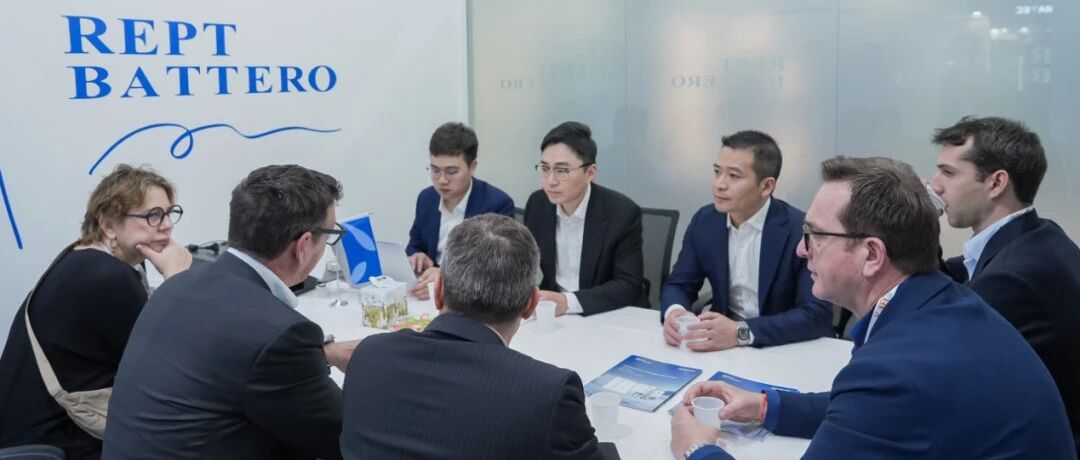
Core Viewpoint - The article highlights the significant advancements and market positioning of the company 瑞浦兰钧 in the European energy storage market, particularly through recent agreements and product offerings [1][3]. Group 1: Market Developments - The company showcased its latest energy storage solutions at the International Renewable Energy Exhibition in Italy, signing supply agreements with seven European partners to deliver a total of 8.3 GWh of energy storage systems over the next two years [1]. - The Powtri x® energy storage system is designed for high flexibility and performance, aiming to create greater value for customers throughout its lifecycle [3]. Group 2: Market Position and Performance - 瑞浦兰钧 ranks among the top in global energy storage cell shipments, holding the number one position in residential energy storage cell shipments and fifth in total energy storage cell shipments as of 2025 [3]. - The company has established a robust delivery and service capability in key international markets, including multiple countries in Europe such as Germany, Belgium, and Poland, and is expanding its service network [3]. Group 3: Future Strategy - The company plans to deepen its focus on the European market, leveraging the momentum from recent bulk orders to enhance local partnerships, optimize service systems, and drive innovation in energy storage technology [5].

贵金属狂飙!金银铜铂齐创历史新高,牛市还能走多远?
Guo Ji Jin Rong Bao· 2025-12-24 10:29
Core Insights - The global precious metals market experienced a significant rally on December 24, with gold, silver, platinum, and copper all reaching historical highs, driven by multiple factors including liquidity expectations, geopolitical risks, and structural supply-demand imbalances [1][3]. Gold Market - London spot gold prices broke through $4,500 per ounce, reaching a new historical record, with a year-to-date increase of approximately $1,880 per ounce, translating to a 64% rise when priced in Chinese yuan [2][4]. - The recent surge in gold prices is attributed to the weak U.S. labor market, as indicated by the November unemployment rate, which supports ongoing monetary easing expectations from the Federal Reserve [4]. - Central banks worldwide have been buying gold in large quantities, providing a solid foundation for the current bull market, with significant inflows into gold ETFs, particularly the SPDR Gold Trust, which saw its holdings increase by over 20% this year [4]. Silver Market - Silver prices have outperformed gold, with London silver reaching $72.255 per ounce and a year-to-date increase exceeding 150% [6]. - The rise in silver prices is driven by both investment and industrial demand, with significant imports in major consumer countries like India, particularly during festive seasons [6]. - The global silver market is experiencing a structural shortage, as demand has consistently outstripped mine production for five consecutive years, exacerbated by the accelerating transition to green energy [6]. Platinum Market - Platinum has emerged as the standout performer among precious metals, with prices surpassing $2,300 per ounce, marking a 150% increase year-to-date, the best annual performance since data collection began in 1987 [7]. - The hydrogen energy sector is creating new demand for platinum, which is used as a catalyst in hydrogen fuel applications, indicating a shift in price dynamics away from traditional precious metal frameworks [7]. - Supply disruptions in major producing countries like South Africa are contributing to a third consecutive year of supply shortages in the platinum market [7]. Copper Market - Copper prices reached a historical high of $12,159.50 per ton, driven by global supply chain tensions and increasing demand from the renewable energy sector [3][8]. - The supply shortage is a critical factor in rising copper prices, with multiple mines facing production interruptions and preemptive stockpiling due to potential tariff policies [8]. - The long-term demand outlook for copper remains optimistic, supported by global energy transition and infrastructure development, although high prices may suppress some consumption and encourage the development of alternative materials [8].
21社论丨全球贸易格局变化重塑中国外贸动能
21世纪经济报道· 2025-12-11 00:34
Core Insights - China's goods trade surplus has surpassed $1 trillion for the first time, reaching $1.076 trillion, driven by both short-term factors and long-term structural changes [1][2][3] Group 1: Trade Dynamics - The increase in trade surplus is influenced by the "export rush" phenomenon due to the U.S. imposing tariffs on multiple countries, leading to a preemption of future trade activities [1] - Structural changes in global trade are reshaping China's trade dynamics, particularly through the rise of emerging markets and the restructuring of industrial chains [1][2] Group 2: Export Structure Upgrade - China's export structure is evolving from exporting consumer goods to developed countries to supplying intermediate goods for emerging manufacturing bases [2] - The share of intermediate goods in China's total exports has risen from approximately 42% in early 2015 to 46% by June 2025, while the share of consumer goods has decreased from 37% to 31% [2] Group 3: Green Energy Transition - The global shift towards green energy is creating new demand, with China's capabilities in solar, lithium batteries, and electric vehicles supporting this transition [2] - Exports of China's "new three items" (electric vehicles, lithium batteries, solar cells) are projected to grow 2.6 times from 2020 to 2024, reaching around 1 trillion RMB [2] Group 4: Market Diversification - China's exports to countries involved in the Belt and Road Initiative, ASEAN, and Africa have been growing rapidly, with exports to Africa increasing by 26.3% in the first 11 months of this year [2] - This diversification has allowed China to maintain growth in total foreign trade and surplus despite pressures in traditional markets like the U.S. and Europe [2] Group 5: Comparative Advantage - The essence of China's trade surplus is shaped by global industrial chain division and China's industrial upgrading, creating a win-win trade scenario [3] - China's exports of intermediate and green products meet the urgent needs of emerging markets for industrialization and global decarbonization [3]
全球贸易格局变化重塑中国外贸动能
2 1 Shi Ji Jing Ji Bao Dao· 2025-12-10 23:07
Core Insights - China's goods trade surplus has surpassed $1 trillion for the first time, reaching $1.076 trillion in the first 11 months of this year, attracting significant international attention [1] - The expansion of this surplus is attributed to both short-term factors and long-term structural forces [1] Group 1: Trade Dynamics - The U.S. imposed "reciprocal tariffs" on multiple countries at the beginning of the year, creating substantial uncertainty in global trade, which led to a noticeable "export rush" as businesses preemptively advanced trade activities [1] - A significant structural change is reshaping the underlying dynamics of China's trade, characterized by two major trends: the development of the Global South and the restructuring of industrial chains [2] Group 2: Export Structure and Trends - China's export structure is evolving from exporting consumer goods to developed countries towards providing intermediate goods for emerging manufacturing bases globally, with intermediate goods' share of total exports rising from approximately 42% in early 2015 to 46% by June 2025 [2] - The global green energy transition is generating new demand, with China's capabilities in photovoltaic, lithium batteries, and electric vehicles significantly supporting this transition, leading to a 2.6 times increase in exports of "new three items" (electric vehicles, lithium batteries, solar cells) compared to 2020, reaching around 1 trillion RMB [2] Group 3: Market Diversification - The structural forces driving export growth have also led to market diversification, with rapid growth in exports to countries involved in the Belt and Road Initiative, ASEAN, and Africa, where exports to Africa surged by 26.3% this year [2] - This diversification has enabled China to maintain growth in total foreign trade and surplus, even amid pressures on traditional markets in the U.S. and Europe, demonstrating strong resilience [2] Group 4: Comparative Advantage and Global Trade - The essence of China's trade surplus is shaped by the comparative advantages resulting from global industrial chain division and China's industrial upgrading, contributing to a win-win trade pattern [3] - China's exports of intermediate and green products meet the urgent needs of industrialization in emerging markets and global decarbonization, while high-quality consumer goods help developed countries curb inflation [3] - The UN Conference on Trade and Development projects that global trade will exceed $35 trillion this year, growing approximately 7%, indicating a tightening connection among developing economies driving global trade growth [3]
电池行业大咖齐聚上海,最新研判
Shang Hai Zheng Quan Bao· 2025-11-17 00:40
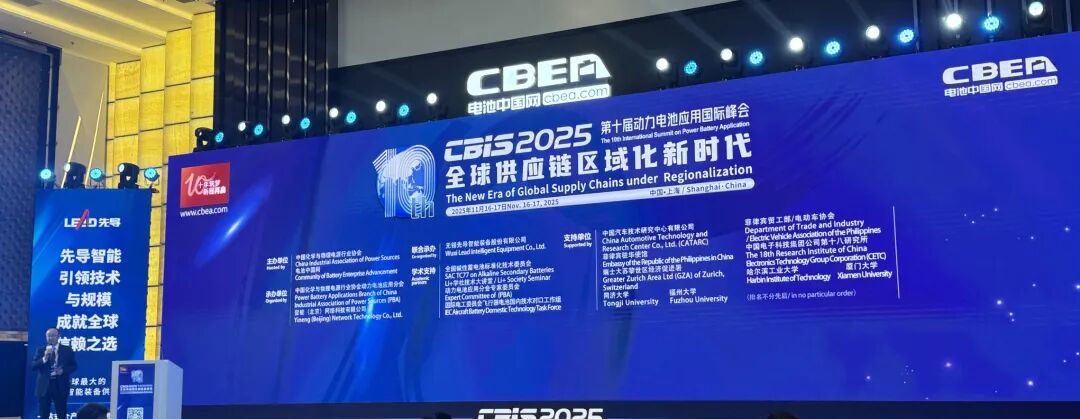
Core Insights - The 10th International Summit on Power Battery Applications (CBIS 2025) was held in Shanghai, focusing on the theme of "New Era of Regionalization in Global Supply Chains" [1] - The summit has become a significant platform for industry exchange, attracting leading companies such as Yiwei Lithium Energy, Ganfeng Lithium, and others to discuss battery industry trends and next-generation technology breakthroughs [1][3] Industry Trends - The current stage of new energy battery technology is characterized by critical exploration, with advancements in liquid and solid-state batteries being pivotal [3] - Innovation is seen as the driving force to address resource constraints, safety challenges, and cost pressures in the industry [3] - The industry is evolving from a single automotive power application to a multi-scenario energy carrier, necessitating global supply chain collaboration [3] Challenges and Opportunities - Key challenges identified include lifecycle cost control and performance optimization in extreme cold environments [3] - The integration of power batteries into distributed energy systems is essential for transforming electric vehicles into "mobile banks" through vehicle-to-grid (V2G) technology [3] - Safety concerns, particularly thermal runaway in batteries, remain a critical issue that the industry must address [3] Solid-State Battery Focus - Solid-state batteries are gaining attention due to their high energy density and safety, with a significant increase in global shipments expected [6] - The 2025 China Solid-State Battery Industry Development White Paper indicates a projected shipment of 6.8 GWh in 2024, representing a growth of over 280% year-on-year [6] - Breakthroughs in material technology are laying the foundation for the industrialization of solid-state batteries [6] Competitive Landscape - Chinese battery companies are transitioning from followers to strong competitors in the global market, focusing on product quality, supply chain resilience, and carbon footprint management [4] - As production capacity increases, the emphasis on cost and quality has made lean manufacturing a focal point in the industry [5] Future Outlook - Solid-state batteries are expected to occupy 20%-30% of the niche market, serving as a high-end supplement rather than a complete replacement for existing battery systems [7] - Continuous micro-innovations in safety, cost reduction, and efficiency improvements are crucial for the industry's future [7]


电解铜期货日报:铜价小幅上涨受英美资源和泰克资源合并推动-20250912
Guo Jin Qi Huo· 2025-09-12 08:59
Report Industry Investment Rating - Not provided in the content Core Viewpoints - The merger of two major copper mining companies boosts copper prices, and the demand for copper is expected to grow rapidly due to the dual - drive of global green energy transformation and data center construction, while the supply of copper mines is limited [1][2] - The Grasberg copper mine accident in Indonesia and the potential supply interruption may further exacerbate the copper concentrate supply gap and support copper prices [3] - The Fed's approaching interest rate cut in September and the long - term strong trend of copper have made the market focus on when copper will break the sideways trend [11] Summary by Relevant Catalogs 1. Futures and Spot Markets - On Tuesday, LME copper prices were strong. On Wednesday, September 10, 2025, SHFE copper rose slightly. The main 2510 contract closed at 79,790 yuan/ton, up 140 yuan/ton or 0.18% from the previous day's closing price [1] - The spot market atmosphere is average, with relaxed spot circulation, active shipments by traders, and downstream price - pressing purchases. The spot premium continues to decline, and the refined - scrap price difference of bright copper in major Chinese markets has fallen [1] 2. Macro and Fundamentals - Anglo American and Canada's Teck Resources announced a merger on the 9th. If approved by regulatory authorities, it will be the largest global mining merger in more than a decade, with a combined market value of over $53 billion [2] - Driven by global green energy transformation and data center construction, the demand for copper is expected to grow rapidly, but the supply of copper mines is limited. Chinese mining companies are extending into the copper field, and Barrick Gold is investing in two copper projects and changing its name [2] - The Grasberg copper mine accident in Indonesia has 7 miners trapped underground. The mine has suspended operations for rescue. The 2023 copper production of the Grasberg mining area accounted for 2.5% of the global copper output. If the mine is shut down for more than a week or a month, it will exacerbate the copper concentrate supply gap [3] 3. Market Outlook - The temporary supply interruption of the large - scale Grasberg copper mine in Indonesia will have a certain impact on copper prices. The Fed's approaching interest rate cut in September and the long - term strong trend of copper have made the market focus on when copper will break the sideways trend [11]