内需主导战略

Search documents
坚持内需主导 建设强大国内市场
Xin Lang Cai Jing· 2025-12-22 17:14
Group 1 - The core focus of the recent Central Economic Work Conference is to prioritize domestic demand and build a strong domestic market as the main task for economic work in the coming year [1] - The current economic situation reveals a contradiction of "strong supply but weak demand," indicating that while domestic supply capacity is robust, effective demand remains insufficient [1][2] - The strategy of expanding domestic demand is seen as a direct approach to address structural contradictions, aiming to stabilize the domestic cycle to counter external uncertainties [1][5] Group 2 - The conference outlines six interconnected strategies to achieve the goal of "domestic demand-led growth," emphasizing the importance of both increasing income and optimizing supply to stimulate consumption [2] - Specific initiatives include the implementation of consumption promotion actions and urban resident income increase plans, which aim to enhance consumer purchasing power and improve the quality of goods and services available [2][3] - Investment stabilization and urban renewal are highlighted as long-term strategies to boost demand and improve supply structure, with examples of effective projects that enhance both investment and living standards [3][4] Group 3 - The focus on domestic demand is fundamentally about enhancing residents' consumption capacity and experience, which is essential for stimulating internal demand [4] - The strategy is not intended to neglect external markets but rather to create a new development pattern that promotes both domestic and international cycles, leveraging external surpluses and internal capacities for stronger growth [5]
杨德龙:尽管A股今年已站上过4000点,许多投资者仍不认同这是一轮牛市!年底是布局2026年行情的时间窗口
Sou Hu Cai Jing· 2025-12-22 08:14
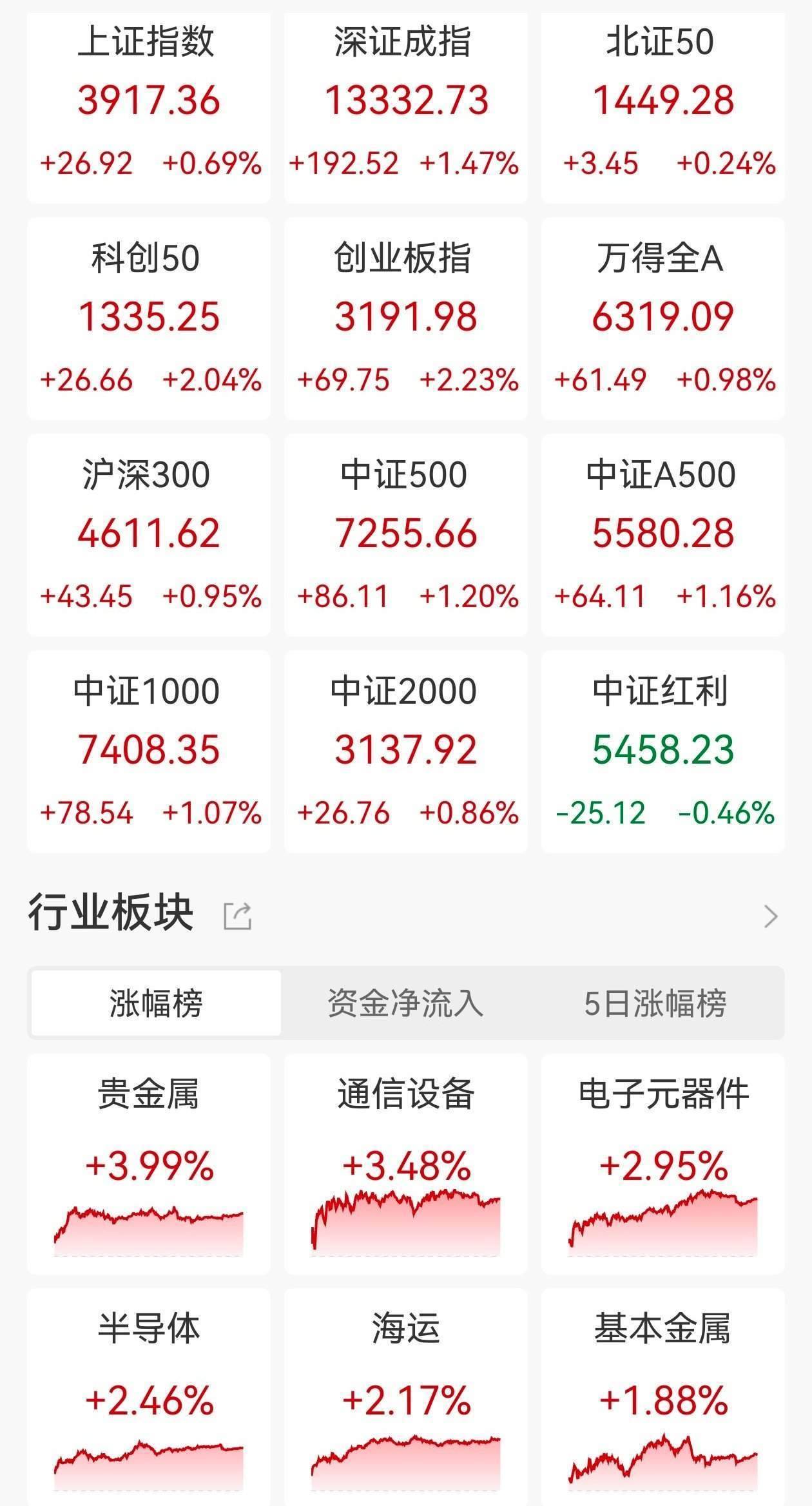
Market Overview - In 2025, China's capital market experienced a slow bull market, with major stock indices surpassing the 4000-point mark, although there was significant structural differentiation in market performance [1] - Investors focusing on the technology sector achieved better returns, while others saw limited gains, leading to skepticism about the bull market despite the index levels [1] Index Performance - Major indices showed positive movements: - Shanghai Composite Index: 3917.36 (+26.92, +0.69%) - Shenzhen Component Index: 13332.73 (+192.52, +1.47%) - ChiNext Index: 3191.98 (+69.75, +2.23%) [2] Economic Outlook for 2026 - The macroeconomic environment is expected to recover, supported by more proactive growth policies from the central government [4] - The Central Economic Work Conference has outlined specific measures to stabilize economic growth, focusing on boosting domestic demand [4] - CPI is projected to gradually rise to around 2%, while PPI may turn positive due to policies aimed at reducing overcapacity [4] Trade and Export - In 2025, China's export trade surplus exceeded $1 trillion for the first time, setting a historical record [5] - The trade environment is expected to remain stable in 2026, particularly with a potential agreement between China and the U.S. [5] Monetary Policy - The monetary policy is anticipated to maintain a moderately loose stance, with potential further declines in deposit and loan rates [6] - The trend of capital moving from savings to the capital market is expected to accelerate, with a significant increase in new stock accounts and fund issuance in 2025 [6] Consumer Trends - New consumption patterns have emerged, with companies like Pinduoduo and Moutai showing strong performance, while traditional consumption remains subdued [7] - As the stock market performs well, consumer spending is expected to rebound, benefiting both new and traditional consumption sectors [7] Foreign Investment - The Federal Reserve is expected to continue its rate-cutting cycle, which may lead to a depreciation of the dollar and an appreciation of the yuan, attracting more foreign investment into A-shares [7] - In 2025, foreign capital maintained a net inflow, and this trend is likely to accelerate in 2026 [7] Gold Reserves and Currency Internationalization - The People's Bank of China has increased its gold reserves for 14 consecutive months, enhancing the international status of the yuan [8] - The shift towards yuan settlement in international trade is seen as a strategic move to reduce reliance on the dollar and enhance China's position in global commodity pricing [8]

杨德龙:年底是布局2026年行情的时间窗口
Xin Lang Cai Jing· 2025-12-22 08:00
Group 1: Market Overview - The capital market in China is expected to experience a slow bull market in 2025, with major indices surpassing the 4000-point mark, although there is significant structural differentiation in market performance [1][6] - Investors focusing on the banking and technology sectors have seen good returns, while others have had limited gains, leading to skepticism about the bull market despite the index levels [1][6] - As 2025 comes to a close, some investors are taking profits, resulting in market adjustments, but this phase is nearing its end, and funds are gradually entering the market for 2026 [1][6] Group 2: Economic Outlook for 2026 - The macroeconomic environment is expected to show signs of recovery in 2026, supported by more proactive growth policies and measures to stabilize the real estate market [1][2] - The Central Economic Work Conference has outlined specific economic tasks for 2026, emphasizing the importance of boosting domestic demand to stabilize economic growth [1][9] - Inflation is projected to rise, with CPI expected to gradually return to around 2%, while PPI may turn positive due to policies aimed at reducing overcapacity [1][2] Group 3: Domestic Demand and Consumption - Enhancing domestic demand requires increasing residents' income levels, as current pressures on businesses make it difficult to raise wages [2][9] - The capital market's strength may provide opportunities for stockholders and mutual fund investors to gain wealth, which could stimulate consumer spending [2][9] - New consumption models have shown strong performance in 2025, and as the stock market improves, consumer spending growth is anticipated to rebound in 2026 [4][9] Group 4: Monetary and Fiscal Policies - Monetary policy is expected to remain moderately accommodative, with potential further declines in deposit and loan rates, encouraging savings to shift towards capital markets [3][8] - The fiscal deficit rate exceeded 3% in 2025, reaching 4%, and is expected to remain around 4% in 2026, which will support local government debt management and consumption initiatives [2][3] Group 5: International Trade and Currency - China's export trade surplus surpassed $1 trillion for the first time in 2025, and exports are expected to remain stable in 2026, supported by a potential agreement in US-China trade relations [2][10] - The People's Bank of China has been increasing its gold reserves for 14 consecutive months, enhancing the international status of the RMB and its role in global trade [5][10] - The anticipated interest rate cuts by the Federal Reserve may lead to a depreciation of the US dollar, potentially strengthening the RMB and attracting more foreign investment into A-shares [4][10]
中央重磅会议!透露三大信号:2026年“房价拐点”来了
Sou Hu Cai Jing· 2025-12-10 13:16
Core Viewpoint - The central economic work conference outlines a policy blueprint for 2026, indicating that the real estate market is transitioning from a period of significant fluctuations to a more stable phase, with 2026 expected to be a critical turning point for housing prices in China [1] Group 1: Monetary and Fiscal Policy Support - The conference emphasizes the continuation of "more proactive fiscal policies and moderately loose monetary policies" in 2026, which will provide essential financial support for the real estate market [2] - Large-scale issuance of special bonds and government bonds will drive housing demand, particularly in urban renewal and village renovation projects [2] - Current first-home loan interest rates have reached a nearly 20-year low, easing the financial burden on homebuyers and creating a more favorable financing environment for real estate companies [2] Group 2: Policy Adjustment Strategies - The focus on "increasing counter-cyclical and cross-cyclical adjustment" indicates a shift in real estate regulation from short-term stimulus to a dual approach of stabilizing the market in the short term while promoting long-term transformation [4] - Local governments are gradually removing unreasonable restrictions in housing consumption, and cities like Guangzhou are initiating regular collection of commercial housing to improve supply-demand relationships [4] - The gradual policy adjustments aim to guide housing prices to stabilize and avoid significant market fluctuations, laying the groundwork for the upcoming turning point [4] Group 3: Domestic Demand and Urban Renewal - The conference prioritizes "building a strong domestic market and expanding consumption," linking the development of the real estate market closely with domestic demand strategies [6] - Urban renewal and village renovation are expected to release housing consumption potential, with 35% of buildings over 30 years old, representing a significant market opportunity [6] - The trend towards upgrading housing demand reflects a growing need for high-quality and functional housing, with targeted subsidies expected to further activate this potential [6] Group 4: Market Dynamics and Price Trends - The turning point in housing prices in 2026 is characterized as a transition from continuous decline to a "L-shaped bottoming and low-level consolidation," with regional differentiation becoming the norm [7] - Core areas in first-tier cities are projected to see moderate price increases of 2%-3%, while strong second-tier cities may experience structural recovery [7] - Third and fourth-tier cities are likely to maintain low-level fluctuations due to population outflows and high inventory levels, with some weaker cities continuing to face challenges [7]