决策智能

Search documents
跨界研究方法的应用:QYResearch如何引入其他学科的分析工具?
QYResearch· 2026-03-05 02:16
Core Insights - The article emphasizes the transformation of consulting and market research towards decision-centric modeling, orchestration of decision flows, and monitoring loops, aligning with the concept of Decision Intelligence Platforms (DIP) that combine data, knowledge, and AI to enhance decision quality [1][4]. Group 1: Methodology and Tools - QYResearch has integrated a systematic approach termed "D-A-T-A" (Define problem - Acquire evidence - Transform model - Action loop) with interdisciplinary tools, enhancing the feedback loop of policies, supply-demand dynamics, and delays [4]. - The introduction of tools like Design of Experiments (DOE) has led to quantifiable improvements in efficiency, analytical depth, and accuracy, reducing ineffective data collection and shortening the hypothesis-to-conclusion cycle [4]. - System dynamics has enabled a shift from point predictions to mechanism explanations and strategy simulations, providing a more forward-looking perspective on micro-decisions such as capacity rhythm and pricing strategies [4]. Group 2: Future Directions - QYResearch plans to diversify its tools by introducing and developing decision components compatible with DIP, focusing on modularization and knowledge base enhancement around modeling, execution, monitoring, and feedback [5]. - The company aims to refine causal identification and engineering processes for A/B and quasi-experiments, creating an integrated stack of diagnostics, prescriptions, scenarios, and experiments [5]. - By linking industry databases with methodology libraries, QYResearch seeks to establish a rolling calibration of "data-model-decision" dashboards, enhancing the transferability and consistency of projects across various industries and regions [5]. Group 3: Company Overview - QYResearch, established in 2007, operates with dual hubs in Beijing and Los Angeles, providing insights across high-tech industry segments, including electronic semiconductors, chemical raw materials, advanced materials, machinery manufacturing, and new energy vehicles [5].

2026最新国内主流决策引擎公司深度解析
Jin Tou Wang· 2026-02-09 07:50
Group 1: Evolution and Value of Decision Engines - The intelligent transformation of data-driven decision-making is becoming a core competitive factor for modern enterprises, as traditional hard-coded business rules are insufficient for dynamic business needs [2] - The decision intelligence market is projected to grow from $15 billion in 2024 to $17.5 billion by 2025, reflecting a compound annual growth rate of 16.5%, indicating a strong demand for smarter and faster decision support [2] - The value of decision engines lies in four main areas: reducing complexity and costs of business system maintenance, improving responsiveness to market changes, standardizing management and iteration of business rules, and transforming business rules into core digital assets [2] Group 2: Shanghai Ruidao Information Technology Co., Ltd. - Shanghai Ruidao is a specialized provider of rule engines and intelligent decision engine solutions, with core products including Ruidao UDM and Ruidao URule Pro, focusing on usability and autonomy [3] - Ruidao's products separate complex business logic from application code, allowing business personnel to define complex logic through visual tools without needing technical expertise [3] - The URule Pro product supports hot loading and version control of rules, ensuring business continuity without system restarts, and offers four service modes: embedded, local, client-server, and standalone [3] Group 3: Taktile - Taktile specializes in no-code decision automation platforms, particularly for the financial services sector, enabling rapid construction, testing, and deployment of automated decision services without extensive engineering resources [5] - The platform integrates AI co-pilot features to enhance decision logic and explainability, supporting third-party data source integration and various AI models [6] - Taktile is particularly suited for fintech companies, banks, insurance firms, and lending institutions that require quick iterations of credit strategies and fraud detection models while allowing business teams to manage decision logic directly [6] Group 4: InRule Technology - InRule Technology offers an integrated decision-making platform that combines business rules management with machine learning, emphasizing traceability and governance, especially in regulated industries [7] - The platform allows business users to manage decision rules without relying on development cycles, ensuring transparency and auditability of decision logic [7] - InRule is particularly effective in highly regulated sectors such as insurance, government, and healthcare, where decision transparency and audit trails are critical [7]
对话离哲:企业AI告别「对话玩具」,多模态记忆是分水岭
雷峰网· 2026-02-09 03:57
Core Viewpoint - Memory will be the protagonist in the AI era, and multimodal memory platforms will become the foundational infrastructure paradigm of this era [1]. Group 1: Development Stages of AI - The development of AI can be divided into three stages: 1. Before 2024, where the focus was on connecting AI to enterprises through vector databases and knowledge bases [3]. 2. From 2024 to 2025, where the emphasis will shift to demonstration applications beyond chat tools, addressing integration into enterprise workflows [4]. 3. From the second half of 2025, the focus will be on evolving into a production efficiency platform, requiring high standards of reliability and complexity [5]. Group 2: Multimodal Memory - Multimodal memory is essential for enterprises, as decision-making processes are inherently multimodal, involving various data types such as text, audio, and structured data [7]. - The goal of a multimodal memory platform is to fully reproduce the decision-making trajectory, allowing AI to reason based on comprehensive memory [8]. - Building multimodal memory involves high technical barriers, requiring a complete memory engineering technology stack and independent multimodal data models [8]. Group 3: MemoryLake Product - MemoryLake aims to create a unified "multimodal memory framework" that allows for structured understanding and association of various data types [10]. - The product has various forms, including APIs that integrate with existing standards, enabling users to leverage multimodal memory seamlessly [13]. - MemoryLake serves over 1.5 million professional data users globally and has significant advantages in performance metrics such as accuracy and recall rate [28][29]. Group 4: Market Dynamics - The market for personalized decision-making AI is still large, but challenges exist due to the difficulty in validating and incentivizing these systems [22]. - The relationship between generalized and specialized applications suggests that generalization will likely outperform specialization in the long run [32]. - The emergence of tools like Interactive Tools indicates a shift towards headless software, which may disrupt existing specialized applications [34]. Group 5: Future Directions - The company plans to enhance multimodal capabilities, including support for video and audio, and improve the accuracy of its models [37]. - Market expansion will focus on promising sectors such as gaming, office applications, and financial services [38].

专家观点 | 以“AI+场景”推动智慧应急走向实践
Xin Lang Cai Jing· 2026-02-05 12:25
Core Insights - Emergency management is transitioning from passive response to proactive prevention, necessitating a new paradigm of smart emergency science to address complex challenges posed by climate change and urban governance [1][62] - The integration of AI and digital technologies into emergency management is crucial, with "AI + scenarios" serving as a practical bridge between scientific research and engineering practice [1][68] Group 1: Smart Emergency Science System Composition - Smart emergency science is an interdisciplinary field that combines information science, management science, engineering, and social sciences to fundamentally reshape traditional emergency management through data-driven approaches [3][64] - The transition from traditional emergency management, which relies on historical experience, to smart emergency management, which utilizes real-time data and predictive models, marks a significant paradigm shift [4][64] Group 2: Key Components of Smart Emergency Science - Data perception is foundational, focusing on integrated sensing networks and multi-source data fusion to monitor disaster elements and emergency resources comprehensively [5][65] - The smart emergency science system encompasses four key components: data intelligence, model intelligence, decision intelligence, and action intelligence, each contributing to a closed-loop system [6][65][66] Group 3: "AI + Scenarios" Implementation - "AI + scenarios" emphasizes the deep integration of AI technologies into specific emergency management contexts to address real pain points and create tangible value [8][68] - The approach shifts from a technology-driven model to one that is scenario-driven, defining specific emergency management challenges and developing tailored AI solutions [9][68] Group 4: Strategic Pathways for "AI + Scenarios" - The implementation of "AI + scenarios" requires breaking down broad goals into quantifiable, solvable scenario problems, such as predicting community evacuations during severe weather events [71] - Establishing cross-departmental data sharing and high-quality datasets is essential for training AI models effectively [71][72] Group 5: Challenges in Smart Emergency Management - Significant challenges include data silos, the scarcity of data for rare disaster scenarios, and the need for AI models to be robust and interpretable in high-stakes decision-making environments [72][73][74] - The complexity and uncertainty of real disaster scenarios necessitate AI systems that can adapt and function reliably under extreme conditions [75][76] Group 6: Frontiers of Research in Smart Emergency Science - Research directions include federated learning for data integration without sharing raw data, small-sample learning for rare disaster scenarios, and dynamic evolution of emergency knowledge graphs [78][79][80] - The development of digital twins for complex systems and disaster scenarios is crucial for high-fidelity simulations and effective emergency response planning [81]

重磅 | 百望推出交易本体论白皮书——在AI2.0时代构建可信的智能经济基础设施
Ge Long Hui· 2026-01-30 14:03
Core Insights - The article discusses the transition of AI from "generative intelligence" to "decision intelligence," emphasizing the need for a solid data infrastructure that is deterministic, traceable, and auditable [2][4]. Global Trends - The development path of enterprise-level AI is undergoing structural changes, with companies like Palantir and Bill.com achieving high valuations not due to complex software functions, but because they embed directly into enterprise decision-making and financial flows, focusing on "result-oriented" services [1][3]. China's Unique Advantage - Unlike overseas markets, China has a unique advantage in this transformation due to national-level digital infrastructure initiatives like the Golden Tax Phase IV and digital invoices, which have enabled comprehensive digitalization and standardization of key business behaviors [3][4]. Theoretical Breakthrough - The white paper introduces the concept of "transaction ontology," which redefines invoices as economic fact nodes that connect financial flows, goods flows, and legal responsibilities, emphasizing that only data confirmed by legal frameworks can be considered as auditable and accountable assets [4][5]. Paradigm Shift - The industry is experiencing a structural shift from Software as a Service (SaaS) to Results as a Service (RaaS), where businesses pay for quantifiable operational outcomes rather than just software functionalities [5][6]. Business Model Innovations - In various scenarios such as procurement and supply chain finance, new business models are emerging that leverage transaction ontology to provide accountability and auditability, thus enabling more reliable outcome delivery [6][7]. Company Strategy - As a foundational enterprise in financial and tax digitalization, the company is strategically focused on building a comprehensive transaction semantic standard and industry-wide mapping, which transforms fragmented data into structured economic facts [7][8]. Future Directions - The white paper suggests that the future of competition in the AI 2.0 era will hinge on who can master legally confirmed economic facts and translate them into actionable decision-making capabilities, highlighting the importance of trust as a precursor to intelligent economic upgrades [7][8].
中科闻歌CEO罗引:AI 走向企业核心,绕不开“决策”
Sou Hu Cai Jing· 2026-01-29 06:55
Core Insights - The rapid evolution of generative AI over the past two years has profoundly impacted the global technology industry [2] - The industry is forming a new consensus that the value of AI is shifting from content generation to higher-value enterprise decision-making [3] - By 2027, Gartner predicts that 50% of business decisions will be assisted or automated by decision intelligence AI agents [3] Group 1: Decision Intelligence - The key challenge for enterprises is how to integrate AI into core decision-making processes [4] - Zhongke Wenge, founded by the Chinese Academy of Sciences, is focusing on decision intelligence rather than general large model development [5] - The CEO of Zhongke Wenge emphasizes that the core of enterprise AI lies in systematic reasoning and judgment capabilities, rather than just model parameter size [5][7] Group 2: AI's Role in Decision-Making - Current generative AI primarily operates at the "System 1" level, providing quick answers based on probabilities but often lacking logical coherence [5] - For AI to participate in critical decision-making, it must be safe, controllable, and truly understand industry logic [10] - Zhongke Wenge has developed its own large model, "Yayi," to address these needs while ensuring a clear methodology [10] Group 3: DOMA Framework - The DOMA (Data–Ontology–Models–Agents) framework has been proposed to systematically address how enterprises can use AI for decision-making [12] - The four layers of the DOMA framework include: - Data layer: Captures the current operational state through multi-source data governance [12] - Ontology layer: Structures decision logic by formalizing industry rules and causal relationships [12] - Models layer: Conducts reasoning within defined rules and logical boundaries [12] - Agents layer: Facilitates the execution of decisions through multi-agent collaboration [12] Group 4: Long-Term Strategy - Decision intelligence is a "heavy engineering" task that requires long-term industry engagement and iterative refinement of business logic [15] - Zhongke Wenge's decision intelligence systems have been successfully implemented in complex scenarios across finance, energy, media, and government [15] - The true value of AI lies in becoming an integral part of the organizational decision-making system, helping organizations form stable, explainable, and reviewable judgments in uncertain environments [15]

FICO(FICO) - 2026 Q1 - Earnings Call Presentation
2026-01-28 22:00
Investor Presentation Q1 FY2026 January 28, 2026 Forward-looking Statements / Non-GAAP Financial Measures Certain statements made in this presentation are forward-looking under the Private Securities Litigation Reform Act of 1995. Those statements involve many risks and uncertainties that could cause actual results to differ materially. Information concerning these risks and uncertainties is contained in the Company's filings with the SEC, particularly in the Risk Factors and Forward-Looking Statements port ...

当AI开始设计芯片
Hu Xiu· 2025-10-10 04:32
Core Insights - The article discusses XMOS, a chip design company in the UK, which is leveraging generative AI to transform the interaction between humans and silicon chips, aiming to simplify the design process significantly [2][4][12] - XMOS is developing a GenAI tool that allows engineers to configure hardware characteristics of its Xcore processors using natural language prompts, potentially reducing development time from months to days [3][4][15] - This approach represents a fundamental shift in the semiconductor industry, moving from traditional hardware sales to a model that emphasizes "decision intelligence" and the ability to convert vague requirements into optimal hardware configurations [24][25][32] Group 1: Revolutionizing Design Processes - The traditional gap between concept and implementation in chip design is vast, requiring deep technical knowledge and experience [6][11] - XMOS's "intent abstraction" aims to bridge this gap by allowing users to define what they need rather than how to achieve it, thus returning to a declarative programming paradigm [12][13][18] - The generative AI acts as a "super compiler," internalizing years of design data to optimize hardware configurations based on user-defined goals [15][19][20] Group 2: Shifting Business Models - The semiconductor industry has historically focused on selling hardware and associated intellectual property, with value derived from chip performance and software ecosystem [23][24] - XMOS's integration of generative AI into its toolchain shifts this value equation to include "decision intelligence," enhancing customer experience and reducing cognitive and trial-and-error costs [25][28][31] - This new model provides customers with a "navigation system" that minimizes exploration risks and ensures successful outcomes, creating a strong customer loyalty [32][34] Group 3: Predictable Parallel Architecture - XMOS's Xcore architecture emphasizes "hard real-time behavior" and "static verification," offering a predictable parallel processing environment [41][46] - Unlike traditional processors that operate in a dynamic and uncertain manner, Xcore's architecture allows for precise timing and task execution, making it suitable for applications requiring guaranteed performance [42][49] - The generative AI tool can formalize verification processes, ensuring that designs meet performance and timing requirements, thus selling "time" as a valuable commodity in various applications [50][55]
Z Event|SF Tech Week10.8硅谷线下会:为什么是现在?RL 的转折点与未来
Z Potentials· 2025-09-30 03:59
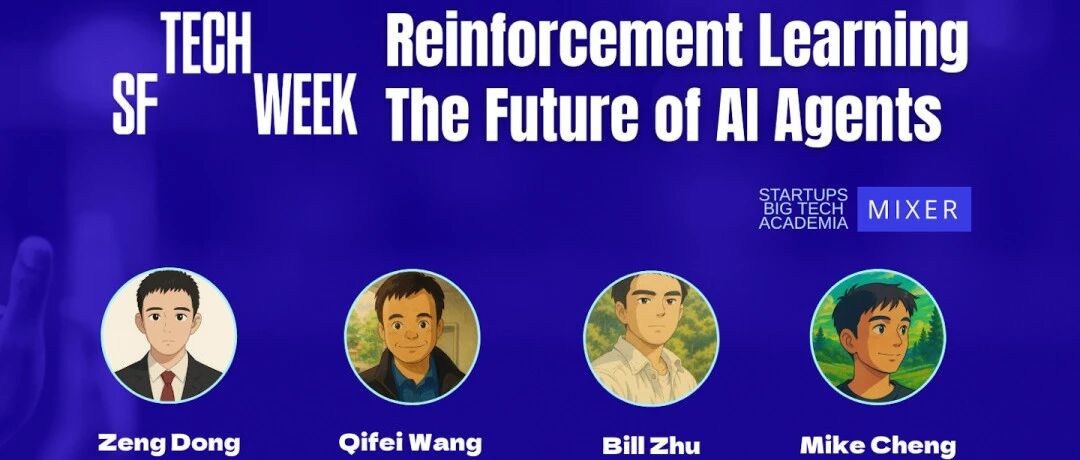
Core Insights - Reinforcement Learning (RL) is transitioning from a niche area to a critical component in advancing reasoning, decision-making, and complex scene interactions, especially as developments in Large Language Models (LLMs) reach a bottleneck [3] - The current moment is pivotal for the cross-disciplinary integration of RL, with academia, industry, and startups collaborating to move RL from research to practical applications [3] Event Details - An event is scheduled for October 8th at 6:30 PM in San Francisco, featuring top-tier guests from academia, industry, and entrepreneurship to discuss the future of RL [4] - Notable speakers include Zeng Dong from UCSB, Qifei Wang from DeepMind, Bill Zhu from Pokee AI, and others who are shaping the next generation of RL [6][7] Organizers and Community - The event is presented by Z Potentials in collaboration with HatTrick Capital and Future Builderz, focusing on supporting early-stage technology entrepreneurs and bridging the gap between research and industry [8][9] - HatTrick Capital is a Silicon Valley fund dedicated to backing new generation technology entrepreneurs, particularly in the AI sector [9] Networking Opportunities - The event will provide a relaxed networking atmosphere, allowing attendees from leading labs like OpenAI, Anthropic, DeepMind, and Meta to engage in deep discussions [10]
从“策略对抗”到“模型博弈”:同盾AI大模型筑牢金融安全防火墙
Cai Fu Zai Xian· 2025-09-24 07:02
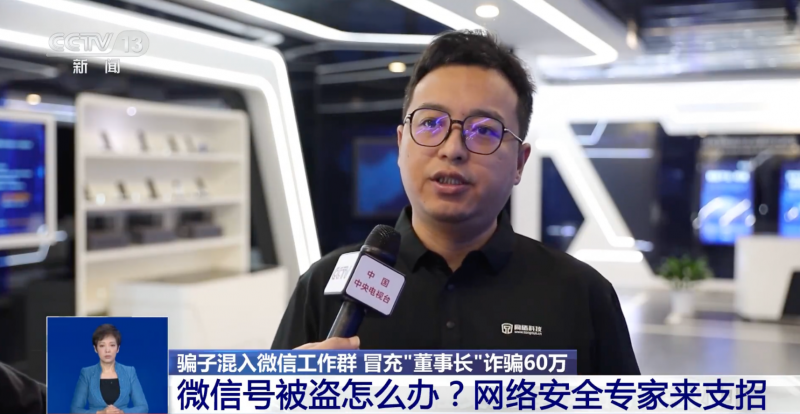
Core Insights - The article highlights a significant telecom fraud case involving a financial officer who was deceived into transferring 600,000 yuan under the guise of a company chairman, emphasizing the increasing sophistication of financial risks in the digital economy era [1][3] - The rise of social engineering attacks and the misuse of emerging technologies like deepfake and AI voice synthesis are transforming traditional risk control systems, necessitating a shift from expert-driven strategies to AI-based dynamic models [3][4] Group 1: Fraud Case Analysis - A financial officer from a construction company in Changchun, Jilin, was scammed by fraudsters posing as company executives, leading to a loss of 600,000 yuan, which was later recovered through police intervention [1] - The case illustrates the high-tech and adversarial nature of financial risks in the context of widespread AI technology adoption [1][3] Group 2: Technological Response - Same as the previous point, the financial industry must enhance the application of AI and big data analytics in risk prevention and improve information sharing across institutions and industries [4][5] - Tongdun Technology has proposed a comprehensive anti-fraud solution that innovatively approaches risk identification from both the victim's and the fraudster's perspectives, utilizing AI and machine learning for high-precision detection and real-time intervention [4][5] Group 3: Implementation and Impact - The solution has been implemented in hundreds of financial institutions across the country, successfully aiding a bank in preventing a telecom fraud case involving 260 million yuan and affecting 6,000 individuals, achieving a prediction accuracy of 90% [5] - The focus is on proactive risk management, transitioning from reactive measures to a forward-looking risk control approach [5][6] Group 4: Advanced Risk Control Systems - Tongdun Technology aims to develop a smarter decision-making framework that not only identifies risks but also understands and predicts them, marking a fundamental upgrade in risk control philosophy [7][8] - The financial risk control model integrates advanced capabilities such as intelligent decision engines and knowledge construction, enabling financial institutions to effectively identify and respond to potential risks [7][8] Group 5: Future Directions - The new generation of technologies, represented by AI models, is becoming a core driving force in establishing a new paradigm for financial intelligent risk control, reflecting a profound transformation in financial security concepts and models [8]