
出口下滑

Search documents
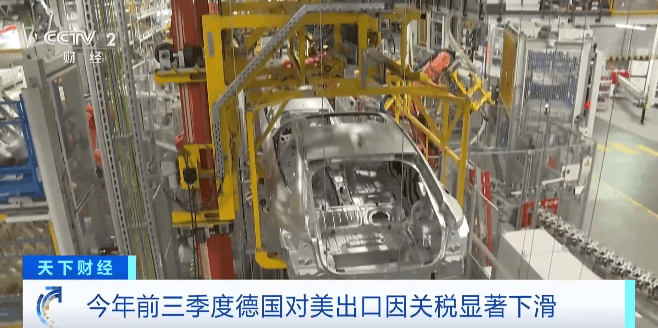
今年前三季度德国对美出口因关税显著下滑
Sou Hu Cai Jing· 2025-12-23 11:02
Group 1 - The core viewpoint of the report indicates that Germany's exports to the United States are expected to decline by nearly 8% year-on-year in the first three quarters of 2025, falling below the levels of 2022 due to U.S. tariffs [1][3]. - Exports of automobiles and parts to the U.S. have decreased by approximately 15%, while the machinery manufacturing and chemical products sectors have seen declines of nearly 10% each [3]. - Historically, from 2016 to 2024, Germany's exports to the U.S. maintained an average annual growth rate of about 5% [3]. Group 2 - The high tariffs imposed by the U.S. on steel, aluminum, and related products, reaching up to 50%, have significantly increased the export costs for German machinery manufacturers, contributing to the decline in exports [5]. - In addition to tariff impacts, high domestic energy prices in Germany have led to reduced production in the chemical industry, further affecting export volumes [5]. - Experts suggest that Germany should reduce its reliance on the U.S. market and accelerate the exploration of new markets in South America, India, and Indonesia, while also working to eliminate trade barriers within the EU and enhance the international competitiveness of its domestic industries [7].

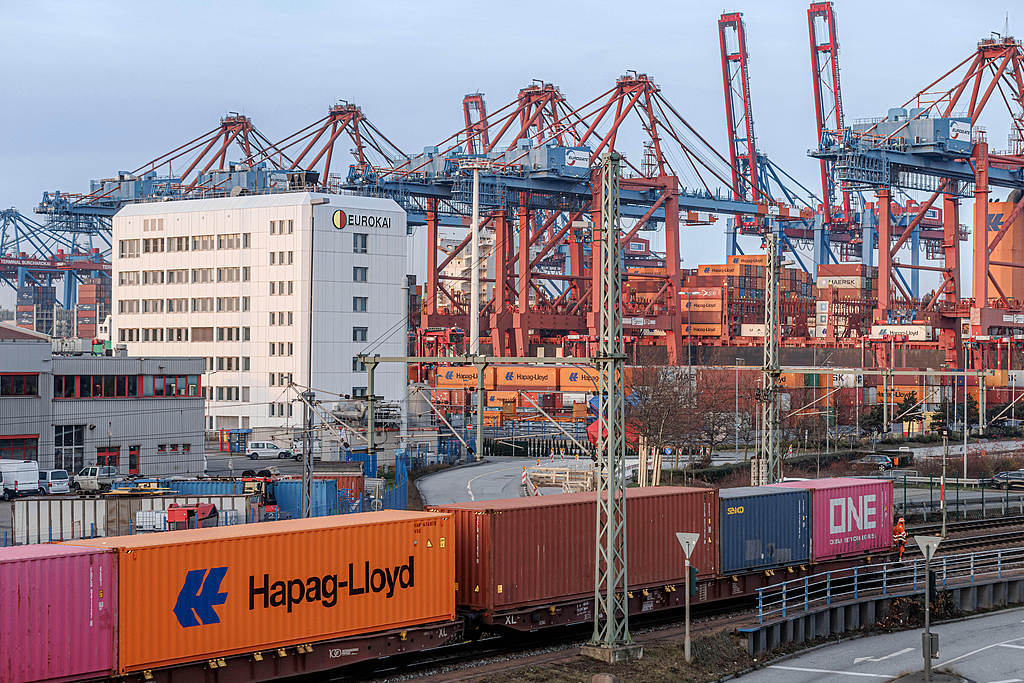
顺差骤降,德国担忧贸易陷入长期危机
Huan Qiu Shi Bao· 2025-12-18 22:48
Group 1 - Germany's overall export is projected to grow by 0.6% in 2023, reaching approximately €1.6 trillion, maintaining the same level as 2022 for the third consecutive year [1] - Imports are expected to increase by 4.4% to around €1.4 trillion, resulting in a trade surplus of about €200 billion, the lowest since 2012, excluding the pandemic years [1] - The export outlook for Germany in 2026 remains bleak, indicating ongoing challenges in international trade [1] Group 2 - Exports to China are forecasted to decline by 10% in 2023, falling to €81 billion, marking the first time since 2010 that China will not be among the top five export destinations for Germany [3] - Imports from China are expected to rise by over 7%, reaching approximately €168 billion [3] - Exports to the United States are also projected to decrease by 7.3%, slightly below €150 billion, with potential further declines anticipated due to preemptive actions by German companies [3] Group 3 - Different industries in Germany face varying export challenges in 2025, with food exports expected to grow by over 6% to a record €86 billion [4] - The chemical industry is projected to see slight growth, particularly in pharmaceuticals and fertilizers, with both expected to increase by over 3% [4] - The plastics industry is anticipated to be significantly affected, with exports expected to decline by over 2%, while the petrochemical sector may experience a dramatic drop of 13% [4] Group 4 - The machinery sector is likely to see a 1.7% decrease in exports due to U.S. tariffs on steel and aluminum, impacting EU machinery products [4] - The automotive industry is also expected to be heavily impacted, with a projected export decline of 3.2% [4] - The shift towards electric vehicles in China and other emerging markets may provide competitive advantages for Chinese manufacturers [4]
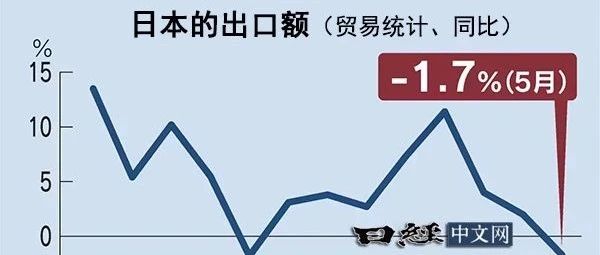
日本5月出口额减1.7%,对华减8.8%
日经中文网· 2025-06-20 07:27
Core Viewpoint - Japan's overall exports in May decreased by 1.7% year-on-year, marking the first decline in eight months, primarily due to a drop in automobile exports to the United States [1]. Group 1: Export Performance - Japan's total export value fell to 8.1349 trillion yen in May, with a significant reduction in exports to the U.S. by 11.1%, amounting to 1.514 trillion yen [1]. - Exports of automobiles to the U.S. saw a substantial decline of 24.7%, indicating a notable impact from the additional tariffs imposed by the Trump administration [1]. - The decrease in export volume was only 3.9%, suggesting that the decline in export value was primarily driven by falling prices [1]. Group 2: Trade Balance - The trade balance with the U.S. showed a surplus of 451.7 billion yen, which is a reduction for the first time in five months [1]. - Japan's exports to China also decreased by 8.8%, totaling 1.4417 trillion yen, with declines in semiconductor manufacturing equipment, copper, and hybrid vehicles [1]. - Overall imports into Japan amounted to 8.7726 trillion yen, down 7.7%, marking a consecutive two-month decline [1]. - The trade balance, after subtracting imports from exports, resulted in a deficit of 637.6 billion yen, continuing a trend of deficits for two consecutive months [1].
【期货热点追踪】铁矿石期货价格下跌,钢材消费疲软和出口下滑影响铁矿石价格,市场能否找到新驱动力?
news flash· 2025-06-05 03:50
Core Insights - Iron ore futures prices are declining due to weak steel consumption and a drop in exports, raising questions about whether the market can find new drivers [1] Industry Summary - The decline in iron ore prices is attributed to sluggish demand in the steel sector and reduced export activities [1]

日本4月对中国出口同比下滑0.6%,对欧盟出口下滑5.2%,对美国出口下滑1.8%。
news flash· 2025-05-20 23:59
Group 1 - Japan's exports to China decreased by 0.6% year-on-year in April [1] - Exports to the European Union fell by 5.2% [1] - Exports to the United States declined by 1.8% [1]