分布式算力网络

Search documents
马斯克努砸20亿美金搞AI,测试“虚拟员工”将颠覆人类职场
Sou Hu Cai Jing· 2026-01-30 14:40
Core Viewpoint - Tesla's decision to invest $2 billion in Elon Musk's private AI company xAI comes amidst a significant decline in its profits, with a reported 61% drop in Q4 of FY2025, raising concerns among investors [2][3]. Financial Performance - Tesla's Q4 revenue decreased by 3% to $24.9 billion, and the total revenue for FY2025 also fell by 3% year-over-year to $94.8 billion [3]. - The company's electric vehicle sales in 2025 saw a 9% decline compared to the previous year, with a gap of nearly 600,000 units behind BYD, which has become the global sales leader in electric vehicles [3]. Investment in xAI - Tesla's investment in xAI is surprising, especially after shareholders recently voted against a non-binding proposal to invest in the company, with more votes against than in favor [2]. - xAI's valuation has skyrocketed from $24 billion in summer 2024 to $120 billion, indicating significant growth potential [2]. Strategic Shift - Tesla is undergoing a strategic shift towards AI and robotics, with executives indicating a future focus on service models, such as robotaxi services, rather than solely increasing vehicle sales [13]. - The investment in xAI is seen as a critical step in this transformation, as Tesla aims to pivot from electric vehicle sales to AI and robotics technology [15]. Controversies and Challenges - The investment has faced strong opposition from shareholders, who are concerned about Musk's use of Tesla's resources for personal AI ambitions [13]. - xAI's operations have come under scrutiny from the EPA due to the use of diesel generators at its Memphis data center, raising environmental concerns [13]. - Tesla's reputation has declined in traditional markets like California and Europe, impacting its electric vehicle sales, particularly after Musk's involvement in partisan politics [15].



协创数据:已在上海、宁波、成都、乌兰察布等国内核心节点以及东南亚及美国等海外市场建立分布式算力网络
Mei Ri Jing Ji Xin Wen· 2025-11-12 10:46
Group 1 - The company has confirmed the procurement of 4 billion computing power servers and is actively working on the delivery of related orders [2] - The company has established a distributed computing network in key domestic locations such as Shanghai, Ningbo, Chengdu, and Ulanqab, as well as in Southeast Asia and the United States [2] - The company has a sufficient backlog of orders and is committed to timely information disclosure in accordance with relevant laws and regulations [2]

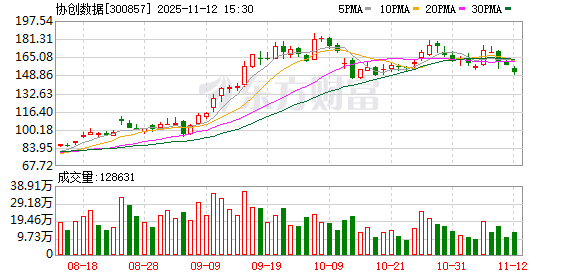
协创数据(300857.SZ):目前在手订单充裕 正积极推进相关订单交付
Ge Long Hui· 2025-11-07 07:10
Core Viewpoint - The company is actively building a high-end GPU computing server cluster and has established a distributed computing network in key domestic locations as well as in Southeast Asia and the United States [1] Group 1 - The company has set up distributed computing networks in major domestic nodes including Shanghai, Ningbo, Chengdu, and Ulanqab [1] - The company is also expanding its presence in overseas markets such as Southeast Asia and the United States [1] - The company currently has a substantial backlog of orders and is actively working on the delivery of these orders [1]
特斯拉的“冰与火之歌”:财报里的现实与马斯克口中的未来
Sou Hu Cai Jing· 2025-10-23 11:28
Core Viewpoint - Tesla's Q3 2025 results showed record revenue and delivery numbers, but profitability declined, leading to a drop in stock price, reflecting market disappointment over the "revenue without profit" situation [2][25][26] Financial Performance - Q3 2025 revenue exceeded expectations at $26.37 billion, with a year-on-year increase in automotive sales revenue of 8.11% to $20.36 billion [8][9] - Despite record deliveries of 497,100 vehicles, earnings per share were only $0.50, below the market expectation of $0.54, contributing to stock price decline [8][9] - Automotive gross margin decreased by 1.69 percentage points to 14.71%, attributed to a higher sales volume of lower-priced models [5][9] - Free cash flow reached approximately $4 billion, with total cash and investments exceeding $41 billion [9] Delivery and Market Performance - Model 3/Y deliveries grew by 9.36% year-on-year to 481,200 units, with overall vehicle deliveries up 7.39% [5][8] - Significant regional delivery growth was noted in Greater China (33%), Asia-Pacific (29%), North America (28%), and Europe, Middle East, and Africa (25%) [5] - The surge in deliveries was partly driven by U.S. consumers rushing to purchase vehicles before the federal EV tax credit expiration [5][10] Strategic Initiatives and Future Outlook - CEO Elon Musk outlined ambitious plans for a production capacity of 3 million vehicles annually and the introduction of a new model without a steering wheel [3][11] - Tesla is focusing on localizing battery and powertrain supply chains globally, with new models expected to mitigate the impact of the expiring EV tax credits [10][11] - The company is also advancing its AI and robotics initiatives, with plans to produce 1 million units of the Optimus robot annually [13][19] Energy and Service Business - Tesla's energy storage deployment reached record levels, with a year-on-year revenue increase of 43.73% to $3.42 billion, contributing significantly to overall profitability [6][22] - The service and other segments also performed well, with a revenue increase of 24.55% to $3.48 billion [8][22] - New products like the Megablock are expected to enhance the energy storage business and meet growing demand [24] Market Sentiment and Challenges - The market appears to be recalibrating its expectations, weighing short-term profitability challenges against long-term growth potential in AI and robotics [25][26] - The end of the federal EV tax credit and the impact of previous policies are seen as short-term headwinds for Tesla's growth [3][25]
宇树科技王兴兴发“暴论”,对智驾有什么参考?
3 6 Ke· 2025-08-11 23:58
Core Viewpoint - The current state of embodied intelligent AI models, particularly the VLA model, is seen as inadequate for large-scale application in robotics, with a need for more advanced model architectures and a shift towards video generation models for better efficiency [1][10][13]. Summary by Sections Key Bottlenecks - The primary reason for the limited large-scale application of robots is not hardware performance or cost, but rather the immaturity of embodied intelligent AI models [4]. - Current robot hardware is sufficient for basic functions, but the AI models have not yet reached a critical threshold for advancement [6]. - The industry is overly focused on data, neglecting the fundamental issues with the models themselves [6][8]. New Technology Directions - Video generation models are proposed as a more promising direction than the VLA model, as they can simulate robot actions in video form, which can then be translated into control signals for real robots [13]. - However, there is a challenge with current video generation models being too focused on video quality, leading to high GPU consumption, which may not be necessary for robotic applications [15]. Future Technological Focus - The development of embodied intelligent robots will concentrate on three main areas over the next 2-5 years: 1. Unified end-to-end intelligent robot models to enhance capabilities [16]. 2. Lower-cost, longer-lasting hardware with mass manufacturing capabilities [16]. 3. Low-cost, large-scale distributed computing networks to support robotic operations [16]. Market Expectations - There is a belief that once robots achieve large-scale operational capabilities, they could potentially be free to users, as their value creation could be taxed [17].