利益优先

Search documents
裁员or赋能?中美AI一场关乎1.7亿岗位的暗战
Guan Cha Zhe Wang· 2025-11-11 03:23
Core Viewpoint - The recent announcement of Amazon's plan to lay off up to 30,000 employees has sparked significant discussion about the impact of AI on employment, contrasting the situation in China where major companies are still in expansion mode [1][2][6]. Group 1: Amazon's Layoff Plan - Amazon's layoff plan, the largest since the financial crisis, involves 14,000 officially reported layoffs, but reports suggest the number could reach 30,000, nearly 10% of its 350,000 white-collar employees [2][4]. - The layoffs are framed by Amazon's CEO Andy Jassy as a correction to overhiring during the pandemic, despite the company's strong performance, with Q3 2025 revenue up 13% to $180.2 billion and net profit up 39% to $21.2 billion [2][9]. - The layoffs are seen as a strategic restructuring to reallocate resources towards expensive generative AI initiatives, potentially benefiting companies like Nvidia [5][9]. Group 2: AI's Role in Employment - AI's development is cited as a factor giving Amazon the confidence to reduce its workforce, with Jassy indicating that AI efficiency improvements would lead to fewer labor needs [5]. - Other companies, such as Chegg and Salesforce, have also linked layoffs directly to AI, with Chegg cutting 45% of its workforce and Salesforce eliminating 4,000 customer service positions [5]. - The narrative around AI in the U.S. emphasizes efficiency and profit maximization, often at the expense of social responsibility, leading to a focus on "AI replacing humans" [9][17]. Group 3: Comparison with China - In contrast to the U.S., Chinese companies have not experienced large-scale layoffs due to AI, with many, like Alibaba, announcing plans for significant hiring [6][10]. - The Chinese approach to AI emphasizes social value and empowerment rather than solely profit, with companies like iFlytek focusing on enhancing the skills and income levels of the general workforce [10][15]. - The differences in AI development paths between the U.S. and China reflect broader cultural and market choices, with the U.S. prioritizing elite tools and efficiency, while China focuses on inclusive empowerment [17][24].



特朗普其人(国金宏观赵宏鹤)
雪涛宏观笔记· 2025-04-20 00:34
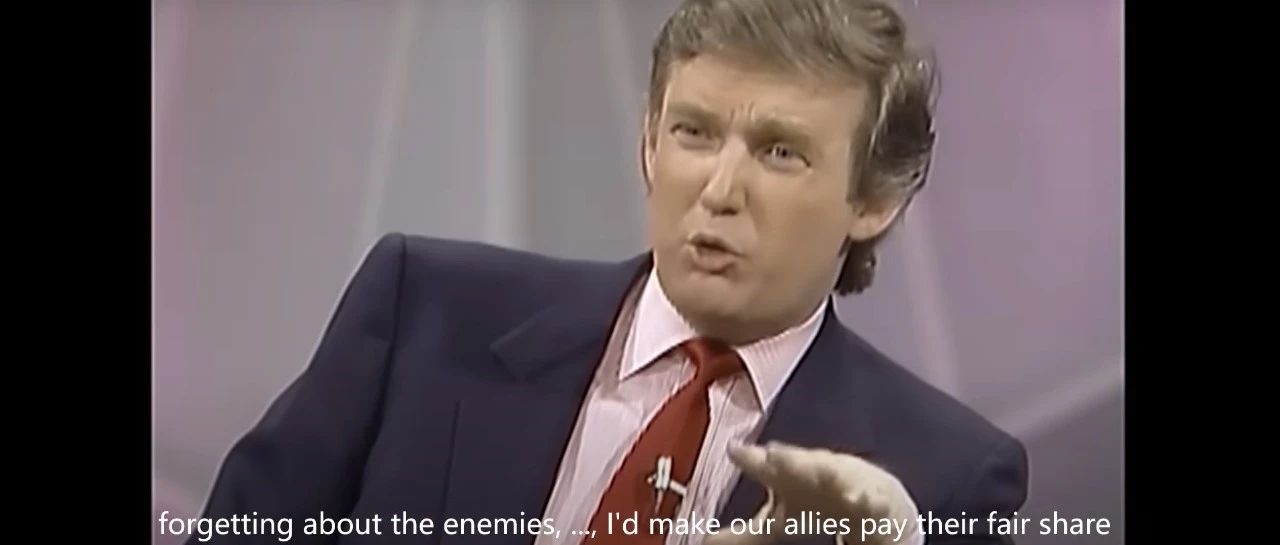
Core Viewpoint - The article discusses Donald Trump's political strategies and their implications in the context of changing international dynamics, emphasizing his adaptability and focus on personal and political interests [2][10]. Group 1: Trump's Business Background and Political Rise - Trump, born in 1946, leveraged his business acumen and media presence to become a prominent political figure, notably through his book "The Art of the Deal," which outlines his "maximum pressure" negotiation tactics [3][4]. - His political success in 2016 was attributed to his appeal to the "silent majority," particularly white working-class voters, by promising job creation and economic revival through protectionist measures [4][5]. Group 2: Trade Policies and Economic Impact - In 2024, the U.S. accounted for 39% of the global trade deficit, amounting to $1.15 trillion, a 34% increase since 2017, highlighting the significance of trade relations under Trump's policies [5]. - Trump's use of tariffs as a diplomatic tool has raised concerns about inflation risks, particularly for lower-income households who are more sensitive to price increases [12][13]. Group 3: Political Strategy and Alliances - Trump's approach often involves leveraging allies for financial and political gain, as seen in his past statements about making allies pay their fair share [6][9]. - His relationships with influential figures like Elon Musk and Jeff Bezos illustrate the potential volatility of alliances, especially when personal interests are at stake [9][10]. Group 4: Flexibility and Response to Challenges - Trump's ability to adapt his strategies in response to economic pressures, such as adjusting tariff policies to mitigate market impacts, showcases his focus on personal and political interests [10][11]. - The article suggests that if Trump's political interests are threatened by economic fallout from tariffs, he is likely to modify his approach to maintain support [11][12].