制造业创新

Search documents
湖北认定4个省级制造业创新中心
Zhong Guo Hua Gong Bao· 2026-02-25 01:53
Core Viewpoint - The Hubei Provincial Economic and Information Technology Department has recognized four manufacturing innovation centers as provincial-level centers, aiming to enhance innovation capabilities and support high-quality development in Hubei's manufacturing sector [1] Group 1: Recognized Innovation Centers - The four recognized centers include: 1. "Hubei Industrial Mother Machine Intelligent CNC System Innovation Center" led by Huazhong CNC Co., Ltd. in Wuhan [1] 2. "Hubei Nutrient Synthesis Biotechnology Manufacturing Innovation Center" led by Jabiou Biotechnology (Wuhan) Co., Ltd. in Wuhan [1] 3. "Hubei Anti-Virus Traditional Chinese Medicine Preparation Manufacturing Center" led by Zhen'ao Honeysuckle Pharmaceutical Co., Ltd. in Xianning [1] 4. "Hubei Precision CNC Machine Tool Equipment Manufacturing Center" led by Yixing Intelligent Equipment Co., Ltd. in Suizhou [1] Group 2: Objectives and Support - The provincial government aims for these centers to integrate industry innovation resources, focus on key common technology research, and enhance the engineering capabilities of innovation outcomes [1] - Local economic and information departments are encouraged to increase support for these innovation centers, guiding them to improve innovation capabilities and modernize industrial chains [1]


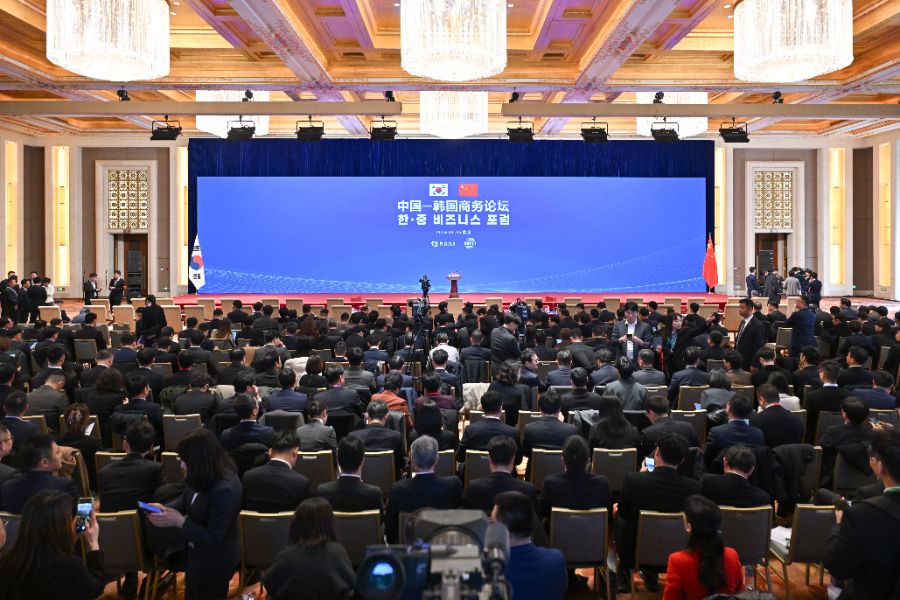
“好邻居金不换!” 李在明携韩商业天团访华 呼吁制造业创新合作
2 1 Shi Ji Jing Ji Bao Dao· 2026-01-05 23:14
Group 1 - The core message emphasizes the importance of China-Korea cooperation in industry innovation and stable supply chains to explore new development opportunities beyond their respective markets [1][5][12] - Since the establishment of diplomatic relations in 1992, significant achievements have been made in personnel exchanges, local cooperation, and economic trade, with bilateral trade increasing from $6.5 billion to $272.9 billion by 2024 [1][8][10] - The forum highlighted three main topics for discussion: manufacturing innovation, supply chain cooperation, and new markets for consumer goods, with over 400 attendees from both countries [2][9][12] Group 2 - The visit of the South Korean President, Lee Jae-myung, included a delegation of over 200 business representatives from major companies such as Samsung, SK Group, and Hyundai, indicating strong business interests in enhancing bilateral trade [2][8][9] - The signing of 15 cooperation documents in areas such as technology innovation, ecological environment, transportation, and economic cooperation signifies a commitment to deepening collaboration [2][9][10] - The focus on cultural and service industry cooperation is expected to expand, with increasing youth exchanges and popular travel experiences between the two countries [5][12][14]

“好邻居金不换!”李在明携韩商业天团访华 呼吁制造业创新合作
2 1 Shi Ji Jing Ji Bao Dao· 2026-01-05 15:50
Group 1: Economic Cooperation - The bilateral trade volume between China and South Korea has increased from $6.5 billion at the time of diplomatic relations in 1992 to $272.9 billion in 2024, with China being South Korea's largest trading partner and South Korea being China's second-largest trading partner [1][2] - The two countries aim to deepen cooperation in manufacturing innovation, supply chain collaboration, and explore new markets in consumer goods and services [2][5] - The ongoing negotiations for the second phase of the China-South Korea Free Trade Agreement (FTA) are expected to provide new momentum for corporate collaboration, particularly in emerging fields such as artificial intelligence, biopharmaceuticals, and green industries [5][6] Group 2: Cultural and Service Industry Collaboration - There is a growing interest in cultural and service industry cooperation, with popular travel experiences such as "Seoul Cultural Tours" and "K-Beauty Experiences" among Chinese youth, and "Shanghai Weekend Trips" favored by South Korean youth [6] - The collaboration in content industries, gaming, performances, and cultural platforms is seen as a vital link between manufacturing, consumer investment, and new market development [6] Group 3: Political Context and Future Outlook - The visit of South Korean President Yoon Suk-yeol to China is viewed as a significant diplomatic achievement, marking a renewed focus on strengthening bilateral relations [3][4] - The South Korean government emphasizes the importance of mutual respect and understanding in enhancing communication and cooperation with China [3] - The strategic partnership between China and South Korea is expected to evolve positively under the leadership of both countries, with a focus on economic stability and regional security [5][6]
“好邻居金不换!”李在明携韩商业天团访华,呼吁制造业创新合作
2 1 Shi Ji Jing Ji Bao Dao· 2026-01-05 13:48
Group 1: Economic Cooperation - The bilateral trade volume between China and South Korea has increased from $6.5 billion at the time of diplomatic relations in 1992 to $272.9 billion in 2024, with China being South Korea's largest trading partner [2] - The forum highlighted three main topics for discussion: manufacturing innovation, supply chain cooperation, and consumer goods market [3] - The two countries aim to deepen cooperation in emerging fields such as artificial intelligence, biopharmaceuticals, green industries, and the silver economy, as part of the ongoing negotiations for the second phase of the China-South Korea Free Trade Agreement [5] Group 2: Cultural and Service Industry Collaboration - There is a growing interest in cultural exchanges, with popular travel experiences like "Seoul Cultural Tours" and "K-Beauty Experiences" among Chinese youth, and "Shanghai Weekend Trips" favored by South Korean youth [6] - The collaboration in content industries, gaming, performances, and cultural platforms is expected to strengthen ties between manufacturing, consumer investment, and new market exploration [6] - Despite rising competition in certain industries, representatives believe that the strategic and mutual benefits of cooperation between the two countries remain unchanged [6] Group 3: Government Support and Future Outlook - The South Korean government is committed to enhancing cooperation with China to provide a favorable environment for businesses and expand cooperation channels [2][6] - The visit of President Yoon signifies a significant diplomatic achievement, aiming to restore comprehensive relations and plan for the future of bilateral ties over the next 30 years [3][4] - The emphasis on mutual respect and understanding in government communications is seen as crucial for the ongoing development of China-South Korea relations [4][5]

制造业创新迈向系统性跃迁
Xin Lang Cai Jing· 2025-12-21 22:46
Core Insights - The sales revenue of China's high-tech manufacturing industry increased by 11.1% from January to November this year, with integrated circuits and industrial mother machines growing by 19.3% and 11% respectively [1][2] - Traditional industry key tax source enterprises increased R&D investment by 12.3% year-on-year, indicating a surge in innovation vitality within the manufacturing sector [1] Group 1: Manufacturing Innovation Trends - China's manufacturing innovation is transitioning from fragmented breakthroughs to systematic leaps, focusing on deep restructuring across the entire production chain, innovation elements, and development cycles [1] - The competition in manufacturing must be systemic, with a focus on technology integration, resource allocation, and scenario innovation to gain an advantage in the new technological revolution and industrial transformation [1] Group 2: Technological and Scenario Integration - The integration of technology is deepening, with digital technology becoming a core element embedded in manufacturing processes, driving transformation and upgrades [2] - Manufacturing innovation is extending beyond workshops to encompass R&D design, supply chain management, and after-market services, enhancing industry resilience and giving rise to new business models like shared manufacturing and customized services [2] Group 3: Policy and Ecosystem Support - To foster a better innovation ecosystem, there is a need to strengthen digital support and address challenges such as data silos and inconsistent standards [2] - Policies should be enhanced to encourage participation in deep innovation areas like core algorithms and high-end equipment, while also promoting collaboration between academia and industry to expedite the transition of laboratory results to production lines [2]
苏州市“两岸两链”创新融合发展大会举行
Xin Hua Ri Bao· 2025-10-30 21:52
Group 1 - The "Cross-Strait Two Chains" Innovation and Integration Development Conference was held in Suzhou, emphasizing the importance of enhancing economic exchanges and cooperation between the mainland and Taiwan [1] - A total of 19 key investment projects from Taiwan were announced, with a cumulative amount of 20.632 billion yuan, predominantly in high-end manufacturing and new industries like chips and semiconductors, accounting for over 90% of the projects [1] - The conference featured discussions on cutting-edge fields such as artificial intelligence and manufacturing innovation, providing intellectual support for the integration of the two chains [1] Group 2 - Suzhou has a strong industrial foundation, vibrant innovation, and high openness, making it an attractive location for Taiwanese businesses, with over 14,400 approved Taiwanese enterprises and actual utilized investment reaching 38.629 billion USD, accounting for about 40% of the province's total [2] - From January to September this year, Taiwanese enterprises in Suzhou achieved an industrial output value of 718.45 billion yuan, representing a year-on-year growth of 4.5% [2]
我市出台制造业创新能力提升三年行动计划——锚定四大重点,镇江制造“竞速”创新赛道
Zhen Jiang Ri Bao· 2025-10-17 23:25
Core Viewpoint - The newly released "Zhenjiang Manufacturing Innovation Capability Improvement Three-Year Action Plan (2025-2027)" aims to enhance the city's manufacturing innovation development, addressing challenges in key technologies and efficiency in results transformation, while promoting an upgrade in the industrial chain and value chain [1][2]. Group 1: Goals and Objectives - By 2027, Zhenjiang aims for strategic emerging industries to account for 43% of industrial output, high-tech industries to reach 56%, and R&D investment intensity in large-scale industrial enterprises to increase to 2.2% [2]. - The plan includes the establishment of over 220 provincial enterprise technology centers and aims to include 110 products in the provincial "first set" category, as well as 200 new technologies and products in the provincial promotion directory [2]. Group 2: Key Tasks - The action plan focuses on four major tasks to address bottlenecks in the innovation process, employing a dual strategy of "attack and defense" [2]. - The "attack" strategy emphasizes breakthroughs in key technologies through market-oriented methods like "ranking and competition" to encourage advancements in core components and basic materials [2]. - The "defense" strategy aims at collaborative innovation and results transformation, promoting market applications of new products to convert good technologies into marketable products [2]. Group 3: Innovation Platforms and Talent - The plan emphasizes the importance of enhancing innovation platforms, with a focus on building provincial manufacturing innovation centers and creating public service platforms for SMEs to reduce innovation costs [3]. - Talent development is highlighted as a critical resource, with initiatives to attract high-level talent and implement training programs to foster collaboration between industry and academia [3]. Group 4: Expected Outcomes - The comprehensive implementation of the action plan is expected to lead to a more resilient, dynamic, and high-level manufacturing system in Zhenjiang, significantly enhancing corporate innovation capabilities and optimizing the innovation ecosystem [4].
中国制造业企业500强入围门槛再次提升
Ren Min Ri Bao· 2025-09-21 21:57
Core Insights - The threshold for entering the 2025 China Manufacturing Enterprises Top 500 list has increased to 17.365 billion yuan, up by 303 million yuan from the previous year [1] - The total revenue of the top 500 manufacturing enterprises reached 5.168 trillion yuan [1] - The top three companies on the list are China Petroleum & Chemical Corporation, China Baowu Steel Group, and Hengli Group [1] Innovation and R&D - The R&D intensity of the top 500 manufacturing enterprises is 2.45%, an increase of 0.03 percentage points from the previous year [1] - The number of effective patents held by these enterprises is 1.6632 million, with 803,800 being invention patents, representing increases of 11.34% and 12.07% respectively compared to the previous year [1] Industry Structure and Performance - Industries such as communication equipment manufacturing and computer & office equipment have seen average revenue growth exceeding 10% [1] - The semiconductor integrated circuit and panel manufacturing industries have experienced average profit growth of over 100% [1] Export Performance - The proportion of overseas revenue for the top 500 manufacturing enterprises has risen to 19.10%, an increase of 0.87 percentage points from the previous year [1]



事关免费学前教育、个人养老金、租房……9月新规来了
21世纪经济报道· 2025-08-31 11:10
Group 1 - The State Council issued opinions on gradually promoting free preschool education, starting from the autumn semester of 2025, which will exempt public kindergartens from charging care and education fees for children in their final year [2] - The implementation plan for personal consumption loan interest subsidy policy states that from September 1, 2025, to August 31, 2026, residents can enjoy interest subsidies on personal consumption loans used for consumption, excluding credit card transactions [4] - The notice regarding personal pension withdrawals, effective from September 1, introduces three new scenarios for pension withdrawals and enhances online service access through electronic social security cards and mobile apps [6] Group 2 - The new mandatory national standard for electric bicycles, effective from September 1, stipulates that electric bicycles must not exceed a maximum design speed of 25 km/h and that the total plastic mass used should not exceed 5.5% of the total vehicle mass [8] - The Supreme People's Court issued an interpretation regarding labor dispute cases, effective from September 1, stating that any agreement to not pay social insurance is invalid, regardless of whether it was negotiated or unilaterally promised by the employee [10] - The implementation of the "Identification Measures for AI-Generated Synthetic Content" from September 1 aims to help users identify false information and outlines the responsibilities of service providers regarding content labeling [12] Group 3 - The Administrative Division Code Management Measures will officially take effect on September 1, establishing rules for the creation and abolition of administrative division codes, which are reflected in the first six digits of personal ID numbers [14] - The Housing Rental Regulations will come into effect on September 15, mandating that rental properties must comply with safety and health standards, and stipulating conditions for the collection and return of security deposits [16] - The Rural Road Regulations, effective from September 15, require county-level transportation authorities to take effective measures against over-limit transportation on rural roads and allow for the participation of local residents in road maintenance through government service purchases [18] Group 4 - Starting September 1, Beijing and Hunan provinces will adjust their minimum wage standards, with Beijing's minimum wage set at no less than 14.6 yuan per hour and 2540 yuan per month, while Hunan's monthly minimum wage will be adjusted to 2200 yuan, 2000 yuan, and 1800 yuan for full-time workers [20] - From September 1, Sichuan Province will directly distribute maternity allowances to insured employees who meet the eligibility criteria, either by the employees themselves or their authorized representatives [22] - Guangdong Province will provide financial support for key projects in manufacturing innovation, quality enterprise cultivation, industrial intelligence application, and open-source ecosystem development, with individual projects eligible for up to 50 million yuan in subsidies, effective from September 1 until the end of 2027 [24]