医保省级统筹

Search documents
中国银河证券:看好2026年医药行业投资机会 推荐关注创新药、创新器械及医疗AI方向
智通财经网· 2026-03-20 03:35
Core Insights - The "14th Five-Year Plan" has significantly advanced the biopharmaceutical industry, with a notable increase in the number of approved innovative drugs, rising from 11 in 2015 to 92 in 2024, and a 42% share of domestic innovative drugs [1] - The "15th Five-Year Plan" positions biopharmaceuticals as a new pillar industry, emphasizing the need for a collaborative development mechanism among healthcare, medical insurance, and pharmaceuticals [1] - The healthcare sector is transitioning from a focus on system construction to a quality-driven approach, emphasizing collaborative governance and a health-centered service model [2] Healthcare Sector - The "15th Five-Year Plan" marks a critical phase for China's healthcare, shifting from scale expansion to a focus on quality and foundational strengthening [2] - The "Three Medical Linkages" strategy is evolving towards systematic collaborative governance, exemplified by the Sanming model [2] Medical Insurance Sector - The acceleration of provincial-level coordination in medical insurance is expected to enhance fund utilization efficiency and address structural issues within the insurance system [3] - The provincial coordination system aims to redistribute surplus funds from economically developed areas to support regions facing financial challenges, thereby addressing structural imbalances [3] Pharmaceutical Sector - The national policy framework is fostering original innovation and high-quality development in the pharmaceutical industry, with a record number of new drug approvals and increased global competitiveness [4] - The industry is witnessing a shift towards domestic alternatives in high-end medical devices and life sciences, alongside the integration of AI technology to enhance research and service capabilities [4]

中国银河证券:医保省级统筹提速 医药中长期投资新起点
Zhi Tong Cai Jing· 2026-03-12 01:49
Group 1 - The core viewpoint is that the rapid implementation of provincial-level medical insurance coordination policies aims to resolve structural contradictions in the medical insurance fund and activate over 5 trillion yuan in surplus funds, potentially leading to a recovery in the medical service and pharmaceutical sectors [1][2] - The recent deployment of provincial-level coordination policies includes discussions and guidelines from the State Council, emphasizing the importance of these policies in enhancing the efficiency of medical insurance fund usage and driving growth in the medical industry [2][3] - The provincial coordination system is expected to address structural issues within the medical insurance fund, redistributing surpluses from economically developed areas to support regions facing financial difficulties, thereby achieving a balance in risk-sharing [3][4] Group 2 - The transition from a "transfer fund" model to a "unified collection and expenditure" model is underway, with over 20 provinces accelerating this process, which is projected to lead to a return of double-digit growth in medical insurance expenditures [4][5] - The acceleration of medical insurance spending is anticipated to benefit the domestic healthcare industry, particularly in medical services, hospital-based pharmaceuticals, and innovative drug sectors, which are expected to see improved demand and financial performance [5]
中国银河证券:医保省级统筹或成医药中长期投资新起点 医疗服务、创新药等板块值得关注
智通财经网· 2026-03-11 06:38
Group 1 - The core viewpoint is that the acceleration of provincial coordination of medical insurance funds is expected to enhance the efficiency of fund utilization, potentially becoming a new starting point for investment in the pharmaceutical sector [1] - Recent policies on provincial coordination of medical insurance have been intensively deployed, with significant discussions and implementations scheduled for 2025 and 2026, indicating a strong governmental push towards improving the medical insurance system [1][2] - The medical insurance fund is a core component of China's pharmaceutical payment system, and its growth is highly correlated with the revenue growth of the pharmaceutical manufacturing industry, suggesting that an increase in medical insurance expenditure will positively impact the recovery of the healthcare sector [1] Group 2 - The provincial coordination system aims to address structural issues within the medical insurance fund, redistributing surpluses from economically developed areas to support regions facing financial difficulties, thereby revitalizing existing funds and reversing the trend of slowing expenditure growth [2] - Over 20 provinces are accelerating the transition to a "unified collection and expenditure" model, with several provinces already implementing this system, which is projected to lead to a compound annual growth rate (CAGR) of 10.4% in income and 13.4% in expenditure for the medical insurance fund from 2021 to 2035 [3] - The acceleration of medical insurance expenditure is expected to benefit the recovery of the domestic healthcare industry, particularly in medical services, hospital-based medical devices, diagnostics, and innovative drugs, which are anticipated to see increased demand and improved financial performance [4]
湖南推动基本医保省级统筹;向日葵遭证监会立案
2 1 Shi Ji Jing Ji Bao Dao· 2026-01-16 04:11
Policy Developments - Hunan Province has issued an implementation plan to promote provincial-level coordination of basic medical insurance, aiming to enhance the level of medical security and fund risk resistance by 2029 [1] Drug and Device Approvals - Zai Lab has received clinical trial approval for injectable ZGGS18 and ZG005 for use in advanced solid tumors, although this will not significantly impact the company's recent performance [2] - Jianfeng Group has voluntarily withdrawn its clinical trial application for "C2235 and C2235 tablets," with plans to resubmit after further research [3] Capital Markets - WuXi AppTec has made a conditional cash acquisition offer of HKD 4.00 per share for all shares of Dongyao Pharmaceutical, representing a premium of approximately 114.67% over the average closing price for the previous 30 trading days [4] - Yinuo Micro Pharmaceuticals has submitted a listing application to the Hong Kong Stock Exchange, with Citigroup and CICC as joint sponsors [5] Industry Developments - Over 11,000 designated medical institutions are equipped to purchase 105 new drugs added to the 2025 medical insurance catalog, with 6,537 being medical institutions and 4,592 retail pharmacies [6][7] - France has launched a roadmap for addressing national obesity issues, with goals to curb obesity growth, improve health conditions, enhance accessibility to personalized medical services, and support innovative care methods from 2026 to 2030 [8] Public Opinion Alerts - Sunflower has been investigated by the China Securities Regulatory Commission for alleged misleading statements in its restructuring plan, leading to a 20% drop in its stock price [9]



中央决定推进医保省级统筹
Xin Lang Cai Jing· 2025-12-31 16:58
Core Viewpoint - The acceleration of provincial-level medical insurance coordination in China by 2026 is expected to enhance the autonomy of insured individuals, improve fairness in treatment, and streamline administrative services, while also presenting challenges for medical institutions [1][3]. Group 1: Provincial-Level Coordination Implementation - The "14th Five-Year Plan" has achieved city-level coordination, and the "15th Five-Year Plan" aims to advance provincial-level coordination [3]. - Currently, 20 provinces have issued documents to promote provincial-level coordination [1]. - Two main models for provincial-level coordination are identified: unified collection and expenditure, and a more common provincial adjustment fund model [3][4]. Group 2: Impact on Insured Individuals - Provincial-level coordination will create a larger medical insurance fund pool, enhancing risk resistance and reducing disparities in treatment across the province [5]. - The implementation in Guizhou province has shown that unified policies can stabilize chronic disease coverage and improve emergency medical services [5]. - The elimination of policy barriers within provinces will reduce the need for patients to travel for care, thus decreasing the number of interprovincial medical visits [5][6]. Group 3: Effects on Medical Institutions - The shift to provincial-level coordination is expected to increase patient flow to larger hospitals, potentially squeezing the survival space of healthcare institutions in less developed areas [6][7]. - The "siphoning effect" of larger hospitals will necessitate stronger regulatory oversight of medical insurance [6]. - The balance between payment entities and service providers will continue to evolve, with a focus on managing the influx of patients to high-quality medical resources [6][7]. Group 4: Policy Adjustments and Challenges - The policy aims to unify treatment standards across regions while still considering local funding levels [7]. - Adjustments to payment ratios for interprovincial and intraprovincial medical services are being proposed to promote fairness [7].
中央决定推进医保省级统筹
第一财经· 2025-12-31 15:49
Core Viewpoint - The acceleration of provincial-level medical insurance coordination in China is expected to enhance the autonomy of insured individuals, improve fairness in treatment, and streamline administrative services, while also presenting challenges for medical institutions due to increased competition and regulatory demands [4][10]. Summary by Sections Provincial-Level Coordination Implementation - The "14th Five-Year Plan" has achieved city-level coordination of medical insurance, and the "15th Five-Year Plan" aims to promote provincial-level coordination [6][7]. - Currently, 20 provinces have issued documents to advance provincial-level coordination, with two main models: unified collection and expenditure, and provincial adjustment funds [7][8]. Impact on Insured Individuals - Provincial-level coordination will create a larger medical insurance fund pool, enhancing risk resistance and reducing disparities in treatment across the province [10][11]. - Patients will no longer face the classification of inter-provincial medical treatment within the same province, leading to reduced administrative burdens and improved access to healthcare services [11][12]. Effects on Medical Institutions - The shift to provincial-level coordination may exacerbate the "siphoning effect" towards larger hospitals, increasing the need for smaller medical institutions to enhance their capabilities [4][12]. - The regulatory environment for large hospitals will become stricter, especially with the integration of inter-provincial medical treatment into Diagnosis-Related Groups (DRG) payment systems [12]. Policy and Management Enhancements - The national medical insurance work conference emphasizes the need for optimized fund budget management and enhanced responsibilities at provincial and municipal levels [8]. - The introduction of risk adjustment mechanisms aims to balance the financial pressures across regions, particularly benefiting areas with lower funding capabilities [7][11].
中央决定推进医保省级统筹,2026年求医问药有哪些变化
Di Yi Cai Jing· 2025-12-31 12:46
Core Insights - The core viewpoint of the articles is that the acceleration of provincial-level medical insurance coordination in China by 2026 will lead to significant changes in the healthcare market structure, benefiting insured individuals while presenting challenges for healthcare institutions [1][2][4]. Group 1: Provincial-Level Coordination - The "14th Five-Year Plan" aims to achieve provincial-level coordination of basic medical insurance, building on the city-level coordination established during the "13th Five-Year Plan" [2]. - By 2026, the implementation of provincial-level coordination is expected to enhance the risk resistance capability of the medical insurance fund and improve governance levels [2][3]. - Currently, 20 provinces have initiated policies to promote provincial-level coordination, with two main models: unified collection and expenditure, and a provincial adjustment fund model [2][3]. Group 2: Impact on Insured Individuals - Provincial-level coordination will create a larger medical insurance fund pool, enhancing risk resistance and fairness in treatment, as intra-provincial medical services will no longer be considered as cross-regional [4][5]. - The unification of medical insurance policies within provinces is expected to reduce the need for patients to travel for services, thereby decreasing the number of inter-regional medical visits and fund transfers [5][6]. Group 3: Implications for Healthcare Institutions - The shift to provincial-level coordination may intensify the "siphoning effect" towards larger hospitals, as patients are likely to prefer higher-quality medical institutions within their provinces [5][6]. - Healthcare institutions in less developed areas may face increased pressure, necessitating improvements in their capabilities to compete with larger hospitals [5][6]. - The regulatory environment for large hospitals is expected to tighten, particularly with the inclusion of inter-regional medical services into Diagnosis-Related Groups (DRG) payment systems [6].
个人账户资金转移可“即时到账”
Xin Lang Cai Jing· 2025-12-28 19:25
Core Viewpoint - Guizhou Province is implementing three new smart and convenient measures to enhance the basic medical insurance provincial coordination, focusing on "more data running, less running for the public" [1][2]. Group 1: Smart Medical Insurance Services - The province is exploring the introduction of artificial intelligence to enable video-based processing of certain medical insurance services, enhancing service convenience and user experience [1]. - The efficiency of personal account fund transfers has significantly improved, with offline applications being processed instantly and online applications completed within one working day after data settlement [1]. Group 2: Optimization of Insurance Relationship Transfer - A new model for transferring medical insurance relationships within the province eliminates the need for manual transfer procedures, allowing for automatic accumulation of payment years when transferring basic medical insurance relationships [1]. - This new approach simplifies the process for insured individuals, making it easier to manage their medical insurance relationships [1]. Group 3: Expansion of Outpatient Chronic Disease Services - The province is expanding the "one hospital handles all" service for outpatient chronic diseases, allowing insured patients to manage their conditions through both online and offline channels [2]. - Future plans include increasing the range of chronic disease types covered under this service, facilitating smoother and more convenient reimbursement for patients [2].
20省发文推进医保省级统筹 医药统一大市场建设加速|数读“十四五”
Di Yi Cai Jing· 2025-12-18 14:40
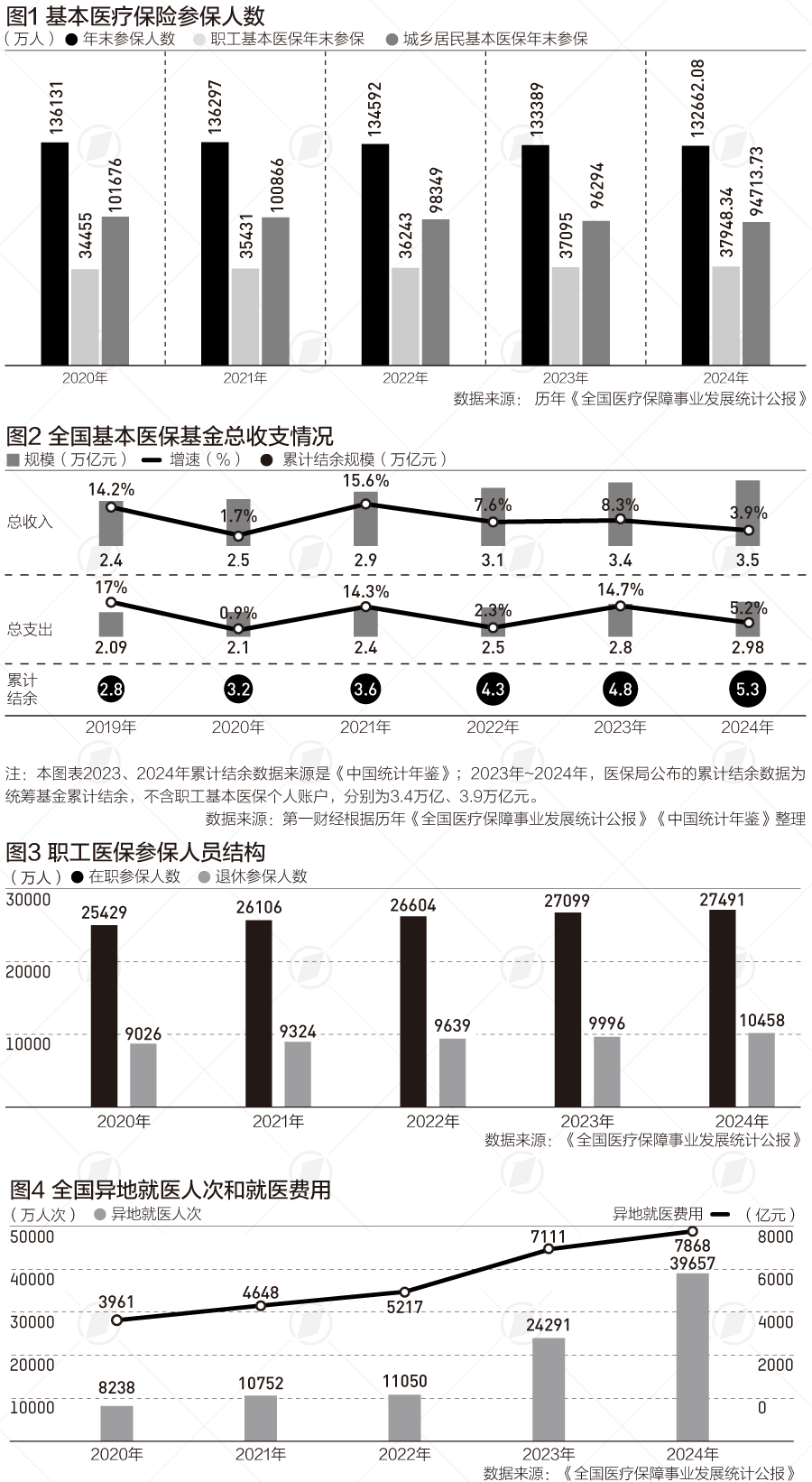
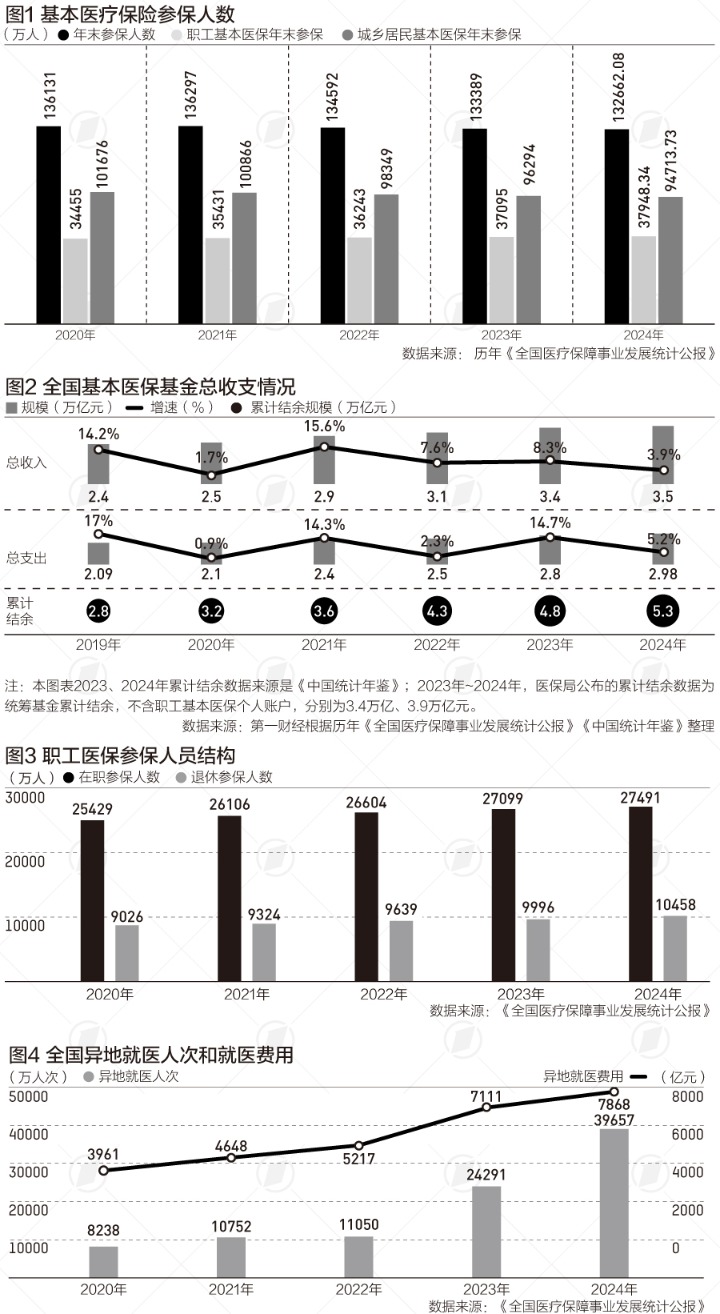
Core Insights - The article discusses the ongoing reforms in China's medical insurance system during the "14th Five-Year Plan" period, highlighting the release of institutional dividends that enhance public welfare and upgrade the pharmaceutical industry [1][2] Group 1: Medical Insurance Reforms - The reforms include direct settlement for cross-regional medical treatment, faster inclusion of innovative drugs into insurance, and improved access to quality and affordable medicines [1] - The national medical insurance work conference emphasizes the need to advance reforms and promote technological innovation to support healthcare and the pharmaceutical industry [1] Group 2: Financial Stability of Medical Insurance - Over the past five years, the medical insurance fund has maintained stability, with total expenditures exceeding 13 trillion yuan, and the basic medical insurance coverage rate remaining stable at 95% [2] - By the end of 2024, the total income of the basic medical insurance fund is projected to be 3.49 trillion yuan, with total expenditures at 2.98 trillion yuan, resulting in a current balance of 463.92 billion yuan [2] Group 3: Aging Population Challenges - The aging population poses significant challenges to the medical insurance system, with the number of retired employees in the employee medical insurance system exceeding 100 million for the first time in 2024 [7] - The ratio of active to retired participants in the employee medical insurance system has been declining, indicating increased financial pressure on the insurance fund [7][8] Group 4: Provincial Coordination of Medical Insurance - The push for provincial-level coordination of medical insurance is seen as a crucial step in enhancing the insurance system's mutual assistance capabilities and risk resistance [8] - As of now, 20 provinces have issued documents to promote provincial-level coordination, which is expected to improve the fairness and efficiency of medical insurance [8][9] Group 5: National Unified Medical Market - The central government aims to accelerate the construction of a national unified market, particularly in the medical sector, to enhance resource allocation efficiency [10] - Over the past five years, significant progress has been made in cross-provincial direct settlement services, benefiting over 600 million people and reducing out-of-pocket expenses by over 660 billion yuan [11]
20省发文推进医保省级统筹,医药统一大市场建设加速|数读“十四五”
Di Yi Cai Jing· 2025-12-18 13:44
Core Insights - The article discusses the ongoing reforms in China's medical insurance system during the 14th Five-Year Plan period, highlighting the release of institutional dividends that enhance public welfare and upgrade the pharmaceutical industry [1][2]. Group 1: Medical Insurance Reform - The current challenge for China's medical insurance system is balancing the fund's income and expenditure amid an aging population, particularly in regions with high elderly dependency ratios [1][2]. - The national medical insurance work conference emphasizes advancing medical insurance reforms and promoting technological innovation to support healthcare and the pharmaceutical industry [1][2]. Group 2: Fund Performance and Coverage - Over the past five years, the medical insurance fund has maintained stability, with total expenditures exceeding 13 trillion yuan, and the basic medical insurance coverage rate stabilizing at 95% [2]. - By the end of 2024, the total number of basic medical insurance participants is projected to reach approximately 1.33 billion, with total fund income of about 3.49 trillion yuan and expenditures of around 2.98 trillion yuan [2]. Group 3: Aging Population Impact - The number of retirees under the employee medical insurance system is expected to exceed 100 million in 2024, with medical expenses surpassing 1 trillion yuan [7]. - The ratio of employed to retired participants in the employee medical insurance system has been declining, indicating increased pressure on the fund [7][8]. Group 4: Provincial Coordination - The push for provincial-level coordination in medical insurance is seen as a significant institutional advancement, aimed at enhancing the fund's risk resistance and governance [8][9]. - Currently, 20 provinces have issued documents to promote provincial-level coordination, which is expected to improve the fairness and efficiency of medical insurance [8][9]. Group 5: National Unified Market - The central government aims to accelerate the construction of a unified national market, particularly in the pharmaceutical sector, to enhance resource allocation efficiency [13]. - The establishment of a unified medical insurance treatment list and the promotion of a standardized framework for basic medical insurance are key steps in this direction [13][14]. Group 6: Personal Account Utilization - The expansion of personal account utilization for employee medical insurance to include close relatives has been implemented, with over 7.8 billion instances of account sharing recorded [14]. - A national unified medical insurance information platform has been established, facilitating over 280 million daily settlements and significantly reducing out-of-pocket expenses for patients [14].