半导体上行周期

Search documents
星星之火,全面燎原!芯片涨价潮蔓延,半导体设备ETF(561980)盘中拉涨1.61%!
Sou Hu Cai Jing· 2026-01-28 02:35
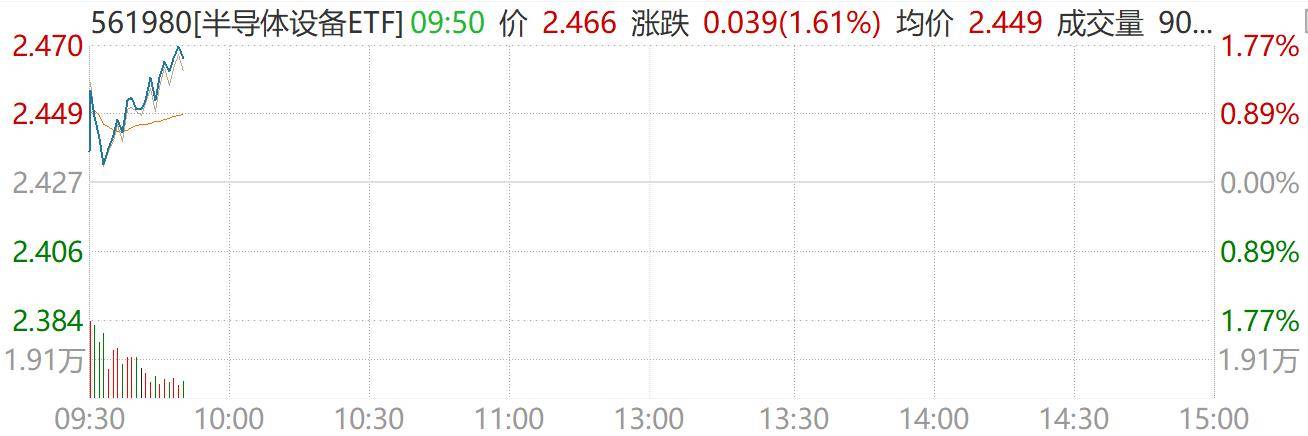
Core Viewpoint - The semiconductor equipment sector is experiencing a strong rally due to a price increase across the supply chain, with significant gains in related stocks and ETFs, indicating robust demand and investment opportunities in the semiconductor industry [1][2]. Group 1: Market Performance - The semiconductor equipment ETF (561980) saw a 1.61% increase, with key stocks like Zhongwei Company and SMIC rising over 2%, and Tuojing Technology increasing over 5% [1]. - In the last 10 trading days, the semiconductor equipment ETF has attracted over 460 million yuan in net inflows, bringing its total size to over 3.6 billion yuan [1]. - The index tracking the semiconductor equipment sector has recorded a maximum increase of over 112% since 2025, outperforming similar indices in the technology sector [2]. Group 2: Price Increases and Cost Pressures - Multiple chip design companies have issued price increase notices, confirming that the positive sentiment in the semiconductor industry is spreading throughout the supply chain [1]. - Zhongwei Semiconductor announced a price increase of 15%-50% for products like MCU and Nor Flash due to rising packaging costs and extended delivery cycles [1]. - Guokewai announced a price increase of 40%-80% for KGD products, highlighting the dual pressures of rising storage chip prices and increased advanced packaging costs [1]. Group 3: Industry Dynamics - The current chip price increase cycle was initiated by a surge in AI demand, leading to tight supply and rising prices for storage chips like DRAM and NAND [2]. - The price adjustments from chip design companies confirm a key industry logic: the prosperity of the storage chip sector is translating into demand for upstream equipment and materials [2]. - To meet strong demand and manage costs, chip manufacturers and packaging firms must expand capital expenditures and upgrade or add production capacity, which will ultimately lead to increased orders for semiconductor equipment across the entire supply chain [2]. Group 4: ETF Composition - The semiconductor equipment ETF (561980) tracks the CSI Semiconductor Index, heavily weighted towards leading companies like Zhongwei Company and Northern Huachuang, with the top ten holdings accounting for approximately 75% of the index [2]. - The ETF's focus on leading companies and comprehensive coverage of equipment, materials, and design sectors provides it with higher elasticity compared to similar indices [2].




新一轮半导体上行周期已至,半导体产业ETF(159582)强势拉升涨超2%
Xin Lang Cai Jing· 2025-11-28 02:39
Core Insights - The semiconductor industry is experiencing a recovery, with the semiconductor industry ETF rising by 12.01% over the past three months as of November 27, 2025 [1] - Google is shifting its strategy by marketing its Tensor Processing Units (TPUs) to clients, with Meta considering a significant investment in TPUs for data center construction, which could positively impact Google's sales and profits [1] - The semiconductor sector is expected to benefit from a new upcycle driven by AI demand, healthy inventory levels, and domestic capital expenditure [1] Industry Performance - As of November 28, 2025, the CSI Semiconductor Industry Index increased by 2.25%, with notable gains from stocks such as Jingyi Equipment (up 8.81%) and Tuojing Technology (up 6.74%) [1] - The semiconductor industry ETF (159582) reported a price of 2.07 yuan, with a trading volume of 13.78 million yuan and a turnover rate of 3.85% [1] - The top ten weighted stocks in the CSI Semiconductor Industry Index account for 78.04% of the index, including companies like Zhongwei Company and North Huachuang [2]
半导体再掀涨停潮!“上行周期”成多家公募共识
券商中国· 2025-09-24 23:38
Core Viewpoint - The semiconductor industry is experiencing a significant rally, driven by strong market sentiment and positive developments in the sector, indicating a shift towards more certain investment directions [1][6][8]. Market Performance - On September 24, major A-share indices rose, with the Shanghai Composite Index up 0.83% and the Shenzhen Component Index up 1.8%. The ChiNext Index reached a three-year high, and over 4,400 stocks in the market saw gains [3]. - The semiconductor sector led the market surge, with over 20 stocks hitting the daily limit, including Jiangfeng Electronics and Changchuan Technology, both up 20% [3][5]. Fund Activity - Jiangfeng Electronics was favored by public funds, with a holding ratio of 16.56% among 308 fund products as of the end of Q2 [3][5]. - Several ETFs related to semiconductors saw significant gains, with the GT Fund's semiconductor ETF achieving a record daily trading volume of 1.987 billion yuan [5]. Positive Industry Developments - Goldman Sachs raised the 12-month target price for SMIC's H-shares from 73.1 HKD to 83.5 HKD, citing strong long-term demand for AI chips in China [6]. - Alibaba's CEO announced plans to invest 380 billion yuan in cloud computing and AI infrastructure over the next three years, indicating a substantial increase in demand for semiconductor-related products [7]. Industry Trends - The semiconductor equipment and materials sector is expected to see a long-term increase in domestic production rates, benefiting companies in this space [8]. - The current semiconductor industry is entering a "second upcycle," with a focus on identifying high-quality companies that can sustain growth through market fluctuations [8].

芯片主题ETF迎大丰收产业周期上行成基金共识
Zheng Quan Shi Bao· 2025-09-24 18:26
Core Viewpoint - The semiconductor industry is experiencing a significant rally, driven by strong market sentiment and favorable industry developments, leading to substantial gains in related ETFs and active equity funds [1][2][3] Group 1: Market Performance - On September 24, A-shares saw all major indices rise, with the Shanghai Composite Index up 0.83% and the Shenzhen Component Index up 1.8%, while the ChiNext Index reached a three-year high [1] - The semiconductor sector led the market surge, with over 20 stocks hitting the daily limit up, including Chengbang Co., Zhangjiang Hi-Tech, and Tongfu Microelectronics [1][2] - Several ETFs related to the semiconductor industry experienced significant trading volumes, with the Guotai Fund's semiconductor ETF achieving a record daily trading volume of 1.987 billion yuan [2] Group 2: Fund Performance - Public funds have shown strong interest in semiconductor stocks, with Jiangfeng Electronics seeing a 20% increase and being held by 308 fund products, representing a 16.56% holding ratio [2] - Other companies with over 10% gains, such as Jiewa Technology, had a fund holding ratio of 33.75% as of the end of Q2 [2] - Multiple semiconductor ETFs closed with gains exceeding 9%, indicating robust investor interest in the sector [2] Group 3: Industry Catalysts - The semiconductor industry is benefiting from a surge in demand for AI chips, with Goldman Sachs raising the target price for SMIC's H-shares from 73.1 HKD to 83.5 HKD, citing a clearer long-term demand outlook [3] - Alibaba's CEO announced plans to invest 380 billion yuan in cloud computing and AI infrastructure over the next three years, further driving demand for semiconductor products [3][4] Group 4: Long-term Trends - The semiconductor equipment and materials sector is expected to see a long-term increase in domestic production rates, positively impacting company performance [5] - The semiconductor industry is entering a second upward cycle after experiencing a downturn, with a focus on identifying high-quality companies that can sustain growth [5][6] - Investment strategies should prioritize companies demonstrating market share growth and technological advancements in design, packaging, materials, and equipment sectors [5]
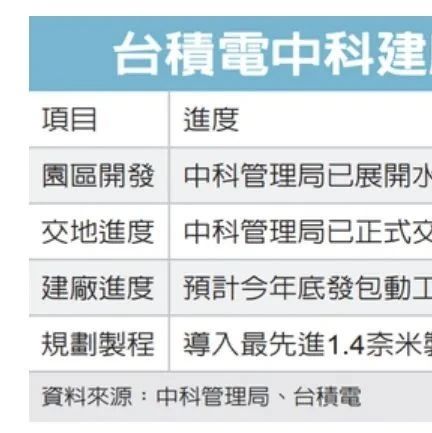
台积电2nm遭哄抢,1.4nm披露最新进展
半导体行业观察· 2025-07-19 03:21
Core Viewpoint - TSMC's 2nm technology is experiencing unprecedented demand, with significant implications for the semiconductor industry and TSMC's revenue growth [2][3]. Group 1: TSMC's 2nm Technology - TSMC is set to mass-produce 2nm chips in H2 2024, which is expected to drive approximately NT$73 trillion in global product value over the next five years [2]. - The anticipated revenue for TSMC in 2024 is NT$2.8943 trillion, a 2.79 times increase from NT$762.8 billion in 2014, with a gross margin rising from 49.5% to 56.1% [3]. - Major clients such as AMD, MediaTek, Qualcomm, Microsoft, and Meta are actively pursuing 2nm technology for high-end products, indicating strong market interest [2][3]. Group 2: Future Developments - TSMC plans to build four 1.4nm wafer fabs in the Zhongke Phase II park, with the first expected to begin risk production by the end of 2027 and mass production in H2 2028 [4][5]. - The initial monthly production capacity for the 1.4nm process is projected to be around 50,000 wafers [6]. - The Zhongke Phase II expansion will also accommodate other semiconductor-related companies, enhancing the local supply chain ecosystem [8].