AI需求爆发

Search documents
预警!2026 半导体行情,或将颠覆认知
是说芯语· 2026-03-22 08:14
Core Viewpoint - The semiconductor industry is expected to experience significant price increases and shortages by 2026, driven by supply chain constraints and rising demand, particularly in AI applications [1][14]. Group 1: Material Shortages and Price Increases - Silicon oxide is facing a supply gap of 40%, with a shortage of 1.5 million wafers this year and prices increasing by over 50%, expected to remain in short supply until 2028 [4][5]. - Molybdenum, essential for semiconductor targets, has seen an 80% price increase due to a shortage of 12,000 tons, with expectations of continued shortages until 2027 [6][7]. - Photoresists are experiencing severe supply constraints, with a shortage of 12,000 tons this year and prices doubling, projected to worsen with a 15,000-ton shortage next year [8][9]. - High-end electronic fabrics are in high demand, with a shortage of 50% and prices doubling, expected to last until 2028 [10]. - High Bandwidth Memory (HBM) has been completely sold out for the year, with prices doubling and a 60% supply gap due to high demand from AI chips [11][12]. - Silicon photonic wafers are facing a 40% price increase and a shortage of 800,000 wafers, with supply issues expected to persist until 2027 [13]. Group 2: Market Dynamics and Price Trends - The current price increases are attributed to a combination of raw material shortages, geopolitical factors, and surging AI demand, indicating a significant shift in the market rather than temporary fluctuations [14]. - Major companies like Texas Instruments and Infineon have announced price hikes of up to 85% starting April 1, with domestic firms also increasing prices by 10%-20%, and some up to 80% [15].


聚辰股份申请港交所主板上市,打造A+H双融资平台
Jing Ji Guan Cha Wang· 2026-02-13 02:21
Group 1 - The core viewpoint is that Juchen Technology has submitted its mainboard listing application to the Hong Kong Stock Exchange, aiming to create an A+H dual financing platform to seize opportunities in the storage industry, which may enhance the company's valuation expectations and liquidity attention [1] - The CEO indicated that the demand for DDR5 SPD chips is in a ramp-up phase, with significant volume expected in Q3 and Q4 of 2026, and the company is collaborating with Samsung Electronics to advance VPD chip design verification, expanding into the AI server and high-performance computing markets [1] Group 2 - The company's performance continues to grow, with operating revenue of 933 million yuan for the first three quarters of 2025, a year-on-year increase of 21.29%, and an adjusted net profit of 301 million yuan, up 25.9% year-on-year [2] - There is a structural improvement in profitability, with gross margin rising from 46.6% in 2023 to 59.8% in the first three quarters of 2025, and net margin increasing from 20.1% to 32.3% during the same period [2] - Growth drivers are primarily from the demand for SPD chips driven by servers and AI infrastructure, as well as the trend of domestic production of automotive-grade chips, although there is a concentration risk with the top five customers accounting for 59.3% of revenue in the first three quarters of 2025 [2] Group 3 - In the recent stock performance, Juchen Technology's stock price fluctuated by 0.48% over the last seven trading days, with a closing price of 149.22 yuan on February 12, 2026, reflecting a single-day increase of 0.72% [3] - The stock has seen a cumulative increase of 18.83% year-to-date, with a current price-to-earnings ratio (TTM) of 59.23, indicating market attention on the high prosperity cycle of storage chips [3] Group 4 - Industry analysis suggests that Juchen Technology benefits from the DDR5 technology iteration and the explosion of AI demand during the storage super cycle, with the SPD chip business being a core growth engine [4] - However, institutions like Goldman Sachs warn that rising storage prices may suppress consumer electronics demand, predicting a potential decline of 6%-10% in global smartphone shipments in 2026, which could pressure some of the company's consumer electronics chip business [4]

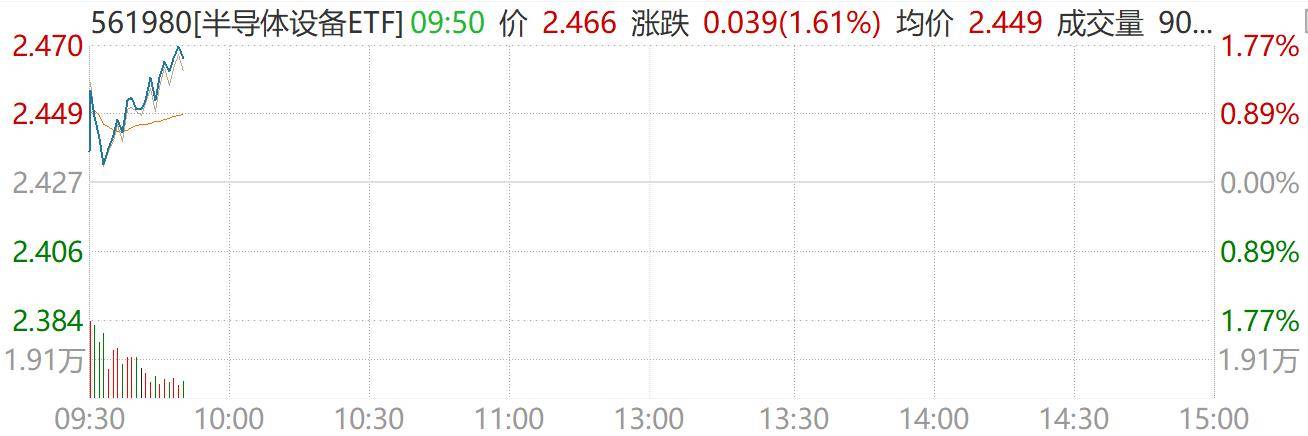
星星之火,全面燎原!芯片涨价潮蔓延,半导体设备ETF(561980)盘中拉涨1.61%!
Sou Hu Cai Jing· 2026-01-28 02:35
Core Viewpoint - The semiconductor equipment sector is experiencing a strong rally due to a price increase across the supply chain, with significant gains in related stocks and ETFs, indicating robust demand and investment opportunities in the semiconductor industry [1][2]. Group 1: Market Performance - The semiconductor equipment ETF (561980) saw a 1.61% increase, with key stocks like Zhongwei Company and SMIC rising over 2%, and Tuojing Technology increasing over 5% [1]. - In the last 10 trading days, the semiconductor equipment ETF has attracted over 460 million yuan in net inflows, bringing its total size to over 3.6 billion yuan [1]. - The index tracking the semiconductor equipment sector has recorded a maximum increase of over 112% since 2025, outperforming similar indices in the technology sector [2]. Group 2: Price Increases and Cost Pressures - Multiple chip design companies have issued price increase notices, confirming that the positive sentiment in the semiconductor industry is spreading throughout the supply chain [1]. - Zhongwei Semiconductor announced a price increase of 15%-50% for products like MCU and Nor Flash due to rising packaging costs and extended delivery cycles [1]. - Guokewai announced a price increase of 40%-80% for KGD products, highlighting the dual pressures of rising storage chip prices and increased advanced packaging costs [1]. Group 3: Industry Dynamics - The current chip price increase cycle was initiated by a surge in AI demand, leading to tight supply and rising prices for storage chips like DRAM and NAND [2]. - The price adjustments from chip design companies confirm a key industry logic: the prosperity of the storage chip sector is translating into demand for upstream equipment and materials [2]. - To meet strong demand and manage costs, chip manufacturers and packaging firms must expand capital expenditures and upgrade or add production capacity, which will ultimately lead to increased orders for semiconductor equipment across the entire supply chain [2]. Group 4: ETF Composition - The semiconductor equipment ETF (561980) tracks the CSI Semiconductor Index, heavily weighted towards leading companies like Zhongwei Company and Northern Huachuang, with the top ten holdings accounting for approximately 75% of the index [2]. - The ETF's focus on leading companies and comprehensive coverage of equipment, materials, and design sectors provides it with higher elasticity compared to similar indices [2].




存储芯片超级周期爆发!气派科技20CM涨停,国内两大存储芯片巨头宣布涨价,存储芯片的供应紧张局面可能持续至2027年甚至2028年
Jin Rong Jie· 2026-01-28 01:53
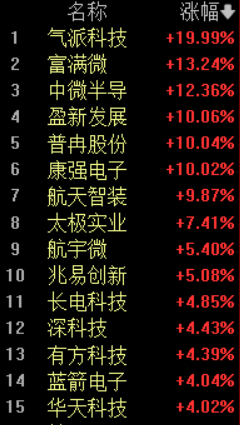
Core Viewpoint - The storage chip sector is experiencing a strong rally driven by a super cycle, supported by surging AI demand and domestic substitution, leading to significant price increases and robust performance across the industry [2][3]. Market Performance - Notable stocks in the storage chip sector include: - Qipai Technology: +19.99% - Zhongwei Semiconductor: +12.36% - Yingxin Development: +10.06% - Puran Shares: +10.04% - Kangqiang Electronics: +10.02% [2]. Industry Dynamics - The storage chip market is expected to maintain a tight supply until at least 2027, with AI demand outpacing capacity expansion. Price increases are anticipated to continue, with significant hikes already observed in contracts with major companies like Samsung and SK Hynix [3][4]. - Domestic companies such as Zhongwei Semiconductor and Guokewai have announced price increases ranging from 15% to 100% for various products due to rising costs and supply constraints [3]. Future Projections - The global storage chip market value is projected to reach $842.7 billion by 2027, with semiconductor equipment sales expected to exceed $150 billion, positioning China as the largest market [4]. - The expansion plans of major players like Micron are likely to stimulate demand for upstream semiconductor equipment, benefiting domestic suppliers [4]. Sector Opportunities - Storage chip design firms are set to benefit from the price surge, with AI-driven demand for high-end storage driving revenue growth [5]. - The storage testing and packaging sector will see increased order volumes and pricing due to the expansion of domestic and international storage manufacturers [5]. - The demand for high-capacity storage modules is expected to rise significantly, providing opportunities for domestic manufacturers amid the trend of domestic substitution [5]. - The expansion in storage chip production will boost demand for upstream materials and equipment, offering growth prospects for domestic suppliers in these segments [5].



国产第一、全球第四,巨亏400亿
Xin Lang Cai Jing· 2026-01-19 03:53
Core Viewpoint - The DRAM market, crucial for devices like smartphones and computers, is dominated by international players, but Chinese company Changxin Technology has emerged as a significant competitor, marking a breakthrough in China's semiconductor industry [1][20]. Group 1: Market Overview - DRAM, or Dynamic Random Access Memory, is a key component that affects device performance and multitasking capabilities [1]. - The global DRAM market is projected to reach $97.6 billion (approximately 680 billion yuan) in 2024, accounting for about 59% of the overall storage chip market [3][23]. - Samsung, SK Hynix, and Micron collectively hold over 90% of the global market share, maintaining a dominant position for over a decade [1][3]. Group 2: Changxin Technology's Development - Changxin Technology, established in a push for semiconductor localization, began mass production of its first DRAM chip in 2019 and has since expanded its product offerings [5][27]. - The company has secured significant clients, including Alibaba Cloud, ByteDance, Tencent, Lenovo, and Xiaomi, and anticipates revenues between 55 billion to 58 billion yuan by 2025 [1][21]. - After eight rounds of financing, Changxin's valuation has exceeded 150 billion yuan, and it plans to raise 29.5 billion yuan through an IPO, potentially becoming the second-largest financing in the history of the Sci-Tech Innovation Board [21][28]. Group 3: Financial Performance - From 2022 to 2024, Changxin's main business revenue is expected to grow at a compound annual growth rate of 72.04%, increasing from 8.287 billion yuan in 2022 to 24.178 billion yuan in 2024 [28]. - By the first three quarters of 2025, the company reported revenues of 32.084 billion yuan, reflecting a year-on-year growth of 97.79% [28]. Group 4: Competitive Landscape - Despite being the fourth largest globally, Changxin's market share of 3.97% is significantly lower than the leading firms, indicating limited bargaining power and market influence [10][29]. - In contrast, Samsung, SK Hynix, and Micron are projected to generate revenues of $13.75 billion, $13.5 billion, and $10.65 billion respectively in Q3 2025, while Changxin's revenue is estimated at 16.646 billion yuan (approximately $2.387 billion) [10][29]. Group 5: Technological Challenges - Changxin's products are approaching international standards, with recent releases achieving transmission speeds of up to 8000 Mbps and capacities of 24 Gb for DDR5 [11][30]. - However, the company lags in process technology, currently producing at a 17nm level compared to the 10nm advancements of its competitors, which affects performance metrics [11][31]. - High Bandwidth Memory (HBM) remains a critical bottleneck for Changxin, as it lacks experience in this advanced technology area, which is essential for high-end applications [12][32]. Group 6: Market Dynamics and Future Outlook - The current surge in AI demand has created a global shortage of storage chips, presenting an opportunity for Changxin to expand its market presence [14][33]. - The company projects revenues to exceed 55 billion yuan for the previous year and aims for profitability by 2026 or 2027, contingent on the DRAM industry remaining in an upward cycle [34]. - The cyclical nature of the DRAM industry poses risks, as price fluctuations can significantly impact profitability, especially for companies in a growth phase like Changxin [15][19].
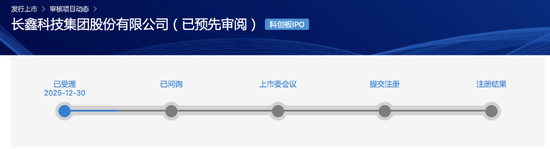
295亿!巨无霸IPO来了!已预审两轮,阿里腾讯小米入股
Xin Lang Cai Jing· 2025-12-31 08:35
Company Overview - Changxin Technology, a leading DRAM manufacturer in China, has officially received acceptance for its IPO on the Sci-Tech Innovation Board, aiming to raise 29.5 billion yuan [1][14] - The company is the first to be accepted under the pre-review IPO project on the Sci-Tech Innovation Board, having completed a three-month guidance period [1][10] Financial Performance - From 2022 to 2025, Changxin Technology's revenue is projected to grow significantly, with figures of 8.287 billion yuan, 9.087 billion yuan, 24.178 billion yuan, and 15.438 billion yuan for each respective year [6][17] - Cumulative revenue from 2022 to September 2025 is expected to reach 73.636 billion yuan, with a compound annual growth rate of 72.04% for main business income from 2022 to 2024 [6][17] - Despite revenue growth, the company has incurred substantial losses, totaling 40.857 billion yuan by mid-2023, with losses of 5.28 billion yuan reported in the first nine months of 2023 [7][18] Market Position - According to Omdia, Changxin Technology ranks as the largest DRAM manufacturer in China and the fourth globally, but still lags behind the top three international players: Samsung, SK Hynix, and Micron, which collectively hold 94.27% of the market share [3][15] - The company's market share is projected to increase to 3.97% by the second quarter of 2025 [3][15] Industry Trends - The global storage industry is entering a "super cycle" driven by surging AI demand and supply-side contractions, leading to a dual explosion of performance and capital for storage chain enterprises [4][15] - A DRAM supply shortage is expected to persist until at least 2028, with major firms like SK Hynix warning of ongoing tightness in supply [4][15] Future Outlook - Changxin Technology anticipates a turnaround in profitability in 2025, projecting a net profit of 2 billion to 3.5 billion yuan, with a potential net loss of 1.6 billion to 600 million yuan for the year [8][19] - The company aims to enhance its production capacity and competitiveness through the funds raised from the IPO, focusing on technology upgrades and cost reduction [5][16] Corporate Structure - Changxin Technology operates under an IDM (Integrated Device Manufacturer) model and has a diverse product range, including DRAM wafers, chips, and modules, covering DDR and LPDDR series [5][16] - The company has no controlling shareholder, with significant stakes held by various investors, including state funds and private equity [12][23]