博雅教育

Search documents
对话《优秀的绵羊》作者:精英教育为什么变得更糟糕了 | Edu指南专访
3 6 Ke· 2025-05-26 00:33
Group 1 - The core argument of the article revolves around the critique of elite education, highlighting that it produces intelligent individuals lacking in self-awareness and personal fulfillment [5][6][21] - The author, William Deresiewicz, emphasizes that the situation regarding elite education has worsened over the past decade, with acceptance rates at top universities like Stanford and Harvard dropping from approximately 7-8% to around 4% [6][7] - The impact of social media and the COVID-19 pandemic on students' mental health is discussed, indicating that these factors have exacerbated issues related to anxiety, loneliness, and self-worth among young people [7][8] Group 2 - Deresiewicz argues that students need unstructured time to explore their interests and passions, which is essential for developing a sense of self and understanding what is truly important to them [9][10] - The article discusses the importance of allowing young people to make choices and learn from their mistakes, suggesting that this process is crucial for personal growth and developing a deeper understanding of life [15][19] - The author critiques the current educational system for prioritizing utilitarian outcomes over meaningful experiences, which leads to a lack of fulfillment and a sense of disconnection among students [22][23] Group 3 - The discussion includes the role of humanities and liberal arts in education, arguing that these fields are vital for exploring human meaning and purpose, and should not be diminished in favor of more practical disciplines [24][26] - Deresiewicz highlights the increasing value of human skills in the age of AI, suggesting that emotional intelligence, creativity, and interpersonal skills are irreplaceable and essential for future success [25][26] - The article concludes with a call for a reevaluation of educational priorities, advocating for a balance between practical skills and the exploration of human experience and values [22][24]

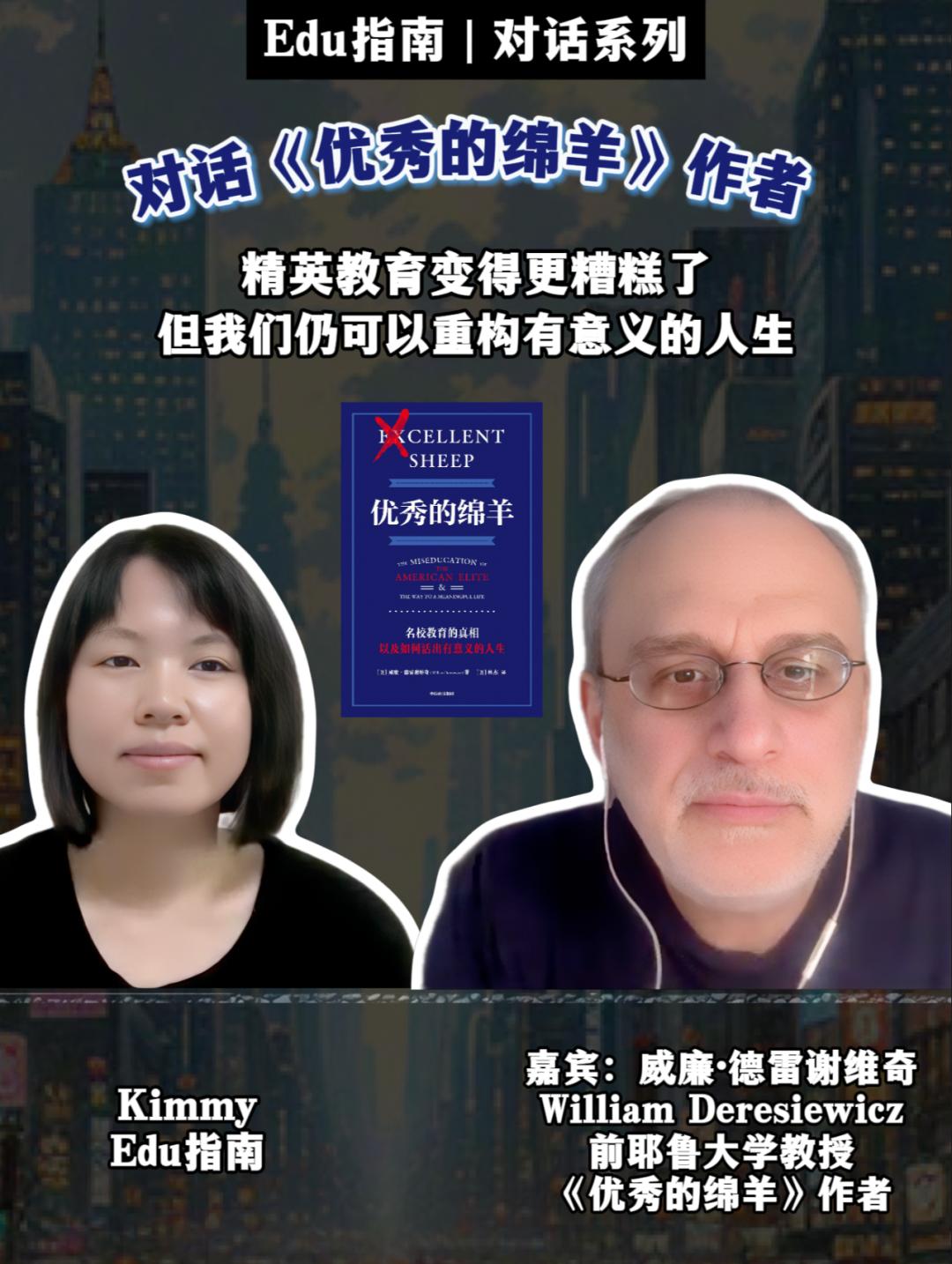
未来10年,文科会越来越重要|专访《优秀的绵羊》作者德雷谢维奇
36氪· 2025-05-17 09:13
Core Viewpoint - The article discusses the increasing pressure and anxiety faced by young people in a competitive job market, particularly in elite educational systems that prioritize certain fields over others, leading to a sense of existential crisis among graduates [2][4][6]. Group 1: Educational System and Its Impact - The elite education system is criticized for producing "excellent sheep" who are compliant but lack critical thinking and a sense of purpose, resulting in anxiety and a lack of curiosity among top graduates [4][6]. - The phenomenon of degree inflation is highlighted, where the number of bachelor's degrees awarded in the U.S. increased by 84% from 1991 to 2022, while the population grew by only 31%, leading to a devaluation of degrees [8][11]. - The decline in the quality of undergraduate education, particularly in humanities, is noted, with humanities graduates now making up less than 3% of the total, down from 11% 50 years ago [16][18]. Group 2: Career Choices and Market Saturation - Many students are flocking to stable fields like finance, consulting, and technology, which leads to market saturation and increased competition for limited positions [6][11]. - The article emphasizes the need for students to pursue unique paths and develop distinct skills rather than following the crowd into popular fields, which may not guarantee job security or satisfaction [11][22]. - The importance of soft skills, creativity, and emotional intelligence is underscored as essential for future job markets, especially in the face of AI advancements [20][22]. Group 3: Personal Development and Meaning - The article argues that the true measure of life’s value should not be tied to salary or prestige but rather to personal fulfillment and meaningful engagement with the world [12][13]. - Young people are encouraged to explore their passions and interests early on, rather than conforming to societal expectations of success [12][36]. - The need for a shift in mindset regarding education and career paths is emphasized, advocating for a more holistic approach to personal and professional development [28][30].

全球文科倒闭潮来了?不,未来文科会越来越重要|专访《优秀的绵羊》作者
3 6 Ke· 2025-05-17 01:33
Core Insights - The article discusses the increasing pressure and competition among young people in elite education systems, leading to a sense of anxiety and lack of fulfillment despite high academic achievements [1][3][4] - It highlights the phenomenon of degree inflation, where the value of academic qualifications diminishes as more individuals obtain higher degrees, resulting in a saturated job market [9][11] - The author emphasizes the need for students to redefine their understanding of success and personal fulfillment beyond societal expectations and external rewards [12][14] Group 1: Education System and Degree Inflation - The article notes that degree inflation is a significant issue, with the number of bachelor's degrees awarded in the U.S. increasing by 84% from 1991 to 2022, while the population grew by only 31% [9] - It points out that the quality of secondary education has declined, leading employers to rely on degrees as a hiring criterion, which has become increasingly absurd [11] - The article mentions that the proportion of humanities graduates has dropped below 3%, while vocational and business-related degrees dominate, indicating a shift in educational focus [11][16] Group 2: Mental Health and Existential Crisis - The article discusses the existential crisis faced by students in elite education, where the pressure to succeed leads to mental health issues and a lack of vitality [6][12] - It suggests that students should explore what truly matters to them and what brings them fulfillment, rather than conforming to societal pressures [14][30] - The author warns that chasing societal definitions of success can lead to a never-ending competition that ultimately does not provide true satisfaction [12][14] Group 3: Future of Humanities and Interdisciplinary Studies - The article predicts a bleak future for humanities as enrollment continues to decline, with fewer students willing to pursue these fields due to societal perceptions [16][17] - It argues that the skills developed through humanities education, such as critical thinking and creativity, will become increasingly valuable in a technology-driven world [20][22] - The author advocates for interdisciplinary studies, suggesting that combining humanities with STEM fields can enhance adaptability and prevent obsolescence in the job market [20][22]

全球文科倒闭潮来了?不,未来文科会越来越重要|专访《优秀的绵羊》作者
后浪研究所· 2025-05-13 06:40
Core Insights - The article discusses the increasing pressure and competition in the job market, particularly for young people, as resources and talent concentrate in a few leading industries, while liberal arts education declines [1][3][4] - It highlights the existential crisis faced by graduates from elite educational institutions, who often feel anxious and lost despite their achievements [1][4][5] Group 1: Elite Education System - The elite education system is criticized for producing "excellent sheep" who excel in following directions but lack critical thinking and self-awareness [1][3] - The phenomenon of degree inflation is noted, with a significant increase in the number of degrees awarded from 1991 to 2022, leading to a devaluation of bachelor's and master's degrees [5][9] - The article emphasizes the need for students to pursue unique paths rather than conforming to popular fields, which are becoming oversaturated [9][10] Group 2: Mental Health and Existential Crisis - Young people are facing severe mental health challenges due to the pressures of the elite education system, leading to a lack of vitality and purpose [4][10] - The article suggests that the core issue lies in how individuals define their life's meaning, urging them to seek fulfillment beyond external rewards [10][12] Group 3: Future of Liberal Arts - The future of liberal arts education appears bleak, with a declining percentage of graduates majoring in humanities, dropping from 11% to below 3% over the decades [14][15] - The article warns that the cancellation of humanities programs in universities may continue, impacting the cultural and intellectual landscape [17][19] - It argues that despite the challenges, the skills developed through liberal arts education, such as critical thinking and creativity, will remain valuable in the face of technological advancements [20][22] Group 4: Adaptation and Self-Discovery - The article encourages students to explore their true interests and values early on, rather than following conventional paths dictated by societal expectations [12][36] - It emphasizes the importance of adaptability and continuous learning in a rapidly changing world, suggesting that students should not view their degrees as directly tied to their future careers [28][30] - The need for a balanced approach between pursuing personal passions and adapting to technological changes is highlighted, asserting that both can coexist [22][24]