去石油化

Search documents
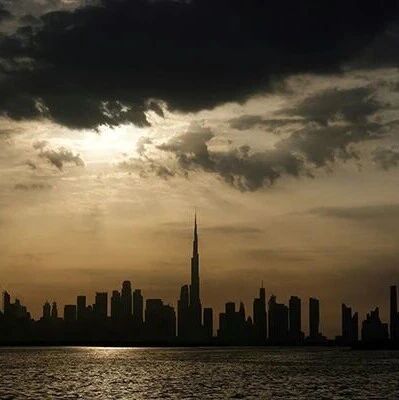
迪拜的“安全神话”破灭
日经中文网· 2026-03-24 08:00
Core Viewpoint - The "safety myth" surrounding Dubai is collapsing due to geopolitical tensions, particularly the threat from Iran, which is impacting its status as a global business and tourism hub [2][3]. Group 1: Impact on Tourism and Travel - Dubai International Airport is projected to reach a record 95 million passengers by 2025, maintaining its position as the world's busiest international airport since surpassing London Heathrow in 2014 [5]. - Recent attacks from Iran have led to damage at airport facilities and nearby fuel tanks, causing frequent flight cancellations and delays, resulting in a stark decrease in passenger presence at the airport [7]. - The number of flights to Dubai has decreased significantly, with many departing flights fully booked due to evacuations, while incoming flights are nearly empty [7]. Group 2: Real Estate and Economic Impact - Real estate transactions in Dubai dropped by 37% in the first two weeks of March compared to the same period last year, as reported by Goldman Sachs [7]. - The stock price of Emaar Properties, a government-linked real estate company, fell by over 25% following the escalation of the US-Iran conflict [7]. Group 3: Regional Competition and Strategic Shifts - Other Gulf nations, including Saudi Arabia and Qatar, are closely observing Dubai's model, aiming to develop their own tourism, sports, and cultural sectors, as well as becoming hubs for data centers and AI technology [9]. - The recent fire and power outage at a data center in the UAE raised concerns about the region's safety, potentially deterring investment and talent [9]. Group 4: Government Response and Public Perception - The UAE government is taking measures to maintain its image as a safe destination, allowing travelers stranded due to conflict to remain in the country beyond their visa limits [10]. - There are reports of increased government scrutiny on social media posts related to attacks, indicating a push to control the narrative surrounding safety in the region [10].

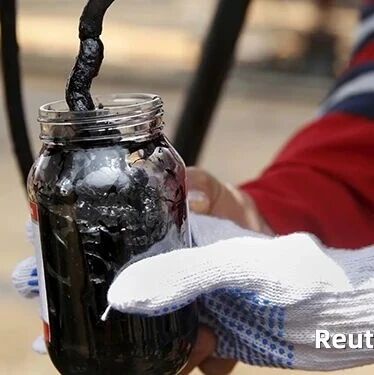
美国攻击委内瑞拉让OPEC面临逆风
日经中文网· 2026-01-13 02:23
Core Viewpoint - The potential development of Venezuela's oil reserves by the United States could significantly diminish OPEC's price control capabilities, leading to a shift in the global oil market dynamics [2][5]. Group 1: Oil Market Dynamics - Venezuela, a member of OPEC, has the largest oil reserves in the world, and the U.S. is the largest oil producer. If the U.S. develops Venezuela's oil, OPEC's influence may further decline [2]. - As of January 12, WTI crude oil futures were around $59 per barrel, only about 3% higher than before the U.S. attack on Venezuela, and significantly lower than the peak prices during the Ukraine crisis in 2022 [4]. - Morgan Stanley predicts that Venezuela's oil production could increase from over 800,000 barrels per day to 1.3-1.4 million barrels per day within two years, and potentially reach 2.5 million barrels per day in ten years [4]. Group 2: OPEC's Challenges - The shale revolution in the late 2000s revitalized the U.S. as an oil producer, overshadowing OPEC's influence. In 2016, OPEC formed the "OPEC+" framework with Russia to regain some price control [7]. - Post-COVID-19, non-OPEC countries like the U.S. and Guyana have steadily increased production, leading to a decline in OPEC+'s market share. Some OPEC+ countries plan to gradually lift production cuts starting April 2025 due to oversupply [8]. Group 3: Geopolitical Implications - Trump's administration aims to lower gasoline prices ahead of the 2026 midterm elections, which could be supported by increased Venezuelan production, keeping oil prices low and enhancing U.S. energy security [8]. - The short-term impact of U.S. actions may benefit Gulf Arab oil producers, as over half of Venezuela's oil exports go to China, potentially strengthening the negotiating power of Gulf countries seeking alternative supply sources [8].
刘亦菲代言的中东城市,快成国际大片的固定背景了
3 6 Ke· 2025-12-07 22:49
Core Insights - Abu Dhabi has transformed from a small fishing village to an international metropolis in just over 60 years, boasting a per capita GDP ranking among the top six globally [1][8] - The city is heavily investing in cultural and entertainment infrastructure, including the Louvre Abu Dhabi and various theme parks, to enhance its global appeal [5][7] - Abu Dhabi is positioning itself as a "future city" by diversifying its economy away from oil dependency, with non-oil sectors contributing 54.7% to its GDP in 2024 [9][10] Group 1: Economic Transformation - The discovery of oil in the 1960s marked a turning point for Abu Dhabi, leading to a population increase from 2.7 million to over 4.1 million in the past decade [8] - The city has implemented a film production incentive program, increasing cash rebates for film projects to 50%, attracting over 180 international productions since 2013 [3][4] Group 2: Cultural and Entertainment Development - Abu Dhabi is home to significant cultural landmarks, including the Sheikh Zayed Grand Mosque and the Louvre Abu Dhabi, showcasing its ambition in architecture and cultural diversity [5][6] - The city has become a popular filming location for international movies, with its contrasting landscapes appealing to filmmakers [2][3] Group 3: Future Sustainability Initiatives - Abu Dhabi is investing in nuclear power to meet 25% of its electricity needs, reducing reliance on oil and enhancing water security through desalination [10][12] - The development of Masdar City aims for zero carbon emissions, featuring innovative urban planning and transportation solutions [10][12]

重磅发布!阿联酋 2025 年住宅市场深度报告:多重红利驱动市场增长
克而瑞地产研究· 2025-09-24 03:03
Core Insights - The UAE real estate market is experiencing significant opportunities driven by a combination of policy, economic, and planning benefits [2][4][6] Economic Growth and Diversification - The UAE's economy is projected to grow by 4% in 2024, with non-oil sectors contributing 75.5% to GDP, marking a historical high [2][4] - The tourism sector is particularly strong, contributing 13% to GDP in 2024, with international tourist spending exceeding 217 billion dirhams [4][6] Population Dynamics - The UAE's population is expected to reach 12.5 million by 2024, a 23% increase from 2023, primarily due to the influx of expatriates [8][10] - The age demographic shows that 68.62% of the population is between 25-54 years old, indicating a robust labor force and strong consumer spending potential [10][11] Policy Environment - The UAE has optimized its visa policies to attract international investment, including lowering the threshold for golden visas and allowing joint property investments [11][12] - The UAE ranked as the 10th largest destination for foreign direct investment (FDI) in 2024, attracting 167.6 billion dirhams, a 48% increase from the previous year [12][14] UAE-China Cooperation - Enhanced cooperation between China and the UAE in various sectors, including construction, investment, and tourism, is expected to deepen, with 22 agreements reached in the first half of 2025 [14] Abu Dhabi Market Insights - Abu Dhabi's GDP reached 291 billion dirhams in Q1 2025, with a 3.4% year-on-year growth, driven by a 6.1% increase in non-oil sectors [15][16] - The residential market in Abu Dhabi saw a 30% increase in transaction value in the first half of 2025, with off-plan sales contributing significantly [20][23] - The average residential price in Abu Dhabi reached 3.3 million dirhams, a 17% increase year-on-year [26] Dubai Market Insights - Dubai's GDP is projected to grow by 3.3% in 2025, with tourism being a key growth driver, as evidenced by a 6% increase in international overnight visitors [38][40] - The Dubai real estate market recorded a historic high of 326.9 billion dirhams in transaction value in the first half of 2025, a 22% increase year-on-year [45][48] - Emaar led the Dubai market with a 46% increase in sales, reaching approximately 46 billion dirhams in the first half of 2025 [58] Conclusion - The UAE residential market is in a golden period characterized by policy benefits, economic transformation, and sustained population growth, making it a market to watch in 2025 [60]
中东土豪疯狂氪金电竞,就问拳头慌不慌
3 6 Ke· 2025-07-14 11:32
Group 1 - The 2025 Esports World Cup (EWC2025) in Riyadh, Saudi Arabia, features 24 esports titles, 25 events, 200 clubs, and 2,000 players, with a total prize pool exceeding $70 million [1][4] - The event is backed by Saudi Arabia's Savvy Games Group, which has a $38 billion investment strategy aimed at reshaping the global esports landscape [5][6] - The Saudi investment is part of the "Vision 2030" plan, which seeks to diversify the economy away from oil by investing in sectors like esports, sports, and entertainment [6][7] Group 2 - The influx of capital from Saudi Arabia is seen as a potential disruption to the traditional esports ecosystem, which has been dominated by companies like Riot Games and Tencent [4][8] - Analysts express concerns about the sustainability of the EWC's business model, noting that reliance on Saudi funding could lead to instability if oil prices fluctuate [7][16] - The EWC's high-profile nature and substantial prize pool are drawing attention away from established events like the League of Legends MSI, which is experiencing declining engagement [8][17] Group 3 - The esports industry is facing challenges, including declining sponsorships and financial losses in major leagues like LCK, which reported a cumulative loss of approximately 42.7 billion KRW (around 2.2 million RMB) over three years [14][15] - The LPL has seen a significant reduction in sponsorship partners, indicating a broader trend of financial strain within the esports sector [13][15] - The competitive landscape is shifting, with the EWC's innovative approach and substantial funding posing a challenge to traditional esports events [16][17]