可充可换可升级

Search documents
2026 李斌选择回到最原始的命题
2 1 Shi Ji Jing Ji Bao Dao· 2026-01-08 15:22
Core Insights - NIO has achieved significant growth, delivering 326,000 vehicles in 2025, a year-on-year increase of approximately 47% [1][6] - The company is optimistic about achieving profitability in Q4 2025, driven by the delivery of the new ES8 model, which has a gross margin exceeding 20% [1][8] - NIO emphasizes a focus on quality growth rather than setting specific sales targets for 2026, aiming for a 40%-50% growth rate [4][10] Group 1: Company Performance - NIO's first million vehicles were produced in 91 months, making it the fifth company to join the "million club" in the electric vehicle sector [2] - The company has launched three brands, covering a price range from 100,000 to 800,000 RMB, enhancing its market reach [3][7] - NIO's technology cost reduction strategies, including self-developed chips, have led to improved gross margins [3][7] Group 2: Strategic Focus - In 2026, NIO plans to concentrate on vehicle sales and service quality, avoiding single annual sales targets [4][11] - The company aims to enhance efficiency and expand its presence in lower-tier markets through the "SKY" integrated store model [4][12] - NIO is committed to building at least 1,000 battery swap stations, leveraging partnerships to expand its network [4][18] Group 3: Market Position and Future Outlook - NIO's CEO believes that the Chinese automotive market can support at least ten major brands, with a projected annual sales volume of 35 million vehicles [5][27] - The company is focused on maintaining a competitive edge through continuous innovation and operational efficiency [5][23] - NIO's long-term strategy includes a commitment to battery swapping technology, which addresses the issue of battery lifespan and vehicle longevity [4][28]


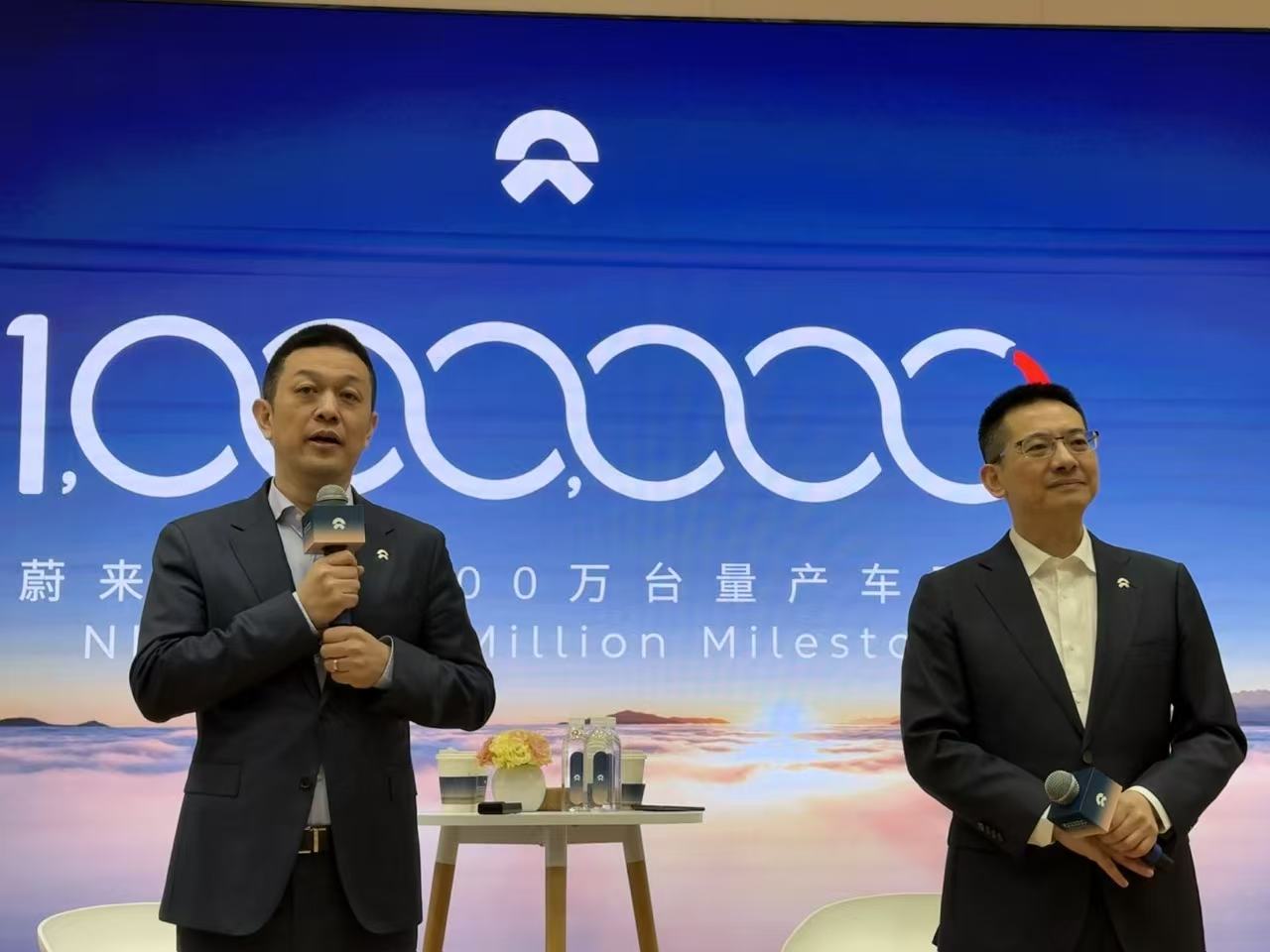
蔚来站上百万辆台阶,李斌:已从谷底进入第三发展阶段
Jing Ji Guan Cha Bao· 2026-01-08 09:57
Core Insights - NIO has reached a significant milestone by rolling off its one millionth vehicle, marking a pivotal moment in its development journey [1] - The company aims to deliver 326,000 vehicles across its three brands in 2025, reflecting a year-on-year growth of 47% [1] - NIO's founder, Li Bin, indicates that the company is transitioning into its third development phase, characterized by improved sales performance and strategic goals [1][3] Group 1: Development Phases - The first phase of NIO's development lasted from its founding in 2014 until 2021, marked by a consistent annual sales growth of 100% [1] - The second phase, from 2022 to mid-2025, saw annual sales growth of 30%-40%, which was below industry expectations [1] - The third phase is expected to begin in the second half of 2025, with a rebound in sales and a focus on strategic growth [1][3] Group 2: Key Characteristics of the Third Phase - The third phase will feature collaboration among NIO, Ladao, and Firefly brands, targeting a wide user base with price ranges from 100,000 to 800,000 yuan [2] - NIO's investments in technology and R&D, totaling 65 billion yuan, are beginning to yield results, enhancing product competitiveness and improving gross margins [2] - The company's "chargeable, swappable, and upgradable" technology strategy is gaining market acceptance, as evidenced by record sales of the new ES8 and Ladao L90 [2] Group 3: Financial Outlook and Goals - NIO aims to achieve profitability in the fourth quarter of 2025, with confidence in improved gross margins from increased vehicle deliveries [3] - The company acknowledges that reaching one million vehicles is a small achievement relative to the overall market, maintaining a startup mentality [3] - Future efforts will focus on technology investment, infrastructure expansion, brand collaboration, and market penetration, with a goal of maintaining 40%-50% annual growth [3] Group 4: 2026 Plans - In 2026, NIO plans to transition all models to a third-generation platform and introduce new mid-to-large vehicles [4] - The company aims to add 1,000 new battery swap stations and enhance its sales and service network [4] - NIO's operational goal for 2026 is to achieve profitability while prioritizing growth quality and long-term development [4]
蔚来要去下沉市场和BBA掰手腕了
Feng Huang Wang· 2026-01-07 05:47
Core Insights - NIO has reached a significant milestone with the production of its one-millionth vehicle, but it still holds only about 1% of the Chinese automotive market, indicating a long journey ahead in a highly competitive landscape [1] - The company is entering a new phase of growth, focusing on expanding its brand matrix and enhancing operational efficiency while aiming for a 40%-50% annual growth rate without setting specific sales targets for 2026 [4][5] Group 1: Company Strategy and Market Position - NIO's founder, Li Bin, emphasizes the importance of not becoming complacent and acknowledges the competitive nature of the market, predicting that only about ten Chinese EV companies will survive in the long run [1] - The company has segmented its development into three phases: rapid growth (2018-2021), an adjustment period with growth (2022-2025), and a new phase starting in late 2025 characterized by a mature brand matrix and technological advancements [2] - NIO plans to deepen its market penetration by expanding its sales network into 210 cities, aiming to compete more effectively with established brands [4] Group 2: Product Development and Technological Advancements - NIO is set to launch the ES9, a flagship SUV, in the second quarter of 2026, which is expected to leverage the company's technological advantages to deliver significant user value [5] - The company has committed to building at least 1,000 new battery swap stations in 2026, addressing the critical issue of battery life synchronization in electric vehicles [5] - NIO is increasing its investment in computing power to enhance its smart driving capabilities, with plans for large-scale model training in 2026 [5] Group 3: Financial Performance and Profitability - Li Bin expresses confidence in achieving profitability in the fourth quarter, driven by high-margin models like the new ES8 and effective cost management [3] - The company has invested over 65 billion yuan in R&D, focusing on self-developed technologies that create a competitive edge [3] - Despite rising costs due to material price increases, NIO plans to absorb some of the pressure without adjusting vehicle prices, relying on existing profit margins [5]
全程高能!新年首场群访,李斌深度剖析蔚来
Zheng Quan Ri Bao Wang· 2026-01-06 10:56
Core Viewpoint - NIO has reached a significant milestone with the production of its one millionth vehicle, marking a transition from merely being operational to focusing on stability and high-quality growth in its third development phase [1][3]. Group 1: Development Phases - NIO's current position is described as the "third development phase," emphasizing collaboration among its three brands (NIO, Ladao, and Firefly) to cover a broader price range and user needs [3]. - The company aims to improve operational quality and efficiency, moving from a focus on aggressive growth to a more pragmatic and detailed approach [3][4]. - The transition to the third phase involves a focus on operational efficiency, with a recognition that small efficiency differences can lead to significant competitive advantages in the automotive industry [4]. Group 2: Financial and Operational Strategy - NIO's CEO expressed confidence in achieving profitability by Q4 2025, contingent on increased delivery volumes and improved gross margins while maintaining stable expense control [5]. - The company is adopting a "million mindset," where every cost decision is evaluated at a scale of one million units, emphasizing the importance of resource allocation for long-term capabilities [4][5]. Group 3: Future Roadmap - NIO's future strategy includes significant investments in infrastructure, with a goal of establishing over 10,000 charging and battery swap stations by 2030 [6]. - The company plans to enhance market penetration through brand collaboration and service integration, aiming to improve scale efficiency [6][7]. - NIO is focusing on a systematic approach to battery swapping, addressing long-term cost structures and user experience, which is seen as a critical infrastructure for the future of electric vehicles [6][7]. Group 4: Performance Metrics - NIO has invested a total of 65 billion yuan in technology research and development and 18 billion yuan in charging and battery swap infrastructure, with 8,541 charging and battery swap stations established nationwide [7]. - The company aims to maintain a growth target of 40%-50% annually, based on a collaborative approach across products, technology, infrastructure, and service systems [7][8]. - NIO's strategy reflects a shift in focus from survival to improving operational performance, with an emphasis on measurable and sustainable business practices [8].