
蔚来ES9

Search documents
蔚来-SW(09866):迈过盈利拐点,26年迎强势新车周期
ZHONGTAI SECURITIES· 2026-03-27 09:02
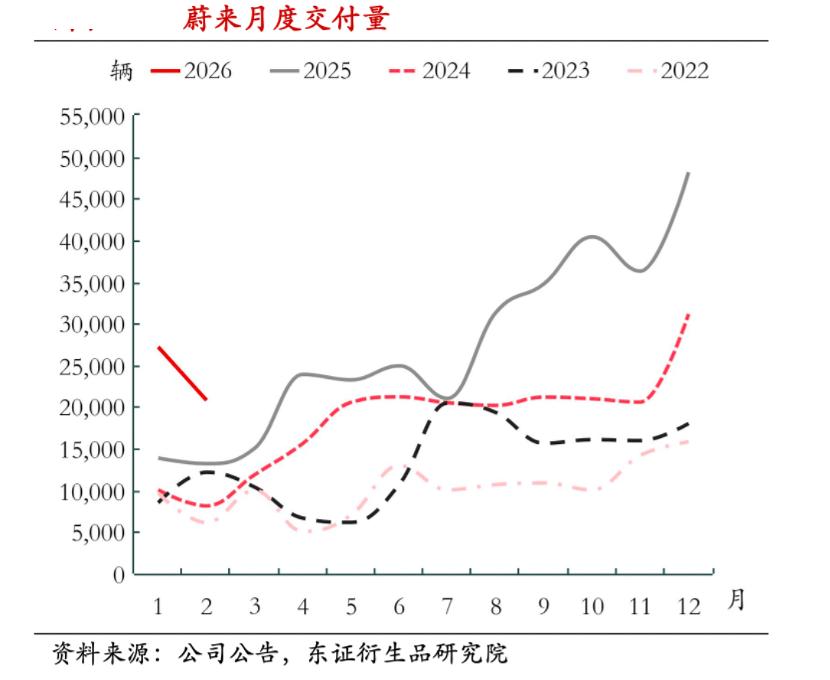
Investment Rating - The report assigns a "Buy" rating for the company, indicating an expected relative performance increase of over 15% against the benchmark index within the next 6 to 12 months [17] Core Insights - The company has achieved continuous revenue and gross profit growth, successfully controlling expenses, and has reported its first quarterly profit [4] - The company is expected to enter a strong new product cycle in 2026, with significant sales growth anticipated due to the launch of multiple new models [8][12] - The company has reached a turning point in profitability, having recorded a positive net profit of 1.2 billion yuan in Q4 2025, marking its first quarterly profit [5] Financial Performance Summary - Revenue projections for the company are as follows: 65,732 million yuan in 2024, 87,488 million yuan in 2025, 132,480 million yuan in 2026, 157,819 million yuan in 2027, and 180,831 million yuan in 2028, with growth rates of 18%, 33%, 51%, 19%, and 15% respectively [3] - The company is expected to achieve a net profit of 99 million yuan in 2026, with significant growth projected in subsequent years, reaching 5,799 million yuan in 2027 and 8,334 million yuan in 2028 [3] - The gross margin is projected to improve to 18.5% in 2026, 19.2% in 2027, and 18.7% in 2028, reflecting ongoing improvements in product mix and operational efficiency [10][12] Sales and Delivery Insights - The company delivered 125,000 vehicles in Q4 2025, representing a year-over-year increase of 71.7% and a quarter-over-quarter increase of 43.3% [7] - The company expects to deliver between 80,000 to 83,000 vehicles in Q1 2026, which would represent a year-over-year growth of 90.1% to 97.2% [7] - The new models launched in 2025, including the Firefly, NIO ES8, and Lido L90, have shown strong market performance, contributing to the anticipated sales growth [6][7]

车企盯上有钱人,“9系”大战一触即发
虎嗅APP· 2026-03-25 00:32
Core Viewpoint - The "9 Series" battle represents a critical competition among domestic electric vehicle brands, significantly impacting their market positioning and survival, as they aim to capture high-end consumers and redefine luxury in the automotive sector [2][4][16]. Group 1: Market Context - The Chinese automotive market is undergoing a severe reshuffle, with profit margins dropping to a five-year low of 4.1% by 2025, and even lower to 1.8% in December [7][10]. - The market for vehicles priced below 200,000 yuan is dominated by large manufacturers like BYD and SAIC, leaving new entrants struggling to gain traction [10][11]. - The emergence of the "9 Series" is a strategic response from manufacturers seeking to escape the low-price competition and secure higher profit margins in the premium segment [12][16]. Group 2: Competitive Landscape - The "9 Series" includes flagship models from various brands, characterized by high prices (generally above 300,000 yuan), advanced technology, and spacious designs, targeting affluent customers [4][5]. - Key players in the "9 Series" include NIO, Li Auto, and BYD, each with different financial health and market strategies, ranging from established leaders to those still seeking profitability [4][6][16]. - The competition is not only among the "9 Series" brands but also against established luxury brands like BMW, Benz, and Audi (BBA), which are facing challenges in maintaining their market share [16][32]. Group 3: Strategic Implications - The battle is expected to be most intense in the business market, where many "9 Series" models cater to high-net-worth individuals, influencing brand perception and market dynamics [20][21]. - The family market will see increased competition, but it is anticipated to be less fierce compared to the business segment, as "9 Series" vehicles are well-suited for family needs [22]. - The introduction of models like the Leap Motor D19, which aims to combine affordability with high-quality features, could create a new competitive landscape focused on value [23][24]. Group 4: Product Differentiation - All "9 Series" models share common features of spaciousness and high intelligence, leading to potential product homogeneity, which necessitates unique selling propositions to stand out [26][28]. - Early-stage leaders like Li Auto and Xpeng are expected to leverage their established market presence and technological advancements to gain an initial advantage [27][28]. - Long-term success will depend on the ability to innovate and provide unique customer experiences, balancing high-end services with financial sustainability [31][32]. Group 5: BBA's Response - BBA's strategy to counter the "9 Series" includes aggressive pricing, launching new models, and enhancing technological capabilities through partnerships with tech companies [34][36]. - Despite these efforts, BBA's response may not effectively address the fundamental shifts in market dynamics, as the "9 Series" brands continue to innovate and capture market share [32][42]. - The ongoing transformation in consumer preferences towards smart and electric vehicles indicates that BBA must adapt quickly to maintain relevance in the evolving market landscape [40][41].



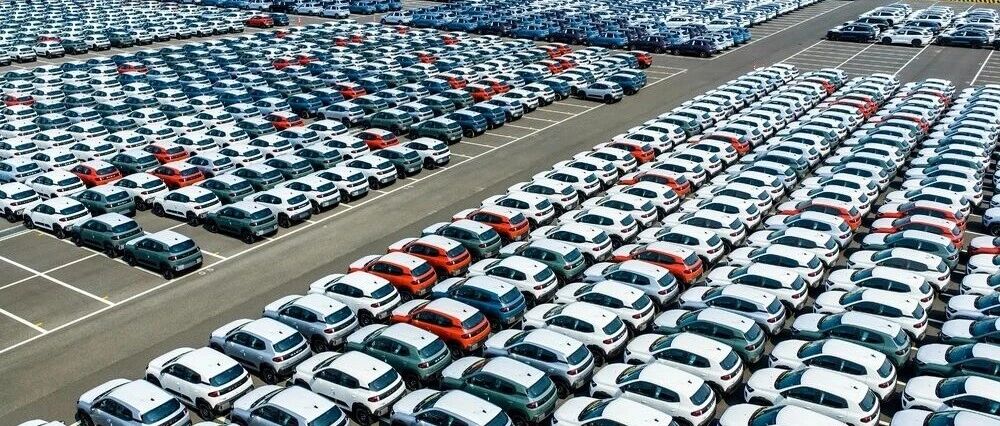
近期汽车市场发展趋势
数说新能源· 2026-03-24 03:02
Group 1 - The core viewpoint of the article highlights the challenges and improvements in the domestic and export sales of passenger vehicles in early 2026, with a focus on the impact of the vehicle replacement policy and the upcoming new car launches [2][3]. - In January and February 2026, domestic passenger car sales were under pressure, primarily due to a vacuum period in the vehicle replacement policy, but the structure of sales showed improvement with an increase in the proportion of B-class and above vehicles [2]. - Passenger car exports in January and February 2026 reached 1.17 million units, representing a year-on-year increase of 53%, indicating strong performance in the export market [2]. Group 2 - The article anticipates a marginal improvement in passenger car sales in March and April 2026, driven by the effects of the vehicle replacement policy and the launch of new models by automakers [3]. - A series of flagship models and new technologies are expected to be released by various car manufacturers before the Beijing Auto Show at the end of April, which may further stimulate sales [3]. - Notable upcoming releases include the second-generation Xiaomi SU7, new products from Hongmeng Zhixing, and several flagship SUVs from brands like NIO, Xpeng, and Great Wall [3].

蔚来能盈利,是谁的功劳?
雷峰网· 2026-03-13 08:30
Core Viewpoint - NIO has achieved its first quarterly profit with a net profit of 300 million yuan in Q4, marking a significant turnaround from a nearly 7 billion yuan loss in the same quarter last year, raising questions about the sustainability of this profitability into 2026 [2][4][6]. Group 1: Financial Performance - In 2025, NIO delivered a total of 326,000 vehicles, a year-on-year increase of 46.9%, with Q4 deliveries reaching 125,000 units, an increase of 38,000 units from Q3 [4]. - Q4 vehicle sales revenue increased by 12.4 billion yuan, with a single vehicle gross profit of 46,000 yuan, leading to a quarterly gross margin of 18.1%, up 3.4 percentage points from Q3 [6]. - For the entire year, NIO reported revenues of 87.49 billion yuan, a 33.1% year-on-year growth, with a gross profit of 11.92 billion yuan, also reflecting a 33.1% increase [6][7]. Group 2: Business Model and Strategy - NIO's profitability is closely linked to the rapid growth of high-margin models, operational efficiency improvements, and a positive cycle in its business model [4][6]. - Non-vehicle businesses contributed over 10 billion yuan in revenue, accounting for 12% of total income, with a gross margin of 11.9%, indicating a shift in NIO's business model [7]. - The company plans to maintain quarterly R&D investments of 2 to 2.5 billion yuan while achieving efficiency comparable to competitors spending 3 to 4 billion yuan [8]. Group 3: Market Position and Future Outlook - NIO aims for a 40% to 50% increase in sales by 2026, despite a slight decline in the overall Chinese passenger car market, with a focus on electric vehicle growth [16]. - The company is set to launch three key models in 2023, including the ES9, ES7, and L80, to drive sales growth [16]. - NIO emphasizes the importance of maintaining a competitive edge in a market facing increasing product homogeneity and technological convergence [20]. Group 4: Challenges and Competitive Landscape - The automotive industry faces challenges such as raw material shortages and rising costs, which could increase the cost of high-end smart electric vehicles by 6,000 to 10,000 yuan [17][18]. - NIO is committed to managing these cost pressures without passing them onto consumers, focusing on efficiency improvements [18]. - The company recognizes the need to navigate the "new car death valley effect," where new models may not sustain sales momentum post-launch [17].
【蔚来(NIO.N)】4Q25如期扭亏,基本面向上趋势有望延续——2025年四季度业绩点评(倪昱婧/邢萍)
光大证券研究· 2026-03-12 23:05
Core Viewpoint - The company has shown significant improvement in its financial performance, with a notable increase in revenue and a shift to profitability in the fourth quarter of 2025, indicating a positive trend for future growth [4][5]. Financial Performance - In Q4 2025, total revenue increased by 33.1% year-on-year to 87.49 billion yuan, surpassing the expected 84.35 billion yuan, with a gross margin improvement of 3.7 percentage points to 13.6% [4]. - The Non-GAAP net loss narrowed by 39.0% year-on-year to 12.43 billion yuan, compared to an expected loss of 12.83 billion yuan [4]. - Q4 2025 vehicle deliveries rose by 71.7% year-on-year to 125,000 units, with automotive revenue increasing by 80.9% year-on-year to 31.61 billion yuan [5]. Profitability Improvement - The average selling price (ASP) of vehicles increased by 5.3% year-on-year to 253,000 yuan, contributing to a gross margin of 18.1% in the automotive business, up 5.0 percentage points year-on-year [5]. - Non-GAAP R&D expense ratio decreased by 11.7 percentage points year-on-year to 5.0%, while Non-GAAP SG&A expense ratio fell by 14.3 percentage points year-on-year to 9.8% [5]. - The company ended Q4 2025 with cash reserves totaling 45.9 billion yuan, indicating a strong liquidity position [5]. Strategic Focus - The company plans to maintain its Non-GAAP annual profit guidance for 2026, focusing on the rollout of mid-to-large SUVs and optimizing product cycles, with five new models expected to enhance scale and margin [6]. - The company is also concentrating on battery swapping and external chip supply opportunities, leveraging its network of over 3,800 battery swap stations as a competitive advantage [6]. - The chip subsidiary has successfully completed its first round of financing and is entering mass production of advanced process chips, which may open new revenue streams [6].
背负千亿负债,“最惨”的李斌终于赚钱了
阿尔法工场研究院· 2026-03-12 11:34
Core Viewpoint - NIO achieved its first quarterly profit in Q4 2025, but still faces significant challenges, including a net loss of 14.9426 billion yuan for the year and a debt exceeding 100 billion yuan, raising concerns about its financial stability and future growth prospects [3][4][28]. Financial Performance - In Q4 2025, NIO reported a net profit of 282.7 million yuan, marking its first quarterly profit since going public. The total revenue for the quarter was 34.6502 billion yuan, a year-on-year increase of 75.9% [7][9]. - For the full year 2025, NIO's total revenue reached 87.4875 billion yuan, up 33.1% from the previous year, while the net loss narrowed by 33.3% compared to 2024 [8][9]. - The gross margin for Q4 2025 was 17.5%, an increase of 5.8 percentage points year-on-year, attributed to higher sales volume and cost control measures [9][10]. Sales and Delivery - NIO delivered 124,807 vehicles in Q4 2025, a year-on-year increase of 71.7% and a quarter-on-quarter increase of 43.3% [7][8]. - The ES8 model has been a key driver of sales, maintaining a leading position in the market for large SUVs priced above 400,000 yuan [10][11]. Product Strategy - NIO plans to launch three new models in 2026, including the flagship ES9, which is expected to enhance overall gross margins and support sustained profitability [28]. - The ES8's competitive pricing and upgraded features, including a new high-voltage platform and advanced driver assistance systems, have contributed to its strong market performance [12][13]. Cost Management - NIO has successfully reduced R&D expenses by 44.3% and sales, general, and administrative expenses by 27.5% in Q4 2025, saving over 2 billion yuan compared to the previous year [14][15]. - However, there are concerns about potential manipulation of expenses to achieve profitability targets [14]. Debt and Financial Health - NIO's total liabilities exceeded 111.7 billion yuan, with an asset-liability ratio of 89.8%, indicating significant financial pressure [28][33]. - The company has seen a substantial increase in debt, with liabilities rising from 22.78 billion yuan in 2020 to over 111.7 billion yuan in 2025, while shareholder equity has decreased significantly [33]. Market Response - Following the announcement of its financial results, NIO's stock price surged by 14% on March 11, reflecting positive market sentiment towards its first quarterly profit [19]. Executive Compensation - NIO introduced a substantial stock incentive plan for CEO Li Bin, linking his compensation to the company's market value and net profit, which could drive long-term performance but also presents significant challenges [22][24].
蔚来-SW(09866):Q4季度扭亏为盈、新车周期仍强势
GOLDEN SUN SECURITIES· 2026-03-12 11:13
Investment Rating - The report maintains a "Buy" rating for the company [6] Core Insights - The company achieved profitability in Q4 2025, delivering 125,000 vehicles, a year-on-year increase of 71.7% and a quarter-on-quarter increase of 43.3% [1] - Revenue for Q4 2025 reached 34.65 billion yuan, up 75.9% year-on-year and 59% quarter-on-quarter, driven by strong sales and increased average selling prices [1] - The company expects to deliver 80,000 to 83,000 vehicles in Q1 2026, representing a year-on-year growth of 90% to 97% [2] - The company anticipates a 40% to 50% year-on-year increase in sales for the full year 2026, targeting total sales of 460,000 to 490,000 vehicles [2] - The new ES8 model has shown strong demand, achieving a gross margin close to 25% [3] - The company plans to launch the flagship SUV ES9 in April 2026 and upgrade several existing models [3] - The company’s chip subsidiary, Anhui Shenji, has a valuation nearing 10 billion yuan, with successful development of a second chip [4] Financial Summary - Q4 2025 gross margin improved to 17.5%, a significant increase of 5.8 percentage points year-on-year and 3.7 percentage points quarter-on-quarter [1] - The company recorded a net profit of 120 million yuan in Q4 2025, with a non-GAAP net profit of 730 million yuan, marking its first quarterly profit [1] - For 2026, the company expects non-GAAP operating profit and aims to maintain R&D expenses at approximately 20 to 25 billion yuan per quarter [2] - Projected revenues for 2026 are expected to reach 124.2 billion yuan, with a non-GAAP net profit forecast of 463 million yuan [5]
3-4月新车发布情况
数说新能源· 2026-03-12 03:14
Group 1 - The article highlights the upcoming product launch cycle for major automotive companies in March and April 2026, with significant new models expected from BYD, Huawei, Xiaomi, and others [2][3] - BYD plans to host a technology day after March 7, introducing several new models including the Song Max/Ultra, Qin Max, and various updated versions of existing models [2] - Other companies like Xpeng, Li Auto, and NIO are also set to unveil new models, with Xpeng's G pre-sale starting in March and NIO's ES9 expected to launch in late March [3] Group 2 - The article mentions that CATL is focusing on the energy storage market, which is growing faster than the power battery sector [13] - BYD is expanding its presence in Southeast Asia, indicating a strategic move to tap into emerging markets [13]

比亚迪闪充之后,蔚来的换电模式还值钱吗
3 6 Ke· 2026-03-11 08:39
Core Viewpoint - The introduction of BYD's fast-charging technology poses a potential threat to NIO's battery swap model, but the immediate impact is expected to be manageable due to NIO's established market position and operational strategies [2][8]. Group 1: NIO's Business Model and Performance - NIO's rebound in performance is closely tied to its battery swap model, which has created a competitive moat for the company [2]. - The company's profitability improvement is primarily driven by optimized supply chain management and increased delivery volumes, which have reduced market expenses [2][12]. - NIO's battery-as-a-service (BaaS) model allows the company to transfer battery assets to a joint venture, alleviating pressure on its balance sheet while still benefiting from the user experience [6][8]. Group 2: Impact of Fast-Charging Technology - The introduction of fast-charging technology by BYD is seen as a potential challenge to NIO's battery swap model, but the short-term impact is expected to be limited [8][9]. - The attractiveness of NIO's battery swap model lies not only in alleviating charging anxiety but also in lowering the purchase threshold for consumers, which fast-charging cannot replicate [8]. - NIO's financial statements indicate a significant increase in receivables from battery sales to its joint venture, suggesting a shift towards the BaaS purchasing model among consumers [8]. Group 3: Profitability and Cost Management - NIO's gross margin improved to 13.62% in 2025, with automotive gross margin at 14.6%, despite a decline in average selling price (ASP) [12]. - The reduction in operating expenses, with Q4 2025 sales and administrative expenses dropping to 3.5 billion from 4.9 billion the previous year, has been a key factor in returning to profitability [14]. - The current environment of reduced price competition in the automotive industry is expected to support the maintenance of gross margins for manufacturers like NIO [15].
终端探需-如何看待当前车市热度和后续景气拐点
2026-03-06 02:02
Summary of Conference Call Records Industry Overview - The records focus on the automotive industry, particularly the electric vehicle (EV) market in China, with specific mentions of brands like BYD, NIO, and others. The discussion revolves around market trends, consumer behavior, and pricing strategies in the context of new policies and economic conditions. Key Points Market Recovery and Consumer Demand - Since late February, the automotive market has seen a better-than-expected recovery in orders, with brands like BYD, Aito, and NIO using cash discounts and financial incentives to stimulate demand, resulting in a year-on-year decline in orders narrowing to 10%-15% [1][2] - The "trade-in" policy has been implemented across 31 provinces, with orders involving purchase subsidies accounting for 70%-80%, significantly improving transaction conversion rates [1][5] - The overall order levels in February were higher than in January, although still down approximately 10%-15% year-on-year [2][3] Pricing Strategies and Brand Competition - Luxury brands like BMW, Mercedes-Benz, and Audi have adopted a "one-price" model by lowering their guide prices to eliminate price bubbles, which is expected to improve single-vehicle gross margins from a loss of 20,000 yuan to a profit of 5,000-8,000 yuan [1][8][9] - BYD's upcoming technology release is anticipated to impact the market significantly, especially in the 100,000-150,000 yuan segment, potentially exerting pressure on joint venture and competing products [1][3][20] Future Market Predictions - The forecast for the total automotive market in 2026 is cautious, with expectations of slower growth in new energy vehicles (NEVs) and a structural replacement of 10%-20% market share from joint ventures to domestic brands in the 100,000-150,000 yuan price range [1][6] - The overall sentiment for March remains optimistic, with expectations of a "small spring" in demand, but the sustainability of this recovery will depend on the performance in April and May [4][6] Regulatory Environment - The automotive industry is facing stricter price compliance regulations starting in March, which will enforce that dealers cannot sell below cost, shifting the competitive logic from "price for volume" to "stable prices with reduced volume" [2][15][19] - The implementation of the "Automotive Industry Price Compliance Guidelines" is expected to significantly impact dealer operations and profitability, with a focus on ensuring that new car sales margins are positive [17][18] Brand-Specific Insights - BYD is expected to launch several new models in March, focusing on pure electric vehicles and advanced technology features, which could reshape the competitive landscape in the 100,000-150,000 yuan segment [21][22] - Traditional luxury brands are adjusting their pricing strategies to maintain competitiveness, with significant price adjustments observed in models like the Mercedes-Benz GLC, which has shifted from a loss to a profit margin post-adjustment [9][14] Conclusion - The automotive industry is navigating a complex landscape of recovering demand, regulatory changes, and competitive pressures. Brands are adapting their strategies to maintain market share and profitability, particularly in the growing EV segment. The upcoming months will be critical in determining the sustainability of the current recovery trends and the overall health of the market.