可得性启发

Search documents
人生建议:警惕10种认知陷阱
洞见· 2025-12-11 12:20
Group 1 - The article emphasizes the importance of self-reflection and recognizing personal accountability in the face of failure, rather than attributing failures to external factors [7] - It discusses the "Dunning-Kruger effect," where individuals with lower ability tend to overestimate their competence, while those with higher ability underestimate theirs [10][12] - The concept of "confirmation bias" is highlighted, illustrating how individuals seek information that reinforces their existing beliefs, leading to a narrow perspective [15] Group 2 - The "halo effect" is explained, where people make assumptions about someone's abilities based on their appearance, leading to cognitive biases [18] - The article introduces "availability heuristic," which suggests that people judge the frequency of events based on how easily examples come to mind, potentially distorting their perception of reality [22] - The "spotlight effect" is discussed, indicating that individuals often overestimate the attention others pay to them, which can lead to unnecessary anxiety [24] Group 3 - The article addresses "herd mentality," where individuals follow the crowd without independent thought, often resulting in poor decision-making [26] - It mentions the "Zeigarnik effect," which describes how unfinished tasks can lead to anxiety and distraction, emphasizing the need to manage uncertainty [30][31] - The concept of "black-and-white thinking" is presented, where individuals view situations in extremes, which can hinder personal growth and self-acceptance [36] Group 4 - The article concludes with the idea that most worries are unfounded, as demonstrated by a psychological experiment showing that over 90% of anticipated worries do not materialize [39] - It stresses the importance of recognizing and avoiding cognitive traps to enhance personal growth and decision-making [40][42]


研客专栏 | 豆粕:成本传导与供给边际增长预期的错配?
对冲研投· 2025-09-19 12:27
Core Viewpoint - The article discusses the potential impact of U.S.-China trade negotiations on soybean imports and the subsequent effects on domestic soybean meal pricing, highlighting the complexity of supply and cost narratives in the market [4][5][6]. Group 1: U.S.-China Trade Negotiations - The market's focus is on whether China will resume imports of U.S. soybeans, influenced by recent U.S. Department of Agriculture (USDA) reports and trade talks [4][6]. - The USDA's September report predicts a neutral supply-demand balance for the 2025/26 period, with ending stocks estimated at 300 million bushels, reflecting the impact of Chinese demand [5][6]. Group 2: Pricing Dynamics - If U.S. soybean imports resume, soybean meal pricing will likely be anchored to CBOT soybean prices, with potential upward pressure on prices due to supply constraints and weather impacts not fully reflected in reports [5][8]. - The article outlines a pricing logic where the market currently emphasizes supply increases while potentially overlooking rising costs associated with importing U.S. soybeans [8][9]. Group 3: Import Timing and Scale - The discussion on imports revolves around whether, when, and to what scale U.S. soybeans will be imported, with expectations of a possible agreement by mid-October [6][7]. - If trade resumes, a typical import volume of 23-30 million tons is anticipated, with the possibility of exceeding this depending on negotiation outcomes [7][9]. Group 4: Cost Considerations - The article emphasizes that while supply narratives dominate short-term pricing, cost increases from shipping and processing U.S. soybeans will eventually manifest, impacting domestic soybean meal prices [9][10]. - The potential for higher costs is compounded by the comparison of oil and meal yields between U.S. and Brazilian soybeans, which could affect profitability [9][10]. Group 5: Global Supply Context - Resuming U.S. soybean imports would place domestic supply within a broader global context of supply abundance, indicating that imports are more about redistributing existing stocks rather than eliminating shortages [10].

日子真快,转眼快一个月了
猛兽派选股· 2025-09-19 04:41
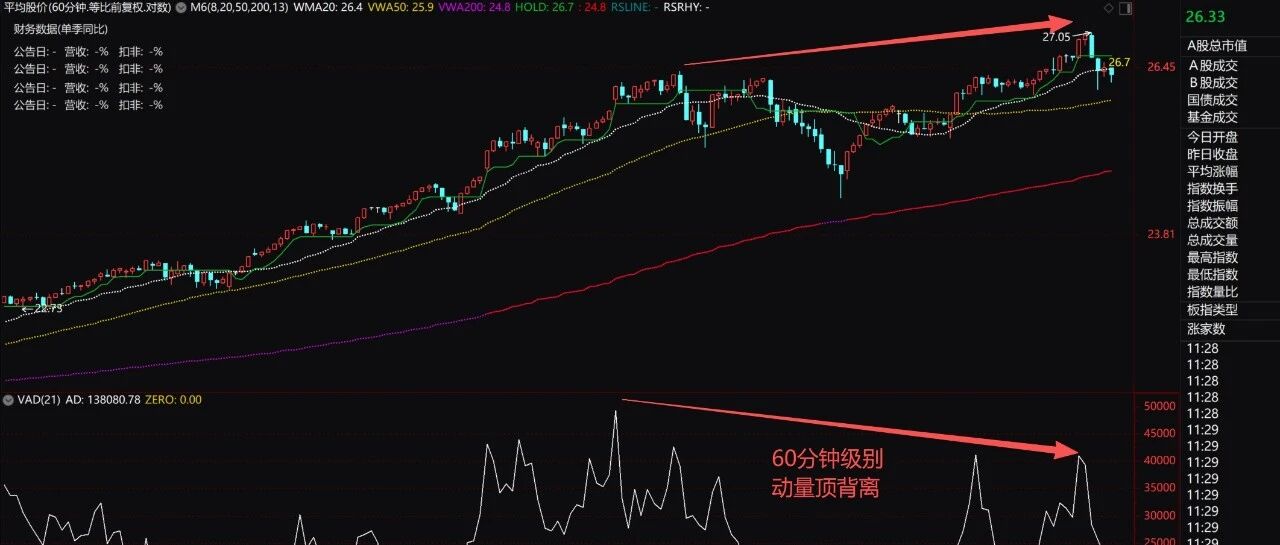
Group 1 - The current market is in an adjustment phase with a divergence breakthrough, indicating that the recent rebound has ended and a pullback is expected [1] - Historical trends suggest that after a significant upward movement, personal accounts often experience profit withdrawal, leading to a situation where new highs are rarely achieved before further declines occur [1] - Behavioral psychology concepts such as recency effect, loss aversion, availability heuristic, and confirmation bias play a role in market movements [1] Group 2 - Group psychology will ultimately reflect in momentum indicators, with signs of top divergence indicating an increase in retreating and cashing out funds [2] - To effectively track trends, it is essential to learn to identify changes in momentum and understand the overall market psychology [2] - Leading stocks, such as those in the computing power sector, are seen as consolidating and not showing signs of fatigue, suggesting that the market trend is not over [2] Group 3 - New categories that are rising against the trend, such as energy storage and lithium batteries, should be closely monitored [3] Group 4 - The market maintains a multi-mainline structure, reducing the need for excessive concern about overall market movements, allowing individual stock strategies to diverge from broader market trends [5]