
四库联动

Search documents
四库联动的系统实践:中国石油将扩绿行动转化为可持续发展新动能
Sou Hu Cai Jing· 2026-01-20 09:36
Core Viewpoint - China National Petroleum Corporation (CNPC) is actively engaging in ecological initiatives, demonstrating a commitment to "expanding green, promoting green, and protecting green" as part of its systematic approach to ecological value realization [1][6]. Group 1: Expanding Green - CNPC's "expanding green" initiative showcases a comprehensive strategy across the entire industry chain, integrating greening efforts with oil and gas production and ecological restoration [3]. - Over 227 million trees have been planted around thousands of oil fields and stations, improving production environments and creating green barriers in fragile ecological areas [3]. - Aiming to plant over one million trees around key operational nodes like gas stations and storage facilities in the next three to five years, CNPC is working towards a harmonious green ecological landscape [3]. Group 2: Promoting Green - The "promoting green" initiative encourages public participation in ecological construction through innovative public welfare models, exemplified by the "I Plant a Tree for Carbon Neutrality" online campaign, which attracted 1.939 million participants [4]. - This initiative has led to the establishment of over 5,000 acres of carbon sink and carbon neutral forests in key areas, demonstrating a successful collaboration between the company and the public [4]. - The model broadens funding and manpower sources for land greening while enhancing public environmental awareness, fostering a collective effort to protect the environment [4]. Group 3: Protecting Green - CNPC's approach to "protecting green" goes beyond mere tree planting, focusing on maximizing ecological value through a systematic "four reservoirs" linkage strategy [5]. - New afforestation projects are designed to meet high standards for forestry carbon sinks, establishing a solid foundation for carbon reservoir functionality [5]. - By enhancing soil and water conservation capabilities in ecologically vulnerable areas, CNPC aims to strengthen the role of forests as natural water reservoirs, thereby improving the overall service functions of ecosystems [5]. Group 4: Overall Impact - CNPC's systematic green actions reflect its transformation from a traditional energy company to a comprehensive sustainable development enterprise, as evidenced by the significant increase in green land area and tree planting [6]. - The integration of governance, environmental, and social responsibilities in its ESG reports highlights CNPC's commitment to the national "dual carbon" goals and its role as a responsible corporate citizen in building a beautiful China [6].



加快建设现代化国有林场,六部门意见传出什么信号?
第一财经· 2025-11-18 05:24
Core Viewpoint - The article discusses the Chinese government's initiative to accelerate the development of state-owned forest farms, aiming to enhance their role in ecological protection, green development, and benefiting the public, with a goal to establish a modernized system by 2030 and complete it by 2035 [2][3]. Summary by Sections Development Goals - By 2030, a modernized state-owned forest farm system with high-quality resources, stable ecological functions, and robust industrial development is to be established, with a complete system expected by 2035 [2]. Current State and Challenges - As of now, there are 4,297 state-owned forest farms covering 8% of the national territory, playing a crucial role in ecological projects like the Three-North Shelter Forest Program [3]. - Despite past reforms improving management and ecological functions, challenges remain, including insufficient supply of quality ecological products, outdated infrastructure, and a lack of professional talent [3][4]. Infrastructure and Living Conditions - Many forest farms face significant infrastructure deficits, with 543 sub-farms lacking water and 318 lacking electricity, leading to poor living conditions for workers [4]. Resource Management and Protection - The government plans to establish a clear resource asset ledger and improve property rights systems, while also exploring paid usage of forest resources and prohibiting free allocation to local financing platforms [4][5]. Economic Development and Industry Support - The initiative encourages the development of diverse economic activities within forest farms, including the cultivation of high-quality timber and the promotion of ecological tourism and carbon market participation [7][8]. Technological Advancements - There is a push for the integration of smart machinery and new technologies like IoT and AI in forest management, alongside improvements in basic infrastructure such as roads and utilities [8].
加快建设现代化国有林场,六部门意见传出什么信号?
Di Yi Cai Jing· 2025-11-18 02:25
Core Viewpoint - The Chinese government aims to accelerate the development of state-owned forest farms to enhance ecological protection, green development, and benefit the people, with a goal to establish a modernized state-owned forest farm system by 2030 and essentially complete it by 2035 [1][4]. Summary by Sections Development Goals - By 2030, a modernized state-owned forest farm system with high-quality resources, stable ecological functions, and robust industrial development is expected to be initially established, with full completion targeted by 2035 [1]. Current State and Challenges - Since the founding of New China, 4,855 state-owned forest farms have been established, with 4,297 currently operational, covering 8% of the national land area [2][4]. - Despite improvements since the 2015 reform, challenges remain, including insufficient supply of quality ecological products, inadequate resource protection mechanisms, outdated infrastructure, lack of development vitality, and a shortage of professional talent [4][5]. Infrastructure and Living Conditions - Significant infrastructure deficits exist, with 543 sub-farms lacking water supply and 318 without electricity, leading to poor living conditions for workers compared to surrounding villages [5][6]. Resource Management and Economic Development - The government plans to systematically inventory resources, establish clear property rights, and explore paid use of forest resources while prohibiting free allocation to local financing platforms [5][6]. - Support will be provided for the development of a modern industrial system, including the establishment of genetic resource banks and the promotion of various economic activities such as eco-tourism and forest products processing [8][9]. Technological and Infrastructure Improvements - The initiative encourages the adoption of smart machinery and new technologies like IoT and AI, alongside improving basic infrastructure such as roads, power, and communication systems [9]. - The integration of state-owned forest farms into local road networks and the enhancement of their accessibility are also prioritized [9].
小草峪何以“碧如玉”(新发展理念引领高质量发展·一线故事)
Ren Min Ri Bao· 2025-10-16 22:20
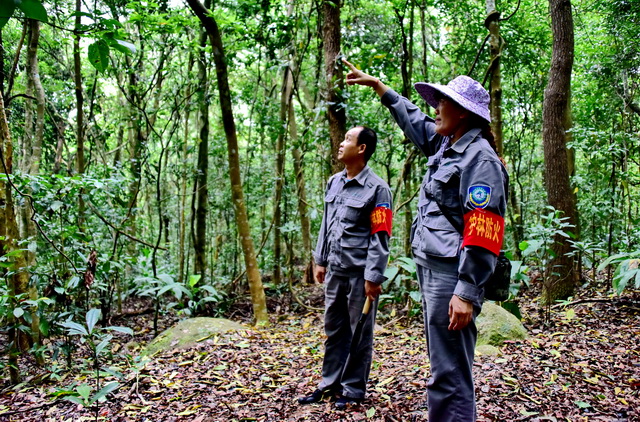
Core Viewpoint - The article emphasizes the importance of the South-to-North Water Diversion Project, highlighting the ecological and economic transformations in Xichuan County, Henan Province, as it balances water conservation with local development [3][9]. Group 1: Ecological Transformation - The South-to-North Water Diversion Project is crucial for the strategic development and welfare of the people in the Beijing-Tianjin-Hebei region [3]. - Xichuan County has implemented a "three greens" strategy (expanding, thriving, and protecting greenery) to enhance ecological sustainability and economic growth [3][5]. - The forest coverage rate in Xichuan has increased from 45.7% at the end of the 12th Five-Year Plan to 61.7%, and the number of bird species in the Danjiang Wetland National Nature Reserve has risen from over 100 to 510 [5]. Group 2: Economic Development - The "thriving green" initiative aims to convert ecological advantages into economic benefits, aligning with the principle that "lucid waters and lush mountains are invaluable assets" [6]. - The establishment of a pomegranate base in Suzhuang Village has created new income opportunities for locals, with over 100 people employed during peak seasons [7]. - The signing of a carbon credit transaction worth 2.16 million yuan in Xichuan marks a significant step in monetizing ecological benefits [7]. Group 3: Community Involvement - The article highlights the role of local communities in ecological protection, with a growing number of volunteers and professionals engaged in conservation efforts [8]. - The establishment of a multi-faceted management model combining human, technological, and regulatory measures has enhanced proactive environmental protection [8]. - The narrative of Xichuan County illustrates a collective commitment to ecological stewardship, reflecting a broader trend of harmonizing human and natural systems [9].
“绿起来”“美起来”“富起来” 生态治理转向全民参与 | 《“三北”工程总体规划》解读
Yang Shi Wang· 2025-09-13 05:27
Core Points - The "Three Norths" project aims to enhance ecological construction and improve the quality of life for local communities through sustainable development strategies [8][10] - The project has been divided into three phases, with the current phase focusing on significant ecological battles and improving vegetation coverage [6][4] - By 2050, the project aims to increase forest coverage by 1.9 percentage points and achieve a vegetation coverage of over 25% in desertified areas [8] Group 1: Project Overview - The "Three Norths" project construction period spans from 1978 to 2050, divided into three phases and eight sub-projects [4] - The third phase includes three significant battles aimed at combating desertification and improving ecological conditions [6] - The seventh and eighth sub-projects will focus on consolidating previous achievements and enhancing the overall quality and stability of ecosystems [6] Group 2: Ecological and Economic Integration - The project emphasizes a shift from merely planting trees to a more scientific approach to greening, focusing on the quality and stability of ecosystems [10] - It aims to integrate ecological benefits with economic development, promoting industries such as specialty forestry and eco-tourism [10][12] - The project encourages the development of new business models, such as "photovoltaic + desertification control," to generate economic income while enhancing regional attractiveness [12] Group 3: Multi-Stakeholder Participation - The project promotes participation from various stakeholders, including state-owned enterprises, private companies, and non-profit organizations [13] - There is a shift from a government-led model to a collaborative approach involving multiple sectors to ensure sustainable ecological governance [15] - The project suggests innovative mechanisms to encourage private investment, such as granting land use rights and developing ecological product value realization mechanisms [15]
全区新建成86个“口袋公园”
Guang Xi Ri Bao· 2025-06-15 01:43
Group 1 - The core viewpoint of the news is that Guangxi has made significant progress in land greening efforts, achieving a total of 4.34 million acres of afforestation and over 80 million voluntary tree plantings in 2024 [1] - The region has established 86 "pocket parks" and improved urban and rural greening levels, with a green space rate of 37.48% in built-up areas and an average of 12.71 square meters of park green space per person [1] - Guangxi has implemented various measures to expand greening, including the establishment of 70 "Internet + National Voluntary Tree Planting" bases and conducting over 400 physical tree planting activities [1] Group 2 - The ecological resource protection efforts have been strengthened, with grassland vegetation coverage reaching 82.98% and the establishment of multiple important wetland areas [2] - The region has recorded a significant reduction in forest fire incidents and achieved important results in forest fire road construction, pest control, and the protection of ancient trees [2] - In 2024, over 70,000 "nostalgia trees" will be recorded, covering more than 120,000 towns and natural villages [2]