
医保控费

Search documents
山东药玻20260309
2026-03-10 10:17
Summary of Conference Call for Shandong Pharmaceutical Glass (山东药玻) Industry and Company Overview - The conference call discusses the performance and outlook of Shandong Pharmaceutical Glass, a company in the pharmaceutical packaging industry, particularly focusing on glass bottles and closures. Key Points and Arguments 2025 Performance and Challenges - **Sales Volume Decline**: In 2025, the sales volume of Class I molded bottles is approximately 1.5 billion units, down 20%, while ordinary soda-lime bottles are at 5.4 billion units, down 10% due to healthcare cost control and a weakening macro environment [2][3]. - **Profit Pressure**: The reduction in export tax rebate from 13% to 9% has pressured profits, alongside an increase in asset impairment provisions totaling about 150 million yuan, with 50 million yuan attributed to the coal-to-gas project [2][3]. - **Cost Management**: The company is implementing cost reduction and efficiency improvement measures, which are expected to support a slight increase in gross margin due to declining prices of bulk materials [2][4]. Product Performance - **Product Sales Overview**: Sales for various products in 2025 include: - Class I molded bottles: 1.5 billion units (-20%) - Ordinary soda-lime molded bottles: 5.4 billion units (-10%) - Daily chemical molded bottles: 3.2 billion units (-2%) - Brown bottles: 3.7 billion units (-5%) - Closures: 4.7 billion units (-20%) [5][6]. - **Price Stability**: Overall prices remained stable, with slight declines in certain categories due to market competition, while closures saw price increases due to product mix optimization [6]. 2026 Outlook - **Sales Growth Projections**: For 2026, Class I molded bottles are expected to see single-digit growth, with the penetration rate of borosilicate glass slowing down. Daily chemical and brown bottles are projected to grow around 10%, with overseas contributions expected to exceed domestic growth [2][7][8][9]. - **New Capacity in Malaysia**: A new production project in Malaysia is set to start, with an investment of 400-500 million yuan and a planned capacity of 800 million units, aimed at mitigating trade uncertainties [2][19]. Financial Health and Cash Flow - **Cash Flow Decline**: Operating cash flow is expected to drop significantly in 2025, with less than 600 million yuan compared to over 1 billion yuan in previous years, primarily due to weak external sales despite ongoing raw material procurement [12][13]. - **Inventory Increase**: Continuous inventory growth is noted, particularly in molded bottles and closures, with specific figures to be detailed in the annual report [17]. Market Dynamics - **Impact of Tariffs**: The U.S. market faced challenges due to tariffs, leading to a decrease in shipments and profitability. Tariff costs are shared between the company and customers [18][19]. - **International Market Performance**: The overseas market showed slight growth, primarily driven by sodium-calcium bottles, brown bottles, daily chemical bottles, and closures, with a focus on Asia and India for demand [12][14]. Strategic Initiatives - **New Shareholder Approval**: The introduction of new shareholders is in the approval stage, which is expected to create synergies in the pre-filled and closure businesses [16]. - **Cost Control Measures**: The company plans to continue internal cost reduction and efficiency improvement initiatives to counter competitive pressures in 2026 [20]. Additional Insights - **Pre-filled Product Development**: The pre-filled product line is expected to contribute approximately 300 million yuan in revenue with a gross margin of 20%-26% [21]. - **Packaging Business Performance**: The cardboard box business saw slight revenue growth in 2025, but profit margins were squeezed due to rising raw material costs [22]. This summary encapsulates the key insights and projections from the conference call, highlighting the challenges and strategic directions for Shandong Pharmaceutical Glass in the coming years.

信达生物百亿元营收难掩增速烦恼,GLP-1刚上市或遇价格战
Hua Xia Shi Bao· 2026-03-06 08:49
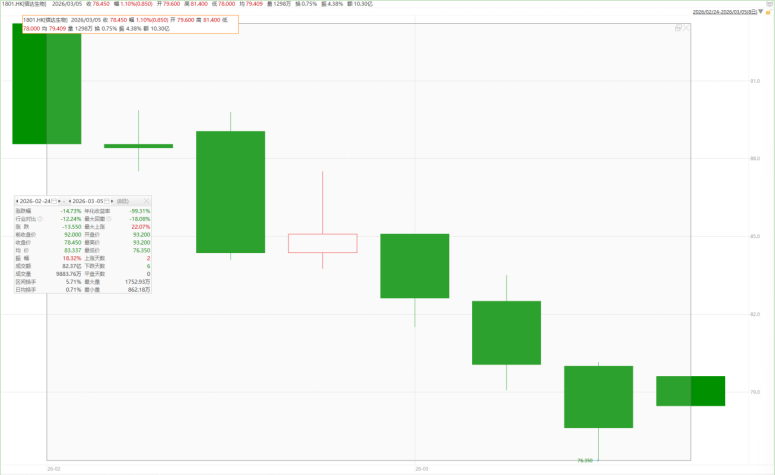
Core Viewpoint - Recently, Innovent Biologics (1801.HK) announced a global strategic collaboration with Eli Lilly to jointly advance the global development of innovative drugs in oncology and immunology [1] Group 1: Strategic Collaboration - Innovent will lead the research and development from drug discovery to clinical concept verification in China, while Eli Lilly will have exclusive development and commercialization rights outside Greater China [1] - Innovent will receive an upfront payment of $350 million and could earn up to approximately $8.5 billion in milestone payments based on subsequent development, regulatory, and commercialization achievements [1] - Innovent will also enjoy a tiered sales share of net sales outside Greater China for the related products [1] Group 2: Financial Performance - Innovent disclosed that it expects total product revenue to reach approximately RMB 11.9 billion in 2025, a year-on-year increase of about 45%, marking its first time surpassing the RMB 10 billion threshold [1] Group 3: Market Reaction and Concerns - Despite the positive financial outlook, the secondary market reacted coldly, with Innovent's stock price declining by 14.73% from February 24 to March 5, exceeding the industry average decline of 12.24% [3] - The company faces increasing pressure from intensified competition in the innovative drug sector and ongoing healthcare cost control measures [5] Group 4: Core Product Performance - Innovent's cornerstone product, PD-1 inhibitor Tyvyt (sintilimab), has seen a significant slowdown in growth after a peak in 2020, with sales dropping nearly 30% in 2022 [7][9] - The sales revenue for Tyvyt was approximately RMB 3.82 billion in 2024, with a projected growth rate of only about 5% for 2025 [9] Group 5: Competitive Landscape - The PD-1 market is becoming increasingly competitive, with similar products from competitors like BeiGene and Hengrui rapidly catching up in terms of indications and healthcare coverage [9] - Innovent's new GLP-1 drug, Ma Shidu (mounjaro), is entering a highly competitive market, facing aggressive price cuts from major players like Eli Lilly and Novo Nordisk [10][11] Group 6: Strategic Adjustments - Innovent is adjusting its strategy by focusing on core projects and optimizing cash flow, which may involve reducing its research pipeline to concentrate resources on commercially viable projects [18] - The company aims to stabilize its fundamentals while nurturing the next growth driver to achieve its revenue target of RMB 20 billion by 2027 [18]

并购公司业绩“爆雷”!博雅生物总裁辞职,任职未满10个月
Mei Ri Jing Ji Xin Wen· 2026-02-27 11:04
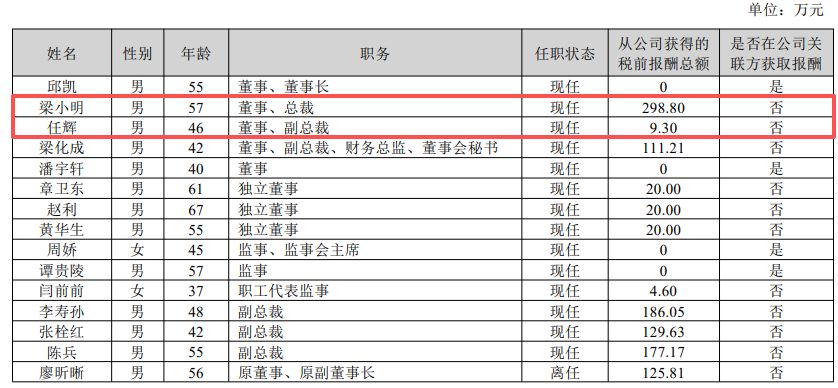
Core Viewpoint - The resignation of Ren Hui, the president of Boya Bio, after less than 10 months in office, coincides with the company's forecast of a significant decline in net profit for 2025, primarily due to asset impairment from an acquisition [1][5]. Group 1: Company Leadership Changes - Ren Hui resigned from his positions as president and board member of Boya Bio due to work changes, and his resignation leaves the president position temporarily vacant [1][2]. - Ren Hui was appointed as president on May 16, 2025, and previously served as vice president starting October 23, 2024, with a reported pre-tax salary of 93,000 yuan in 2024 [2][3]. Group 2: Financial Performance - Boya Bio's 2025 annual performance forecast indicates a net profit decline of 65.62% to 73.55%, estimated between 105 million yuan and 136.5 million yuan, with a projected non-recurring net loss of 7.5 million to 15 million yuan [5][6]. - The decline in financial performance is attributed to three main factors: impairment losses from the acquisition of Green Cross Hong Kong Holdings, depreciation and amortization impacts from the acquisition, and decreased gross margins in the blood products business due to intensified market competition and regulatory changes [6][7]. Group 3: Acquisition Impact - The acquisition of Green Cross Hong Kong Holdings in November 2024 has led to significant impairment losses, totaling approximately 300 million yuan, affecting the company's financial outlook for 2025 [6][7]. - The performance of the acquired company's products, particularly hyaluronic acid, has been negatively impacted by a downturn in the market, contributing to the overall financial challenges faced by Boya Bio [6][7]. Group 4: Shareholder Actions - Despite the poor financial outlook, the controlling shareholder, China Resources Pharmaceutical Group, has increased its stake in Boya Bio, acquiring an additional 6.0509 million shares, representing 1.20% of the total share capital [4][6]. - The stock price of Boya Bio has been on a downward trend since October 2024, with a significant drop from a peak of 41.51 yuan to a closing price of 22.25 yuan as of February 27, 2026, resulting in a market capitalization of approximately 11.22 billion yuan [6][7].

神州细胞:2025年营收15.60亿元,净利润由盈转亏
Xin Lang Cai Jing· 2026-02-27 09:06
Core Viewpoint - Shenzhou Cell reported a significant decline in revenue and a net loss for the fiscal year 2025, primarily due to healthcare cost control, price reductions of core products, and increased commercialization and R&D investments [1] Financial Performance - Total operating revenue for 2025 was 156,015.30 million yuan, representing a year-on-year decrease of 37.91% [1] - The net profit attributable to the parent company was -55,329.37 million yuan, indicating a shift from profit to loss [1] - Total assets at the end of the reporting period were 383,328.43 million yuan, an increase of 16.73% compared to the beginning of the year [1] - Equity attributable to the parent company's owners was 13,956.18 million yuan, a decrease of 0.95% from the start of the year [1] Factors Influencing Performance - The performance decline was mainly driven by factors such as healthcare cost control measures, price reductions of key products, and increased investments in commercialization and research and development [1]

做眼科器械的爱博医疗花了近七亿买了家运动医学公司
Xin Lang Cai Jing· 2026-02-26 14:00
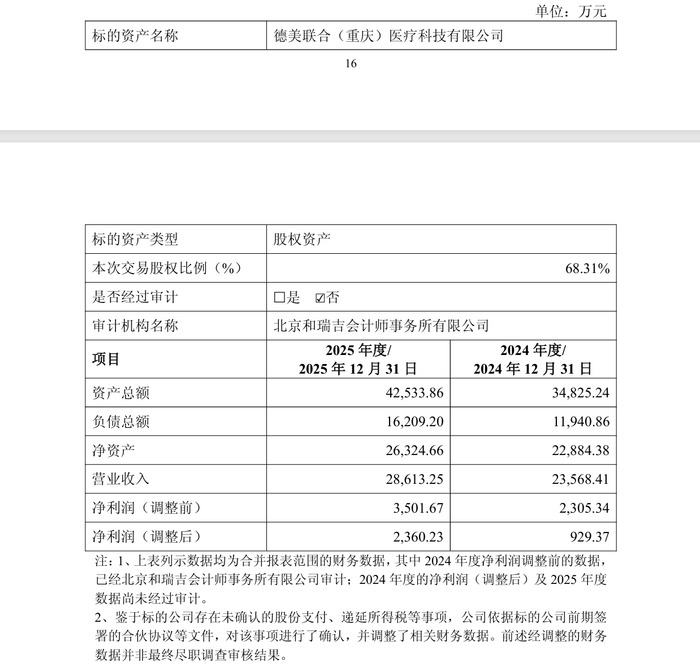
Core Viewpoint - Aibo Medical announced plans to acquire a 68.31% stake in Demei Medical for 683 million yuan, which will make Demei a subsidiary and included in Aibo's financial statements [1][2]. Group 1: Acquisition Details - The acquisition price for the 68.31% stake in Demei Medical is 683 million yuan [1]. - Demei Medical, established in 2016, is a leading company in the domestic sports medicine sector with a sales network covering Southeast Asia, Latin America, the Middle East, and Europe [2]. - Demei Medical has won bids for several products in the fourth batch of national high-value consumables procurement, indicating a strong market presence [2]. Group 2: Financial Performance - Demei Medical's projected revenues for 2024 and 2025 are 236 million yuan and 286 million yuan, respectively, with adjusted net profits of 9.29 million yuan and 23.60 million yuan [2]. - The overall gross margin for Demei Medical is approximately 70% [2]. - Demei Medical's net asset book value is 242 million yuan, with a valuation of 1.074 billion yuan, resulting in a value increase rate of 343.29% [6]. Group 3: Strategic Intent and Risks - Aibo Medical aims to leverage its existing R&D advantages and management systems to cultivate new profit growth in the high-potential sports medicine sector [6]. - The acquisition includes performance guarantees, requiring Demei Medical to achieve audited net profits of at least 45 million yuan, 55 million yuan, and 65 million yuan for the years 2026 to 2028, or a cumulative net profit of no less than 165 million yuan [6]. - Aibo Medical's financial strategy for the acquisition involves using a combination of acquisition loans and its own funds, with loans expected to cover 70%-80% of the transaction price [6]. Group 4: Market Context and Challenges - Aibo Medical's recent financial performance has been affected by industry policies such as medical insurance cost control and competitive pressures, leading to declining revenue growth rates [9][11]. - The company reported revenues of 1.41 billion yuan and 1.14 billion yuan for the first three quarters of 2024 and 2025, respectively, with net profits showing a downward trend [9]. - The competitive landscape in the contact lens market is intensifying, with signs of price wars emerging [11].

石四药集团(02005)发盈警,预期年度股权持有人应占溢利同比下降约45%至60%
智通财经网· 2026-02-16 09:01
Core Viewpoint - The company, Stone Four Pharmaceutical Group, anticipates a significant decline in profit attributable to equity holders, projecting a decrease of approximately 45% to 60% compared to HKD 1.061 billion for the year ending December 31, 2024 [1] Group 1: Profit Forecast - The estimated decline in profit is primarily due to a decrease in revenue driven by several factors, including the absence of large-scale epidemics and healthcare cost control measures leading to reduced drug sales [1] - The company expects that the absence of major epidemics, which previously boosted demand for intravenous infusions and other medications, will negatively impact sales for the year ending December 31, 2025 [1] - Increased price pressure from expanded volume-based procurement initiatives and intensified competition in both domestic and international markets is also contributing to the anticipated revenue decline [1] Group 2: Financial Health and Strategy - Despite the expected decline in profit, the company's financial position and cash flow remain robust [1] - The company has been focusing on product diversification in recent years, enhancing sales of oral formulations and active pharmaceutical ingredients to optimize its product mix [1] - The company is actively taking appropriate measures to seek improvements in performance, while closely monitoring the situation and responding in a timely manner as it progresses into 2026 [1]
神州细胞2025年预亏超5亿,核心产品销售受挫,股价近期走弱
Jing Ji Guan Cha Wang· 2026-02-14 01:16
Core Viewpoint - Shenzhou Cell forecasts a net profit loss of 520 million to 580 million yuan for 2025, primarily due to significant revenue decline from its core product Anjiah, impacted by medical insurance cost control and price reductions [1] Financial Performance - The company anticipates a net profit loss of 503 million to 563 million yuan after excluding non-recurring items, with R&D investment projected between 830 million to 870 million yuan [1] - In the Q3 2025 report, revenue decreased by 32.27% year-on-year, with a net profit loss of 251 million yuan and a debt ratio of 101.46% [1] Recent Developments - During an institutional survey, Shenzhou Cell disclosed that several products (e.g., SCT1000, SCT650C, SCTB14) have entered or are planned to advance to Phase III clinical trials, with some potentially entering the registration research phase in 2026 [2] - The company plans to advance several new product IND applications this year and considers overseas business development as a medium to long-term strategy, although specific transactions remain uncertain [2] Stock Performance - Over the past seven trading days, Shenzhou Cell's stock price has declined by 1.55%, with a price range fluctuation of 4.98% [3] - The latest closing price is 39.38 yuan, with trading volume gradually decreasing and turnover rate maintained between 0.24% and 0.46% [3] - The stock has underperformed compared to the overall decline in the pharmaceutical and biotechnology sector [3]
珍宝岛2025年预亏超10亿元,股价连续下跌
Jing Ji Guan Cha Wang· 2026-02-12 08:31
Group 1 - The company, Zhenbao Island, announced a forecast for 2025 indicating a net profit loss of between 1.012 billion to 1.173 billion yuan, marking its first annual loss since its listing, primarily due to delayed procurement of traditional Chinese medicine and healthcare cost control, leading to a 53% year-on-year revenue decline and a 93% drop in gross profit [1] - Revenue has continuously declined from a peak of 4.219 billion yuan in 2022, with only 919 million yuan reported in the first three quarters of 2025, representing a 54.73% year-on-year decrease, while the net profit excluding non-recurring items has turned negative multiple times since 2022, indicating weakened core profitability [1] - The company's investment in innovative drug research and development is progressing slowly, making it difficult to support performance in the short term [1] Group 2 - The stock price of Zhenbao Island has experienced a continuous decline over the past seven days, with a total drop of 3.91%, closing at 8.12 yuan on February 12, down 1.81% for the day, and showing a net outflow of 11.388 million yuan in principal funds on the same day, with retail investors accounting for 36% [2] - Technical analysis indicates that the stock is in a bearish trend, with the moving average system showing a bearish arrangement, a resistance level at 9.33 yuan, and a support level at 7.96 yuan, underperforming compared to the pharmaceutical and biological sector and the broader market [2] Group 3 - On February 6, 2026, the controlling shareholder, Chuangda Group, announced a reduction in its shareholding from 56.98% to 55.86% due to the conversion of exchangeable bonds, although control has not changed [3] - As of February 10, Chuangda Group has pledged 80.48% of its shares, with an additional 1.17 million shares pledged to secure the exchangeable bond guarantee [3] - On February 6, the Ministry of Industry and Information Technology and other departments released the "High-Quality Development Plan for Traditional Chinese Medicine Industry (2026-2030)," emphasizing the upgrade of the entire industry chain, which aligns with Zhenbao Island's layout, but the short-term impact on performance is limited [3]

集采压价、存货积压、转型迟缓 珍宝岛研发投入“节衣缩食”却持续大额分红
Xin Lang Cai Jing· 2026-02-11 07:39
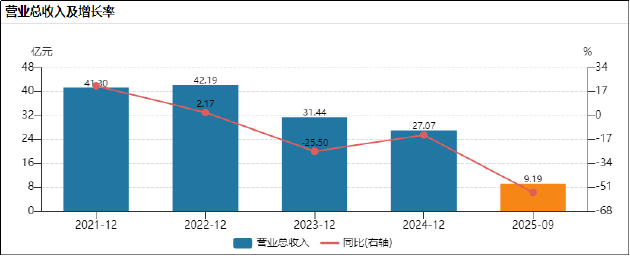
Core Viewpoint - The traditional Chinese medicine company Zhenbaodao Pharmaceutical is expected to report a net loss of between 1.012 billion and 1.173 billion yuan for the fiscal year 2025, marking its first annual loss since its listing in 2015, nearly erasing the total net profit from the previous three years [1][10] Financial Performance - The company's revenue peaked at 4.219 billion yuan in 2022 but plummeted by 25.5% to 3.144 billion yuan in 2023, with a further decline of 13.84% to 2.707 billion yuan in 2024, falling below 2018 levels. In the first three quarters of 2025, revenue dropped by 54.73% to only 919 million yuan, indicating a trend towards a historical low for the year [2][11] - The net profit, excluding non-recurring gains and losses, turned negative for the first time in 2022, with a loss of 280 million yuan. Although the loss narrowed to 31.84 million yuan in 2023, the downward trend continued, with an expected loss of between 1.073 billion and 1.234 billion yuan in 2025 [4][13] Asset Structure and Risks - The company faces significant asset structure risks, with accounts receivable reaching 3.111 billion yuan by the end of September 2025, while revenue for the same period was only 919 million yuan, resulting in a ratio of accounts receivable to revenue of 338.52%. This ratio has been on the rise in recent years [4][13] - Inventory levels surged from 1.005 billion yuan in Q3 2023 to 1.521 billion yuan in Q3 2025, reflecting a more than 50% year-on-year increase, indicating severe sales obstacles and inventory accumulation issues [4][13] Operational Efficiency - The company's operational efficiency has deteriorated, with inventory turnover days and accounts receivable turnover days reaching historical highs of 692.31 days and 919.37 days, respectively, more than doubling compared to the previous year [5][14] Impairment Losses - Zhenbaodao plans to recognize approximately 395 million yuan in credit impairment losses and about 266 million yuan in asset impairment losses, with these combined losses exceeding 660 million yuan, significantly impacting annual performance [7][16] Business Challenges - Core products have been included in the national centralized procurement of traditional Chinese medicine, coupled with increased pressure from national medical insurance cost control, leading to significant price reductions. The anticipated volume increase through price reductions has not materialized, resulting in a decline in both volume and price [7][16] Research and Development - Despite attempts to explore new growth avenues, the company has significantly reduced R&D investments, with R&D expenses dropping by 52.64% to 37.99 million yuan in 2024, accounting for only 2.60% of revenue, far below industry leaders [8][17] - The company announced plans to invest over 400 million yuan in building an R&D platform for innovative drugs, but actual investment progress has been slow, with only 92.17 million yuan spent by mid-2025, representing 26.26% of the planned investment [8][17] Dividend Policy and Governance Issues - Zhenbaodao has maintained a rigid cash dividend policy, distributing a total of 1.302 billion yuan since its listing, despite deteriorating fundamentals. In 2023 and 2024, the company distributed 188 million yuan and 141 million yuan, respectively [9][18] - The concentrated ownership structure raises concerns, as the largest beneficiary of dividends is the controlling shareholder, with a high pledge ratio of 81% for the controlling shareholder's equity, increasing financial risks [9][18] - Governance issues were highlighted by a lack of proper procedures in a significant 425 million yuan subsidiary equity transfer, exposing internal control deficiencies [10][19] Conclusion - Zhenbaodao Pharmaceutical is facing severe challenges due to industry changes, internal governance issues, and actions by major shareholders, necessitating a balance between short-term returns and long-term development to restore fundamentals and rebuild market trust [10][19]
神州细胞:安佳因®2025年销售下降的主要影响因素
Zheng Quan Ri Bao Zhi Sheng· 2026-02-09 12:28
Core Viewpoint - The sales of Anjiahin® are expected to decline significantly by 2025 due to several factors, including medical insurance cost control and substantial price reductions initiated by the company in response to national healthcare policies [1] Group 1: Sales and Market Impact - The decline in Anjiahin® sales is primarily influenced by the reduction in patient usage resulting from medical insurance cost control measures [1] - Starting from the third quarter of 2025, Anjiahin® will undergo significant price cuts to align with the national healthcare bureau's initiatives, aiming to make the medication more accessible to patients [1] Group 2: Treatment Guidelines and Patient Care - The revised "Chinese Guidelines for Hemophilia Treatment (2025 Edition)" has redefined treatment approaches for coagulation disorders, shifting from traditional preventive treatment to regular replacement therapy and from on-demand treatment to temporary replacement therapy [1] - The medical community is emphasizing the importance of preventive treatment, and the company hopes that adult patients will receive similar protections as pediatric patients [1] - The company anticipates that the recombinant factor VIII will receive equal treatment as blood-derived factor VIII in the future [1]