地缘风险升级

Search documents
个别机构看多黄金到6600美元,多方提示超买风险
Di Yi Cai Jing· 2026-01-26 23:20
Core Viewpoint - The surge in gold and silver prices is driven by a combination of factors including monetary credit reconstruction, escalating geopolitical risks, and liquidity expectations, with gold prices potentially reaching $6,000 per ounce by 2026 [1][3]. Group 1: Gold and Silver Price Movements - On January 26, London spot gold broke through the $5,000 and $5,100 per ounce thresholds, reaching a historical high of $5,111 per ounce, while silver also hit a new record, surpassing $110 per ounce before settling at $108 [1]. - In the domestic futures market, the main contract for gold rose by 3.67%, reaching a new high of 1,151 yuan per gram, while silver surged nearly 13%, peaking at 28,226 yuan per kilogram [1]. Group 2: Institutional and Investor Sentiment - Various institutions maintain bullish outlooks on gold, with UBS setting a target price of $5,000 per ounce, while Goldman Sachs raised its year-end target from $4,900 to $5,400, citing increased demand from private investors and central banks [3]. - Bank of America has set a target of $6,000 per ounce for gold, predicting a significant price increase based on historical trends [3]. Group 3: Investment Trends and Demand - There is a notable increase in investor interest in gold, with many seeking to diversify their portfolios through various investment vehicles such as gold ETFs and stocks [5]. - The largest gold ETF in China surpassed 100 billion yuan in assets for the first time, reflecting a significant inflow of capital into gold investments [6]. Group 4: Central Bank Activities - Central banks globally continue to increase their gold reserves, with China's central bank reporting a rise in gold holdings, and emerging market central banks actively converting foreign reserves into gold [7]. - The World Gold Council reported that global official gold reserves reached approximately $3.69 trillion, with central banks purchasing gold at a rate significantly higher than in previous years [7]. Group 5: Market Risks and Regulatory Actions - Regulatory bodies have begun to implement measures to cool down the overheated gold market, including adjusting trading limits and increasing risk assessment requirements for gold investment products [8]. - Analysts caution that the current market is driven by emotional factors, and while the long-term outlook for gold remains positive, short-term corrections may be necessary due to overbought conditions [9].
金价创历史新高,为什么越是普通人越容易被套牢?
Sou Hu Cai Jing· 2026-01-26 16:52
Group 1 - The recent surge in gold prices is driven by four main factors: expectations of Federal Reserve interest rate cuts, central banks accumulating gold, escalating geopolitical risks, and increasing pressure on the credibility of the US dollar [3] - Central banks, including China and Poland, have been actively purchasing gold, indicating a preference for gold over the US dollar as a more reliable asset [3] - The current market sentiment suggests that gold is viewed as a safe haven amidst rising global tensions and concerns over the long-term stability of the US dollar [3] Group 2 - The analogy of the US dollar as a ticket and gold as a house illustrates that while the dollar may depreciate with excessive printing, gold retains its value [5] - There are differing opinions on whether to invest in gold now, with some believing in its long-term value due to central bank purchases, while others caution against the rapid price increase driven by market emotions [7] - Goldman Sachs' prediction of gold reaching $6,600 is seen as plausible, although short-term volatility is expected to be significant [8] Group 3 - The outlook for the gold market in 2026 suggests that while gold is a worthy asset to hold, it should not be treated as a speculative investment [11]

个别机构看多黄金到6600美元
Di Yi Cai Jing Zi Xun· 2026-01-26 16:11
Core Viewpoint - The surge in gold and silver prices is driven by a combination of monetary credit reconstruction, escalating geopolitical risks, and liquidity expectations, with gold prices potentially reaching $6,000 per ounce by 2026 [2][5]. Group 1: Price Movements - As of January 26, London spot gold prices reached a historic high of $5,111 per ounce, while silver prices peaked at $110 per ounce before settling at $108 [2]. - In the domestic futures market, the main contract for gold rose by 3.67% to a new high of 1,151 yuan per gram, while silver surged nearly 13% to 28,226 yuan per kilogram [2]. - Year-to-date, gold and silver prices have increased by over 17% and 52%, respectively [3]. Group 2: Institutional Outlook - Multiple institutions maintain bullish forecasts for gold, with UBS setting a target price of $5,000 per ounce, while Goldman Sachs raised its target from $4,900 to $5,400 due to increasing demand from private investors and central banks [5]. - Bank of America has set a target of $6,000 per ounce for gold by the end of the year, citing historical trends of significant price increases during bull markets [5]. - Jefferies Group even suggests that gold could reach $6,600 per ounce this year [5]. Group 3: Investment Trends - There is a significant increase in investor interest in gold, with many seeking to invest in gold ETFs and stocks, leading to a surge in A-share gold concept stocks [7]. - The largest gold ETF in China surpassed 100 billion yuan in assets for the first time, reflecting a growing trend in gold investment [8]. - As of January 26, the total management scale of seven gold ETFs tracking the Shanghai Gold Exchange reached 267.9 billion yuan [8]. Group 4: Central Bank Activities - Global central banks continue to purchase gold at high levels, with an estimated monthly average of 60 tons, significantly higher than the pre-2022 average of 17 tons [9]. - As of December 2025, China's gold reserves increased to 74.15 million ounces, marking a continuous increase over 14 months [8]. Group 5: Market Sentiment and Regulation - The current gold market is characterized by heightened emotional trading, with regulatory bodies beginning to implement measures to cool down the market [11]. - Some gold ETFs have started to limit inflows to manage high demand and protect existing investors [8]. - Analysts warn of potential overbought conditions in the market, suggesting that investors should be cautious of a possible correction [12].
金银价疯涨,全球“氪金”热潮能否持续
Di Yi Cai Jing· 2026-01-26 13:52
Group 1 - The core viewpoint of the articles highlights a bullish sentiment towards gold and silver prices, with predictions of gold potentially reaching $6,000 per ounce by 2026, driven by various economic factors [1][2] - On January 26, London spot gold broke through the $5,000 and $5,100 per ounce levels, reaching a historical high of $5,111 per ounce, while silver also set a new record, surpassing $110 per ounce before settling at $108 [1] - In the domestic futures market, the main contract for gold rose by 3.67%, reaching a historical high of 1,151 yuan per gram, and silver surged nearly 13%, peaking at 28,226 yuan per kilogram [1] Group 2 - The bullish trend in precious metals is attributed to a combination of factors including the reconstruction of monetary credit, escalating geopolitical risks, and liquidity expectations, leading to a global revaluation of precious metal assets [1] - Bank of America has raised its near-term gold price target to $6,000 per ounce, citing historical trends where gold prices have increased by an average of 300% over approximately 43 months during past bull markets [2] - Jefferies Group has an even more optimistic outlook, suggesting that gold prices could reach $6,600 per ounce this year [2]

现货黄金突破4800美元,黄金基金ETF(518800)大涨2%,资金抢筹布局
Sou Hu Cai Jing· 2026-01-21 01:57
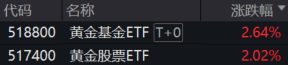
Core Viewpoint - Gold prices have surged, with spot gold in London surpassing $4800 per ounce, leading to significant increases in gold ETFs [1][2]. Short-term Drivers - The escalation of geopolitical risks and macroeconomic disturbances have heightened demand for gold as a safe-haven asset, making global geopolitical tensions a key catalyst for short-term gold price increases [4]. - Recent U.S. economic data showed a lower-than-expected rebound in the December 2025 CPI, with core CPI rising by 0.2% against a forecast of 0.3%. Additionally, initial jobless claims unexpectedly fell to 198,000, the lowest since late November, which may impact interest rate expectations [4]. Medium to Long-term Support - Global liquidity easing and a trend towards de-dollarization are expected to provide solid support for gold prices. In the past year, nine out of ten G10 countries have lowered interest rates, which is anticipated to continue, reducing the holding costs of gold [5]. - Concerns over U.S. debt and government intervention have led central banks to increase gold reserves, with recent data indicating that global central bank gold holdings have surpassed U.S. Treasury holdings for the first time since 1996. This trend is likely to persist [6]. - The combination of a Federal Reserve rate-cutting cycle, increasing global uncertainties, and de-dollarization trends positions gold as a potential new asset pricing anchor, with Citibank predicting a spot gold price of $5000 per ounce in the next three months [6]. Investment Opportunities - Investors are encouraged to consider gold-related ETFs to capitalize on the entire industry chain. The two core investment vehicles highlighted are: - Gold Fund ETF (518800): Direct investment in physical gold, exempt from value-added tax, providing a convenient tool for ordinary investors to track gold price movements [7]. - Gold Stock ETF (517400): Covers stocks across the entire gold industry, allowing investors to benefit from rising gold prices and industry growth [7].