
钠锂并行

Search documents
热点回应丨钠离子电池能否终结“电动爹”?低温性能与安全优势引关注
Ke Ji Ri Bao· 2026-02-06 12:37
Core Viewpoint - The introduction of sodium-ion batteries by CATL is expected to address the challenges faced by electric vehicles (EVs) in cold climates, such as reduced range and slow charging times, potentially transforming the market for EVs in northern regions [1] Group 1: Sodium-Ion Battery Advantages - Sodium-ion batteries exhibit superior low-temperature performance, maintaining over 90% capacity at -40°C and stable discharge even at -50°C, compared to lithium iron phosphate batteries which drop below 80% capacity at -20°C [2] - The safety profile of sodium-ion batteries is significantly higher, showing no smoke, fire, or explosion even under extreme conditions such as drilling or cutting, due to the thermal stability of sodium salt electrolytes [2] Group 2: Addressing Range Anxiety - In cold regions, sodium-ion batteries can enhance low-temperature discharge power by nearly three times compared to lithium iron phosphate batteries at -30°C, ensuring strong power output and fast charging in extreme weather [3] - The design of vehicles using sodium-ion batteries can eliminate the need for battery heating systems, reducing energy consumption and improving effective winter range to over 90% of the displayed value [3] - The penetration rate of new energy vehicles in northern provinces of China is currently below 10%, but the adoption of sodium batteries could potentially increase this figure to 30% or higher [3] Group 3: Long-term Maintenance and Infrastructure - Sodium-ion batteries have a lower long-term maintenance cost and a significantly reduced risk of thermal runaway, enhancing safety [4] - The raw materials for sodium-ion batteries are abundant and less expensive, with sodium reserves approximately 1200 times that of lithium, which could lower overall vehicle costs [4] - Existing charging infrastructure is compatible with sodium-ion batteries, requiring no modifications, as their operating voltage is similar to that of lithium iron phosphate batteries [4] - CATL plans to establish over 3,000 battery swap stations by the end of 2026, focusing on cold regions to improve user convenience [4] - The industry is moving towards a "sodium-lithium parallel" era, where lithium batteries target high-end markets while sodium batteries cater to cost-sensitive and low-temperature needs, promoting broader adoption of electric transportation [4]

纳电走向量产乘用车,耐低温性能或拓展新能源边界
Guan Cha Zhe Wang· 2026-02-05 08:35
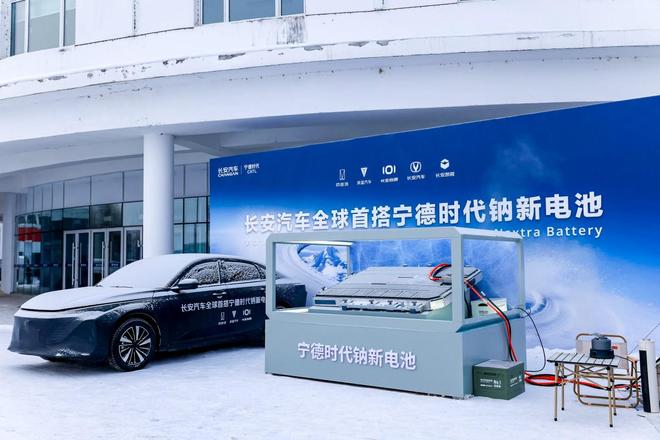
Core Viewpoint - Changan Automobile and CATL have officially launched the sodium-ion battery strategy and the world's first mass-produced passenger vehicle equipped with sodium-ion batteries, marking a significant step in the commercialization of sodium-ion battery technology [1][3]. Group 1: Sodium-Ion Battery Strategy - CATL will be the sole partner for Changan's sodium-ion battery strategy, with plans to equip multiple brands including Avita, Deep Blue, Qiyuan, and Gravity with "sodium new" batteries, with the first model expected to launch mid-year [3]. - The mass production of passenger vehicles using sodium-ion batteries represents a critical milestone in the commercialization of this technology, following CATL's earlier release of sodium-ion batteries for light commercial vehicles [3][4]. Group 2: Market Context and Demand - The demand for sodium-ion batteries is driven by the need for car manufacturers to compete with fuel vehicles, especially as the sales of new energy vehicles in China surpassed 50% last year, and as subsidies for new energy vehicles decline [4]. - The low-temperature performance and high safety characteristics of sodium-ion batteries are seen as a new technological pathway to activate more usage scenarios, particularly in cold northern regions where lithium batteries face challenges [6]. Group 3: Technical Specifications and Performance - The first mass-produced passenger vehicle with sodium-ion batteries has completed winter testing, featuring a pure electric range exceeding 400 kilometers and a maximum energy density of 175 Wh/kg [6]. - The sodium-ion battery demonstrates superior low-temperature performance, with discharge power nearly three times higher than lithium iron phosphate models at -30°C, and a capacity retention rate exceeding 90% at -40°C [8]. Group 4: Future Developments and Market Positioning - CATL plans to establish over 3,000 chocolate battery swap stations by 2026, focusing on northern cold regions to support the sodium-ion battery ecosystem, while also enhancing the lithium battery charging infrastructure [12]. - The future of electric vehicles is expected to feature a dual approach, with lithium batteries dominating long-range and high-performance models, while sodium-ion batteries will cater to medium-range, cold-weather, and high-safety demand vehicles [12].


电池的任督二脉,被钠打通了
投资界· 2025-04-25 07:03
以下文章来源于远川研究所 ,作者罗松松 远川研究所 . 刻画这个时代 但现实告诉我们,动力电池没有绝对的"完美",这并非技术桎梏,而是材料特性、物理 化学规律与工程实现之间的天然矛盾。 从能量密度与安全性的博弈,到成本控制与低温性能的取舍,每一项技术突破都伴随着 权衡与妥协。 动力电池也迎来了自己的"多核时代"。 作者 | 罗松松 编辑 | 熊宇翔 来源 | 远川研究所 (ID:YuanChuanInstitution) 1 9 91年,当索尼将钴酸锂与石墨组成的小电池装入摄像机时,锂电池商业化的历史大幕 就此拉开。 此后十几年,锂电池和消费电子行业比翼齐飞,直到2008年,当特斯拉将装有6831颗钴 酸锂电池的Roa dst e r推向市场并且大获成功后,原本作为便携式能源的锂电池又被赋予 了一个全新的历史使命:整车动力核心。 发明钴酸锂的J o h n Goode nou g h当初怎么也没想到,自己的发明竟然意外开启了一场前 所未有的电动车革命,也让动力电池行业此后走出了一条"性能暴力拉升,成本急剧下 探"的摩尔曲线。 陡峭的曲线让电动车从奢侈品降格为日用品,逐渐走入寻常百姓家,这种平权化的背后 是动力 ...
电池的任督二脉,被钠打通了
远川研究所· 2025-04-22 12:04
陡峭的曲线让电动车从奢侈品降格为日用品,逐渐走入寻常百姓家,这种平权化的背后是动力电池在材料、结构和工艺层面持续不断的创新。 从钴酸锂到磷酸铁锂和三元锂,从钠电池到固态电池,从 18650 的小圆柱到 4680 大圆柱,从模组方案到电池车身一体化,每一次的技术迭代都伴随着科 学家和工程师对于" 完美电池" 的不懈追求。 但现实告诉我们,动力电池没有绝对的" 完美" ,这并非技术桎梏, 而是材料特性、物理化学规律与工程实现之间的天然矛盾。 1991年,当索尼将钴酸锂与石墨组成的小电池装入摄像机时,锂电池商业化的历史大幕就此拉开。 此后十几年,锂电池和消费电子行业比翼齐飞,直到 2008 年,当特斯拉将装有 6831 颗钴酸锂电池的 Roadster 推向市场并且大获成功后,原本作为便 携式能源的锂电池又被赋予了一个全新的历史使命: 整车动力核心。 发明钴酸锂的 John Goodenough 当初怎么也没想到,自己的发明竟然意外开启了一场前所未有的电动车革命,也让动力电池行业此后走出了一条" 性能 暴力拉升,成本急剧下探" 的摩尔曲线。 从能量密度与安全性的博弈,到成本控制与低温性能的取舍,每一项技术突破都伴随 ...