垂类模型

Search documents
上海浦东新区设立20亿元种子基金
FOFWEEKLY· 2026-01-21 10:01
Core Viewpoint - The article discusses the Shanghai Pudong New Area's initiative to enhance the construction of the Zhangjiang Artificial Intelligence Innovation Town, focusing on the establishment of a 2 billion yuan seed fund to support early-stage investments in AI technologies [1] Group 1: Funding Initiatives - The plan emphasizes the role of artificial intelligence funds, leveraging Shanghai's three major leading industry mother funds and guiding area funds to strengthen collaboration with universities and research institutions [1] - A seed fund of 2 billion yuan will be established, targeting specific areas such as vertical models and embodied intelligence, with a strategy to invest early and in smaller amounts [1] - The initiative aims to increase the direct investment ratio of angel funds and to establish sub-funds focused on concept validation and high-quality incubation [1] Group 2: Corporate Development Support - The plan promotes the establishment of Corporate Venture Capital (CVC) funds, merger and acquisition funds, and S funds to empower the development of growth-stage and mature enterprises [1] - The Zhangjiang Artificial Intelligence Innovation Town will serve as a hub to connect funds and attract outstanding entrepreneurs from both domestic and international markets, fostering the development of unicorn projects [1]

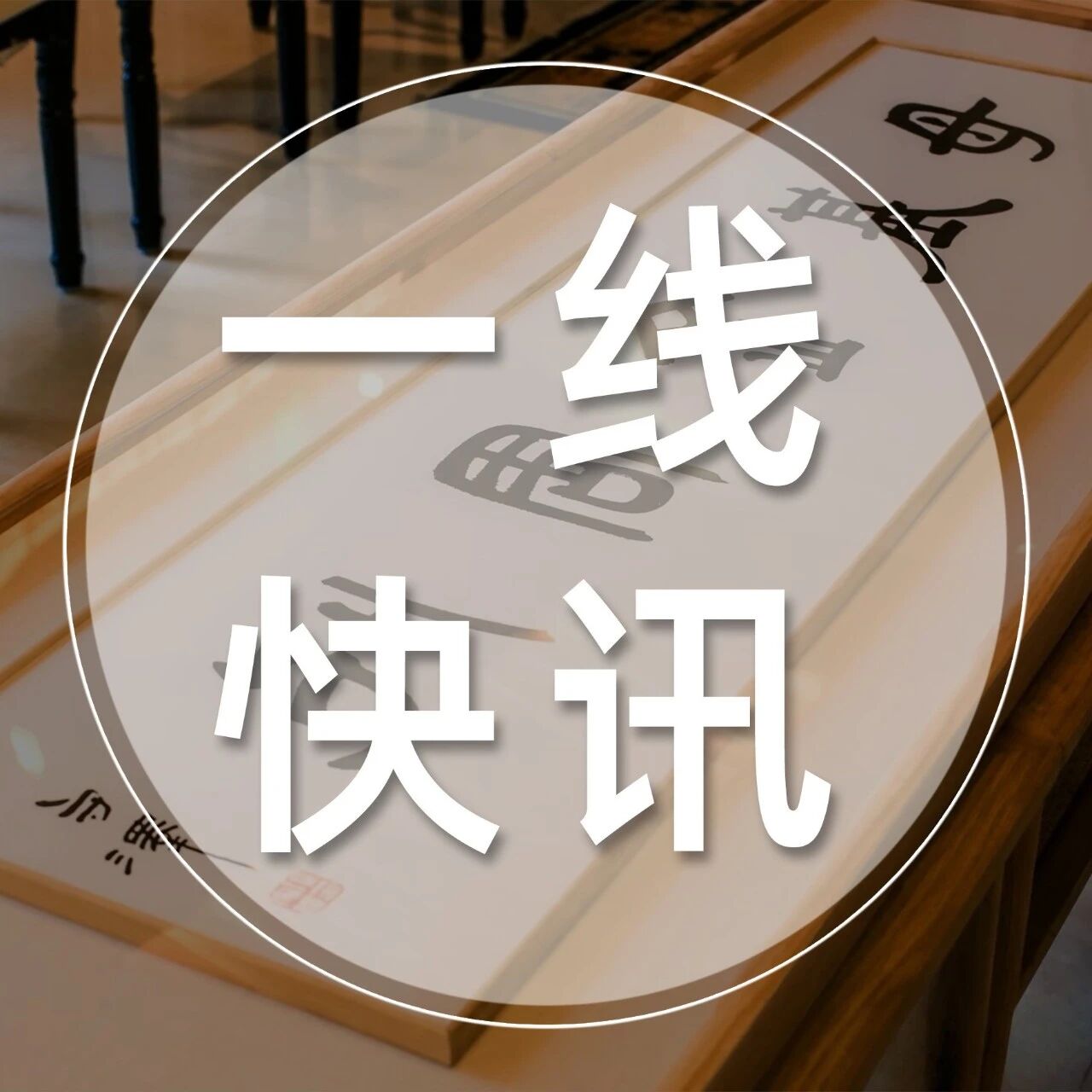
上海浦东持续加码AI投资布局
Zheng Quan Shi Bao· 2026-01-20 15:16
Core Insights - Shanghai Pudong has officially released the "Pudong New Area Work Plan for Promoting the Construction of Zhangjiang Artificial Intelligence Innovation Town," aiming to accelerate the development of a world-class AI industry cluster [1][2] Group 1: Development Goals - By 2027, Zhangjiang AI Innovation Town aims to gather over 800 AI application enterprises, cultivate 3 to 5 industry benchmark companies, complete over 100 large model registrations, and create over 30 AI demonstration application scenarios, with an industry scale reaching 65 billion yuan [2] - By 2030, the goal is to exceed 1,000 AI application enterprises and achieve an industry scale of over 100 billion yuan, forming a number of benchmark application scenarios with replicable significance [2] Group 2: Support Mechanisms - The plan includes establishing a nurturing system for AI enterprises, creating mechanisms for early-stage project discovery, and leveraging competitions and patient capital to attract high-potential companies [2][3] - A 2 billion yuan seed fund will be established, focusing on vertical models and embodied intelligence, with an emphasis on early-stage investments [3][4] Group 3: Investment and Collaboration - Pudong will deepen cooperation with professional investment institutions and establish a rapid response mechanism for project selection and implementation [3] - The Zhangjiang AI Innovation Town Link Fund, initiated by Hillhouse Capital and Pudong Venture Capital Group, aims to connect and incubate outstanding entrepreneurs globally [4]
种子基金、天使基金、CVC基金……上海浦东持续加码AI投资布局
Zheng Quan Shi Bao Wang· 2026-01-20 11:24
Core Viewpoint - The Shanghai Pudong New Area has officially released the "Work Plan for Promoting the Construction of Zhangjiang Artificial Intelligence Innovation Town," aiming to accelerate the development of a world-class AI industry cluster and create a globally influential application innovation hub in the AI sector [1]. Group 1: Development Goals - By 2027, the Zhangjiang AI Innovation Town aims to gather over 800 AI application enterprises, cultivate 3 to 5 industry benchmark companies, complete over 100 large model registrations, and create over 30 AI demonstration application scenarios, with an industry scale reaching 65 billion yuan [4]. - By 2030, the goal is to attract over 1,000 AI application enterprises and achieve an industry scale exceeding 100 billion yuan, forming a set of benchmark application scenarios with replicable significance [4]. Group 2: Support Mechanisms - The plan includes establishing a nurturing system for AI enterprises, creating mechanisms for early-stage project discovery, and leveraging competitions, patient capital, and application scenarios to attract high-potential companies [5]. - A high-growth enterprise reserve will be established to enhance financial empowerment, innovation collaboration, spatial support, and demonstration applications, aiming for quality enterprises to grow into gazelle and unicorn companies within 2 and 3 years, respectively [5]. Group 3: Investment Initiatives - Pudong will deepen cooperation with professional investment institutions and establish a rapid response mechanism for project selection and landing [5]. - A 2 billion yuan seed fund has been set up, focusing on vertical models and embodied intelligence, with an emphasis on early-stage investments [5]. - The Pudong AI Seed Fund, launched during the 2025 World Artificial Intelligence Conference, has a total scale of 2 billion yuan, with an initial scale of 500 million yuan, focusing on seed-stage investments in innovative talent and cutting-edge technologies [6]. Group 4: Infrastructure and Ecosystem Development - The Zhangjiang AI Innovation Town will create an AI innovation functional platform, including AI laboratories, new R&D institutions, and platforms for concept verification, pilot testing, and technology transfer [7]. - There will be an emphasis on building intelligent computing public service platforms and data element aggregation areas to support industry data space construction [7].
上海浦东新区:设立20亿元种子基金 聚焦垂类模型、具身智能等方向
Mei Ri Jing Ji Xin Wen· 2026-01-20 02:16
Group 1 - The core viewpoint of the article is the announcement of a work plan for the construction of the Zhangjiang Artificial Intelligence Innovation Town in Shanghai's Pudong New Area, emphasizing the role of AI funds [1] - The plan aims to strengthen the empowerment of AI funds by leveraging the roles of Shanghai's three major leading industry mother funds and guiding area funds [1] - A seed fund of 2 billion yuan will be established, focusing on vertical models and embodied intelligence, with an emphasis on early and small investments [1] Group 2 - The plan includes increasing the direct investment ratio of angel funds and establishing sub-funds for concept validation and high-quality incubation [1] - It promotes the establishment of CVC funds, acquisition funds, and S funds to empower the development of growth-stage and mature enterprises [1] - The Zhangjiang Artificial Intelligence Innovation Town will serve as a link for funds to gather outstanding entrepreneurs from home and abroad, fostering unicorn projects [1]
发力垂类模型之都,刘根生建言打造概念验证中心与场景中试基地
Xin Lang Cai Jing· 2026-01-18 10:11
Core Insights - Guangzhou is in a "critical window" to seize opportunities in the artificial intelligence (AI) industry, aiming for deep integration of AI across various sectors by 2035, with plans to cultivate over 1,000 AI industry vertical models and establish more than 1,000 typical application scenarios [2] Group 1: Challenges in AI Development - There exists a "valley of death" in transitioning from technical concepts to market applications, with many enterprises and professors lacking platforms for rapid conversion of ideas into demonstrable models [2][5] - A significant 63.2% of manufacturing enterprises in Guangzhou have initiated AI scenario exploration, yet less than 18% have completed concept validation, indicating a bottleneck in transforming business needs into operational prototypes due to a shortage of engineering talent [5][6] Group 2: Proposed Solutions - The establishment of a public AI concept validation center in the Tianhe District is suggested to facilitate low-cost evaluations and mentorship for professors and engineers, helping to bridge the gap from technology to market [3][5] - The Tianhe District is proposed as a hub for AI technology validation and scenario innovation, leveraging its geographical and intellectual advantages to connect research and industry [6][7] Group 3: Industry Opportunities - Guangzhou's diverse industrial base and rich application scenarios present unique advantages for AI integration, particularly in traditional sectors like manufacturing and logistics, which are ripe for intelligent transformation [7][8] - The development of specialized vertical models to address specific industry pain points is recommended, alongside the creation of a distributed, open "AI application scenario innovation and pilot base" to provide real-world testing environments for startups [7][8] Group 4: Support Mechanisms - Government investment funds are called upon to play a leading role in injecting capital into early-stage projects, while enhancing public data operations to provide high-quality scenario data for training vertical models [8][9] - The proposed relay system of "concept validation centers" and "pilot bases" aims to accelerate the integration of AI technology with the real economy, solidifying Guangzhou's position as a hub for vertical models [9]

大行看好!中国科技资产仍存在超预期空间
中国基金报· 2025-11-28 12:51
Core Viewpoint - The capital expenditure demand in the AI investment sector is shifting from US suppliers to Chinese suppliers, indicating significant growth potential for Chinese technology assets, particularly in the domestic substitution direction [1][2]. Group 1: Chinese Technology Assets - Chinese technology assets, especially in the domestic substitution sector, are expected to have unexpected growth potential despite short-term market volatility [2]. - The US's entry into a rate-cutting cycle will lead to increased market liquidity, prompting funds to pursue assets with higher potential returns [2]. - Chinese assets are currently underrepresented in global allocations, indicating significant room for increased investment [2]. - The recognition of China's model capabilities by global tech companies, particularly in the open-source field, is a positive sign for the future [2]. Group 2: Hardware Breakthroughs - By 2025, capital expenditure demand in the AI investment sector is expected to gradually shift from overseas suppliers to domestic suppliers [3]. - The current trend among Chinese tech companies is moving from hoarding imported hardware to actively embracing domestic solutions, which is optimistic for the AI industry [3]. - As leading companies begin large-scale procurement of domestic servers equipped with local chips, profits and capital will flow back to local suppliers, creating a virtuous cycle for technological breakthroughs [3]. Group 3: Global AI Market Dynamics - The global model market has transitioned from a "hundred schools of thought" to a commercialization phase, with a focus on vertical companies [4]. - The funding focus in the AI market is expected to shift towards hardware, with anticipation for the emergence of application-level breakthrough products [4]. - The integration phase of the global model market is nearly complete, with only a few institutions remaining in model development [4]. - Vertical industry data will become key to creating differentiated advantages as model capabilities become more homogeneous [4]. Group 4: AI Commercialization - The path to AI commercialization is clearer for B-end applications compared to C-end applications, making implementation easier [6][7]. - In the e-commerce sector, AI can replace traditional models, reducing operational costs significantly [6]. - The logic behind B-end commercialization is clear and reasonable, focusing on cost savings rather than creating entirely new AI revenue streams [7]. - C-end commercialization faces challenges due to unclear directions and intense competition, with user willingness to pay being low in the Chinese market [7].

都说这个地级市,宜居宜业宜AI
3 6 Ke· 2025-08-06 09:08
Core Insights - Zhuhai is emerging as a leading city for AI development by focusing on localized applications such as smart cities, smart homes, medical AI, and marine technology, avoiding direct competition with general AI [1][22] - The city aims to establish itself as a hub for vertical and scenario-based AI models, with a target of launching over 20 such enterprises by 2024 [6][21] - Zhuhai's unique advantages include its small administrative area, which lowers trial and error costs for AI applications, and its attractive living environment, which draws talent [1][16] Group 1: AI Development Strategy - Zhuhai is concentrating on "small models" as a differentiated competitive strategy, moving away from general-purpose AI [4][6] - The "Modular Space" serves as an incubator for AI applications, facilitating collaboration among enterprises in technology research, model application, and data trading [3][6] - The city has already seen commercial applications of vertical models, such as WPS AI and other industry-specific AI engines [6][7] Group 2: Talent Attraction and Economic Foundation - Zhuhai has a historical commitment to attracting talent, exemplified by the "Million Reward" initiative in the 1990s, which offered substantial rewards for technological contributions [13][14] - The city has implemented various policies to support talent, including free education and housing benefits, reinforcing its appeal to young professionals [14][16] - As of 2024, Zhuhai's GDP per capita is 178,700 RMB, ranking second in Guangdong and among the top 20 nationwide [14] Group 3: Government Support and Infrastructure - The local government is providing significant subsidies for computing power, with a total of 500 million RMB allocated for "computing vouchers" to reduce costs for AI enterprises [18][21] - Zhuhai's government has established a dedicated management bureau for the "Cloud Smart City" initiative, indicating a strong commitment to AI and technology development [18][19] - The city is focusing on developing new industries such as low-altitude economy, AI, humanoid robots, and open-source systems as part of its strategic plan [21][22] Group 4: Positioning in the Greater Bay Area - Zhuhai is strategically positioned as a testing ground for AI applications, differentiating itself from Shenzhen's hard tech focus and Guangzhou's trade center role [22][24] - The city aims to create a technology application ecosystem, encouraging the local implementation of vertical models before scaling them nationally [22][24] - Zhuhai's approach emphasizes leveraging limited resources to foster a sustainable future industry ecosystem rather than engaging in costly competition [24]

人工智能大会上的浦东AI“进化论”
Huan Qiu Wang Zi Xun· 2025-07-27 12:05
Group 1 - The core theme of the news is the rapid evolution of the AI industry in Pudong, showcasing advancements in humanoid robots, AI drugs, and vertical models that empower various industries [1][2]. - The 2025 World Artificial Intelligence Conference highlighted Pudong's AI industry development, with companies like Zhiyuan Robotics achieving significant milestones, including the mass production of humanoid robots [1][2]. - Zhiyuan Robotics launched its versatile exploration robot Lingxi X2 and introduced the "Zhiyuan Qiyuan" general embodiment model at the conference, marking a significant step in humanoid robotics [1]. Group 2 - Pudong is recognized as a fertile ground for innovation and entrepreneurship in the field of embodied intelligence, with companies like Zhiyuan Robotics and Yingsi Intelligence making notable progress [2]. - Yingsi Intelligence reported a revenue of 350 million RMB in 2024, reflecting a year-on-year growth of 108%, and has ten clinical pipelines, including the AI drug Rentosertib, which is the fastest progressing AI drug globally [2]. - The Pudong Moli Community has been instrumental in fostering innovation by focusing on embodied intelligence, scientific intelligence, and application intelligence, creating a unique ecosystem for entrepreneurs [3].
国内首个“主任级AI医生”诞生,夸克健康大模型通过12门主任医师考试
Guan Cha Zhe Wang· 2025-07-23 06:32
Core Insights - Quark Health's large model has successfully passed the written assessment for chief physician in 12 core medical disciplines in China, becoming the first large model to achieve this milestone [1] - This achievement follows the model's earlier success in passing the associate chief physician examination in May, indicating significant advancements in complex medical reasoning tasks [1] - The model's capabilities are now fully integrated into Quark's AI search, allowing users to access "chief-level AI doctor" capabilities for health inquiries [1] Model Development - Quark Health's algorithm head, Xu Jian, stated that the model is based on Tongyi Qianwen and follows a deep engineering route aimed at vertical scenarios, focusing on training the AI to understand medical thinking rather than just answering medical questions [1][2] - A key breakthrough of the model is the development of "slow thinking ability," which combines chain reasoning and multi-stage clinical deduction modeling, enabling the model to derive answers through phased and in-depth reasoning for complex medical issues [1][2] Engineering System - To build the slow thinking capability, Quark employed a "dual data production line + dual reward mechanism" engineering system, categorizing medical data into "verifiable" and "non-verifiable" types for diagnostic and health advice tasks respectively [2] - The training methodology includes a "process reward model" and a "result reward model" to evaluate the reasoning chain's validity and the accuracy of final conclusions, enhancing clinical interpretability and reasoning consistency [2] User Engagement - Quark Health's large model is supported by a professional annotation team of over 1,000 physicians, with more than 400 being associate chief physicians or higher, ensuring high-quality data input [2] - The Quark AI search platform has attracted a significant user base among medical students and doctors, with monthly active users exceeding 2 million among medical students, representing over half of the demographic [2]

技术选择背后的用户逻辑:美图的垂类模型思考
AI前线· 2025-07-06 04:03
Core Viewpoint - The article emphasizes the importance of focusing on niche vertical models in visual AI rather than merely pursuing general large models, highlighting the need for tailored solutions that address specific user pain points and enhance product experience [1][2]. Group 1: Vertical Model Strategy - The choice to deploy vertical models allows the company to create differentiated product capabilities and reduce large-scale investments in foundational model training, leading to better user experience and responsiveness to changing demands [2][5]. - The success of products like Wink, which achieved a second market share position through video beauty and quality restoration, illustrates the effectiveness of focusing on specific user needs in the context of growing short video popularity [3][5]. Group 2: User Experience and Product Development - Prioritizing user experience is crucial, as it requires a comprehensive ability to meet user needs while ensuring simplicity and ease of use [5][6]. - The development of the Meitu Design Studio, which targets small e-commerce sellers lacking professional design resources, showcases the company's strategy to address specific market demands with tailored AI solutions [5][6]. Group 3: AI Workflow and Implementation - Building AI workflows is essential for understanding user work processes and habits, which facilitates the practical application of technology [6][7]. - The company emphasizes the importance of aligning research goals with business objectives, ensuring that both development and implementation teams work towards common targets [6][7]. Group 4: Future Directions in Visual AI - The emergence of generative AI presents opportunities to reshape traditional image intelligence scenarios, enhancing understanding and cross-modal capabilities [7]. - The company aims to democratize AI technology, making it accessible for everyday users, which aligns with its ongoing commitment to developing AI tools [7].