
增收入

Search documents
新华视点·关注地方两会丨从地方两会看稳增长促消费新动向
Xin Hua Wang· 2026-02-12 08:47
Economic Growth - Various provinces are setting GDP growth targets around 5% annually for the 14th Five-Year Plan, with Guangdong and Jiangsu leading in high-quality development [1][2] - Shandong aims to become the first northern province with a GDP exceeding 10 trillion yuan by 2025, while Guizhou and Chongqing also set ambitious growth targets [1][2] Income Increase - The focus on increasing residents' disposable income is evident, with Zhejiang targeting an average income of around 90,000 yuan and urbanization rates of 78% by the end of the 14th Five-Year Plan [3] - Provinces like Tianjin and Shaanxi are implementing plans to boost employment and expand the middle-income group, aiming for steady income growth [3] Cost Reduction - Provinces are emphasizing the reduction of financial burdens on citizens, with Hainan and Gansu focusing on investing resources in public welfare and improving social security systems [4][5] - Shanghai aims to enhance public services in education, healthcare, and housing to alleviate the financial pressures on residents [4] Consumption Promotion - There is a strong emphasis on boosting consumption, with initiatives to promote "emotional consumption" and "scenario-based consumption" across various provinces [5][6] - Tianjin and Guangxi are encouraging the development of new consumption trends, including services targeting the elderly and children, as well as enhancing the supply of quality consumer goods [5][6]
蔡昉:不能让“灵活就业”“新就业形态”与“非正规就业”划等号
和讯· 2025-12-05 09:28
Core Viewpoint - The article emphasizes the importance of integrating "promoting employment, increasing income, and stabilizing expectations" as an inseparable whole, requiring a comprehensive approach to address these areas effectively [4]. Group 1: Five Combinations for a New Macroeconomic Paradigm - The first combination is between addressing cyclical shocks and maintaining long-term growth, suggesting that both short-term fluctuations and long-term trends should be analyzed together [5]. - The second combination involves integrating supply-side potential growth capabilities with demand-side driving forces, highlighting the need to consider both supply and demand factors in macroeconomic analysis [5]. - The third combination focuses on the integration of primary income distribution and redistribution, indicating that both areas require attention to reduce income disparities [5]. - The fourth combination stresses the need to combine "investment in physical assets" with "investment in human capital," recognizing the dual role of human investment in enhancing welfare and driving economic growth [6]. - The fifth combination advocates for the use of various policy tools in a coordinated manner, ensuring that different macroeconomic, social, and labor market policies work together effectively [7]. Group 2: Structural Focus on Employment - The article highlights the current structural changes in the employment landscape, noting a significant shift towards new employment forms such as gig economy and platform jobs, which now account for over 60% of urban employment [10][11]. - It discusses the "involution" of labor mobility, where the flow of labor is stagnating and becoming localized, leading to reduced productivity growth [12][13]. - The article identifies the "age duality" in employment challenges, focusing on the difficulties faced by both young job seekers and older workers, necessitating a comprehensive lifelong training system [14]. Group 3: Increasing Income - The article outlines the dual goals of increasing income: raising per capita income levels and improving income distribution structures, while acknowledging the natural deceleration of income growth [15]. - It points out the need for strong policy interventions to prevent widening income disparities, particularly in urban areas, despite improvements in rural income [16]. - The article emphasizes the potential for enhancing income redistribution through tax reforms and expanding social security systems to achieve more equitable income distribution [16]. Group 4: Stabilizing Expectations - The article asserts that stabilizing expectations hinges on institutional development, addressing uncertainties caused by technological impacts on employment and the challenges of an aging population [18]. - It suggests that while productivity growth can outpace aging population challenges, establishing a fair system for sharing productivity gains is crucial for stabilizing expectations [19].

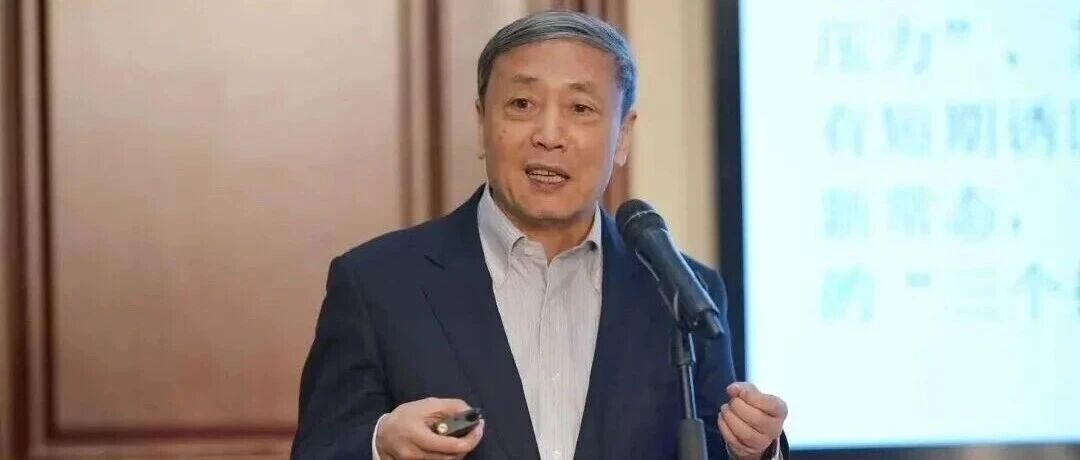
2026年中国经济怎么看、怎么干?刘世锦、李扬、蔡昉、杨瑞龙最新发声
Zheng Quan Shi Bao Wang· 2025-12-01 14:59
Core Insights - The annual China Macroeconomic Forum (CMF) highlighted key recommendations for China's economic and social development during the 14th Five-Year Plan period, emphasizing the need for structural reforms and innovation to stimulate domestic vitality [1][2][3] Group 1: Economic Growth and Policy Recommendations - Liu Shijun suggested that the consumption share of GDP should increase by 1 percentage point annually during the 14th Five-Year Plan, viewing this as a "hard task" for stabilizing growth [5][6] - The CMF report proposed a cross-cycle target for 2026, aiming for a real GDP growth of 4.5%-5%, a CPI target of 1%-3%, and a nominal GDP growth of over 5% [2] - Li Yang identified four financial factors influencing economic operations post-2026: changes in social financing structure, declining interest rates, new opportunities in capital markets, and a new paradigm in monetary policy [3][4] Group 2: Employment and Income Distribution - Cai Fang emphasized the need for a coordinated approach to promote employment, increase income, and stabilize expectations, proposing a "five combinations" strategy [7][8] - The report highlighted the importance of improving income distribution and increasing the proportion of labor remuneration in primary distribution, as well as enhancing public services [8][9] Group 3: Long-term Economic Outlook - Yang Ruilong noted that despite short-term economic pressures, the long-term positive trend of the Chinese economy remains unchanged, with potential growth driven by market-oriented technological innovation and deep urbanization [9][10] - The focus should be on both qualitative stability and reasonable quantitative growth, with an emphasis on building a modern industrial system through technological innovation and institutional reform [10]
2026年中国经济怎么看、怎么干?刘世锦、李扬、蔡昉、杨瑞龙最新发声
证券时报· 2025-12-01 14:16
Core Insights - The article discusses key recommendations from prominent economists at the China Macro Economic Forum (CMF) regarding China's economic development during the "14th Five-Year Plan" period and beyond, emphasizing the importance of structural reforms and innovation to stimulate domestic vitality [1][2]. Group 1: Economic Growth and Consumption - Liu Shijun advocates for increasing the consumption share of GDP by 1 percentage point annually during the "14th Five-Year Plan" period, highlighting the need to stabilize and expand terminal demand to boost investment [6][8]. - The report presented by Liu Xiaoguang suggests setting cross-cycle targets for economic growth, including a real GDP growth target of 4.5%-5% and a CPI target of 1%-3% for 2026 [2]. Group 2: Financial Factors and Market Opportunities - Li Yang identifies four major financial factors influencing economic operations from 2026 onwards: changes in social financing structure, declining interest rates, new opportunities in capital markets, and a new paradigm for monetary policy [4]. - The phenomenon of "disintermediation" is noted as a positive trend, with funds flowing out of the banking system, which could create better conditions for capital market development [3][4]. Group 3: Employment and Income Distribution - Cai Fang emphasizes the need for a coordinated approach to promote employment, increase income, and stabilize expectations, proposing a framework of "five combinations" to address these issues [10][11]. - The focus on increasing per capita income and improving income distribution is critical, with suggestions to enhance labor remuneration and expand public services to reduce disparities [12][13]. Group 4: Long-term Economic Strategy - Yang Ruilong stresses the importance of addressing short-term economic challenges with a long-term perspective, advocating for the modernization of the industrial system and the integration of technological innovation [14][15]. - The article concludes that despite current pressures, the fundamental trend of China's economy remains positive, with potential for sustainable growth through structural reforms and innovation [1][15].

谋篇布局“十五五”•热点问答|如何激发消费新动能?
Zhong Guo Jing Ji Wang· 2025-11-25 05:28
Core Insights - The "Fifteen Five" plan emphasizes the integration of improving people's livelihoods and promoting consumption as a key strategy for economic growth [3][4] - Consumer spending is closely linked to income levels, employment rates, and public services, indicating that enhancing these factors is crucial for stimulating consumption [3][4][6] Group 1: Employment and Income - The plan advocates for multi-channel strategies to stabilize and expand employment, focusing on optimizing the policy environment for entrepreneurship and supporting key demographics in finding jobs [6] - It aims to promote reasonable growth in wage income and broaden channels for property income, thereby expanding the middle-income group [6] Group 2: Consumer Goods and Services - There is a focus on expanding the supply of quality consumer goods and services by easing market access, integrating business formats, and enhancing brand leadership and standards [5] - The initiative encourages the application of new technologies to upgrade product consumption and create new consumption scenarios with broad appeal [5] Group 3: Public Services and Support - The plan emphasizes the need for gradual equalization of basic public services, increasing support for childbirth and childcare, and strengthening education and healthcare systems [6] - It aims to enhance the capacity for medical and elderly care, ensuring the basic living standards of the population are met [6]
