
大湾区机场群

Search documents
大湾区机场群迈入“三跑3.0时代”:从枢纽扩容到集群共舞
Nan Fang Du Shi Bao· 2025-12-08 03:14
Core Insights - The three major international aviation hubs in the Greater Bay Area (GBA) have completed runway expansions, marking a shift towards a collaborative regional aviation network [1][3][4] - The GBA airport cluster is transitioning from individual hub competition to a coordinated network characterized by high quality, efficiency, and collaboration, entering a "3.0 era" [3][4][16] Infrastructure Expansion - Shenzhen Airport's third runway was put into operation on November 29, 2023, handling over 200 flights within a week [1][14] - Guangzhou Baiyun Airport's T3 terminal and fifth runway can accommodate an annual passenger throughput of 120 million, with a terminal capacity of 140 million [4][15] - Hong Kong International Airport's expanded second terminal began phased operations in September 2023, enhancing its capacity to handle 120 million passengers and 10 million tons of cargo annually [15] Network Coordination - The GBA airports are implementing seamless transfer services, such as the "fast boat + shuttle bus" service between Shenzhen and Hong Kong airports, reducing travel time to one hour [17][19] - The new transfer parking facility at Hong Kong Airport supports the "Yue Car South" policy, facilitating cross-border travel [19] - Ground connectivity improvements include integrating high-speed rail and metro services at major airports, enhancing regional transportation efficiency [19] Cargo Operations - The GBA airports collectively handled 9.2 million tons of cargo in 2024, representing 7.2% of the global total, with Guangzhou and Shenzhen ranking among the top 20 cargo airports worldwide [22][23] - Innovative logistics models, such as the "Dongguan-Hong Kong International Air Cargo Center," have reduced logistics costs by 30% and expedited cargo delivery [20][22] Economic Drivers - The airport upgrades are driven by the demand from high-value industries in the GBA, including electronics, biomedicine, and cross-border e-commerce [22][23] - The GBA's economic output is projected to exceed 14.79 trillion yuan in 2024, with foreign trade accounting for nearly one-fifth of the national total [15][22] Competitive Landscape - The GBA airports face challenges in collaborative development due to overlapping service areas and competition for international routes [24] - Differentiated positioning is essential, with Guangzhou focusing on Southeast Asia and Oceania, Shenzhen on technology and high-end manufacturing, and Hong Kong on global network advantages [24] Future Outlook - By 2035, the GBA is expected to meet an aviation passenger demand of 420 million, necessitating the current infrastructure developments [25] - The enhanced airport network will facilitate greater connectivity with the global economy, attracting multinational companies and enhancing the GBA's status in the global city network [25]

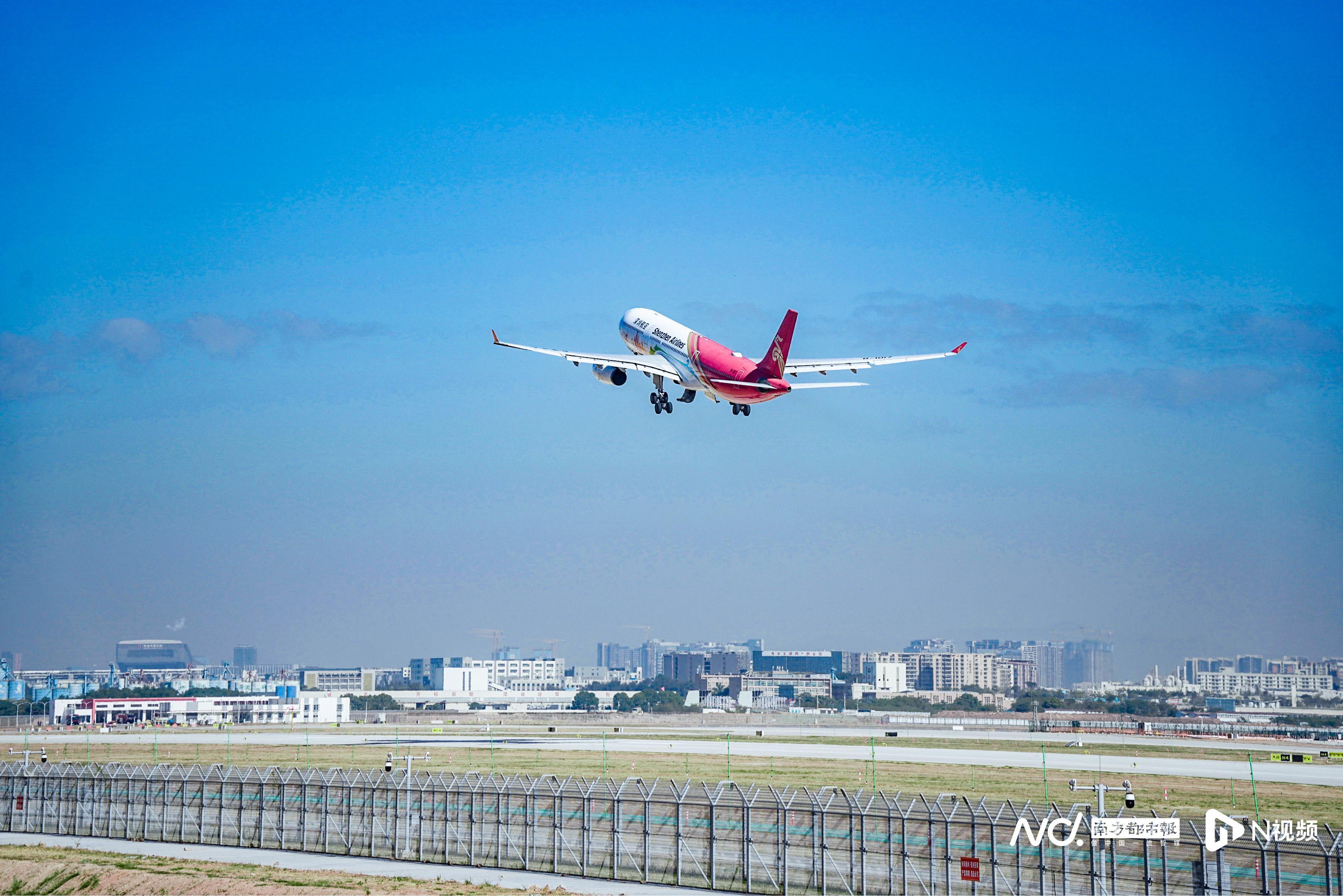
广深港机场加码扩建,新跑道航站楼接连投运,世界级机场群要来了!
2 1 Shi Ji Jing Ji Bao Dao· 2025-12-03 03:53
Core Insights - The article highlights the significant transformation occurring in the Greater Bay Area's airport infrastructure, driven by the expansion of major airports like Guangzhou Baiyun, Shenzhen Bao'an, and Hong Kong International Airport, which aims to enhance their global competitiveness and support regional economic growth [1][3][4]. Infrastructure Developments - Hong Kong International Airport has fully operationalized its third runway system, with the second passenger terminal expansion set to enhance capacity by 2026, allowing for an annual handling of 120 million passengers and 10 million tons of cargo [6][7]. - Guangzhou Baiyun International Airport's T3 terminal is now operational, with a projected capacity of 120 million passengers and 3.8 million tons of cargo annually, positioning it as a key hub for routes to Africa, the Middle East, and Southeast Asia [4][9]. - Shenzhen Bao'an Airport's third runway, measuring 3,600 meters, is expected to improve operational efficiency and accommodate all current large passenger and cargo aircraft, supporting the airport's capacity to handle 80 million passengers and 4.5 million tons of cargo annually [6][9]. Economic Impact - The expansion of the airport infrastructure is a direct response to the increasing demand for air travel, with projections indicating that the total passenger throughput for the seven airports in the Greater Bay Area will exceed 200 million by 2024 [7][9]. - The region's economic growth, with a projected GDP surpassing 14.79 trillion yuan in 2024, is driving the need for enhanced air travel and logistics capabilities, facilitating a shift from broad coverage to high-density, high-quality air routes [7][10]. Strategic Objectives - The airport expansions are part of a broader strategy to strengthen the Greater Bay Area's position in the global economy, enhancing its ability to attract multinational companies and fostering the development of high-value industries such as electronics, biomedicine, and cross-border e-commerce [9][10]. - The construction of a world-class airport cluster is essential for the Greater Bay Area to achieve its goal of becoming a leading global city cluster, with improved connectivity and resource allocation capabilities [10][19]. Collaborative Dynamics - The article emphasizes the need for collaboration among the three major airports—Guangzhou, Shenzhen, and Hong Kong—to optimize their operations and create a complementary network of air routes, enhancing the overall efficiency of the airport cluster [17][18]. - The integration of transport systems, including high-speed rail and multi-modal transport networks, is crucial for facilitating seamless connectivity within the Greater Bay Area, thereby enhancing the movement of people and goods [15][19].


拿下“世界级”,广州要重返全国第一?
虎嗅APP· 2025-11-01 14:11
Core Viewpoint - The expansion of Guangzhou Baiyun International Airport marks a significant milestone, positioning it as a major hub in the Guangdong-Hong Kong-Macau Greater Bay Area, with the potential to reclaim its status as the busiest airport in China [5][11]. Group 1: Airport Expansion and Capacity - The newly expanded airport features the T3 terminal and a fifth runway, enabling an annual passenger capacity of 120 million and cargo capacity of 3.8 million tons, making it the largest single-terminal airport globally [5][16]. - In 2020, Guangzhou Airport achieved the highest passenger throughput globally, surpassing Atlanta, but was later overtaken by Shanghai in 2024 [5][11]. - The airport's expansion is expected to break previous throughput limits, with projections indicating a potential to exceed 80 million passengers in the current year [16][21]. Group 2: Economic Impact and Trade Growth - Guangzhou's foreign trade volume reached 923.68 billion yuan in the first three quarters of the year, with an impressive growth rate of 12.5%, leading among major cities [17]. - The airport's enhanced cargo capabilities are crucial for the growth of cross-border e-commerce, with the airport handling 33.3% of international cargo volume attributed to e-commerce in 2023, a significant increase from 2019 [21][22]. Group 3: Competitive Landscape and Future Challenges - The airport faces competition from other major hubs in the Greater Bay Area, particularly in international routes, where Guangzhou's international passenger volume is only 19.6%, compared to Shanghai's 44.2% [26][28]. - The development of a new airport in the Pearl River Delta is expected to create a combined capacity of 220 million passengers across the region, necessitating coordinated management among the airports to optimize growth [27][28].
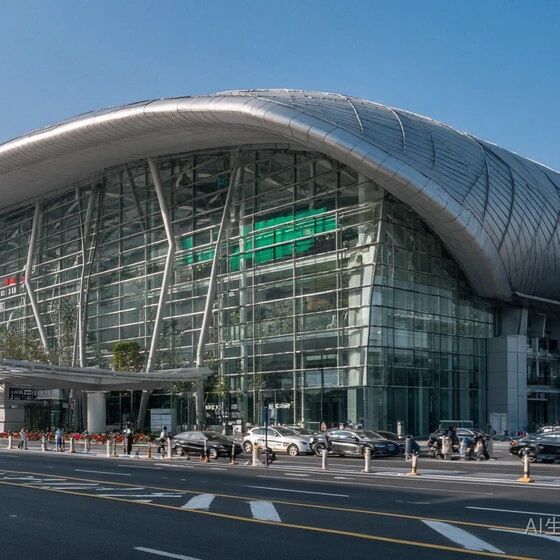
拿下“世界级” 广州要重返全国第一?
Mei Ri Jing Ji Xin Wen· 2025-10-31 16:29
Core Viewpoint - The expansion of Guangzhou Baiyun International Airport marks a significant milestone, making it the first airport in China to operate five commercial runways, with a capacity to handle 120 million passengers and 3.8 million tons of cargo annually, thus being dubbed the "world's largest single terminal airport" [1] Group 1: Airport Expansion and Capacity - The newly opened T3 terminal and fifth runway enable Guangzhou Airport to meet the growing demand for passenger and cargo transport, enhancing its status as a major international aviation hub [1] - The airport's passenger throughput reached 73.38 million in 2019, with a growth rate of 5.2%, surpassing major competitors like Beijing and Shanghai at that time [2] - Following the expansion, Guangzhou Airport is projected to achieve a passenger throughput of 120 million by 2030 and 140 million by 2045, breaking previous design limits [3] Group 2: Economic Impact and Cross-Border E-commerce - Guangzhou's foreign trade import and export volume reached 923.68 billion, with a growth rate of 12.5%, leading among major cities, driven by a 21.2% increase in exports [5] - The airport's enhanced cargo capacity supports the booming cross-border e-commerce sector, which saw a significant increase in export volume, with 33.3% of international cargo being cross-border e-commerce in 2023 [5][6] - Guangdong province has become a hub for cross-border e-commerce, with its import and export volume skyrocketing from 11.3 billion to 843.3 billion, accounting for over 30% of the national total [6][7] Group 3: Competitive Landscape and Future Challenges - The competition among major airports in the Guangdong-Hong Kong-Macau Greater Bay Area is intensifying, with Guangzhou, Shenzhen, and Hong Kong vying for international routes and passenger traffic [9][10] - Despite recent growth, Guangzhou Airport's international passenger throughput remains lower than that of Shanghai, indicating a need for improved international connectivity [10] - The management and coordination among the three major airports in the Greater Bay Area will be crucial for optimizing the overall development of the airport cluster [11]