
太空科技

Search documents
纳斯达克中国金龙指数大涨超4%,百度集团领涨
Xin Lang Cai Jing· 2026-01-03 04:26
Group 1 - The performance of major US stock indices was mixed, with the Dow Jones Industrial Average rising by 0.66% to close at 48,382.39 points, while the S&P 500 increased by 0.19% to 6,858.47 points, and the Nasdaq Composite slightly declined by 0.03% to 23,235.63 points [1] - The Dow and S&P 500 indices experienced weekly declines of 0.67% and 1.03%, respectively, while the Nasdaq saw a larger drop of 1.52% [1] - Major technology stocks generally fell, with the US Tech Giants Index down by 0.6%, as Tesla and Microsoft dropped over 2%, and Amazon and Meta fell by more than 1% [1] Group 2 - Semiconductor stocks showed strong performance, with the Philadelphia Semiconductor Index rising by 4.01%, and Micron Technology's stock soaring over 10% to reach a historical high [1] - ASML's stock increased by over 8%, while Intel and TSMC rose by more than 6% and 5%, respectively [1] - The Nasdaq Golden Dragon China Index rose by 4.38%, indicating renewed interest in Chinese assets [1] Group 3 - Baidu Group stood out among popular Chinese stocks, with a rise of over 15%, while other strong performers included Pony.ai and Youdao, both up over 10% [2] - The potential for value re-evaluation of Chinese assets is significant, with expectations for the Chinese stock market to trend upward steadily by 2025 due to economic transformation and industrial upgrades [2] - Precious metals futures saw slight increases, with COMEX gold futures up by 0.02% to $4,341.90 per ounce, although they experienced a weekly decline of 4.63% [2] Group 4 - The market outlook for gold assets is optimistic due to factors such as a weak dollar, interest rate cuts, and a crisis of confidence in the dollar [3] - Central bank purchases of gold, investment demand for gold ETFs, and increasing global geopolitical risks are expected to provide strong support for gold and certain physical assets [3]

中国资产大爆发!纳斯达克中国金龙指数大涨超4%,百度集团涨超15%
天天基金网· 2026-01-03 02:02
Market Performance - On January 2, US stock indices closed mixed, with the Dow Jones up 0.66% at 48,382.39 points, the S&P 500 up 0.19% at 6,858.47 points, and the Nasdaq down 0.03% at 23,235.63 points [5] - For the week, the Dow Jones fell 0.67%, the S&P 500 dropped 1.03%, and the Nasdaq decreased by 1.52% [5] Technology Sector - The US technology sector saw a decline, with the major tech index down 0.6%. Notable declines included Tesla and Microsoft, both down over 2%, while Nvidia rose over 1% [7] - The semiconductor sector performed strongly, with the Philadelphia Semiconductor Index rising 4.01%. Micron Technology surged over 10%, reaching a historical high, while ASML increased by over 8% [9] Chinese Stocks - Chinese stocks saw a significant rise, with the Nasdaq Golden Dragon China Index up over 4.38%. Baidu Group led the gains, rising over 15% [11] - Other notable performers included Xiaoma Zhixing and Youdao, both up over 10%, while Alibaba rose over 6% [11] Economic Outlook - Dongxing Securities indicated that there is substantial room for revaluation of Chinese assets, predicting a steady upward trend in the Chinese stock market by 2025 as a result of economic transformation and industrial upgrades [13] Precious Metals - International precious metals futures closed higher, with COMEX gold futures up 0.02% at $4,341.90 per ounce, while COMEX silver futures rose 2.35% to $72.265 per ounce [15] - Long-term outlook for gold remains positive due to factors such as weak dollar, interest rate cuts, and geopolitical risks, according to Guoxin Securities [17]


特朗普要“确保太空优势”,美国“太空股”会成为下一个“量子科技”吗?
美股IPO· 2025-12-24 09:24
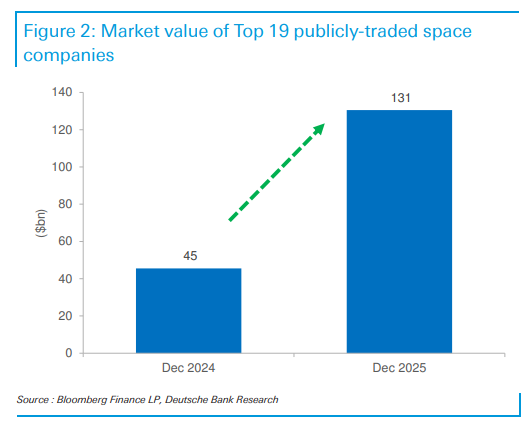
Core Viewpoint - The article discusses the significant revaluation of the U.S. space industry following President Trump's executive order aimed at establishing a lunar base strategy, alongside the appointment of Jared Isaacman as NASA Administrator, which has led to a surge in the stock prices of space-related companies [1][3]. Group 1: Executive Order and Market Impact - Trump's executive order, signed on December 18, outlines priorities for U.S. space policy, emphasizing the expansion of commercial participation to achieve national security and economic goals [5]. - The U.S. space sector has seen a collective surge in stock prices, with the total market capitalization of leading space companies nearly tripling over the past year, reaching approximately $131 billion by the end of 2025, up from $45 billion [10]. - Goldman Sachs analysts view the executive order as a significant positive for launch service providers and defense contractors, indicating a bullish outlook for the commercial space economy [3][5]. Group 2: Specific Goals and Timelines - The executive order sets a timeline for returning to the Moon and establishing a base, with plans to return astronauts by 2028 and create a permanent lunar outpost by 2030 [6]. - A target of increasing $50 billion in investments in the U.S. space market by 2028 is established, alongside promoting private sector pathways to replace the International Space Station by 2030 [7]. - The order also mandates the development of next-generation missile defense technologies by 2028 to address threats from low Earth orbit and lunar space [8]. Group 3: Key Catalysts and Future Outlook - The appointment of Jared Isaacman, a close ally of Elon Musk, as NASA Administrator is seen as a catalyst for closer collaboration between NASA and commercial space companies, reducing uncertainty about NASA's future direction [13]. - SpaceX is expected to conduct its initial public offering (IPO) next year, which is anticipated to further ignite investor interest in space assets, marking a significant event in the ongoing space investment frenzy [13].
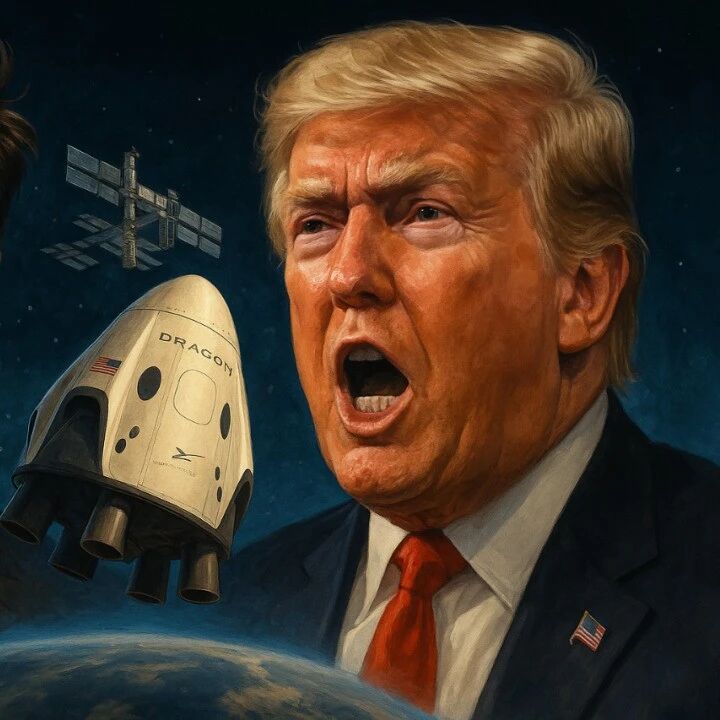
特朗普要“确保太空优势”,美国“太空股”会成为下一个“量子科技”吗?
Hua Er Jie Jian Wen· 2025-12-24 06:05
Core Viewpoint - The U.S. space industry is undergoing a significant valuation reassessment following the Trump administration's executive order aimed at establishing space dominance and key regulatory appointments, leading to a surge in stock prices for space companies [1][3]. Group 1: Policy Impact - Trump's executive order, signed on December 18, outlines priorities for the U.S. in space, focusing on expanding commercial participation to achieve national security and economic goals [3]. - The order sets a timeline and quantitative targets, including the deployment of a lunar surface reactor by 2030 [3][5]. - The order is seen as a positive fundamental support for companies like Rocket Lab and Firefly Aerospace, as well as defense contractors like L3Harris and AeroVironment [3]. Group 2: Market Performance - The total market capitalization of the top 19 U.S. space companies is projected to reach $131 billion by the end of 2025, up from $45 billion a year ago, marking an increase of nearly three times [4]. - Recent market activity has shown significant gains, with Firefly Aerospace's stock rising 16%, Intuitive Machines up approximately 12%, and Rocket Lab increasing by 10% following a contract announcement [4]. Group 3: Future Plans - The Artemis Program aims to return Americans to the Moon by 2028 and establish a permanent lunar outpost by 2030 [5]. - The U.S. space market is targeted to see an additional $50 billion in investments by 2028, promoting private sector pathways to replace the International Space Station by 2030 [5]. Group 4: Key Appointments - Jared Isaacman, a billionaire and close ally of Elon Musk, has been confirmed as NASA Administrator, which is expected to enhance collaboration between NASA and commercial space companies [8]. - Isaacman's appointment eliminates uncertainties regarding NASA's future direction, with expectations of closer ties to the commercial space sector [8]. Group 5: Upcoming Events - SpaceX, a leading player in the industry, is planning an initial public offering (IPO) next year, which is anticipated to further ignite investor interest in space assets [9].
追觅宣布成立天文BU,将打造“追觅宇宙”平台
Xin Lang Ke Ji· 2025-09-10 08:10
Core Viewpoint - Chasing Technology has established an Astronomy Business Unit (BU) aimed at extending its technological vision from Earth to space, focusing on making the mysteries of the universe accessible to everyone [1] Group 1: Product Development - Chasing Technology is addressing the mass production challenges of large-diameter optical lenses in the high-end astronomical optical equipment manufacturing sector [1] - The first smart astronomical telescope product is expected to feature a super-large aperture design, providing an "one-click stargazing" experience [1] - The built-in AI algorithms can automatically compensate for atmospheric turbulence and intelligently identify and track deep-space objects, solving the traditional equipment issues of complexity and susceptibility to interference [1] Group 2: Space Applications - The Astronomy BU is collaborating with domestic commercial space companies to develop high-resolution Earth observation payloads, pushing Chasing Technology's optical technology into space application scenarios [1] Group 3: Community Engagement - Chasing Technology plans to create a platform called "Chasing Universe" that connects global astronomy enthusiasts, allowing users to control smart devices, share captured cosmic images, generate AI-recognized star maps, obtain observation guides, and access an exclusive deep-space database [1] - This initiative aims to build a closed-loop ecosystem combining hardware, software, and community [1]
台胞家庭吉林开启“星辰之旅” 感受大陆多元魅力
Zhong Guo Xin Wen Wang· 2025-08-11 02:20
Group 1 - The event is the fifth cross-strait marriage and family parent-child summer camp held in Jilin Province, which aims to enhance cultural exchange and understanding between Taiwan and mainland China [1][2] - The summer camp includes activities such as visiting the Changchun Aerospace Science and Technology Museum, where participants can learn about space technology and experience various space-related simulations [2][4] - The event is supported by multiple organizations, including the National Taiwan Federation and various provincial Taiwan federations, indicating a collaborative effort to promote cross-strait relations [1][2] Group 2 - The Changchun Aerospace Science and Technology Museum features models of the Tianhe core module and Shenzhou spacecraft, showcasing China's advancements in space exploration [2][3] - Participants will also explore historical and cultural sites in Changchun and Jilin City, as well as visit agricultural projects, highlighting the region's economic and social development [2][4] - The Jilin Taiwan Federation hopes to attract more Taiwanese individuals to experience the local culture and history, fostering emotional connections and cultural recognition among youth from both sides [4]
