战略对冲

Search documents
近六成信托公司2025年利润正增长
Xin Lang Cai Jing· 2026-01-27 21:04
Core Insights - The trust industry in China has shown improved profitability in 2025, despite a decline in trust business revenue, with significant growth in proprietary business income [1][2] Group 1: Financial Performance - The total operating revenue of 50 disclosed trust companies reached 70.871 billion yuan, a year-on-year increase of 15.87%, with 28 companies (56%) reporting positive revenue growth [1] - The total profit of the trust industry was 38.2964 billion yuan, up 13.64% year-on-year, with 29 companies (58%) achieving positive profit growth [2] - The net profit of the industry reached 31.418 billion yuan, reflecting a 14.23% increase year-on-year, with 28 companies (56%) reporting positive net profit growth [2] Group 2: Revenue Breakdown - Trust business revenue totaled 36.568 billion yuan, a decline of 8.76% year-on-year, with only 18 companies (36%) reporting positive growth in this segment [3] - Proprietary business income surged by 73.06% year-on-year, totaling 31.375 billion yuan, becoming the main driver of industry profitability [3][4] Group 3: Market Dynamics - The top five companies by proprietary business income are: Industrial Trust, CITIC Trust, Jiangsu Trust, China Resources Trust, and Huaxin Trust, with significant growth rates observed in several firms [4] - The industry is experiencing a structural shift, with investment income playing a crucial role in revenue for some companies, and asset service trusts emerging as a new growth driver [5][6] Group 4: Future Outlook - The capital market recovery in 2025 has provided a favorable environment for proprietary business growth, supported by enhanced investment management capabilities of trust companies [5] - The wealth management sector is evolving, with companies like Shanghai Trust expanding their service offerings and client base, indicating a trend towards high-quality development in family trusts and personalized services [6]
印欧敲定自贸协定:印度取消对超过90%欧盟商品的关税,提供25万辆汽车进口配额
Hua Er Jie Jian Wen· 2026-01-27 08:24
Core Insights - India and the EU have finalized a historic free trade agreement aimed at significantly reducing tariff barriers, with India committing to eliminate tariffs on over 90% of EU goods and opening up its highly protected automotive and alcoholic beverage markets [1][2] - The agreement is seen as a strategic counter to U.S. trade protectionism, especially following the imposition of punitive tariffs by the U.S. on Indian goods [1][4] - The deal is expected to create a closer economic relationship between India's 1.4 billion population and the European market, with a projected trade volume of $136.5 billion by March 2025 [6] Automotive Industry Access - A key highlight of the agreement is the unprecedented import quota for EU automotive manufacturers, allowing up to 250,000 vehicles annually, which is over six times the quota previously granted to the UK [2] - Import duties on approximately 160,000 fuel vehicles within the quota will be reduced to 10% over five years, while duties on electric vehicles will start to decrease in the tenth year [2] - The EU will reciprocate by providing up to 625,000 import quotas for Indian automotive manufacturers, and both parties will eliminate tariffs on auto parts to enhance supply chain integration [2] Broad Tariff Reductions and Sensitive Areas - The agreement encompasses a wide range of goods, with India agreeing to eliminate tariffs on over 90% of EU products, including a proposal for zero tariffs on steel products [3] - Significant reductions in tariffs on alcoholic beverages have been agreed upon, with wine tariffs set to be adjusted to 20%-30%, spirits to 40%, and beer to 50% [3] - Although agriculture remains a sensitive topic, the agreement includes provisions to lower high tariffs on EU agricultural products [3] Strategic Response to U.S. Tariff Pressures - The agreement is a crucial measure for India to address the trade pressures from the U.S., particularly after the U.S. imposed a 50% tariff on Indian goods [4] - This marks India's fourth major trade agreement following similar deals with the UK, Oman, and New Zealand [4] EU's Search for Trade Partnerships - The EU is also seeking trade partners to navigate the uncertainties in U.S.-EU relations, emphasizing a preference for "fair trade over tariffs" [5] - Prior agreements have been signed with other regions, including the Southern Common Market, Indonesia, Mexico, and Switzerland [5] Trade Scale and Future Outlook - The trade agreement is projected to create a massive market covering 2 billion people, although experts note it cannot fully replace the necessity of the India-U.S. trade agreement [6] - In 2024, India's trade surplus with the U.S. is expected to be $45.8 billion, significantly higher than the $25.8 billion surplus with the EU [6] - The agreement includes review clauses to reassess quotas based on the prosperity of the Indian automotive market and future concessions with other partners, including the U.S. [6]
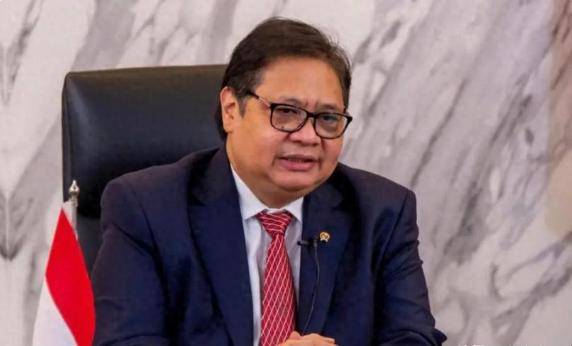
令人没想到:刚接受中国帮助的友国,转头就要帮美国解决稀土问题
Sou Hu Cai Jing· 2025-07-01 08:35
Group 1 - The core issue of rare earths has become a significant point of contention in US-China negotiations, with Indonesia emerging as a potential partner for the US in rare earth projects [1][2] - Indonesia possesses the fifth-largest rare earth reserves globally, estimated at 12 million tons, but faces challenges such as outdated extraction technology and an incomplete industrial chain [2][4] - The US Inflation Reduction Act offers high green subsidies for qualifying mineral exports, which Indonesia aims to leverage by including nickel and rare earth exports in this framework to secure stable funding [4][8] Group 2 - Indonesia is under pressure to achieve an 8% GDP growth target and requires foreign investment, with the US's rare earth cooperation potentially providing additional technology transfer and market access [8][10] - The cooperation with the US is part of Indonesia's broader "great power balancing" diplomatic strategy, maintaining a neutral stance between China and the US while seeking to diversify its partnerships [10][12] - Indonesia aims to enhance its influence within ASEAN by rapidly increasing production capacity through US resources, positioning itself as the leading battery production country in Southeast Asia [14] Group 3 - China holds 88% of global rare earth refining technology, meaning that even if Indonesia collaborates with the US for raw material extraction, it will still rely on China for processing [16][18] - China's investment strategy in Indonesia has deeply integrated its economy, with significant projects like battery production centers creating substantial employment and infrastructure development [18][20] - China is also working on diversifying its rare earth supply chain by signing agreements with countries like Mongolia and Kazakhstan, while upgrading domestic extraction technologies to reduce reliance on Indonesian resources [18][20]