战略考量

Search documents
中国为何对美韩太阳能多晶硅征税五年?背后有何深意?
Sou Hu Cai Jing· 2026-01-13 15:10
Core Viewpoint - The Ministry of Commerce's decision to continue anti-dumping duties on U.S. and South Korean polysilicon is a significant move that sets the development path for China's photovoltaic industry over the next five years, reflecting complex industry dynamics and strategic considerations [1][3]. Industry Dynamics - The anti-dumping duties, which have been in place for twelve years, were initially introduced in response to U.S. and South Korean companies capturing nearly half of the Chinese market with prices 20 to 32 USD per kilogram below market rates, severely impacting domestic companies [1][3]. - Currently, China's self-sufficiency in polysilicon has exceeded 80%, while the import share from the U.S. and South Korea has dropped to less than 4% [3]. Strategic Implications - The core purpose of the recent decision is to prevent the resurgence of dumping behavior during a critical adjustment period in the industry, as global polysilicon production capacity is significantly oversupplied [3][5]. - This policy is not merely a trade protection measure; it aims to create a stable environment for technological iteration and R&D investments in advanced domestic capacities [3][5]. Market Environment - The stable market conditions allow leading companies to focus on technological breakthroughs, such as lower energy consumption in granular silicon technology, while eliminating market noise from less competitive players [3][5]. - The supply security of polysilicon, as a crucial raw material for photovoltaic cells, is essential for the entire industry chain, emphasizing the importance of self-sufficiency [3][5]. Future Outlook - The continuation of these tariffs acts as a "safety lock" on the established industrial chain advantages, preventing external low-priced products from disrupting the market during sensitive periods of capacity clearance and technological advancement [5][7]. - This policy is expected to accelerate the capacity clearance process and increase industry concentration, with resources shifting towards technologically advanced leading companies [7]. - The global competitive landscape for China's photovoltaic industry will transition from scale advantages to technology leadership, prompting international partners to reassess their cooperation models with China [7].


旗滨集团:公司放弃优先购买权主要基于三方面战略考量
Zheng Quan Ri Bao Wang· 2025-12-29 12:42
Core Viewpoint - The company has decided to forgo its preemptive purchase rights based on three strategic considerations aimed at enhancing its long-term competitiveness and shareholder returns [1] Group 1: Strategic Considerations - The company is prudently responding to cyclical adjustments in the industry by actively slowing down large acquisitions and retaining cash to allow for future development and to better manage industry fluctuations [1] - The company aims to introduce a strategic partner, Dongfang Asset, which possesses advantages in "industrial investment experience, resource networks, and policy collaboration" to provide multi-dimensional support for its solar energy segment [1] - The company seeks to maximize overall group value by establishing a collaborative framework where the group focuses on core areas while subsidiaries leverage development opportunities, thereby enhancing long-term competitiveness and shareholder returns without weakening control over subsidiaries [1]

特朗普不想惹中国,当场点名印度立规矩?真相比你想的复杂
Sou Hu Cai Jing· 2025-12-20 04:59
Group 1 - U.S. rice growers expressed concerns at a White House meeting about losing market share in Puerto Rico to India, Thailand, and China, prompting President Trump to question the exemption of tariffs for India [1][4] - Trump's focus on India during the meeting indicates a perception of India as a weaker target compared to China, which has demonstrated strong retaliatory capabilities in past trade conflicts [3][7] - The agricultural meeting took place on December 8, 2025, highlighting ongoing trade tensions and the competitive landscape for U.S. agricultural products [4] Group 2 - India's strong reaction to being singled out by Trump reflects a misunderstanding of the underlying power dynamics, as the U.S. president targets countries based on their ability to retaliate [6][12] - The U.S.-China trade conflict, which began in 2018, has seen multiple rounds of escalation, with China effectively using countermeasures that have pressured U.S. industries [9][10] - In contrast, India's lack of significant retaliatory measures against U.S. tariffs has led Trump to view it as an easier target for pressure [12][14] Group 3 - Trump's strategic choice to focus on India rather than China stems from a recognition of China's strong countermeasures and the pain inflicted on the U.S. during previous confrontations [13][15] - The disparity in industrial strength and technological capabilities between India and China positions India as a scapegoat in U.S. trade policy, as it lacks the means to effectively respond to U.S. actions [14][15] - The ongoing U.S.-China rivalry is characterized by a cautious approach from Trump towards China, while he feels more empowered to impose pressure on India [15]
为什么美国不灭掉加拿大,吞并墨西哥,一统北美洲?
Sou Hu Cai Jing· 2025-06-03 06:54
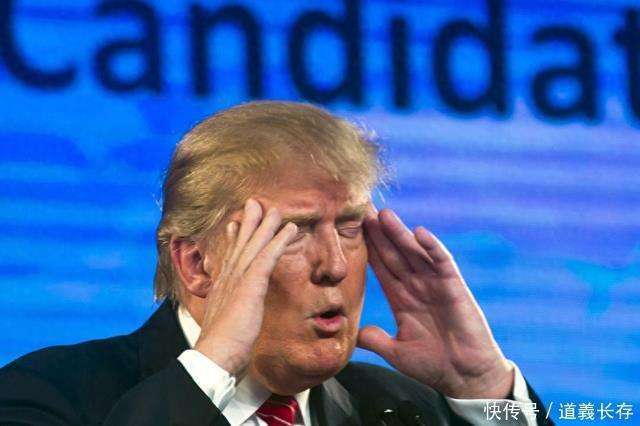
Core Viewpoint - The article discusses why the United States, despite its military and economic power, does not seek to annex neighboring countries Canada and Mexico, highlighting the complexities and costs associated with such actions [1][16]. Group 1: Military and Strategic Considerations - Modern warfare has evolved, making direct annexation of countries through military force increasingly complex and challenging [3][6]. - Canada and Mexico are not easily conquerable due to their significant military capabilities and large populations, which would pose substantial challenges for the U.S. [4][8]. - The potential costs of war with these countries would be enormous, including high casualties and resource depletion, even for a military superpower like the U.S. [8][10]. Group 2: Political and Cultural Challenges - Annexing Canada and Mexico would involve intricate political, economic, and cultural integration, which is significantly more difficult with larger nations [6][12]. - The cultural differences between the U.S., Canada, and Mexico could exacerbate existing social tensions within the U.S., making integration problematic [12][16]. Group 3: Economic and Humanitarian Implications - A conflict with Canada and Mexico could lead to a massive refugee crisis, placing additional strain on U.S. resources and social systems [11][12]. - The U.S. can achieve its economic goals through non-military means, such as financial strategies and influence, making military annexation unnecessary [13][16].