戴森球

Search documents
消息称 SpaceX 拟与 xAI 合并,马斯克疑似证实相关报道
Xin Lang Cai Jing· 2026-02-02 01:55
Core Viewpoint - SpaceX is in discussions for a potential merger with xAI, which may further integrate Elon Musk's space and artificial intelligence businesses. The proposed transaction structure could involve exchanging xAI shares for SpaceX stock, but details regarding valuation, structure, and timeline are not yet finalized, and no agreements have been signed [2][8]. Group 1: Merger Discussions - SpaceX has initiated talks regarding a merger with xAI, with a potential structure involving the exchange of xAI shares for SpaceX stock [2][8]. - As of January 21, two entities were registered in Nevada to facilitate the potential merger between SpaceX and xAI, although discussions are ongoing and a final agreement is not guaranteed [5][10]. Group 2: Strategic Alignment - The potential merger aligns with Musk's strategy of deeply integrating artificial intelligence research with space-based systems, leveraging solar energy for large-scale computational operations [5][10]. - xAI has existing business ties with Musk's other companies and has developed the Grok language model, which secured a contract with the U.S. Department of Defense worth up to $200 million (approximately 1.393 billion RMB) [5][10]. Group 3: Technological Integration - Artificial intelligence plays a crucial role in SpaceX's Starlink and Starshield satellite projects, which utilize automation and machine learning for network management and national security applications [5][10]. - Musk has a history of consolidating his businesses through equity transactions, including Tesla's acquisition of SolarCity in 2016 and xAI's acquisition of the X platform last year [5][10].

炸裂!100万颗卫星!AI太空算力来了,马斯克要打造现实版“戴森球”!今年,SpaceX与特斯拉合并?
雪球· 2026-02-01 05:06
Core Viewpoint - SpaceX is planning to deploy up to 1 million satellites, which is 70 times the current number of active satellites in orbit, and is considering an IPO with a target valuation of $1.5 trillion, making it potentially the largest IPO in history [1][9][10]. Group 1: SpaceX IPO and Valuation - SpaceX's IPO is projected to have a target valuation of $1.5 trillion, which would surpass Saudi Aramco's IPO and become the largest on record [9]. - The expected financing could exceed $50 billion, significantly higher than previous major IPOs, such as Amazon and Microsoft [10][11]. Group 2: Business Structure and Revenue - SpaceX is expected to achieve revenues of $15 billion to $16 billion by 2025, with an EBITDA of approximately $8 billion [13]. - The Starlink service is the primary revenue driver, contributing 50% to 80% of the company's income, with over 9 million users and around 9,500 satellites launched since 2019 [13]. Group 3: Satellite Deployment Plans - SpaceX has submitted an application to the FCC to deploy a satellite system consisting of up to 1 million satellites, aimed at creating a space-based data center network [16][19]. - This plan is seen as a move to establish a computing empire in space, utilizing solar energy and laser links for data routing [19]. Group 4: Industry Trends and Future Projections - Analysts predict that the satellite launch numbers will increase from 5,000 to 50,000 annually between 2025 and 2040, driven by advancements in solar technology and the demand for AI capabilities [24]. - The market for photovoltaic cells in the satellite sector is expected to reach 328.8 billion yuan, with a potential growth of over 30 times compared to the short-term market [24].

OpenAI首席执行官欲造火箭,硬刚马斯克?
Sou Hu Cai Jing· 2025-12-10 15:00
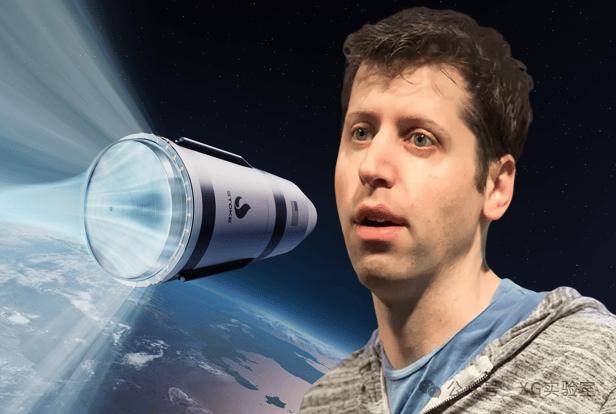
Core Insights - The article discusses OpenAI CEO Sam Altman's exploration of raising funds to acquire or invest in a rocket company, specifically Stoke Space, to compete with Elon Musk's SpaceX [2][3][18] - The negotiations have paused, but Altman's vision for AI's future includes the concept of orbital data centers as a sustainable energy solution [2][10][11] Group 1: Negotiation Details - Altman's target for investment is Stoke Space, recognized as a potential challenger to SpaceX [3] - Initial contact with Stoke Space occurred in the summer, with negotiations intensifying in the fall [4] - The proposed investment could reach several billion dollars over time [6] Group 2: Strategic Rationale - Altman's interest in space is driven by the increasing demand for computational power and energy, with a long-term view on orbital data centers [10] - The environmental consequences of ground-based energy demands may make space a more viable option for energy sourcing [11] - Altman has suggested ambitious ideas like constructing a Dyson sphere around the solar system to harness solar energy [12] Group 3: Current Challenges - OpenAI is facing significant market headwinds, prompting Altman to focus on immediate operational challenges [13] - The company announced a "Code Red" due to competition from Google's Gemini chatbot, delaying other product launches [14] - OpenAI has committed nearly $600 billion in computing resources without clear funding strategies [16] Group 4: Competitive Landscape - A successful rocket investment would escalate the rivalry between Altman and Musk across multiple technology sectors, including rockets, AI, brain-machine interfaces, and social media [18][20] - OpenAI is also developing a social network that could compete with X (formerly Twitter) [21]
马斯克发布“太空AI”计划
3 6 Ke· 2025-11-25 02:56
Core Viewpoint - Elon Musk proposes a revolutionary vision of deploying AI computing centers in space, driven by the need for sustainable energy and cooling solutions for large-scale AI data centers on Earth [1][2]. Group 1: Vision and Rationale - Musk believes that operating large-scale AI systems in orbit will be more cost-effective than on Earth within the next four to five years, primarily due to "free" solar energy and easier cooling technologies [2]. - He estimates that achieving a continuous computing capacity of 200 to 300 gigawatts (GW) would require building large and expensive power plants, which is impractical given the current energy infrastructure [2][4]. - Musk's plan involves deploying 100 GW of solar-powered AI satellites annually, which could potentially exceed the total electricity consumption of the U.S. [4][6]. Group 2: Technical Challenges - The construction of large AI data centers in space faces significant challenges, including the need for massive heat dissipation structures and the high costs associated with launching thousands of spacecraft [7][8]. - Current technology for high-performance AI accelerators may not withstand the radiation in geostationary orbit (GEO) without substantial modifications, which could hinder the feasibility of building AI data centers in space [7][8]. - The proposed project requires advancements in high-bandwidth connections to Earth, autonomous maintenance, and debris avoidance technologies, which are still in their infancy [8].
马斯克发布“太空AI”计划
财联社· 2025-11-24 05:54
Core Viewpoint - Elon Musk proposes deploying AI computing centers in space to overcome the limitations of power production, transmission, and cooling demands faced by large AI data centers on Earth [1][2][3] Group 1: Vision and Rationale - Musk believes that operating large-scale AI systems in orbit will be more cost-effective than on Earth within the next four to five years, primarily due to "free" solar energy and easier cooling technologies [2] - He estimates that the cost-effectiveness of AI in space will surpass that of terrestrial AI before Earth's potential energy runs out [2][3] Group 2: Power Requirements and Infrastructure - Musk claims that to achieve a sustained computing capacity of 200 to 300 gigawatts, large and expensive power plants would need to be built, which is impractical on Earth [3] - He emphasizes that utilizing continuous solar energy in space eliminates the need for batteries and reduces costs associated with solar panels [3] Group 3: Deployment Plans - Musk's plan involves deploying 100 gigawatts of solar-powered AI satellites annually in orbit, which could match a quarter of the total electricity consumption in the U.S. [4] - He suggests that SpaceX's Starship could launch approximately 300 to 500 gigawatts of solar AI satellites into orbit each year, potentially exceeding the U.S. electricity consumption in a few years [4] Group 4: Challenges and Considerations - Musk acknowledges that scaling production and assembling satellites in orbit are critical challenges that need to be addressed [5] - The concept resembles a Dyson sphere, where satellites form a network to utilize solar energy and potentially assist in climate control [5][6] - However, practical challenges such as orbital debris, regulatory approvals, and international space policies pose significant risks to this vision [7][9] Group 5: Technical Feasibility - Building large AI data centers in geostationary orbit faces severe challenges, including the need for massive heat dissipation structures [8] - The scale of launching such a project would require thousands of Starship flights, which is deemed unrealistic within Musk's four to five-year timeline [9] - High-performance AI accelerators would require significant radiation shielding, which could reduce their operational efficiency in geostationary orbit [9]

深度科普:宇宙只是高级文明的模拟程序?为何我们感知不到?
Sou Hu Cai Jing· 2025-06-04 22:29
Group 1 - The article discusses the potential of technology to simulate the universe, raising philosophical questions about existence and reality [1][3][10] - It suggests that a full simulation of the universe may not be necessary; creating a convincing environment for simulated beings could suffice [3][5] - The concept of a "simulation hypothesis" is introduced, proposing that advanced civilizations might create simulations of their ancestors or other beings [5][8] Group 2 - The article outlines several prerequisites for the simulation hypothesis to hold true, including the ability to simulate perception and the advancement of technology [5][6] - It mentions the "Great Filter" theory, which posits that civilizations may self-destruct before reaching a level capable of creating simulations [6][8] - The possibility of multiple simulations existing simultaneously is explored, suggesting that if many simulations are created, the likelihood of being in one is high [10]