太阳能AI卫星

Search documents
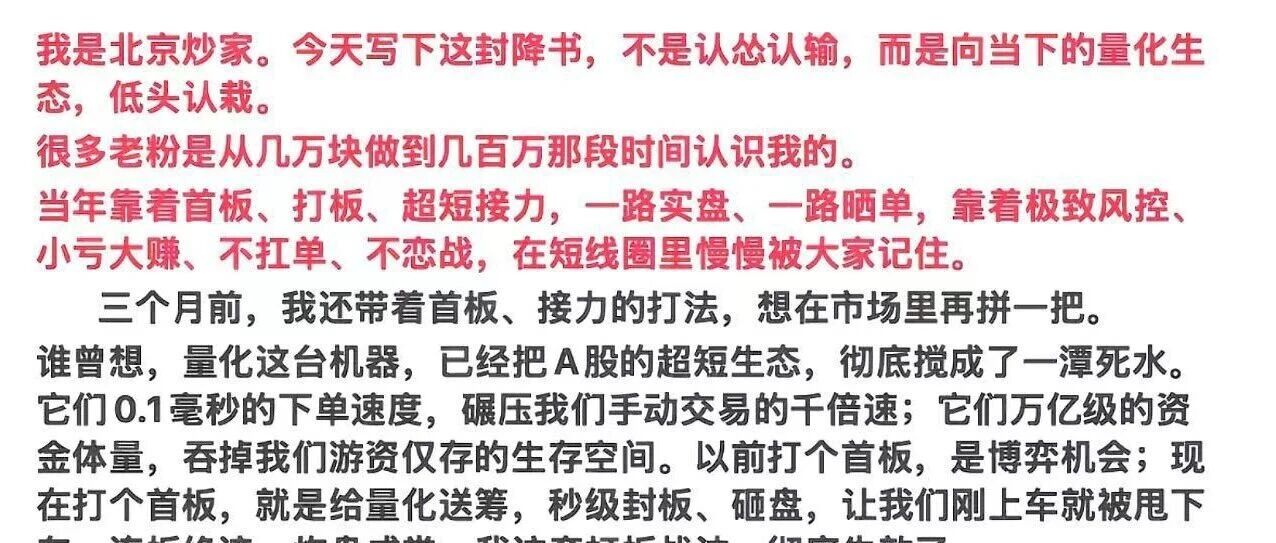
游资“投降”——A股一周走势研判及事件提醒
Datayes· 2026-03-22 14:13
Group 1 - The core viewpoint of the article highlights the significant shift in trading strategies, with retail investors, particularly short-term traders, withdrawing from the market in favor of quantitative trading strategies, which are becoming dominant in the A-share market [1][5] - Retail trading seats have seen a decline in transaction volume, reaching a three-year low, indicating a potential shift in market dynamics as notable traders exit or pause their operations [1][5] - Quantitative private equity funds have expanded significantly, surpassing traditional subjective long-only funds for the first time, indicating a shift in market influence [5] Group 2 - The market's recent decline is attributed to absolute return-oriented funds reducing their positions, rather than institutional reallocation, with certain sectors experiencing mismatched performance [7] - Investors are advised to remain patient and calm amid market fluctuations, as the period from April to May is expected to be crucial for decision-making [7] - Certain sectors, such as energy storage and domestic AIDC chains, are recommended for investment due to their potential resilience against geopolitical tensions and high oil prices [8] Group 3 - In the Hong Kong market, the short-selling volume has reached historical highs, similar to the bear market of 2021-2022, indicating limited upward potential [11] - However, high short-selling does not necessarily predict market declines; a market recovery could trigger a short squeeze, enhancing rebound strength [11] Group 4 - The article discusses the geopolitical tensions in the Middle East, with both the U.S. and Iran signaling a willingness to negotiate, which could impact market sentiment and investment strategies [12][15] - The U.S. seeks to include specific conditions in any agreement, while Iran has outlined six demands that must be met for negotiations to proceed [15] Group 5 - The article outlines various sectors that are expected to perform well, including renewable energy, particularly in wind and solar, as well as energy storage technologies, which are anticipated to benefit from ongoing geopolitical tensions and market demands [23][24] - The semiconductor and AI sectors are also highlighted, with significant investments and developments expected in the coming years, particularly in chip manufacturing and AI infrastructure [17][19][20]


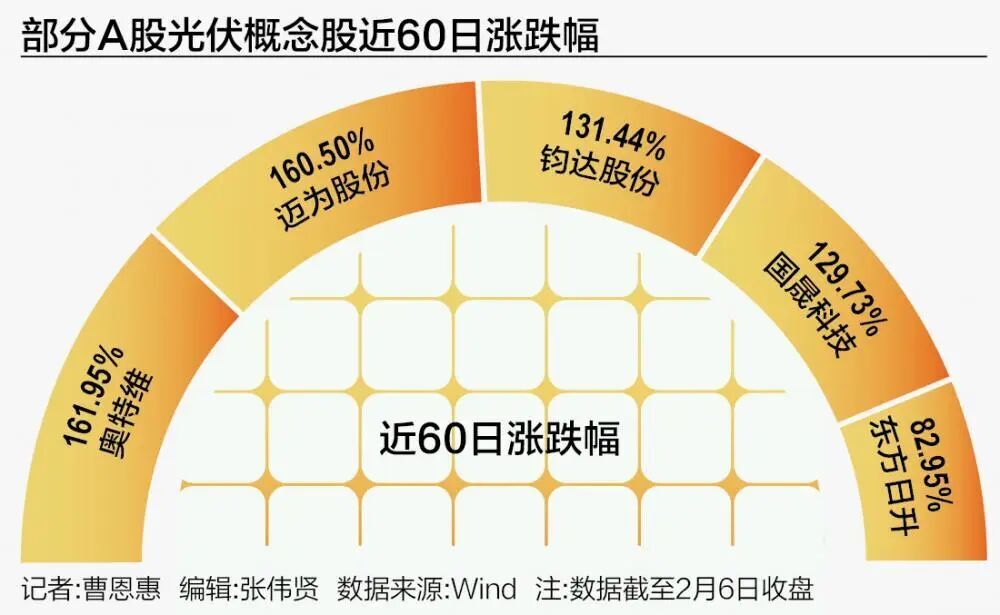
马斯克点火A股光伏,奥特维等股价翻倍
2 1 Shi Ji Jing Ji Bao Dao· 2026-02-07 01:48
Core Viewpoint - Elon Musk is significantly influencing the Chinese A-share photovoltaic sector, with his comments on solar energy and its potential to provide substantial power, which has led to a surge in stock prices within the sector [2][3][4]. Group 1: Market Reaction - On January 23, 2026, following Musk's remarks at the World Economic Forum, 24 photovoltaic stocks in China hit their daily limit up, with the photovoltaic index rising by 7.46% [2]. - Two weeks later, Musk's interest in Chinese photovoltaic companies, including JinkoSolar and TCL Zhonghuan, further ignited stock price increases, with many stocks reaching their daily limit up again [3]. - The excitement surrounding Musk's "space photovoltaic" vision has injected new vitality into the previously stagnant A-share photovoltaic market [3][4]. Group 2: Industry Context - The photovoltaic industry is currently facing challenges, with nearly 70% of A-share photovoltaic companies reporting losses due to low prices in the supply chain [8]. - Despite some companies showing signs of recovery, the overall market sentiment remained negative, as indicated by a 4.10% decline in the Wind photovoltaic index during a week of earnings announcements [8]. - Musk's "space photovoltaic" concept has shifted the focus of the industry from terrestrial applications to potential space-based solutions, which could represent a new growth avenue for the sector [12]. Group 3: Future Prospects - Analysts predict that the "space photovoltaic" market could become a significant growth area, with estimates suggesting a market size of approximately 295 billion RMB by 2030, which is ten times the current scale [15]. - Musk's plans for deploying 100GW of solar power in space could potentially open up vast opportunities for new technologies and applications in the photovoltaic sector [15]. - However, the current competitive landscape and the need for immediate solutions to existing challenges in the industry remain pressing concerns [16].




中国光伏估值,因马斯克重塑?
2 1 Shi Ji Jing Ji Bao Dao· 2026-02-06 12:10
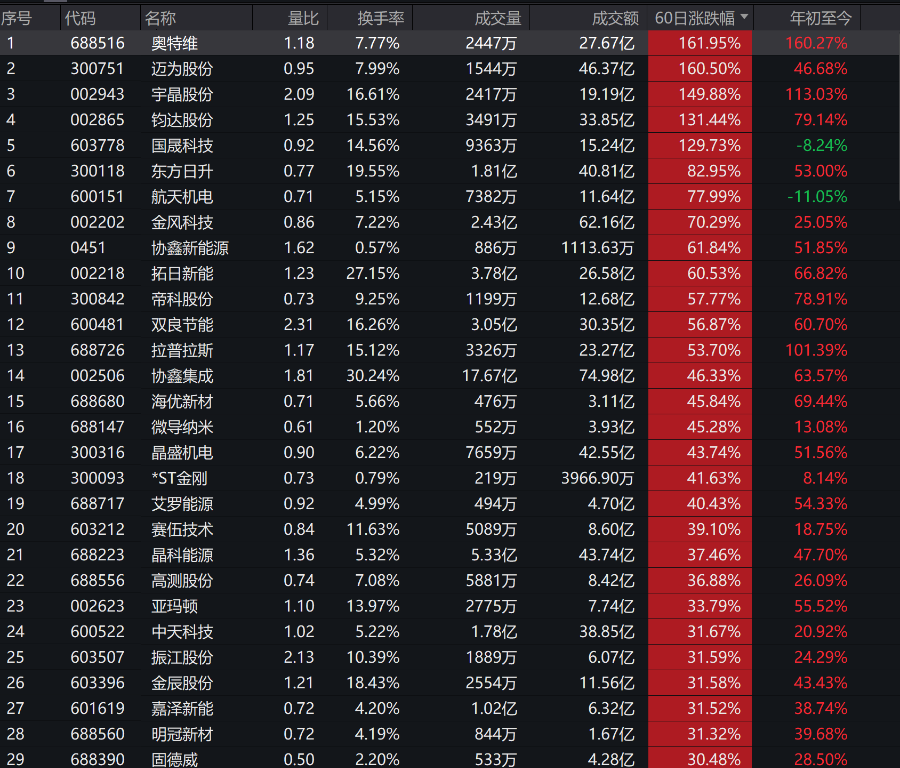
Core Viewpoint - Elon Musk's recent statements and activities have significantly influenced the A-share photovoltaic sector, leading to a surge in stock prices for various companies in this industry [2][3][5]. Group 1: Market Reaction - On January 23, 2026, 24 photovoltaic stocks reached their daily limit up, with the photovoltaic index rising by 7.46%, outperforming the overall market [2]. - Following Musk's remarks about the potential of solar energy in China, several companies, including JinkoSolar and TCL Zhonghuan, saw their stock prices rapidly increase [3][6]. - The A-share photovoltaic sector experienced a collective surge, with stocks like Aotaiwei and Maiwei doubling in price over a two-month period [6]. Group 2: Industry Fundamentals - Despite the recent stock price increases, many photovoltaic companies are still facing financial difficulties, with nearly 70% of 75 companies reporting losses for 2025 [4]. - The photovoltaic industry is currently at a low point, and while some companies are seeing a narrowing of losses, this has not translated into positive market sentiment [4][12]. - The concept of "space photovoltaics" has emerged as a potential new growth area for the industry, driven by the need for new market opportunities amid intense competition in ground-based solar energy [10][13]. Group 3: Future Prospects - Analysts predict that the space photovoltaic market could reach significant sizes, with estimates suggesting a potential market space of 200 billion yuan if 10,000 satellites are launched annually [10]. - Musk's exploration of Chinese photovoltaic companies signals a demand for support from the Chinese supply chain for his space energy ambitions [10][12]. - The push for space photovoltaics may compel companies to focus on new technologies and product quality, potentially leading to a return to value development in the industry [14].


马斯克"太空光伏"计划倒逼电网紧急补课!天弘中证电网设备主题指数基金(025832/ 025833)捕捉源网错配下的基础设施红利
Xin Lang Cai Jing· 2026-02-06 08:45
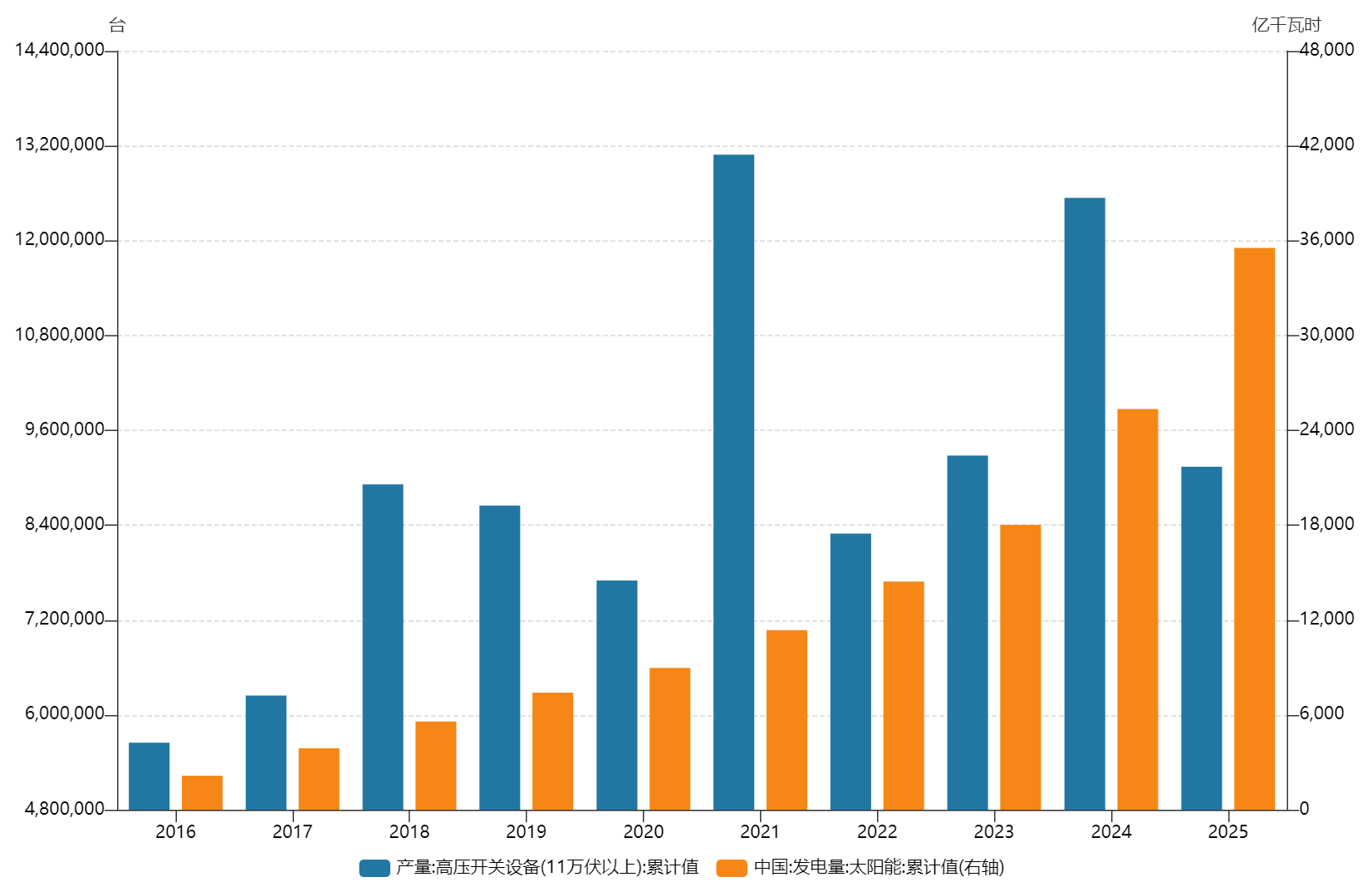
Group 1 - Elon Musk's team is exploring partnerships with leading Chinese photovoltaic companies like TCL Zhonghuan and JinkoSolar for a "space photovoltaic" plan, aiming for an annual solar manufacturing capacity of 100 GW within three years [1] - The plan includes deploying 100 GW of solar AI satellites to Earth orbit, with long-term capacity needs potentially exceeding 100 TW, which represents a quarter of China's expected new photovoltaic installations in 2026 [1] - The global photovoltaic installation is experiencing exponential growth, with China's "Shage Desert" large-scale wind and solar base planning exceeding 455 million kW, requiring significant investment [1] Group 2 - China's solar power generation is projected to increase from 210 billion kWh to nearly 3,600 billion kWh by 2025, a 17-fold growth, while the growth of high-voltage switchgear is showing a declining trend [2][4] - In Qinghai, some photovoltaic power stations face a 50% curtailment rate due to delayed transmission channels, necessitating additional investments for grid stability [2] - The State Grid is accelerating the construction of supporting transmission projects for the "Shage Desert" base, with plans to start 37 key renewable energy grid projects in 2024 [4] Group 3 - In the first 11 months of 2025, China's key power equipment exports reached $71.5 billion, a 20% year-on-year increase, with high-value transmission and transformation equipment driving growth [6] - The export of insulators surged by 45%, transformers by 35%, and high-voltage switchgear by 29%, indicating a structural differentiation in the export categories [6] - The Tianhong CSI Electric Grid Equipment Theme Index Fund tracks companies involved in ultra-high voltage, smart grid construction, and green energy, highlighting the fund's focus on capturing beta returns from grid investments [7][9]
光伏板块爆发,马斯克下单了?
Hua Er Jie Jian Wen· 2026-02-04 06:19
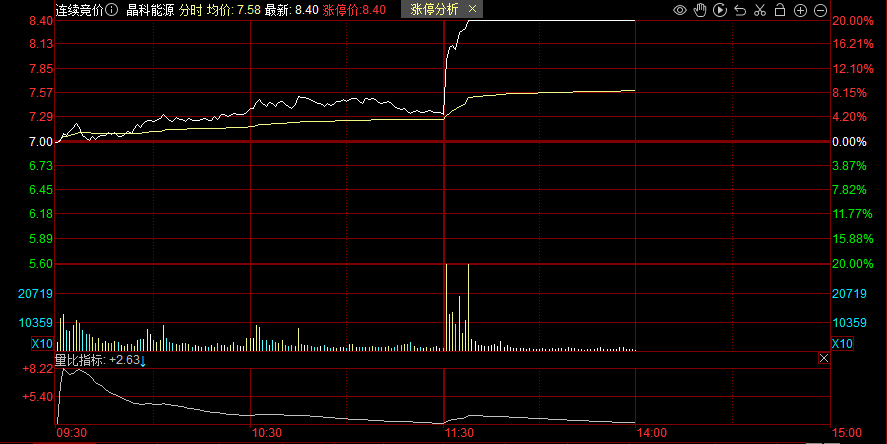
Core Viewpoint - The recent surge in the A-share photovoltaic sector, particularly the space photovoltaic concept, is driven by news of Elon Musk's team secretly visiting multiple Chinese photovoltaic companies to explore potential collaborations [2][3][4]. Group 1: Market Reaction - On February 4, the A-share photovoltaic sector experienced a strong rally, with JinkoSolar hitting a 20% limit up, and several other companies like ZERUN New Energy and Zhonglai Co. also reaching their daily limits [2]. - The market is reacting positively to the potential collaboration between Musk's team and Chinese photovoltaic firms, which are known for their core manufacturing capabilities and cost advantages [3]. Group 2: Musk's Exploration and Technology Focus - Musk's team has reportedly focused on advanced technology routes, particularly heterojunction and perovskite solar cells, during their visits to Chinese companies [3][4]. - The exploration includes various segments such as equipment, silicon wafers, and battery components, indicating a comprehensive interest in the photovoltaic supply chain [3]. Group 3: Space Photovoltaic Concept - The space photovoltaic concept is gaining traction as it aligns with the growing demand for AI computing power and space exploration, making it a new focal point in the capital market [4]. - Musk's announcement of plans to build a photovoltaic base with an annual capacity of 200 GW to support ground data centers and space AI satellites has further fueled interest in this sector [6]. Group 4: Future Projections and Industry Outlook - Research institutions are optimistic about the long-term potential of space photovoltaics, with expectations of a significant increase in demand due to the deployment of millions of computing satellites by SpaceX [8]. - Analysts suggest that the energy needs for AI data centers will double by 2035, and space photovoltaics could provide a sustainable solution to meet this demand [8][9].
传马斯克团队密访中国多家光伏企业 考察项目涉及硅片
Sou Hu Cai Jing· 2026-02-04 03:12
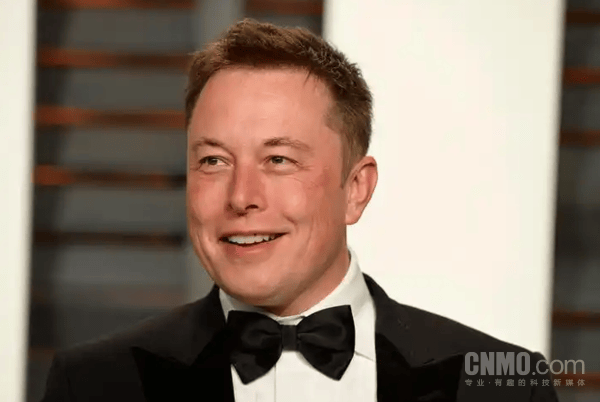
Group 1 - Elon Musk's team has secretly visited multiple Chinese photovoltaic companies to assess projects involving equipment, silicon wafers, and battery components, focusing on heterojunction and perovskite technology routes [1] - During the Davos Forum, Musk announced that SpaceX and Tesla plan to establish a combined photovoltaic capacity of 200GW per year in the U.S. within three years, with part of the capacity directed towards space photovoltaic component production [3] - Musk expressed strong support for space photovoltaics, predicting that solving energy issues in space will soon enable the deployment of AI data centers, with a goal of launching 100GW of solar-powered AI satellites [5] Group 2 - The increased focus of Tesla and SpaceX on photovoltaic technology suggests that Chinese photovoltaic companies may play a more critical role in the global photovoltaic supply chain, contributing significantly to global energy transition efforts [6]
马斯克放弃核聚变
投资界· 2026-01-30 08:09
Core Viewpoint - A capital and technological competition surrounding nuclear fusion is redefining human imagination about the energy revolution, with significant investments flowing into nuclear fusion startups globally, particularly in the U.S. and China [3][4]. Group 1: Investment Trends - Nuclear fusion concept stocks are gaining traction worldwide, with venture capital continuously pouring into fusion startups in the U.S. and related stocks in China showing strong performance [3][4]. - High-profile investors, including tech billionaires and even former President Trump, are betting on various nuclear fusion technologies, indicating a collective pursuit of creating an "artificial sun" [4][5]. Group 2: Energy Demand and Supply Challenges - The U.S. is facing an electricity shortage, exacerbated by the rising demand from AI, data centers, and other tech sectors, marking a significant shift in energy consumption patterns [6][8]. - AI data centers currently account for approximately 3% of the total electricity consumption in the U.S., with projections suggesting this could rise to nearly 8% by 2030 [8][9]. Group 3: Nuclear Fusion's Advantages - Nuclear fusion is being revisited due to its potential as a clean, efficient, and sustainable energy source, with advantages such as high energy density and low greenhouse gas emissions [10][12]. - Unlike fossil fuels, nuclear fusion's primary fuel source is seawater, reducing geopolitical risks associated with energy supply [10]. Group 4: Technological Pathways in Nuclear Fusion - Various technological pathways for nuclear fusion are being explored, including pulse magnetic confinement, hydrogen-boron fusion, and tokamak systems, each with distinct engineering philosophies and timelines [13][14][15]. - Silicon Valley's investment strategy involves diversifying across multiple fusion technologies to hedge against risks associated with high uncertainty in the field [13][21]. Group 5: Elon Musk's Space Solar Initiative - Elon Musk has publicly criticized terrestrial nuclear fusion, advocating instead for space-based solar power, which he believes can harness solar energy more effectively [17][18]. - Musk's plan includes deploying solar AI satellites to maximize solar energy capture in space, potentially meeting the entire U.S. electricity demand with a relatively small area of solar panels [19][20]. Group 6: Strategic Implications of Investment - Silicon Valley's investment in nuclear fusion reflects a long-term strategic bet on future energy capabilities, with the understanding that technological advancements in fusion could yield benefits across various high-tech industries [21][22]. - The pursuit of nuclear fusion is seen not merely as an energy venture but as a critical component in determining future technological and competitive advantages in the global landscape [23].

马斯克达沃斯预言:AI将如何重塑人类文明
Sou Hu Cai Jing· 2026-01-29 02:40
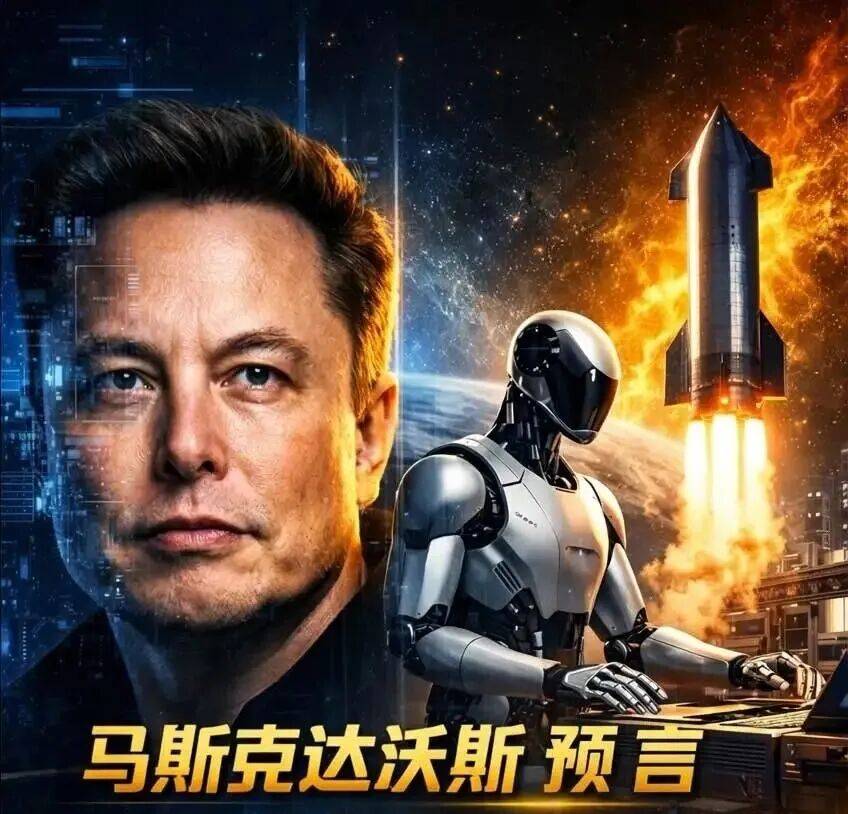
Core Insights - Elon Musk's speech at the 2026 Davos World Economic Forum outlines a future filled with challenges and opportunities, emphasizing the simultaneous emergence of AI, robotics, and sustainable energy as transformative forces for society [1][3]. Group 1: Technological Revolution - Musk identifies three key technological revolutions: artificial intelligence, robotics, and sustainable energy, which are set to reshape the fundamental structure of human society [4]. - He presents a formula for economic output: Economic Output = Average Productivity of a Robot × Number of Robots, suggesting that as robot numbers and capabilities increase, economic output will grow exponentially [4]. - Musk predicts that by the end of 2026, AI may surpass human intelligence, and by 2030 or 2031, AI will be smarter than all humans combined [4]. Group 2: Energy Challenges - Musk highlights a critical bottleneck in the deployment of AI: the energy supply, which is growing at only 2% to 4% annually, while AI chip production is increasing exponentially [6]. - He proposes a futuristic solution of deploying AI data centers in space, leveraging solar energy and natural cooling from the cosmic environment to address energy constraints [6]. Group 3: Economic and Employment Impact - Musk expresses a cautious outlook for the next 3-7 years, predicting a period of chaos and prosperity, with white-collar jobs being the first to be impacted by AI [8]. - He argues that AI will primarily replace jobs involving information processing rather than physical labor, challenging traditional views on job displacement [8]. Group 4: Global Dynamics - Musk emphasizes China's significant role in the global energy landscape, noting its solar power capacity of 1,500 gigawatts and annual deployment exceeding 1,000 gigawatts, which could meet half of the average electricity demand in the U.S. if paired with storage [9]. - He forecasts that China will surpass the world in AI computing power due to its advantages in energy, manufacturing, and infrastructure [9]. Group 5: Philosophical Perspectives - Musk's vision is rooted in the belief that consciousness and life are rare and precious in the universe, advocating for humanity to become a multi-planetary species to ensure the survival of consciousness [10]. - He suggests that aging is a solvable problem and emphasizes the importance of instilling core values in AI, such as the pursuit of truth and curiosity, rather than merely setting rules [10].
刚刚!史上最大IPO,突传大消息!
券商中国· 2026-01-28 14:34
Group 1 - Elon Musk plans to schedule SpaceX's IPO for mid-June, coinciding with a rare planetary alignment and his birthday, aiming to raise $50 billion with a valuation of approximately $1.5 trillion, potentially making it the largest IPO in history [1][2][5] - The IPO is expected to generate significant demand from both institutional and retail investors, surpassing the previous record set by Saudi Aramco's $29 billion IPO in 2019 [2][3] - SpaceX has appointed major banks including Bank of America, Goldman Sachs, JPMorgan, and Morgan Stanley as lead underwriters for this significant transaction [3] Group 2 - The motivation behind Musk's push for the IPO is to secure funding for the development of the Starship rocket system aimed at reaching Mars, as well as to enhance SpaceX's competitive position in the AI sector [4] - SpaceX is also working on technology to deploy data centers in space, leveraging its Starlink satellite network, which consists of 9,400 satellites [4] - The IPO date in June reflects Musk's personal influence on corporate decisions, with some analysts suggesting that the timing is also linked to the upcoming planetary alignment [6] Group 3 - The Chinese commercial space sector is also making significant strides, with the China Aerospace Science and Technology Corporation emphasizing the importance of reusable rocket technology and planning to enhance its capabilities in commercial launches [7] - In 2025, China's commercial space industry is projected to maintain rapid growth, completing 50 launches, which accounts for 54% of the country's total space launches, with a significant number of commercial satellites being deployed [8] - The advancement of reusable rocket technology is expected to drastically reduce launch costs and stimulate demand for satellite deployment in various sectors, indicating a potential boom in China's commercial space industry [8]
国泰海通|机械:SpaceX与特斯拉规划部署太阳能产能,光伏产业链迎发展新机遇
国泰海通证券研究· 2026-01-26 14:03
Group 1: Core Insights - The mechanical equipment index increased by 3.19% during the week of January 19-23, 2026 [1] - SpaceX and Tesla plan to achieve an annual solar manufacturing capacity of 100GW within three years, with a focus on space as a key application scenario [2] - The commercialization of Tesla's humanoid robot, Optimus, is progressing, with capabilities expected to expand significantly by the end of 2026 and 2027 [1][2] Group 2: Industry Developments - The third Beijing Commercial Aerospace Industry High-Quality Development Promotion Conference is set to take place, highlighting local efforts to enhance capabilities in research, manufacturing, and support services for commercial aerospace [3] - The "Yizhuang Arrow" is projected to complete 24 launches and carry over 160 satellites in 2025, with the aerospace industry revenue exceeding 32 billion yuan [3] - The conference will focus on various technical directions such as launch vehicles and space infrastructure, indicating a shift in commercial aerospace development from "engineering validation" to "scale delivery and industrial collaboration" [3]