
托育服务法

Search documents
钱哪里来、人怎么留、谁来管?托育服务法还有这些问题待明确
Di Yi Cai Jing· 2026-01-04 12:35
Core Viewpoint - The draft of the childcare service law emphasizes government leadership and public service attributes, aiming to reduce family childcare costs and support a fertility-friendly society, but lacks rigidity in fiscal expenditure provisions [2][3][4]. Group 1: Government Role and Fiscal Support - The draft specifies that childcare services will be "government-led," reinforcing its public service nature and encouraging local governments to explore family childcare service subsidy systems [3][4]. - The challenge lies in clearly defining the government's fiscal responsibilities to elevate childcare service standards to match those of preschool education [3]. - Current provisions in the draft use terms like "encourage" and "promote," which lack legal enforceability, suggesting a need for more binding language [4]. Group 2: Cost Reduction and Accessibility - High childcare costs are a significant barrier for families, with the average monthly fee for private childcare institutions reported at 1978 yuan, and over 5500 yuan in first-tier cities, creating a gap between costs and family affordability [3]. - The draft aims to incorporate inclusive childcare services into basic public services, indicating that government investment is necessary to lower costs [4]. Group 3: Workforce Development and Standards - The draft proposes a qualification examination and registration system for childcare workers, establishing educational and professional standards to improve service quality [9][10]. - There is a call for better compensation for childcare workers, suggesting that their salaries should not be lower than those of preschool teachers to enhance their social recognition and job satisfaction [10][11]. Group 4: Management and Oversight - The draft designates the health department as the primary regulatory body for childcare services, clarifying previous ambiguities regarding oversight responsibilities [12][13]. - It outlines the responsibilities of different government levels in managing childcare services, ensuring a structured approach to implementation [13][14]. Group 5: Future Considerations - The draft lacks specific regulations for various types of childcare services, such as community-based and kindergarten-based care, which are popular among parents [13][15]. - There is a need for detailed rules to address the challenges of integrating childcare services within existing educational frameworks, particularly regarding staffing and service quality [15].

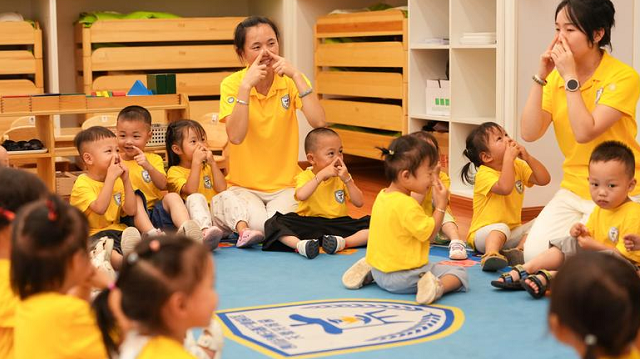
推动托育服务“从有到优”
Xin Lang Cai Jing· 2026-01-02 22:39
Core Viewpoint - The introduction of the Childcare Services Law draft aims to provide legal support for childcare services, addressing the challenges of "difficulty in childcare" and "high costs" while enhancing the quality of services for children under three years old [1][2]. Group 1: Legislative Framework - The draft consists of 8 chapters and 76 articles, covering various aspects such as childcare institutions, personnel, service provision, and legal responsibilities [1]. - The law is intended to establish a solid legal framework for the development and regulation of childcare services, which is crucial for improving birth support policies and reducing family upbringing costs [2]. Group 2: Demand and Supply Issues - One-third of families with infants express a strong need for childcare services, indicating that the lack of care for children under three is a significant barrier to increasing birth rates [3]. - The draft emphasizes the need for government-led initiatives to address the mismatch between supply and demand in childcare services, including increased financial support and encouraging social participation [2][4]. Group 3: Multi-faceted Support - The draft proposes that local governments incorporate childcare service development into national economic and social development plans, ensuring adequate funding and resource allocation [4]. - It encourages various entities, including government agencies and enterprises, to provide affordable childcare services, thereby enhancing accessibility for families [4]. Group 4: Quality Assurance and Regulation - The draft outlines the necessity of establishing a comprehensive regulatory framework to improve the quality of childcare services, including the development of service standards and monitoring systems [5][6]. - It aims to protect the rights of infants and their families, ensuring safety and quality through third-party evaluations and clear legal responsibilities for childcare institutions [6].
中原期货晨会纪要-20251223
Zhong Yuan Qi Huo· 2025-12-23 01:54
1. Report Industry Investment Rating No information provided in the content. 2. Core Viewpoints of the Report - The market may have entered a small year - end rally. Overseas liquidity has improved with the Bank of Japan's dovish rate hike and the Fed's dovish stance. A - share liquidity has also been enhanced by large - scale ETF subscriptions and the trend of RMB appreciation. The operation strategy is to focus on the policy mainline, use dips for layout, take profits during rallies, and keep a flexible position [18]. 3. Summary by Relevant Catalogs 3.1 Chemical and Agricultural Product Price Changes - **Chemical Products**: On December 23, 2025, among chemical products, PVC had the largest increase with a rise of 2.679% to 4,714.00 yuan, while yellow soybean 2 had the largest decrease in the agricultural products sector, dropping 7.489% to 3,434.00 yuan [4]. 3.2 Macro - economic News - The central bank introduced a one - time credit repair policy for small - amount personal overdue information. Vanke's 20 - billion - yuan bond extension plan was rejected again, but it won a 30 - trading - day grace period. Precious metals soared on December 22, with gold breaking through $4,440 per ounce and silver exceeding $69 per ounce [6]. - The State Council held a meeting on the preparation of the "15th Five - Year Plan". China's December LPR remained unchanged for the 7th consecutive month. The National People's Congress heard a report on the rectification of audit problems in the 2024 central budget [7]. - The Central Economic Work Conference deployed multiple key reform tasks. The draft of the Childcare Service Law was submitted for its first review [8]. 3.3 Morning Meeting Views on Main Varieties 3.3.1 Agricultural Products - **Sugar**: On December 22, the sugar price rose 0.75%. In the short term, it may show a volatile and slightly stronger pattern, with support near the cost line. One can consider going long on dips [11]. - **Corn**: The corn futures price was flat on December 22. It has entered a volatile pattern, and short - term interval trading can be considered [11]. - **Pigs**: The current hog futures market shows a contradiction between weak reality and strong expectations. There is a weak rebound opportunity, and one can focus on the reverse spread of monthly spreads [11]. - **Eggs**: The egg market is still bearish, and the reverse spread of monthly spreads can be held [11]. - **Cotton**: On December 22, the cotton price rose 0.39%. In the short term, positive factors dominate, and one can go long on dips with support at 14,000 yuan [13]. 3.3.2 Energy and Chemicals - **Urea**: The domestic urea market price is stable. The supply - demand pattern shows a double - reduction, and the UR2605 contract may run in the range of 1,650 - 1,750 yuan [12]. - **Caustic Soda**: The caustic soda market is in an oversupply situation, and the main contract continues to be weak [14]. - **Coking Coal and Coke**: The coking coal supply is relatively loose, and the coking coal and coke market tends to be volatile [13]. - **Logs**: The log market shows a pattern of weak supply and demand, and the price oscillates between 760 - 800 yuan [14]. - **Pulp**: The pulp price has broken through the previous range, but the supply exceeds demand. One should not chase the high price and can pay attention to the support near 5,550 - 5,580 yuan [14]. - **Offset Printing Paper**: The offset printing paper price has broken through the previous pressure level. One should not chase the high and can pay attention to the support at 4,000 yuan [14]. 3.3.3 Non - ferrous Metals - **Copper and Aluminum**: The copper and aluminum market is strong, and they continue to run at high levels, but macro risks should be noted [14]. - **Alumina**: The alumina market is in an oversupply situation and continues to be weak [15]. - **Rebar and Hot - Rolled Coil**: The rebar and hot - rolled coil market maintains an interval oscillation pattern, with rebar in the range of 3,000 - 3,200 yuan and hot - rolled coil in the range of 3,200 - 3,300 yuan [15]. - **Ferroalloys**: The ferroalloy market follows the trend of the black series. One should not chase the high price at the current high level [15]. - **Lithium Carbonate**: The lithium carbonate futures price has broken through the previous range. The short - term upward trend is strong, but the risk of high - level fluctuations increases [15]. 3.3.4 Options and Finance - **Stock Index Futures and Options**: On December 22, the A - share market was strong. Trend investors can focus on the strength - weakness arbitrage opportunities among varieties, and volatility investors can short volatility through the short straddle strategy [16]. - **Stock Index**: The A - share market has shown signs of stabilization. The market may have entered a small year - end rally. One should focus on the policy mainline and keep a flexible position [18].
托育服务法草案提请初审
Xin Lang Cai Jing· 2025-12-22 20:23
Core Viewpoint - The draft of the Childcare Service Law aims to ensure the healthy growth of infants and toddlers by regulating childcare institutions and personnel, establishing a comprehensive regulatory system, and providing legal protection for the vulnerable group of children under three years old [1][2]. Group 1: Legislative Intent and Importance - The legislation is crucial for the health and development of infants, impacting families and contributing to high-quality population growth [1]. - Establishing the Childcare Service Law is a significant measure to improve fertility support policies, reduce family rearing costs, and enhance population quality [1]. Group 2: Quality and Standards of Childcare Services - The draft addresses issues of low quality in childcare services and varying levels of childcare personnel by implementing measures to encourage and regulate social participation in the development of inclusive childcare services [2]. - It emphasizes the need for a diverse, safe, high-quality, reasonably priced, and accessible public childcare service system [2]. Group 3: Professional Standards for Childcare Personnel - The draft proposes strengthening the training and professional standards of childcare personnel, including strict qualification requirements and the establishment of a national qualification examination and registration system for childcare workers [2]. - Individuals seeking to obtain a childcare practitioner certificate must have relevant educational qualifications and pass a national qualification exam [2]. Group 4: Childcare Service Content and Practices - The draft specifies that childcare institutions must develop appropriate schedules and activity plans based on the growth and development characteristics of infants, ensuring adequate sleep, outdoor activity, and nutritious meals [2]. - It supports the active exploration and communication of infants, fostering good living and behavioral habits [2]. Group 5: Encouragement of Diverse Childcare Models - The draft encourages various forms of childcare provision, including support from government agencies, organizations, state-owned enterprises, and community integration of inclusive childcare services [2]. - It also promotes employers and industrial parks to provide inclusive childcare services for their employees and encourages kindergartens to offer childcare classes where conditions permit [2].
我国拟立法促进规范托育服务
Xin Lang Cai Jing· 2025-12-22 17:14
Core Viewpoint - The draft of the Childcare Services Law aims to protect the rights of children under three years old and alleviate parental anxiety regarding childcare, marking a significant step in legal support for childcare services in China [1][2]. Group 1: Legislative Framework - The draft consists of 8 chapters and 76 articles, covering general principles, childcare institutions, personnel, service provision, support measures, supervision, legal responsibilities, and appendices [1]. - The main theme of the draft is to ensure the healthy growth of infants and toddlers, serving as both a promotion law for the industry and a protection law for children's rights [1]. Group 2: Current State of Childcare Services - As of now, there are 126,000 childcare service institutions in China, providing a total of 6.657 million childcare spots, with a ratio of 4.73 spots per 1,000 population for children under three [2]. - Challenges such as "difficulty in enrollment," "high costs," and "uneven quality" persist, indicating a gap between current services and public expectations for quality childcare [2]. Group 3: Safety and Regulation - The draft emphasizes safety as a fundamental aspect, proposing strict regulations for the establishment of childcare institutions, including obtaining necessary permits and meeting various conditions [3]. - A qualification examination and registration system for childcare workers will be implemented, along with a blacklist for those with serious criminal records or ethical violations [3]. Group 4: Service Standards and Monitoring - Detailed regulations are set for the entire service process, including guidelines for activities, food safety, health management, and disease prevention [4]. - Childcare institutions are required to install video monitoring systems in key areas, with a retention period for footage of at least 90 days, ensuring comprehensive supervision [4]. Group 5: Accessibility and Affordability - The draft aims to create a diverse, safe, high-quality, reasonably priced, and accessible public childcare service system, integrating affordable childcare services into basic public services [6]. - Measures to expand supply and reduce costs include encouraging employers and local governments to provide subsidies for family childcare services [6].
新华鲜报丨呵护婴幼儿群体!我国拟立法促进规范托育服务
Xin Hua She· 2025-12-22 07:28
Core Viewpoint - The draft of the Childcare Services Law aims to protect the rights of children under three years old and alleviate parenting anxiety for families, marking a significant step in legal support for childcare services in China [1][2]. Group 1: Legislative Framework - The draft consists of 8 chapters and 76 articles, covering general principles, childcare institutions, personnel, service provision, guarantee measures, supervision and management, legal responsibilities, and appendices [1]. - The main theme of the draft is to ensure the healthy growth of infants and toddlers, serving as both a promotion law for the industry and a protection law for children's rights [1]. Group 2: Current State of Childcare Services - As of now, there are 126,000 childcare service institutions in China, providing a total of 6.657 million childcare spots, with a ratio of 4.73 spots per 1,000 population for children under three [2]. - Challenges such as "difficulty in enrollment," "high costs," and "uneven quality" persist, indicating a gap between current services and public expectations for quality childcare [2]. Group 3: Safety and Regulation - The draft emphasizes safety as a fundamental aspect, proposing strict regulations for the establishment of childcare institutions, including obtaining necessary permits and meeting various conditions [4]. - A qualification examination and registration system for childcare workers will be implemented, along with a blacklist for those with serious criminal records or ethical violations [4]. Group 4: Service Standards and Monitoring - The draft outlines detailed service provisions, including guidelines for activities, food safety standards, and health management for infants [5]. - It mandates the installation of video monitoring systems in childcare facilities and the establishment of comprehensive supervision mechanisms by local governments [5]. Group 5: Accessibility and Affordability - The draft aims to create a public service system for childcare that is diverse, safe, high-quality, reasonably priced, and easily accessible [6]. - Measures to expand supply and reduce costs include encouraging employers and local governments to provide subsidies for family childcare services [6].
新华鲜报|呵护婴幼儿群体!我国拟立法促进规范托育服务
Xin Hua She· 2025-12-22 07:04
Core Viewpoint - The draft of the Childcare Services Law aims to protect the rights of children under three years old and alleviate parenting anxiety for families, marking a significant step in legal support for childcare services in China [1][4]. Group 1: Legislative Framework - The draft consists of 8 chapters and 76 articles, covering general principles, childcare institutions, personnel, service provision, support measures, supervision, legal responsibilities, and supplementary provisions [1]. - The main theme of the draft is to ensure the healthy growth of infants and toddlers, serving as both a promotion law for the industry and a protection law for children's rights [1]. Group 2: Current State of Childcare Services - As of now, there are 126,000 childcare institutions in China, providing a total of 6.657 million childcare spots, with a ratio of 4.73 spots per 1,000 population for children under three [4]. - Challenges such as "difficulty in enrollment," "high costs," and "uneven quality" persist, indicating a gap between current services and public expectations for quality childcare [4]. Group 3: Safety and Regulation - The draft emphasizes safety as a fundamental aspect, proposing strict regulations for the establishment of childcare institutions, including obtaining necessary permits and meeting various conditions [5]. - A qualification examination and registration system for childcare workers will be implemented, along with a blacklist for those with serious criminal records or ethical violations [5]. Group 4: Service Standards and Monitoring - The draft outlines detailed service provisions, including guidelines for activities, food safety standards, and health management for infants [6]. - It mandates the installation of video monitoring systems in childcare facilities to ensure comprehensive supervision and safety [6]. Group 5: Accessibility and Affordability - The draft aims to create a diverse, safe, high-quality, reasonably priced, and accessible public childcare service system, integrating affordable childcare services into basic public services [7]. - Measures to expand supply and reduce costs include encouraging employers and local governments to provide subsidies for family childcare services [7].
呵护婴幼儿群体!我国拟立法促进规范托育服务
Xin Hua She· 2025-12-22 06:55
Core Viewpoint - The draft of the Childcare Services Law was submitted for its first review, aiming to protect the rights of children under three years old and alleviate parental anxiety regarding childcare [1][5]. Group 1: Legislative Framework - The draft consists of 8 chapters and 76 articles, focusing on the health and growth of infants and toddlers, serving as both a promotion and protection law for their rights [1][5]. - The law aims to elevate childcare services from policy guidance to legal protection, addressing issues such as accessibility and affordability of childcare [5]. Group 2: Current State of Childcare Services - As of now, there are 126,000 childcare institutions in China, providing a total of 6.657 million childcare spots, with a ratio of 4.73 spots per 1,000 population for children under three [5]. - Challenges such as difficulty in accessing childcare, high costs, and varying quality persist, indicating a gap between current services and public expectations for quality childcare [5]. Group 3: Safety and Regulation - The draft emphasizes safety as a fundamental aspect, proposing strict regulations for the establishment of childcare institutions, including obtaining necessary permits and meeting various conditions [6]. - A qualification examination and registration system for childcare workers will be implemented, along with a blacklist for those with serious criminal records or ethical violations [6]. Group 4: Service Standards and Monitoring - The draft outlines detailed service provisions, including guidelines for activities, food safety, and health management for infants [7]. - It mandates the installation of video monitoring systems in childcare facilities to ensure safety and accountability, with a comprehensive supervision mechanism established by local governments [7]. Group 5: Accessibility and Affordability - The draft aims to create a public service system for childcare that is diverse, safe, high-quality, reasonably priced, and easily accessible [8]. - Measures to expand supply and reduce costs include encouraging employers to provide affordable childcare services and exploring subsidy systems for families [8].
降低家庭养育成本 我国拟对托育服务专门立法
21世纪经济报道· 2025-12-22 04:02
Group 1 - The draft of the Childcare Service Law was submitted for the first review at the 19th meeting of the 14th National People's Congress Standing Committee, consisting of 8 chapters and 76 articles [1] - The law aims to promote and regulate the development of childcare services, providing legal protection for infants and toddlers under three years old, which is crucial for improving fertility support policies and reducing family upbringing costs [1] - This initiative is significant for building a family-friendly society and promoting high-quality population development [1] Group 2 - Precious metals have surged, with gold, silver, and platinum reaching new highs, while palladium futures hit the limit up [2] - Guangzhou's first chip IPO has made significant progress, planning to raise 7.5 billion, with state-owned capital involved [2]

中国拟立托育服务法 禁止托育人员实施侵害婴幼儿身心健康的行为
Zhong Guo Xin Wen Wang· 2025-12-22 03:19
Core Viewpoint - The draft of the Childcare Service Law aims to provide legal protection for infants under three years old, prohibiting childcare personnel from harming their physical and mental health, which is crucial for promoting a fertility-friendly society and enhancing population quality [1][2] Group 1: Legislative Framework - The draft consists of 8 chapters and 76 articles, covering general principles, childcare institutions, personnel, service provision, support measures, supervision and management, legal responsibilities, and supplementary provisions [1] - It mandates that local governments incorporate childcare service development into national economic and social development plans, ensuring funding mechanisms and resource allocation for urban and rural childcare services [1] Group 2: Personnel Regulations - The draft stipulates that childcare institutions must conduct pre-employment checks and annual reviews of childcare personnel, prohibiting the hiring or continued employment of individuals with a history of violence, trafficking, sexual assault, abandonment, or abuse [1] Group 3: Child Rights Protection - The draft emphasizes the protection of infants' rights, including their image rights, reputation rights, privacy rights, and personal information, requiring immediate protective measures and reporting to relevant authorities if any harm is suspected [2] - It encourages local governments to explore establishing subsidies for family childcare services and to support the development of inclusive childcare services through purchasing services [2]