技术性调整

Search documents
好时股价回调,技术性调整与业绩预期重估成主因
Jing Ji Guan Cha Wang· 2026-02-17 16:49
Group 1: Stock Performance - The stock price of the company fell by 2.54% on February 17, closing at $215.51, with a trading volume of approximately $102 million. This decline followed a significant increase in stock price, which had risen by 19.20% year-to-date, and reached a peak of $233.34 on February 9 [1] - The recent drop in stock price may be attributed to profit-taking by investors after a substantial short-term gain, leading to a technical correction [1] Group 2: Financial Performance - Despite a 60.2% year-on-year decline in net profit for 2025, the company's stock price was previously driven up by positive earnings guidance for 2026, which anticipates an earnings per share growth of 79%-89% [2] - The decline on February 17 may reflect investor concerns regarding the pace of cost pressure alleviation or demand resilience, especially after favorable factors like the drop in cocoa prices have been partially priced in [2] Group 3: Industry Context - On the same day, the three major U.S. stock indices showed mixed performance, with the Nasdaq index down by 0.22% and the S&P 500 up by only 0.05%. The overall performance of the consumer sector was lackluster, and the candy store segment, to which the company belongs, showed no change in stock price [3]
众兴菌业股价回调9.8%,技术面与板块情绪成主因
Jing Ji Guan Cha Wang· 2026-02-12 08:24
Group 1: Company Fundamentals - The company's 2025 earnings forecast indicates a net profit growth of 134%-173%, primarily due to the rebound in enoki mushroom prices and cost control measures [4] - There are concerns in the market regarding the rapid expansion of industry capacity, with shiitake mushroom production expected to reach 13.04 million tons in 2023, indicating a need for optimization in supply-demand dynamics [4] - The current price adjustment is mainly a result of technical corrections and sector sentiment, while the company's fundamentals remain strong [4] Group 2: Industry Sector Situation - On February 12, the agriculture, forestry, animal husbandry, and fishery sector declined by 1.49%, with the planting industry down by 1.57%, reflecting overall weakness in the industry [2] - The agricultural sector had previously risen due to optimistic policy expectations, but recent market sentiment has shifted, leading to increased divergence regarding policy implementation and industry prosperity [2] Group 3: Capital Flow - On February 12, there was a net outflow of 35.72 million yuan from major funds, accounting for 20% of the trading volume, while retail investors contributed 37% but could not offset the selling pressure [3] - Recent data from the leaderboard indicates that institutional positions have predominantly been selling, suggesting a cautious attitude from large investors [3]

天成金汇股价下跌4.56%,受板块拖累及技术调整影响
Jing Ji Guan Cha Wang· 2026-02-11 17:43
Group 1 - The stock price of Tiancheng Jinhui (WAI.OQ) fell by 4.56% on February 11, 2026, closing at $2.47, influenced by overall sector performance, technical adjustment pressures, and market liquidity factors [1] - The broader U.S. capital market sector experienced a decline of 1.35% on the same day, which may have negatively impacted individual stocks within the sector [2] - Over the five trading days leading up to February 11, the stock has cumulatively decreased by 3.82%, while it has increased by 9.86% over the past 20 trading days, indicating a potential technical adjustment following prior gains [3] Group 2 - The stock exhibited a trading range of 4.95% on the day, with a trading volume of 8,145 shares and a total transaction value of $20,700, reflecting low liquidity that can lead to significant price fluctuations with minimal capital movement [3] - The turnover rate for the stock was 0.43% on that day, indicating a lack of trading activity, where insufficient depth in buy and sell orders may amplify the impact of single transactions on the stock price [4]
新韩金融股价创历史新高,近期表现强劲
Jing Ji Guan Cha Wang· 2026-02-11 16:38
Core Viewpoint - The stock price of Shinhan Financial (SHG.N) has shown strong performance, reaching a record high and significantly outperforming the broader market and banking sector [1][3]. Company Fundamentals - The company's main business is banking, accounting for 76.48% of revenue, followed by credit cards at 13.59% and insurance at 10.96%. As of December 31, 2024, total assets are projected to reach 724.50 trillion KRW, with a 15% year-on-year increase in net profit expected for 2025. In July 2025, the company issued $500 million in 5-year senior unsecured bonds with a coupon rate of 4.50% [2]. Stock and Capital Performance - The stock has experienced significant volatility, with a 31.65% fluctuation over the past month and high trading activity. During the same period, the U.S. banking sector declined by 0.27%, and the Dow Jones index fell by 0.19%, indicating that this stock has performed notably better than both the industry and the market [3]. Future Development - Following continuous record highs, the stock may face technical adjustment pressures, and macroeconomic factors such as interest rate policies and global economic fluctuations could impact the performance of financial stocks [4].
金银一夜大变天!这波暴力反弹究竟是陷阱还是机遇?
Sou Hu Cai Jing· 2026-02-07 17:12
Core Viewpoint - The international gold market experienced a dramatic crash on January 29, 2026, with spot gold prices plummeting by $440 in just one hour, marking a single-day decline of over 12%, the largest in 40 years [1][3] Group 1: Market Dynamics - The crash was triggered by the nomination of Kevin Warsh as the Federal Reserve Chairman, known for his "hawkish" stance on inflation, leading to a stronger dollar that suppressed gold prices [3] - Prior to the crash, gold had risen over 30% and silver over 60% since the beginning of 2026, indicating a buildup of market risk due to concentrated speculative trading and high leverage [3] - The Chicago Mercantile Exchange (COMEX) raised margin requirements, forcing high-leverage traders to add funds, which triggered a cascade of forced liquidations and automated sell-offs, exacerbating the price drop [3] Group 2: Global Market Impact - The crash had a ripple effect on global markets, with the A-share precious metals sector collapsing, and commodities like crude oil and copper also experiencing significant declines [5] - Bitcoin also fell over 4% in response to the turmoil, highlighting a cross-market liquidity crisis as investors sold off other assets to cover losses in precious metals [5] - There is a divergence in opinions among Wall Street institutions regarding the crash, with some viewing it as a technical adjustment while others warn of further declines in gold prices [5] Group 3: Fund Management Responses - Following the crash, several fund companies implemented risk control measures, including suspending trading or limiting purchases to prevent excessive premiums from triggering further sell-offs [7] - Despite these measures, market volatility continued, with gold prices dropping to $4,470, a decline of over $1,100 from historical highs [7] - Experts noted a structural change in the market, with gold shifting from a "safe-haven asset" to a "high-volatility speculative product," influenced by high levels of quantitative trading and leverage [7]


金价、银价,突然大反转!
中国能源报· 2026-02-07 03:43
Core Viewpoint - International gold and silver prices experienced significant fluctuations on the 6th, reflecting increased volatility in the precious metals market due to changing liquidity expectations and concentrated speculative funds [3]. Price Movements - On the 6th, spot gold prices fell over 2% at one point but rebounded to exceed $1,950 per ounce, with an increase of nearly 4% [3]. - Spot silver prices dropped nearly 1% initially but later surged past $27 per ounce, showing a rise of over 9% [3]. Year-to-Date Performance - Since the beginning of the year, international gold prices have increased by nearly 15%, while silver prices have risen by over 8% [3]. Market Analysis - Analysts suggest that the recent fluctuations in gold and silver prices are a result of both technical adjustments and changes in policy expectations, indicating a shift in the investment logic that previously supported these prices [3].
分析人士:此轮金银价格波动是技术性调整与政策预期变化共同作用的结果
Xin Lang Cai Jing· 2026-02-07 01:10
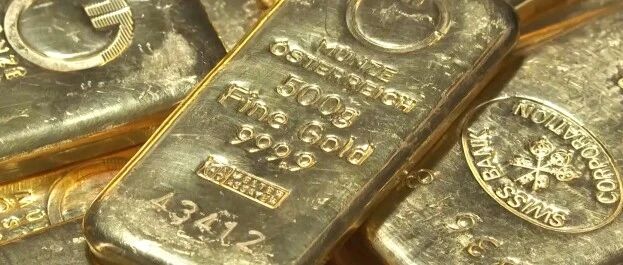
Core Viewpoint - International gold and silver prices experienced significant fluctuations on February 6, with gold prices dropping over 2% before rebounding to exceed $4,950 per ounce, marking a nearly 4% increase, while silver prices fell nearly 10% before rising above $77 per ounce, with an increase of over 9% [1] Group 1: Price Movements - Gold prices increased by nearly 15% since the beginning of the year [1] - Silver prices have risen by over 8% year-to-date [1] Group 2: Market Analysis - Market analysts suggest that the volatility in gold and silver prices reflects increased fluctuations in the precious metals market due to changing global liquidity expectations and concentrated speculative funds [1] - The recent price movements are attributed to a combination of technical adjustments and changes in policy expectations, indicating a shift in the investment logic that previously supported prices [1]
国际金价与银价6日大幅震荡 分析人士:前期支撑价格的投资逻辑正在改变
Xin Lang Cai Jing· 2026-02-07 01:01
Core Viewpoint - International gold and silver prices experienced significant fluctuations on the 6th, reflecting increased volatility in the precious metals market due to changing global liquidity expectations and concentrated speculative funds [3][5][6] Group 1: Price Movements - On the 6th, spot gold prices fell over 2% before rebounding to surpass $4950 per ounce, with an increase of nearly 4% [5] - Spot silver prices dropped nearly 10% before recovering to exceed $77 per ounce, resulting in a gain of over 9% [5] - Year-to-date, international gold prices have risen approximately 15%, while silver prices have increased by over 8% [5] Group 2: Market Analysis - Analysts suggest that the recent fluctuations in gold and silver prices are a result of both technical adjustments and changes in policy expectations, indicating a shift in the investment logic that previously supported these prices [6] - The volatility in precious metals prices is seen as a reflection of heightened market instability [6]
金银惊魂跳水!有色矿业ETF招商(159690)单日重挫6%!白银有色封死跌停!
Sou Hu Cai Jing· 2026-02-05 05:52
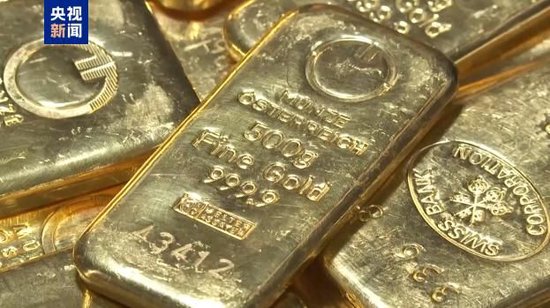
Group 1 - The global precious metals market experienced significant volatility on February 5, 2026, with spot gold dropping over $170 and spot silver plunging more than 16% after falling below $80, leading to a temporary suspension of silver futures trading in Thailand [1][2] - The sharp adjustment in precious metals and non-ferrous sectors is primarily driven by a rapid reversal of short-term risk sentiment and concentrated liquidation of overcrowded trades, indicating that the market is in a "bottom-finding" phase [2][3] - Analysts warn that the extreme one-sided trading in gold, which has seen a nearly 20% decline from its peak, suggests that the momentum reversal is substantial and may not recover quickly, with potential support around $4,800 and risks of falling to $4,500 [2][3] Group 2 - Despite the poor price performance, the market's fund flow indicates a contrasting trend, with the non-ferrous mining ETF (159690) continuing to see net inflows during the downturn, and its shares have surged by 429.42% year-to-date, reflecting a long-term value-based contrarian investment strategy [4]

女子从2016年开始买黄金,称高中政治课教过:刚买时金价才两三百,已连续买了10年
Xin Lang Cai Jing· 2026-02-04 11:15
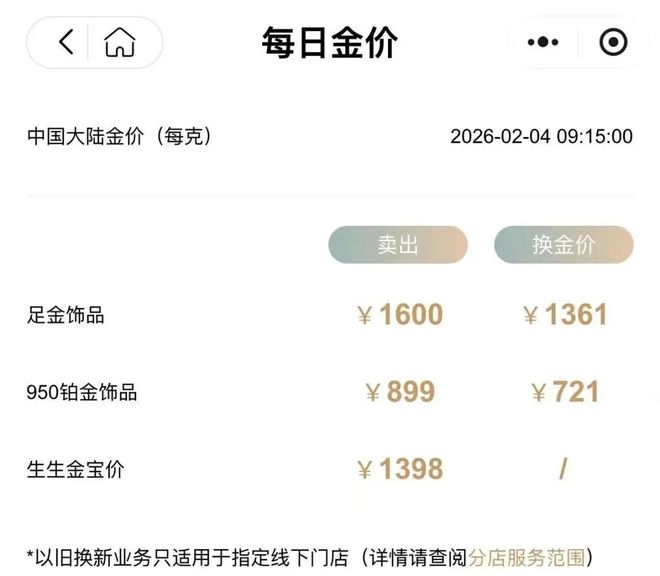
Core Viewpoint - Recent fluctuations in gold prices have been significant, with spot gold surpassing $5000 and domestic gold jewelry prices rising sharply, indicating a volatile market influenced by geopolitical concerns and currency depreciation [1][3]. Group 1: Gold Price Movements - On February 4, spot gold prices exceeded $5000, increasing by over 2% [1]. - Domestic gold jewelry prices rose from ¥1498 to ¥1600 per gram, an increase of ¥102 [1][2]. - A customer noted that gold prices were only a few hundred yuan per gram in 2016, highlighting the long-term value retention of gold against currency depreciation [2]. Group 2: Market Analysis - Experts indicated that the recent sharp decline in gold prices is a technical adjustment, with gold prices dropping 17% from the historical high of $5595.47 per ounce [3]. - The market remains sensitive to news-driven emotional fluctuations, suggesting that volatility will continue [4]. - Analysts believe that fundamental factors supporting gold's long-term rise still exist, preventing a sustained downward trend [4]. Group 3: Regulatory Adjustments - The Shanghai Gold Exchange announced adjustments to margin levels and price limits for certain gold contracts, increasing the margin from 16% to 17% and the price limit from 15% to 16% [4]. - Similar adjustments were made for silver contracts, with the margin level for Ag(T+D) decreasing from 26% to 23% and the price limit changing from 25% to 22% [5].