
政策性农业保险

Search documents
投保农业保险 农户可以自选保险公司吗?
Jin Rong Shi Bao· 2026-02-12 12:18
Core Viewpoint - The article discusses the selection process for agricultural insurance companies in China, emphasizing that while farmers have the right to choose, their options are limited to designated companies within their region [1][3]. Group 1: Agricultural Insurance Selection Process - Farmers can choose insurance providers, but they are typically restricted to those selected through a competitive bidding process by local governments [1][3]. - In regions like Heilongjiang, a list of qualified insurance companies for the period from January 1, 2024, to December 31, 2026, includes several major firms such as PICC Property and Casualty, Sunshine Agricultural Mutual Insurance, and others [2]. Group 2: Rationale Behind the Selection Process - The selection process aims to maintain a balance between adequate competition and service quality, as agricultural insurance relies heavily on local service networks [3][4]. - A stable relationship with selected insurance companies encourages long-term investment in disaster prevention and loss reduction infrastructure, which is crucial for effective agricultural insurance [3][4]. - The process allows for competition during the qualification phase, where companies must demonstrate their capital strength and service capabilities, followed by performance evaluations during the operational period [4].
糖料蔗种植户的“甘蔗保险”
Zhong Guo Jing Ying Bao· 2025-12-20 14:31
Core Viewpoint - The case of a sugarcane farmer's fire insurance claim highlights the importance of professional mediation in resolving disputes and ensuring fair compensation for agricultural insurance claims, aligning with national policies to support agricultural development and risk management [1][3]. Group 1: Case Details - A sugarcane farmer, Mr. Huang, insured his crop with a property insurance company and reported a fire incident that occurred on January 26, leading to a claim for damages [1]. - The insurance company assessed the damage at 15% of the total value, amounting to 23,400 yuan, while Mr. Huang argued for a full loss compensation of 158,400 yuan due to severe damage [1][2]. - The dispute arose from differing opinions on the extent of the damage and the timing of the insurance company's site investigation [2]. Group 2: Mediation Process - The industry mediation organization facilitated the resolution by addressing key points of contention, including the timeliness of the insurance company's assessment and the accuracy of the damage evaluation [2]. - The mediator referenced the provincial policy for sugarcane insurance, which outlines specific damage assessment criteria based on the condition of the crop post-incident [2]. - Ultimately, the parties agreed on a compensation based on a 40% damage assessment, reflecting a more accurate evaluation of the losses incurred [3]. Group 3: Implications for the Insurance Industry - This case exemplifies the role of professional mediation in protecting the rights of policyholders in agricultural insurance, ensuring that compensation aligns with actual losses [3]. - The case underscores the need for insurance companies to enhance their claims handling processes, emphasizing accountability and adherence to established damage assessment standards [3]. - It highlights the social security aspect of policy-based agricultural insurance, aiming to mitigate the financial impact of disasters on farmers [3].
保险渐成农牧民生产“定心丸”
Zheng Quan Ri Bao Zhi Sheng· 2025-10-11 13:36
Core Insights - Insurance is becoming a crucial support for farmers and herders in Tibet, providing a safety net against natural disaster risks through market mechanisms [1][2] - The timely and adequate compensation from insurance companies helps farmers recover economically after disasters, ensuring they have funds to purchase seeds, fertilizers, and feed, thus promoting agricultural production and income growth [1] - Insurance products are tailored to the unique agricultural structure and risk characteristics of Tibet, offering targeted financial services that address local needs [1] Summary by Sections - **Insurance Role in Agriculture** - Insurance is viewed as a "safety valve" for the modernization of highland agriculture, contributing to high-quality economic and social development in the region [2] - **Product Development and Local Adaptation** - The company has developed unique insurance products that cater to local agricultural practices, such as livestock insurance that addresses risks from snow disasters and wildlife attacks, and barley insurance that provides essential support for crop stability and income [1]
面对连阴雨天气带来的影响——国人寿财险山东省分公司多措并举为秋收提供风险保障
Qi Lu Wan Bao· 2025-10-11 07:02
Core Insights - Continuous rainy weather during the autumn harvest season poses challenges and risks for grain collection in Shandong Province, prompting the company to provide extensive support and risk assurance for farmers [1][2] Group 1: Company Initiatives - The company held a leadership meeting to ensure uninterrupted service during the National Day and Mid-Autumn Festival, focusing on safeguarding livelihoods and addressing the adverse effects of weather on grain harvest [2] - The company has established a green channel for autumn grain claims, with personnel on duty to assist farmers in drainage and harvesting efforts [2][3] - Utilizing meteorological data, the company disseminates timely weather information to farmers, enabling them to prepare for harvesting [2][3] Group 2: Technological Empowerment - The company leverages its 331 "Three Rural" service stations to guide farmers in scientific harvesting and mitigate the impact of adverse weather [3] - Advanced methods such as drone inspections and app-based assessments are employed to enhance the efficiency of claims processing [3] Group 3: Insurance Coverage - The company has insured 6.84 million acres of policy-based crops, covering disaster losses amounting to 6.1 billion yuan [4] - New insurance products, including rainfall index insurance and income supplement insurance, have been introduced to address the gap between policy coverage and actual market value [4] - The company has insured 336,700 acres of commercial autumn grain insurance, providing risk coverage of 211 million yuan, creating a multi-layered risk assurance system for farmers [4]

我省首单政策性热带优异水果综合保险落地三亚
Hai Nan Ri Bao· 2025-08-04 01:32
Core Insights - The launch of the tropical excellent fruit comprehensive insurance policy marks a significant step in supporting the agricultural sector in Sanya, Hainan, enhancing risk management for local farmers [1][2] Group 1: Insurance Details - China Pacific Insurance (CPIC) has issued a comprehensive insurance policy for tropical excellent fruits, with Sanya Yiyuan Fruit Ecological Agriculture Co., Ltd. as the insured party, covering 360 acres of papaya and providing over 2.6 million yuan in risk protection [1] - The insurance covers common damage risks such as wind disasters, heavy rain, and leaf diseases, making it the first policy of its kind in Hainan [1][2] Group 2: Agricultural Development - The "Zhongre No. 1" papaya, which is highly resistant to diseases, is part of a promotion by the Sanya Agricultural and Rural Bureau and the Sanya Papaya Association [2] - The new insurance type is part of Sanya's 2025 policy to enhance agricultural insurance, covering five main tropical fruit varieties: papaya, wax apple, dragon fruit, passion fruit, and pineapple [2] - The introduction of this insurance is expected to boost farmers' confidence in expanding production scale and enhance their ability to withstand natural disasters [2] Group 3: Government Support - The launch of the tropical excellent fruit comprehensive insurance reflects the Sanya government's increased support for the agricultural industry, establishing a risk protection barrier for the high-quality development of the tropical fruit sector [2]

套取保险,“套”住自己(监督哨)
Ren Min Ri Bao· 2025-06-23 21:50
Core Points - The investigation revealed fraudulent activities related to agricultural insurance in a village in Hubei Province, where local officials exploited the system for personal gain [1][2] - Two village officials, Lei and Wu, were found to have falsely insured 3,083 acres of rice under the names of local villagers, resulting in the misappropriation of 96,500 yuan in insurance claims [2] - The investigation highlighted the need for stricter oversight and accountability in the implementation of agricultural insurance policies to prevent corruption and protect farmers' interests [2] Summary by Sections - **Fraudulent Activities**: Local villagers reported discrepancies in the agricultural insurance claims, leading to an investigation that uncovered that Lei and Wu had used villagers' accounts to claim insurance without their consent [1][2] - **Financial Misappropriation**: The total amount fraudulently claimed was 96,500 yuan, with 22,500 yuan remaining after deducting insurance premiums, which was misappropriated by the officials [2] - **Consequences and Recommendations**: The involved officials received severe disciplinary actions, and the incident underscored the importance of monitoring agricultural insurance to ensure it serves its intended purpose of supporting farmers [2]
清风为伴产业兴丨政策落地 虾农无忧
Zhong Yang Ji Wei Guo Jia Jian Wei Wang Zhan· 2025-06-21 00:54
Core Insights - The potential of the crayfish industry in Qianjiang, Hubei Province, has been highlighted, with a comprehensive industrial chain established over 20 years, achieving a total industrial output value exceeding 87 billion yuan [1] - The local government has implemented a policy-oriented insurance scheme for crayfish farmers to enhance their resilience against natural disasters and diseases, which has been in place since 2014 [1][2] - The Qianjiang Discipline Inspection and Supervision Commission is actively monitoring the insurance scheme to prevent corruption and ensure proper implementation, having identified and investigated 37 issues related to the insurance program [2] Group 1 - The crayfish industry in Qianjiang has developed into a full industrial chain, including breeding, ecological farming, processing, and culinary sectors, with a total output value surpassing 87 billion yuan [1] - The local government has introduced a policy-oriented insurance program for crayfish farmers, utilizing a model that combines farmers, government funding, and insurance to provide premium subsidies [1][2] - The Qianjiang Discipline Inspection and Supervision Commission is focusing on key areas of the insurance scheme, including underwriting and claims, to address issues of fraud and corruption [2] Group 2 - The use of big data by the Qianjiang Discipline Inspection and Supervision Commission has led to the identification of anomalies in insurance claims and beneficiaries, prompting further investigation [2] - Investigations revealed that some village officials colluded with insurance company employees to fraudulently obtain funds through inflated claims [2] - The commission has taken action against 20 party members for misconduct related to the insurance scheme and is working to improve regulatory frameworks and transparency in the insurance process [2]
内蒙古财政以政策性农业保险为支撑 助力自治区奶产业稳健发展
Sou Hu Cai Jing· 2025-06-06 04:00
Core Insights - Inner Mongolia is a crucial agricultural region in China, contributing one-third of the national milk production and playing a significant role in the country's livestock industry [1] - The central government's 2025 policy emphasizes the need to support the beef and dairy industries, aiming to stabilize production capacity and alleviate operational pressures on farmers [1] Group 1: Dairy Industry Support Measures - The Inner Mongolia Finance Department, in collaboration with the Agriculture and Animal Husbandry Department and the Financial Regulatory Bureau, has optimized the policy for dairy cow insurance by adding new coverage options, enhancing the insurance framework to meet diverse needs of dairy farmers [2] - The new insurance coverage options include additional tiers of 3000, 4000, 5000, and 12000 yuan, expanding choices for farmers and stabilizing their income expectations [2] Group 2: Price Risk Protection Initiatives - The municipalities of Hulunbuir and Xingan League are key dairy production areas, where a pilot program for fresh milk price index insurance has been implemented with financial support from local governments [3] - In 2025, the target for fresh milk insurance coverage in these areas is set at 119,300 tons, with a financial subsidy of 10.46 million yuan from the regional government, providing an estimated insurance risk coverage of 388 million yuan for dairy farmers [3] - The Finance Department plans to enhance the synergy between agricultural insurance policies and dairy revitalization efforts, aiming to strengthen the risk protection framework for this vital agricultural sector [3]
北京4月极端大风农业定损金额最终超千万元,已全部赔付完毕
Xin Jing Bao· 2025-05-28 11:28
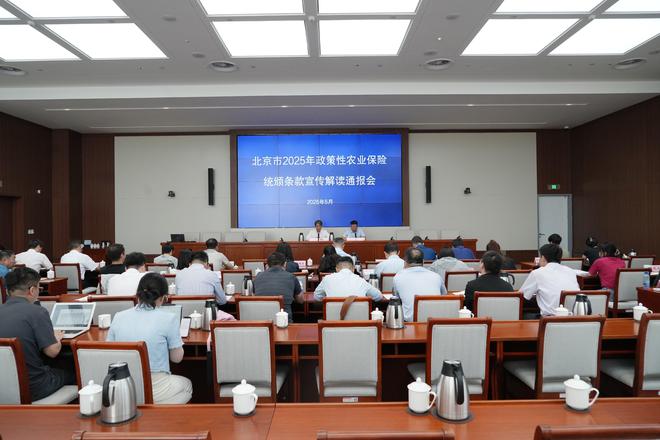
Core Viewpoint - Beijing has revised its policy agricultural insurance terms for 2025, enhancing coverage, optimizing rates, and strengthening supervision to support the agricultural insurance sector in the city [1][7]. Group 1: Insurance Coverage - The revised terms introduce a total of 48 insurance types, including 30 for crop production (grains, vegetables, fruits), 13 for livestock (dairy cows, sows, aquaculture, poultry, beekeeping), and 4 for agricultural property (greenhouses, fruit trees, machinery) [2][4]. - The insurance covers risks such as hail, strong winds, heavy rain, severe drought, animal diseases, and accidents [2]. Group 2: Financial Impact - From 2007 to 2024, the total premium income from policy agricultural insurance in Beijing reached 9.34 billion yuan, with total insurance coverage amounting to 210.41 billion yuan [2]. - The number of insured entities reached 2.399 million, with total compensation payments of 7.72 billion yuan benefiting 1.842 million households, resulting in a simple compensation rate of 82.7% [2]. Group 3: New Insurance Options - The revision includes new insurance options for staple crops like wheat, corn, rice, and soybeans, allowing farmers to choose between traditional crop insurance, full cost insurance, and income insurance [3]. - For example, the new corn full cost insurance offers a coverage of 950 yuan per mu, doubling the previous coverage of 550 yuan for traditional corn planting insurance [3]. Group 4: Claims Process Improvements - The revised terms clarify claims requirements, enhancing the accuracy of certain weather index insurances and establishing a 24-hour response time for claims [5]. - The threshold for compensation for vegetable frost damage has been adjusted from a 50% loss requirement to a calculation based on actual losses [5]. Group 5: Accessibility and Support - All 13 agricultural districts in Beijing will benefit from standardized and unified insurance policies, allowing farmers to choose from basic, full cost, or income insurance based on their needs [6]. - The city has selected six insurance companies to provide policy agricultural insurance, emphasizing rapid response and claims processing in the event of disasters [6].

温州保险业 合力共建浙江农险服务新体系
Zheng Quan Ri Bao Zhi Sheng· 2025-05-05 23:46
Group 1 - The core viewpoint of the article highlights the establishment of a new policy agricultural insurance co-insurance consortium in Zhejiang Province, which aims to enhance agricultural insurance services and support farmers [2][4]. - The first insurance policy under this new consortium was issued for 217.1 acres of early rice in Wenzhou, marking a significant step in the implementation of agricultural insurance in the region [1][2]. - The early rice comprehensive cost insurance provides a coverage amount of 1,200 yuan per acre, with substantial subsidies from central, provincial, and county governments, resulting in farmers only needing to pay approximately 1 yuan per acre [3]. Group 2 - The co-insurance model, initiated in 2004, involves multiple insurance companies working together under a unified management mechanism, which has been crucial for the high-quality development of agricultural insurance in Zhejiang [2]. - The insurance companies in Wenzhou, including PICC, Taiping, China Life, and Ping An, have quickly adapted to the new consortium's operational requirements, ensuring a smooth transition from the previous insurance model [2]. - The use of technology, such as drone surveying and the "e-agriculture insurance" app, has significantly increased operational efficiency, allowing for a threefold increase in daily processing capacity compared to traditional methods [4].