
新就业形态人员职业伤害保障

Search documents
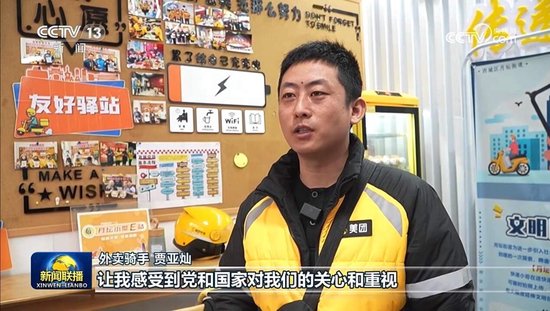
央视《新闻联播》关注“新职伤”为新就业“兜底” 美团已缴纳超27亿元保费
Xin Lang Cai Jing· 2026-03-17 03:28
Core Insights - The report highlights the progress of the "New Occupational Injury" (referred to as "New Job Injury") protection for new employment forms, transitioning from pilot programs to nationwide implementation [1][7] - This initiative is a significant institutional innovation affecting approximately 84 million delivery riders and ride-hailing drivers in China, addressing the lack of protection for these flexible workers [3][9] Policy Development - The "New Job Injury" pilot program began in July 2022 in seven provinces, including Beijing and Shanghai, with the aim of creating a model where platform companies pay for occupational injury insurance for their workers [3][9] - By July 2025, the pilot program will expand to 17 provinces, with over 25 million participants already enrolled as of March 2023 [3][9] Financial Contributions - As of February 2026, Meituan, a leading platform company, has paid over 2.77 billion yuan in insurance premiums, covering approximately 17.28 million riders [4][10] Welfare Initiatives - Meituan is also exploring long-term welfare support for new employment form workers, including a pension insurance subsidy starting in 2025, covering 50% of the insurance costs for eligible riders [6][12] - The company has initiated "rider apartments" in cities like Beijing and Chengdu, providing subsidized housing to alleviate transitional housing pressures for riders [6][12] - The "Rider Major Illness Care Plan" has been upgraded to cover all types of riders and their immediate family members, with over 7,570 beneficiaries and more than 210 million yuan in care funds distributed since its launch in 2019 [6][12] Social Safety Net - The solid advancement of the "New Job Injury" system is creating a more robust social safety net for millions of new employment form workers, addressing the need for enhanced rights protection in the context of flexible employment [7][13]


重庆新业态伤害保障覆盖百万人
Xin Lang Cai Jing· 2026-02-05 20:14
Group 1 - The core viewpoint of the news is the implementation of a new occupational injury insurance system in Chongqing, which provides quick compensation for gig economy workers, enhancing their financial security [1][2] - Chongqing has expanded its coverage to 11 platform companies, allowing over 1 million insured individuals to benefit from the system, with 13,000 people having received compensation [1] - The insurance applies to new employment forms such as delivery workers, ride-hailing drivers, and others who earn through platform services, covering incidents like traffic accidents and sudden illnesses while on duty [1] Group 2 - The Chongqing Human Resources and Social Security Bureau has developed the "Yuan An" occupational injury prevention brand to address communication challenges in promoting the insurance [2] - The initiative breaks down barriers between departments and industries, combining government authority with platform-specific outreach for effective promotion [2] - A systematic training framework has been established, targeting decision-makers, management, frontline workers, and new employees within the gig economy [2]
优质资源“沉下去”,美好生活“托起来”(人民时评) ——从“小家”热气腾腾到“大家”蒸蒸日上②
Xin Lang Cai Jing· 2026-01-20 08:38
Core Viewpoint - The concept of "support power" in social welfare reflects the government's commitment to alleviate public concerns and invest in the future, transforming national development narratives into tangible benefits for individuals [1][4]. Group 1: Financial Support and Direct Benefits - The introduction of a universal cash subsidy for child-rearing, starting in 2025, marks a significant shift from previous policies that primarily extended parental leave [2]. - By the end of 2025, it is projected that 80% of families will receive the child-rearing subsidy, benefiting over 24 million people [2]. Group 2: Resource Allocation and Emergency Response - The ability to mobilize quality resources during emergencies is crucial, as demonstrated by medical teams providing on-site care to individuals with health issues [3]. - Following the 6.8 magnitude earthquake in Tibet, rapid reconstruction efforts allowed affected residents to move into new homes within months, showcasing the government's effective disaster response [3]. Group 3: System Design and Support for New Employment Groups - New support systems for urban employment groups, such as designated rest areas for delivery workers, illustrate the government's efforts to address the needs of diverse populations [4]. - By 2025, the pilot program for occupational injury protection for new employment forms will expand to 17 provinces, covering various industries, with plans to further extend this to 31 provinces by 2026 [4].
优质资源“沉下去”,美好生活“托起来”
Ren Min Ri Bao· 2026-01-20 02:24
Group 1 - The core message emphasizes the government's commitment to enhancing the welfare of families through direct financial support, such as the monthly 300 yuan subsidy for childcare, which reflects a shift from merely reducing burdens to actively uplifting citizens [1][2] - The introduction of a universal cash subsidy for childcare starting in 2025 marks a significant policy shift, providing tangible benefits to families and demonstrating an upgraded development philosophy that combines investment in both material and human resources [2] - By the end of 2025, it is projected that approximately 80% of families will receive the childcare subsidy, benefiting over 24 million people, which illustrates the direct financial relief provided by the government to support young parents [2] Group 2 - The government's enhanced "uplifting power" is evident in its ability to mobilize quality resources to address urgent public needs, as seen in healthcare initiatives where medical teams are dispatched to provide services directly to communities [3] - Following the 6.8 magnitude earthquake in Tibet, rapid reconstruction efforts allowed affected residents to move into new homes within months, showcasing the government's strong support and efficient disaster recovery capabilities [3] - The establishment of facilities for new employment groups, such as rest stations for delivery workers, reflects a growing recognition of their rights and needs, with expanded occupational injury protection trials set to cover more provinces and industries by 2026 [4]
优质资源“沉下去”,美好生活“托起来”(人民时评)
Ren Min Ri Bao· 2026-01-20 01:37
Core Viewpoint - The concept of "supporting power" in social welfare reflects the government's commitment to alleviate public concerns and invest in the future, transforming national development narratives into tangible benefits for individuals [1][4]. Group 1: Financial Support and Direct Benefits - The introduction of a universal cash subsidy for child-rearing, starting in 2025, marks a significant shift in policy, moving from indirect support to direct financial assistance for families [2]. - By the end of 2025, it is projected that 80% of families will receive the child-rearing subsidy, benefiting over 24 million people, thus providing substantial economic relief and a sense of security for parents [2]. Group 2: Resource Allocation and Emergency Response - The enhancement of "supporting power" is evident in the effective allocation of resources during emergencies, such as medical assistance and disaster recovery efforts [3]. - For instance, a medical team from Fudan University successfully treated a patient with a foot deformity in his home village, showcasing a shift from seeking medical help to receiving it directly at home [3]. - Following a significant earthquake in Tibet, rapid reconstruction efforts allowed affected residents to move into new homes within months, demonstrating the government's strong support for disaster recovery [3]. Group 3: System Design and Employment Support - The design of social welfare systems is increasingly focused on providing support for new employment groups, such as delivery workers, through dedicated facilities that cater to their needs [4]. - By 2025, pilot programs for occupational injury protection for new employment forms will expand to 17 provinces, covering various industries, with plans to further extend this to 31 provinces by 2026 [4]. - The initiative aims to ensure that every worker is protected, allowing them to focus on their work without additional concerns [4].
我省为新就业形态劳动者系上“安全带”
Hai Nan Ri Bao· 2025-12-29 01:28
Core Insights - The Hainan province has successfully implemented a pilot program for occupational injury protection for new employment model workers, with over 1 billion orders processed and a total of approximately 24.3 million yuan in benefits paid out [2][3] Group 1: Program Overview - The pilot program for occupational injury protection began on July 1, 2022, with Hainan being one of seven trial provinces [2] - A total of 11 platform companies, including Meituan, Ele.me, and Didi, have been included in the pilot, covering various services such as delivery and transportation [2] - The program has provided coverage for approximately 396,800 new employment model workers [2] Group 2: Payment and Benefits - The payment for occupational injury protection is based on a variable fee structure, with companies contributing between 0.01 yuan to 0.25 yuan per order, calculated monthly [2] - Workers are eligible for benefits such as medical expenses, rehabilitation costs, disability allowances, and living care fees if they suffer injuries while performing platform services [3] - The review process for injury claims has been streamlined, with a standard confirmation time of 30 working days, and expedited processes for minor injuries [3] Group 3: Future Plans - During the 14th Five-Year Plan period, Hainan aims to expand the coverage of the occupational injury insurance system to include more categories of workers, such as delivery personnel and interns [3]
重庆稳步扩大新就业形态人员职业伤害保障试点范围
Ren Min Ri Bao· 2025-12-21 01:36
Core Insights - The article discusses the implementation and expansion of a new occupational injury insurance program aimed at gig economy workers in China, particularly in Chongqing, which has seen significant participation and support from local government [3][4]. Group 1: Program Overview - The "new occupational injury" insurance is designed for gig economy workers, allowing them to report injuries and receive compensation without needing a formal employment contract [3]. - As of now, the program has expanded to 17 provinces, with over 22 million participants enrolled [3]. Group 2: Government Support and Future Plans - The initiative aligns with the goals set by the 20th National Congress of the Communist Party of China, emphasizing the need for improved social security systems and occupational injury protections [4]. - Future plans include expanding the program to cover more industries, with a target to include platform companies in delivery and transportation sectors by 2026, and potentially other high-risk industries by 2027 [5]. Group 3: Stakeholder Feedback - Feedback from stakeholders, including gig workers and representatives from trial companies, indicates a desire for faster processing times and broader inclusion of various job types, such as domestic workers [5]. - The program aims to streamline the application process, making it easier for workers to access benefits [5].
重庆稳步扩大新就业形态人员职业伤害保障试点范围 织密保障网 让奋斗脚步更稳当(贯彻四中全会精神一线见闻)
Ren Min Ri Bao· 2025-12-20 22:19
Core Points - The article discusses the implementation and expansion of a new occupational injury insurance program in China, specifically targeting gig economy workers such as delivery personnel [2][3] - The program, referred to as "new occupational injury," allows workers to receive compensation without needing a formal employment contract, with payments made directly by platform companies [2] - The initiative has seen significant growth, with over 22 million participants across 17 provinces as of now, following its pilot launch in July 2022 [2] Group 1 - The "new occupational injury" insurance program was initiated to enhance the rights and protections of flexible and gig economy workers, aligning with national goals for improved social security [2][3] - The program has expanded from 7 pilot provinces to 17, indicating a growing recognition of the need for such protections in the labor market [2] - Feedback from stakeholders, including workers and platform representatives, is being actively sought to improve the program's efficiency and coverage [4] Group 2 - Future plans include integrating more industries into the occupational injury insurance program, with a focus on sectors with higher risks and labor intensity by 2026 and 2027 [4] - The initiative aims to create a more reliable social security system that enhances the sense of security and well-being among workers [4]
订单取消 司机有轻微过错可豁免
Sou Hu Cai Jing· 2025-09-21 23:21
Core Viewpoint - The article discusses the first algorithm negotiation meeting held by Huolala, aiming to clarify labor rules and establish a consensus between the platform and drivers regarding algorithmic decision-making and labor rights [2][3]. Group 1: Algorithm Negotiation and Labor Rights - Huolala held the first national algorithm negotiation meeting on September 18, signing a "Special Agreement" with driver representatives to clarify ambiguous algorithm rules into clear labor agreements [2]. - The company has added an "Algorithm Disclosure" section on its website to explain the logic behind behavior scores and order cancellation responsibilities, seeking a balance between efficiency and fairness [2][3]. Group 2: Driver Concerns and Solutions - Drivers raised concerns about whether order cancellation responsibilities favor users, highlighting the trust issues stemming from the algorithm's opaque nature [3][4]. - The "Special Agreement" includes detailed rules on commission, order distribution mechanisms, and driver health and welfare, addressing issues like fatigue driving with a strategy to remind drivers after 4 hours of continuous driving [5]. - Huolala plans to invest 338 million yuan to optimize fatigue driving reminders and address issues like overdue freight payments, committing over 10 million yuan annually for this purpose [5]. Group 3: Transparency and Accountability - The platform emphasizes that responsibility for order cancellations must be based on sufficient evidence, stating that only 4% of canceled orders are ultimately deemed the driver's fault [5][6]. - Huolala's leadership indicates that regular negotiation meetings will be held to ensure drivers' rights to information and participation, establishing a new norm in labor relations concerning algorithms [6].

货拉拉与司机签订算法协议,明确订单取消“证据不足无责”
Sou Hu Cai Jing· 2025-09-19 07:30
Core Viewpoint - The article discusses the recent initiative by Huolala to address the concerns of drivers regarding algorithm transparency and labor rules through collective negotiation and the establishment of a special agreement [2][5]. Group 1: Algorithm and Labor Relations - The emergence of platform algorithms as a new form of employment is highlighted, with Huolala holding the first national algorithm negotiation meeting to clarify labor rules [2]. - The lack of traditional labor relations for over 200 million flexible workers in China has made establishing effective social security systems a pressing issue [3]. - The "black box" nature of algorithms has created a gap in understanding and potential conflicts between platforms and drivers, particularly regarding income distribution and accountability for order cancellations [3][5]. Group 2: Key Issues and Solutions - Six core areas of concern for drivers include service income, management of cargo owners, labor safety, and the impact of behavior scores on order eligibility [3]. - Huolala's special agreement outlines rules for commission, order distribution, and driver welfare, addressing issues like fatigue driving with a planned investment of 338 million yuan for improvements [5][6]. - The platform has introduced a new public interface to clarify the principles of order cancellation responsibility, stating that only 4% of canceled orders are attributed to drivers [5][6]. Group 3: Future Engagement - Huolala plans to hold regular negotiation meetings to ensure drivers' rights to information and participation, indicating that discussions around algorithms will become a new norm in labor relations [6].
