新茶饮行业转型

Search documents
流水10000元,到手6000元?新茶饮“五小龙”现状:业绩两重天,加盟亏上天
新浪财经· 2026-03-31 12:16
Core Viewpoint - The new tea beverage industry is experiencing significant performance divergence among key players, with some brands thriving while others struggle with losses and closures [6][8]. Group 1: Financial Performance - In 2025, the financial results of the new tea beverage companies show stark differences, with Gu Ming leading in net profit growth, while Nayuki continues to face substantial losses, accumulating over 2 billion yuan since its IPO [6][8]. - Mixue Ice City achieved a revenue of 33.56 billion yuan, a year-on-year increase of 35.2%, and a net profit of 5.93 billion yuan, up 33.1%, averaging a daily net profit of approximately 16.25 million yuan [6][7]. - Gu Ming reported a revenue of 12.91 billion yuan, a 46.9% increase, and a net profit of 3.12 billion yuan, growing by 108.6%, leading the industry in profit growth [6][7]. - Hu Shang A Yi's revenue reached 4.47 billion yuan, up 36%, with a net profit of 500 million yuan, increasing by 52.4% [6][7]. - Cha Bai Dao's revenue was 5.4 billion yuan, a 9.7% increase, with a net profit of 820 million yuan, up 71.2%, but with a slowing revenue growth rate [6][7]. - Nayuki's revenue fell to 4.33 billion yuan, down 12%, with a net loss of 239 million yuan, although this was a 74% reduction from the previous year [6][7]. Group 2: Market Dynamics - The industry is transitioning from a phase of rapid growth to a structural differentiation where strong players thrive while weaker ones contract [8]. - As of March 31, 2026, stock performance reflects this divergence, with Mixue Ice City and Gu Ming seeing significant stock price increases, while Hu Shang A Yi, Cha Bai Dao, and Nayuki have all experienced substantial declines [8]. - Mixue Ice City closed at 293 HKD, up 44.7% from its IPO price, while Gu Ming rose 174.7% to 27.3 HKD. In contrast, Nayuki's stock plummeted 95.8% to 0.83 HKD [8]. Group 3: Expansion Strategies - Mixue Ice City and Gu Ming are pursuing aggressive expansion strategies, with Mixue adding approximately 13,000 stores in 2025, bringing its total to nearly 60,000 [12][18]. - Gu Ming increased its store count by about 3,640 in 2025, nearly tripling its previous year's growth [12]. - Hu Shang A Yi opened 3,654 new stores but closed 1,383, resulting in a net increase of 2,273 stores, with a high closure rate of 12% [12]. - Nayuki is the only brand to see a net decrease in store count, closing over 150 underperforming stores in 2025 [12]. Group 4: Operational Challenges - The industry faces challenges such as intense price competition and a saturated market, leading to declining single-store profitability and increased closure rates [10][11]. - A franchisee reported that the effective revenue from daily sales has decreased significantly due to rising delivery costs and increased competition, making profitability increasingly difficult [10]. - The operational model is under pressure, with many new franchisees struggling to achieve profitability, leading to store closures or transfers [10]. Group 5: Future Trends - Brands are increasingly looking to international markets for growth opportunities, with Mixue Ice City already entering the U.S. market and expanding into Southeast Asia [16][18]. - To enhance profitability, brands are focusing on upgrading store experiences and differentiating their offerings, with Mixue and HiTea leading in innovative store concepts [18]. - The industry is shifting from a focus on rapid expansion to a deeper emphasis on value creation, product innovation, and supply chain efficiency [18].

风暴眼中的霸王茶姬
3 6 Ke· 2026-03-31 01:53
Core Insights - The new tea beverage industry is experiencing a significant slowdown, with the market size growing only 6.4% in 2025, reaching 187 billion yuan, a stark contrast to the 24.9% compound annual growth rate from 2017 to 2022 [1] - Bawang Chaji, a leading brand in the industry, has seen its store count increase to 7,026 by the end of 2025, but the overall number of stores in the industry has been declining for three consecutive years, indicating a shift to a more competitive environment [1][2] - The brand's same-store sales have fluctuated, with average monthly revenue dropping to 378,500 yuan in Q3 2025, reflecting the challenges faced by the company and the industry as a whole [2] Group 1: Industry Trends - The tea beverage market is transitioning from rapid expansion to a focus on existing store performance, with a net decrease of 3,900 stores in 2025 [1] - Bawang Chaji's rapid growth through a franchise model has slowed, with only a net increase of fewer than 1,000 stores in 2025 compared to nearly doubling in 2024 [3] - The overall consumer frequency for tea beverages is declining, while the number of available brands is increasing, leading to reduced customer traffic for individual stores [4] Group 2: Franchise Model Adjustments - In early 2026, Bawang Chaji adjusted its franchise model by eliminating fixed annual fees and implementing a revenue-sharing model, aiming to strengthen the relationship with franchisees [5] - The adjustments are designed to reduce the financial burden on franchisees and stabilize their confidence in the brand amid increasing competition [5] - However, these changes do not address the core issues of declining customer traffic and intensified competition within the industry [5][6] Group 3: Product Strategy - Bawang Chaji's success has been largely attributed to its flagship product, the "Boya Juexian," which has sold over 1.25 billion cups and accounts for 60-70% of its sales [7] - Despite this focus, the brand has struggled with product innovation, launching only eight new products in 2025, which is significantly lower than competitors [7][9] - The brand's reliance on a single product poses risks, as competitors have introduced similar offerings at lower price points, threatening Bawang Chaji's market position [9][10] Group 4: International Expansion - Bawang Chaji has been expanding internationally since 2019, with 262 overseas stores by September 2025, primarily in Southeast Asia [11] - The brand's overseas revenue reached over 300 million yuan in Q3 2025, marking a 75.3% year-on-year increase, but still represents only 3.8% of total revenue [12][13] - The brand faces challenges in diversifying its international presence, as 75% of its overseas stores are concentrated in Malaysia, exposing it to market risks [13][14] Group 5: Strategic Considerations - The company must navigate the complexities of global expansion, including supply chain localization and operational management, to ensure sustainable growth [14][15] - Bawang Chaji's future success will depend on its ability to innovate product offerings, enhance store profitability, and effectively compete in both domestic and international markets [15][16] - The ongoing industry reshuffle emphasizes the need for continuous evolution and strategic clarity to maintain a competitive edge [16]

奈雪生活全国首店闭店
Nan Fang Du Shi Bao· 2025-10-26 23:11
Core Insights - The closure of Nayuki's first store in Shenzhen marks a significant shift in the tea beverage industry, highlighting the challenges of innovation and transformation within the sector [2][3] - Nayuki's international expansion continues, with its first store in the U.S. opening in October 2025, indicating a new direction for the brand [3][5] Company Overview - Nayuki's first store, Nayuki Dream Factory, opened in 2018 and was a multi-functional space that became a popular destination in Shenzhen [2] - In 2022, Nayuki rebranded to Nayuki Life, shifting its focus from a product experience store to a brand co-creation platform, featuring multiple brands under one roof [3] - Despite initial success, Nayuki has faced ongoing financial struggles, with cumulative net losses of nearly 1.5 billion yuan since its IPO, and has closed 132 stores in the first half of this year [3][4] Industry Context - The tea beverage industry is undergoing a deep adjustment phase, with leading brands facing challenges in balancing scale expansion and single-store profitability [4][5] - Nayuki's strategic shifts, including moving from a fully-owned model to a franchise model, reflect the pressures of rising operational costs and the need for efficiency [5] - The closure of Nayuki Life's first store serves as a warning for the industry, emphasizing the need for more focused and sustainable innovation rather than merely relying on novelty [6]

奈雪生活全国首店闭店 茶饮巨头转型阵痛
Nan Fang Du Shi Bao· 2025-10-24 09:55
Core Insights - The closure of Naixue's first store in Shenzhen's Nanshan Coastal City marks a significant shift in the new tea beverage industry, highlighting the challenges of innovation and transformation within the sector [2][6] - Naixue's international expansion continues, with its first store in the U.S. opening in Flushing, New York, indicating a new direction for the brand [2][7] Company Overview - Naixue's Life originated from the "Naixue Dream Factory," which opened in 2018 and was a multi-functional space that combined tea, baking, and retail, becoming a popular destination in Shenzhen [3] - In 2022, Naixue upgraded to "Naixue Life," shifting its focus from a product experience store to a brand co-creation platform, featuring 16 brands in a shared space [3] - Despite initial success, the actual effectiveness of shared customer flow among brands did not meet expectations, leading to operational challenges [3] Financial Performance - Naixue has struggled financially since its IPO, with cumulative net losses nearing 1.5 billion yuan over four years, and only achieving slight profitability in 2023 [4] - In the first half of the year, Naixue closed 132 direct-operated stores, leaving a total of 1,638 tea shops, with 1,321 being direct-operated and 317 franchised [4] Industry Context - The closure of Naixue's first store reflects broader adjustments in the new tea beverage industry, where leading brands face pressures from both expansion and profitability [6] - The competitive landscape has intensified, with brands like Naixue and Heytea expanding into high-end shopping centers while mid-tier brands are increasingly diversifying their offerings [6] Strategic Shifts - Naixue has shifted from a fully direct-operated model to a franchise model to reduce costs and improve efficiency, although this has raised concerns about quality control [6] - The company has also made frequent changes to its product strategy, launching health-oriented products to align with consumer trends, but these efforts appear reactive rather than part of a cohesive long-term strategy [6][8] Future Directions - The opening of Naixue's U.S. store has shown promising initial results, with significant customer interest and sales, suggesting potential for growth in international markets [7] - The industry is moving towards a phase of "precision cultivation" rather than mere concept accumulation, emphasizing the need for deeper integration of core products with specific consumer scenarios [8]
奈雪生活全国首店闭店,茶饮巨头转型阵痛
Nan Fang Du Shi Bao· 2025-10-24 09:37
Core Insights - The closure of Naixue Life's first store in Shenzhen's Nanshan Coastal City marks a significant shift in the new tea beverage industry, highlighting the challenges of transformation and innovation within the sector [1][9][11] Company Overview - Naixue Life, originally launched as "Naixue Dream Factory" in 2018, aimed to create a multi-functional space combining tea, baking, and retail, becoming a popular destination in Shenzhen [4][8] - The brand transitioned to Naixue Life in 2022, rebranding itself as a "brand co-creation platform" with a focus on shared operations and cross-brand marketing [4][6] Store Performance - The first store experienced initial success, benefiting from the "first store economy" and a large member base, but ultimately faced challenges in shared traffic and high operational costs [6][8] - Naixue has closed 132 direct-operated stores in the first half of 2023, with a total of 1,638 stores as of June 30, 2025, indicating a trend of store closures becoming a norm for the company [8][10] Industry Context - The closure of Naixue Life's first store reflects broader adjustments in the new tea beverage industry, where leading brands face pressures of scale expansion and single-store profitability [9][11] - The competitive landscape has intensified, with brands like Naixue and Heytea expanding into high-end shopping centers while mid-tier brands are diversifying their offerings [9] Strategic Shifts - Naixue has shifted from a fully direct-operated model to a franchise model to reduce costs and improve efficiency, raising concerns about product quality control [9][10] - The company has also attempted to pivot towards health-oriented products, launching new offerings like "Daily Fruit Bottles" and "Fruit Smoothies," but these efforts appear reactive rather than part of a cohesive long-term strategy [9][11] International Expansion - Naixue's first international store opened in Flushing, New York, in October 2025, generating significant initial sales, indicating a potential new growth avenue for the brand [3][10] Future Outlook - The closure of the Naixue Life store serves as a warning for the industry, suggesting that future innovations should focus on core categories and specific consumer needs rather than broad, unfocused concepts [11]
老牌董秘,遭遇沪上阿姨新问题
Xin Lang Cai Jing· 2025-10-21 09:09
Core Viewpoint - The article discusses the challenges faced by Hu Shang A Yi, a tea beverage brand, following its IPO, highlighting issues such as stock price decline, unmet expansion goals, and consumer complaints, which affect investor confidence in the company's long-term value [3][9][22]. Company Overview - Hu Shang A Yi was established on November 8, 2013, with a registered capital of approximately 1.05 billion RMB [4]. - The company went public on May 8, 2025, at an issue price of 113.12 HKD, raising 273 million HKD (approximately 35 million USD) [5][6]. IPO and Market Performance - Despite a successful IPO, Hu Shang A Yi's stock price has fallen below its issue price, closing at 107.20 HKD as of October 20, 2025 [3][9]. - The stock initially peaked at 197.60 HKD on its first trading day but quickly declined, indicating a lack of market confidence [8][9]. Expansion Plans - The "Ten Thousand Store Plan" proposed by the founder, aiming for 10,000 stores, remains unfulfilled, with only 9,436 stores reported as of June 30, 2025, falling short by 564 stores [10][11]. - The company opened 905 new franchise stores in the first half of 2025 but closed 645, resulting in a net increase of only 260 stores [10][11]. Financial Performance - For the first half of 2025, Hu Shang A Yi reported revenue of 1.818 billion RMB, a year-on-year increase of 9.7%, and a net profit of 202 million RMB, up 20.9% [10]. - The gross margin remained stable at 31.4%, indicating consistent profitability despite market challenges [10]. Market Challenges - The tea beverage market is experiencing increased competition and price wars, leading to a decline in consumer demand [3][22]. - Hu Shang A Yi's average daily GMV per store has decreased from 4,109 RMB in 2022 to 3,753 RMB in 2024, reflecting declining sales performance [15][17]. Consumer Sentiment - There has been a rise in consumer complaints regarding service quality and product hygiene, with 4,567 complaints recorded as of October 16, 2025 [18][22]. - The company's reliance on franchisees has led to quality control issues, further impacting brand reputation [18][22]. Strategic Recommendations - To address its challenges, Hu Shang A Yi may need to focus on supply chain improvements, product innovation, and aligning its market positioning to better compete in the crowded mid-tier segment [23][22].
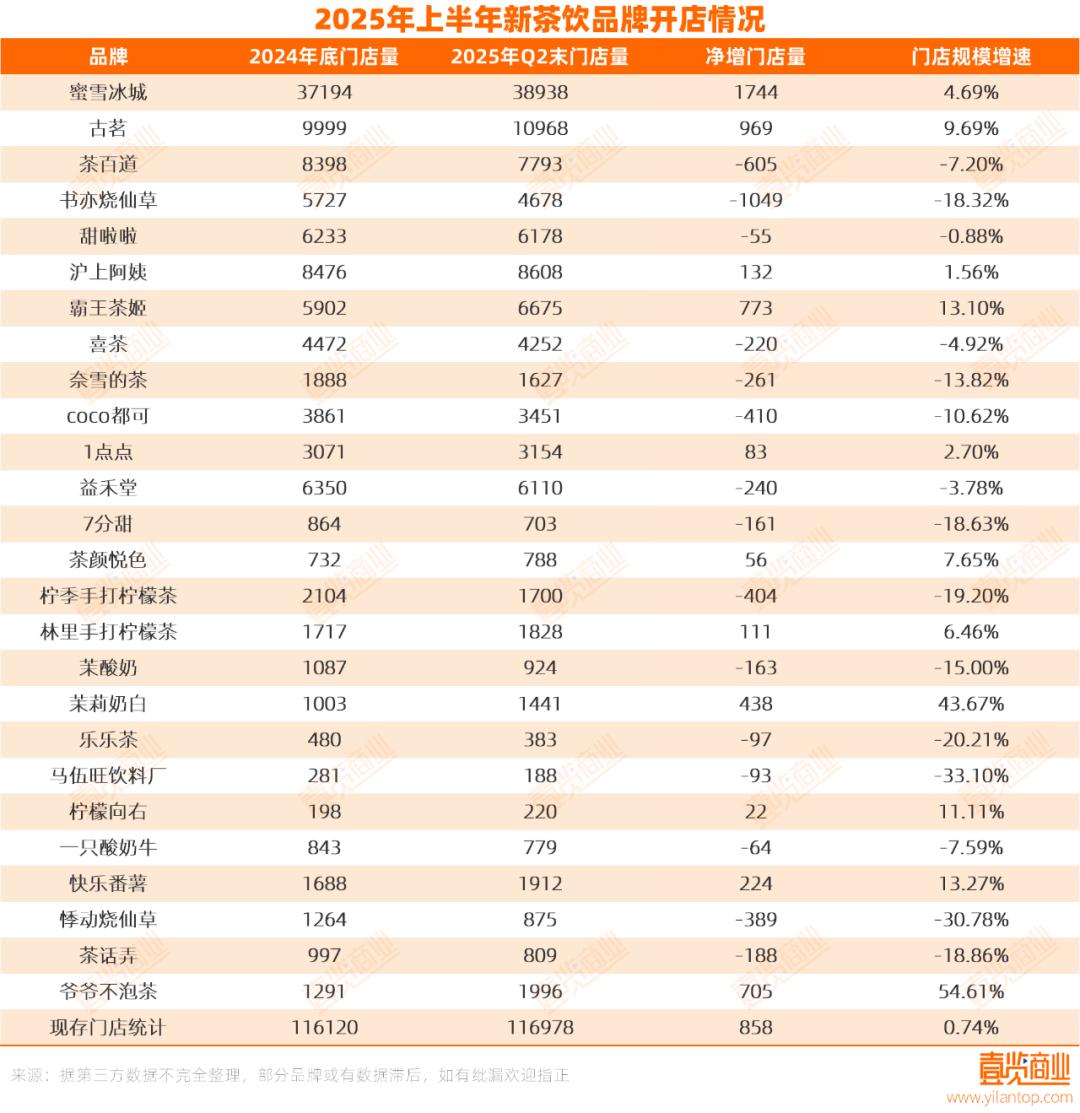
上半年新茶饮:门店增长停滞,集体看向美国
3 6 Ke· 2025-07-29 10:59
Core Insights - The new tea beverage industry is experiencing a slowdown in store opening speed, with a total of 116,978 stores as of June 2025, reflecting a growth of only 0.74% compared to the end of 2024 [1][2] - The brand landscape is undergoing significant changes, with leading brands expanding steadily while many mid-tier brands face closures, indicating an accelerated process of "survival of the fittest" [1][3] Brand Expansion and Performance - Among the 26 tracked brands, 11 showed positive growth in store numbers, with leading brands like Mixue Ice City and Gu Ming showing robust expansion rates of 4.69% and 9.69% respectively [2][3] - Notable closures were observed in mid-tier brands, with Shuyi Burned Grass experiencing the highest net loss of 1,049 stores, a decline of 18.32% [3][4] - The overall trend indicates that the industry is shifting from quantity-focused expansion to quality-driven strategies, with brands like Mixue Ice City and Gu Ming emphasizing deeper market penetration and operational efficiency [6][8] Market Dynamics and Strategy Adjustments - The number of new cities entered by brands has decreased compared to the previous year, with only 11 brands expanding their city presence while 14 brands exited certain cities [6][8] - Brands are increasingly focusing on optimizing their business models, with stricter franchise management and a shift towards enhancing product offerings and customer experiences [7][8] - The industry is moving towards a "tea + " model, integrating elements like baking, light meals, and retail into their store concepts to meet evolving consumer demands [11][12] International Expansion - The U.S. has become a primary target for international expansion, with brands adapting their business models to fit local markets rather than replicating domestic success [14][21] - Key brands like Heytea and Bawang Chaji are establishing a presence in major U.S. cities, focusing on high-end positioning and localized product offerings [18][19] - The U.S. market for ready-to-drink tea is projected to grow significantly, with a potential market size increase of 5 to 10 times by 2030, driven by favorable consumer preferences [21]

新茶饮第一股,“换装”自救?
Hu Xiu· 2025-05-12 09:39
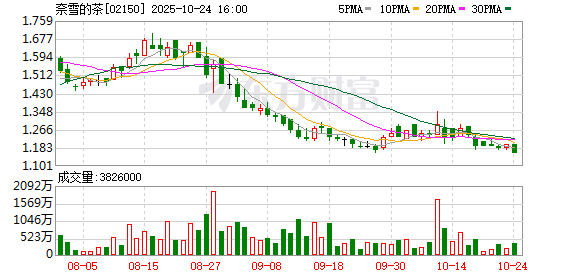
Core Viewpoint - Naixue's rebranding effort, aimed at internationalization, has not resonated with consumers and has led to a decline in market value, reflecting deeper issues within the new tea beverage industry [1][3][9] Financial Performance - In 2024, Naixue reported revenue of 4.92 billion yuan, a year-on-year decline of 4.7%, with an adjusted net loss of 919 million yuan [3] - Since its IPO, Naixue has only briefly returned to profitability in 2023, with a profit of 13 million yuan [3] - The company's market capitalization has plummeted over 93% from 34 billion yuan at IPO to approximately 1.995 billion yuan [6][8] Market Position and Strategy - Naixue's direct sales model, which aims to replicate Starbucks' "third space" experience, has faced significant cost challenges, with employee costs at 29.2% and raw material costs at 36.8% [5] - The average daily sales per store have decreased from 12,700 yuan in 2018 to 8,900 yuan in first-tier cities by 2024 [5] - Naixue's focus on a premium pricing strategy has led to a disconnect with the market, as competitors have successfully captured the lower price segments [5][6] Competitive Landscape - The new tea beverage industry is shifting towards a franchise model, with competitors like Mixue Ice Cream leading with 23,000 stores and a net profit of 4.45 billion yuan in 2024 [6] - Naixue has only 345 franchise stores, significantly lagging behind competitors, and has seen a reduction in direct stores [6][7] - The market is increasingly dominated by brands that offer lower prices and greater efficiency, with Naixue struggling to maintain its market share [8] Brand and Product Development - Naixue's recent rebranding has been criticized for lacking clarity and failing to address underlying performance issues [1][3] - The company is attempting to pivot towards health-oriented products, but faces challenges with high costs and low repeat purchase rates [7] - The introduction of new store formats and reduced franchise fees are part of Naixue's strategy to regain market traction, but their effectiveness remains uncertain [7][9]