
大店模式

Search documents
食品饮料行业周度市场观察:行业环境头部品牌动态投资运营产品技术营销活动-20260328
Ai Rui Zi Xun· 2026-03-28 15:21
Investment Rating - The report does not explicitly provide an investment rating for the food and beverage industry Core Insights - The food and beverage industry is experiencing significant shifts, with trends towards health-conscious products and innovative retail formats driving growth opportunities Industry Trends - Fresh snacks have surged in popularity, with new brands creating "snack collection stores" that emphasize fresh, short-shelf-life products, contrasting with traditional low-cost snack retailers [3] - The coffee market is expected to face a major shake-up by 2025, with over 50,000 coffee shops projected to close, leading to a bifurcation in consumer preferences towards low-cost and high-quality options [3] - The packaged bread market is projected to exceed 200 billion yuan by 2025, with a significant shift towards health-oriented products and fresh-baked options [5] - Tea and coffee brands are increasingly adopting larger store formats to enhance customer experience and drive sales, moving away from efficiency-focused models [5] - The unique beverage segment, particularly regional specialty drinks, is emerging as a new growth area, with high repurchase rates indicating strong consumer interest [6] - Health drinks are becoming mainstream, with a projected market share of over 40% for innovative categories by 2026, driven by consumer demand for nutritious options [8] - The rise of "new-style" vegetables and health-focused products reflects a blend of agricultural innovation and changing consumer preferences [8] - The meat industry is transitioning towards health-oriented products, with major companies developing low-GI and functional foods to meet evolving consumer demands [9] - The restaurant industry is shifting towards smaller, more specialized dining experiences, catering to changing social dynamics and consumer preferences [10] - The cheese powder market in China is expected to grow significantly, driven by the increasing demand for convenience and flavor in food products [13] - The no-sugar tea market is rapidly expanding, with a projected market size increase from 2.26 billion yuan in 2015 to 57.05 billion yuan by 2024, indicating a strong consumer shift towards healthier beverage options [14] - The herbal tea market is evolving into a health-focused segment, with a projected market size of 25.5 billion yuan by 2025, driven by consumer interest in preventive health [15] - The electrolyte drink market is expected to see significant growth, with major brands entering the space to capture the expanding consumer base [17] Top Brand News - East Aojiao is entering the low-alcohol beverage market, aiming to attract younger consumers with health-oriented products [21] - The rapid expansion of the Milk Tea Company, which has opened over 1,000 stores, highlights the demand for low-cost, sweet beverages in shopping malls [22] - The launch of a city theme park by a major tea brand reflects a strategic move to diversify and enhance customer engagement [23] - Luckin Coffee is entering the bottled coffee market, aiming to capture a share of the growing ready-to-drink segment [24] - Nongfu Spring is launching electrolyte drinks, leveraging its extensive distribution network to compete in the growing functional beverage market [25] - The entry of international brands into the energy drink market indicates a shift towards diversified consumption scenarios and younger demographics [26] - The introduction of new ice cream products by a major candy company signifies the competitive landscape of the ice cream market in China [31] - The expansion of bakery products by a tea brand illustrates the trend of cross-category innovation in the food and beverage sector [32]





餐饮行业热门赛道盘点:背后的爆款逻辑是什么?
虎嗅APP· 2026-03-06 09:59
Core Insights - The article discusses the trends and dynamics of the Chinese restaurant industry as it enters a phase of stock competition, with a focus on innovation in products and business models to adapt to changing consumer demands and market conditions [4][6]. Group 1: Industry Growth and Trends - In 2025, China's restaurant industry is projected to achieve a revenue of 5.8 trillion yuan, reflecting a year-on-year growth of 3.2%, with the revenue from large-scale dining units reaching 1.63 trillion yuan, up by 2.0% [6]. - The overall market size continues to expand, but the growth rate is slowing, indicating a shift from expansion-driven growth to a focus on efficiency and quality [6][11]. - The number of restaurant outlets in China is expected to exceed 7.7 million by the end of 2025, marking a 3.1% increase from the previous year [8]. Group 2: Popular Product Trends - In 2025, several popular food items are emerging, including butter rice cakes and milk skin sugar-coated hawthorn, which gained significant traction on social media platforms [16][17]. - The popularity of these products is rooted in their familiarity to consumers, allowing for quick understanding and acceptance, while brands enhance them through innovative ingredient combinations and presentation [17][21]. Group 3: Innovative Business Models - The rise of "beautiful meals" and "mountain wild" dining concepts reflects a growing consumer demand for visually appealing and health-oriented dining experiences [23][24]. - Self-service models are gaining traction, with brands expanding their offerings to include semi-self-service options, catering to consumer desires for diverse experiences and budget control [35]. - Large store formats are becoming a strategic focus for brands, shifting from merely selling products to offering immersive dining experiences that enhance brand value [32]. Group 4: Regional and Niche Market Growth - Jiangxi stir-fry is rapidly gaining popularity, with a 287.5% increase in related business registrations in 2025, and over 20,000 outlets nationwide [39][40]. - The fried chicken market is projected to reach 113 billion yuan by 2026, with a year-on-year growth of 20.2%, driven by a surge in brand expansion and consumer interest [42]. - Freshly made ice cream is experiencing significant growth, with brands leveraging local ingredients and high visual appeal to attract consumers [44]. - The "Benbang" noodle segment is also gaining traction, characterized by its fresh cooking methods and diverse toppings, with several brands achieving chain development [46]. Conclusion - The restaurant industry is evolving towards a more innovative and diversified landscape, where the ability to adapt to consumer preferences and enhance product offerings will be crucial for sustained competitiveness [49].

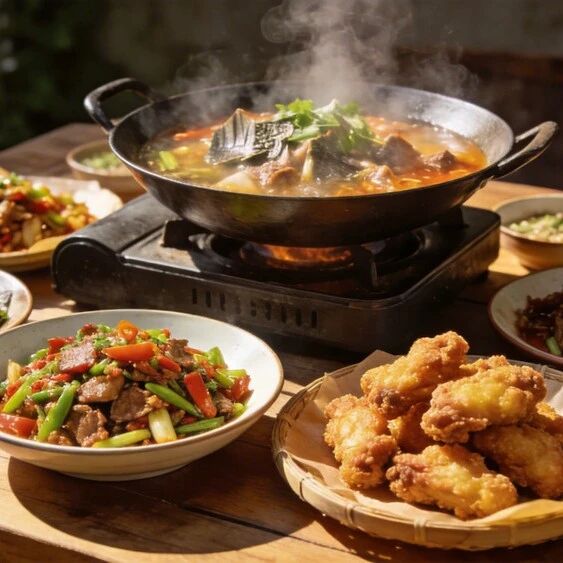
2025年餐饮行业热门赛道盘点报告
Hong Can Chan Ye Yan Jiu Yuan· 2026-03-05 01:30
Investment Rating - The report does not explicitly provide an investment rating for the restaurant industry in 2025 Core Insights - The restaurant industry in China is projected to reach a revenue of 5.8 trillion yuan in 2025, with a year-on-year growth of 3.2%. The growth rate is slowing down, indicating a shift from expansion-driven growth to a more rational focus on efficiency and quality [3][10] - Popular products in the restaurant sector are emerging rapidly, with items like butter rice cakes and corn egg tarts gaining significant traction on social media platforms [3][29] - Six major trends in restaurant models are identified, including "experience and scene innovation," "efficiency and cost optimization," and "social and value empowerment," which are reshaping consumer dining experiences [3][36] Summary by Sections Industry Overview - The restaurant industry is experiencing steady growth, with a focus on brand innovation and the emergence of popular concepts. The market is transitioning to a more rational growth phase, emphasizing efficiency and quality [5][10] - The revenue for limited-scale restaurants is expected to reach 1.63 trillion yuan, growing by 2.0% year-on-year [3][10] Popular Products - The report highlights a variety of trending products, including butter rice cakes, Thai milk tea, and stinky tofu hot pot, which have gained popularity through social media [3][29] - The peak popularity of certain products on platforms like Douyin (TikTok) has reached over 200 million views [29][30] Popular Models - Six key models are identified in the restaurant industry, including: - "Beautiful Rice" focusing on aesthetic presentation and social media appeal [37][39] - "Mountain Wild" emphasizing natural ingredients and a relaxed dining atmosphere [46][47] - "Store-in-Store" models that allow brands to test new concepts with lower risk [48][54] - "Large Store" models that shift focus from product sales to experiential and brand value [55][57] - "Board-Front" models that enhance consumer interaction through visible cooking processes [58][60] - "Self-Service" models that are expanding in various dining categories [61][63] Popular Categories - Strong growth is observed in categories such as black duck pot, Jiangxi stir-fry, and local noodle dishes, driven by supply chain advantages and consumer demand for regional flavors [3][64][66] - The Jiangxi stir-fry segment is particularly notable, with a 287.5% increase in related business registrations in 2025, indicating a shift towards standardization and branding [66][70] - The vegetarian food segment is also rapidly developing, with over 4,000 vegetarian restaurants and a market size of approximately 8 billion yuan by 2025 [71]
星艺装饰旗舰店焕新启幕 董事长孟春忠解读“大店模式”背后的品质坚守与战略升级
Yang Zi Wan Bao Wang· 2026-01-07 14:10
Core Insights - Starry Decoration, a company with 26 years in the Nanjing home decoration market, is set to open a newly upgraded flagship store on January 16, featuring a comprehensive home experience complex exceeding 10,000 square meters [1] - The company is transitioning from "selling products" to "selling lifestyles," aiming to enhance customer experience through immersive home scenarios and a complete home solution [2] Strategic Shift - The flagship store includes various living space displays and partnerships with leading brands, allowing customers to experience the entire home design process [2] - In response to the market shift from new housing to existing housing, the company is extending its service offerings to include renovation, aging-friendly modifications, smart home solutions, and comprehensive design services [2] Quality Assurance - The company emphasizes quality and reputation as the foundation for survival, introducing two core commitments: a quality guarantee that includes free rework for non-compliant projects and a zero-additional-cost promise for unapproved changes [2][3] - The company has implemented rigorous quality control measures, including inspections at various stages and a responsive customer service system [3] Service Model - Starry Decoration has established a service loop that includes unconditional refunds if customers are dissatisfied before the sale, direct communication with the CEO during the sale, and a commitment to lifetime maintenance at cost after the warranty period [3] - The company aims to optimize processes and enhance customer satisfaction, believing that quality will ultimately lead to greater recognition and loyalty [3] Future Vision - The company envisions redefining home life for Nanjing residents through a one-stop, visual, and immersive experience, positioning each renovation as a starting point for positive word-of-mouth [3] - The flagship store represents a new strategic direction for the company, transforming the renovation process into a practice of beautiful living [3]
从始祖鸟到雪王,为什么都在开大店?
36氪· 2026-01-03 13:08
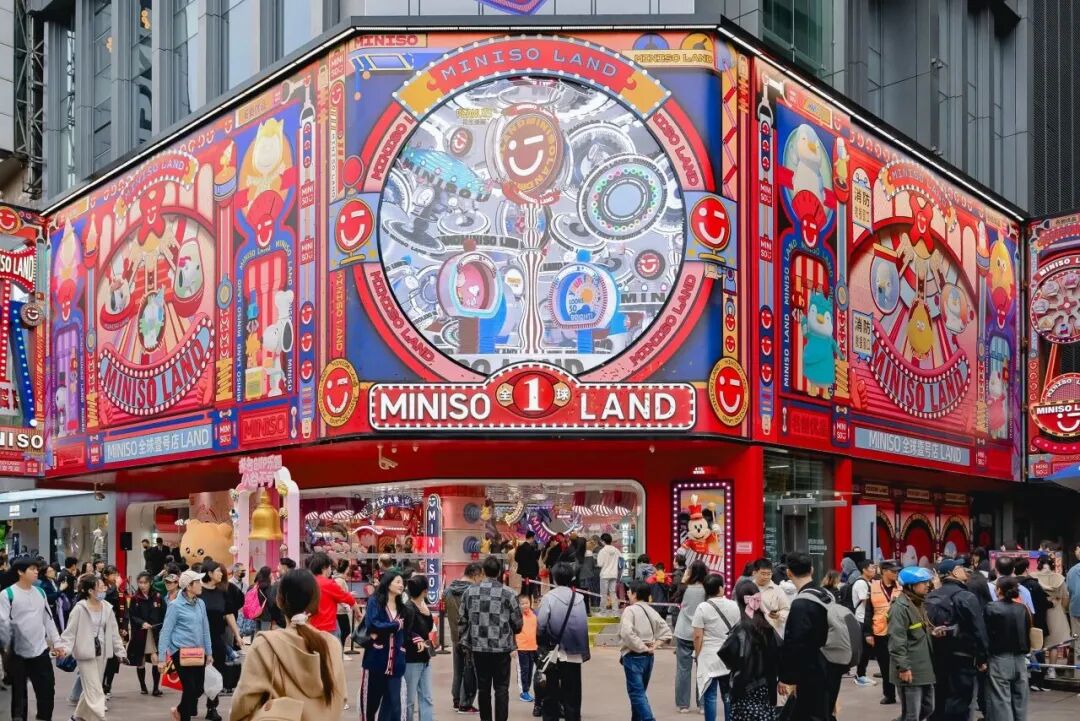
Core Viewpoint - The article discusses the trend of large retail stores emerging in various industries, emphasizing their role in enhancing brand experience and community engagement, while also addressing the shift from traditional retail models to more experiential and emotionally-driven shopping environments [5][10][25]. Group 1: Large Store Trends - Miniso has successfully implemented a new large store model, with Miniso Land generating 1.5 billion yuan in sales within its first year in Shanghai, primarily driven by IP products [8][7]. - The trend of opening large stores is not limited to Miniso; brands like Honey Snow Ice City and H&M are also expanding their flagship stores significantly, with sizes ranging from 600 to 2400 square meters [12][21][22]. - The shift towards larger stores is seen as a response to market saturation in smaller formats, with brands aiming to create high-value, differentiated experiences [13][18][30]. Group 2: Consumer Experience and Engagement - Large stores are designed to enhance consumer engagement by offering unique experiences, such as themed areas and exclusive products, which help build brand loyalty [25][35]. - The success of large stores is attributed to their ability to create immersive environments that cannot be easily replicated online, thus providing a compelling reason for consumers to visit [39][68]. - Brands are increasingly focusing on the emotional value of shopping experiences, moving away from purely functional offerings to those that resonate with consumers on a deeper level [7][10][37]. Group 3: Market Dynamics and Challenges - Despite the trend towards large stores, the retail environment is facing challenges, including rising vacancy rates in shopping centers, which have reached 28.7% [30]. - The article notes that while some large store initiatives have failed, successful examples demonstrate that well-executed large stores can outperform traditional formats in terms of sales per square meter [32][45]. - The current retail landscape requires brands to innovate and adapt their strategies to remain relevant, particularly in the face of economic pressures and changing consumer preferences [30][41].
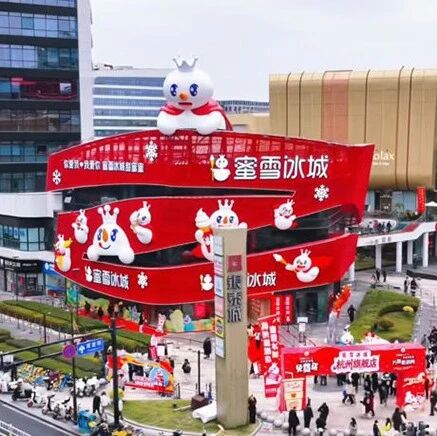
从始祖鸟到雪王,为什么都在开大店?
3 6 Ke· 2025-12-26 10:55
Core Insights - The article discusses the emerging trend of large retail stores that not only expand brand business boundaries but also enhance community engagement and lifestyle leadership. Group 1: Large Store Trends - The new wave of large stores is characterized by their ability to break traditional retail boundaries and expand brand business scope, leading to enhanced community engagement and lifestyle influence [17]. - Miniso has successfully implemented a new model with its large stores, where nearly 80% of sales come from IP products, shifting consumer focus from practical value to emotional value [5][7]. - The trend of opening large stores is not limited to Miniso; other brands like Mixue Ice City and H&M are also adopting this strategy to adapt to market saturation and consumer preferences [8][15]. Group 2: Performance Metrics - Miniso's flagship store in Shanghai achieved sales exceeding 150 million yuan within its first year, demonstrating the potential profitability of large stores [5]. - Mixue Ice City's flagship store in Zhengzhou reported that nearly 50% of its sales came from cultural products, with monthly revenues surpassing 15 million yuan [9]. - The performance of large stores often exceeds expectations, with flagship stores serving as significant traffic drivers and enhancing brand visibility [21][20]. Group 3: Market Context - The current retail environment is challenging, with a national average vacancy rate of 14.2% in shopping centers and a commercial real estate vacancy rate reaching 28.7%, the highest in a decade [19]. - Despite these challenges, certain brands are leveraging large stores to achieve differentiation and high-end positioning, indicating a strategic pivot in response to market conditions [19][18]. Group 4: Design and Experience - The design of contemporary retail spaces has evolved from mere product display to creating strategic experiences that attract and retain customers [25]. - Large stores are increasingly seen as content hubs, where the experience and engagement offered can surpass traditional retail formats, thus enhancing customer loyalty [27][40]. - Successful large stores incorporate unique design elements and exclusive products that create a compelling reason for customers to visit and stay longer [28][29]. Group 5: New Brand Opportunities - New brands are emerging that focus on aesthetic and experiential retail, such as Tagi., which emphasizes unique store designs and local cultural integration to attract consumers [35][37]. - The trend indicates a shift towards brands that can tell compelling stories and create memorable experiences, which are crucial for customer retention in the competitive retail landscape [39][40].


链家打造9分房,用数据和专业定义好房
Mei Ri Jing Ji Xin Wen· 2025-11-12 13:27
Core Insights - The Shanghai second-hand housing market is undergoing significant changes, characterized by high inventory, extended transaction cycles, and evolving buyer-seller dynamics [1][2] - Shanghai Lianjia has initiated a "separation of buyers and sellers" service model to better meet the distinct needs of both parties in the transaction process [1][3] Group 1: Service Model Reconstruction - The "separation of buyers and sellers" is a departure from the traditional dual-agent model, allowing agents to focus exclusively on either buyers or sellers, thus enhancing service efficiency [3][5] - This model aims to address the core demands of both sellers, who want quick sales, and buyers, who seek value for money [5][6] - The implementation of this model has shown effectiveness, with over 75% of high-quality listings sold in September [2][6] Group 2: Efficiency and Standardization - The "9-point house" system is introduced to standardize and visualize what constitutes a "good house," utilizing AI and data to evaluate properties based on multiple criteria [6][8] - The average transaction cycle for listed properties has decreased from 104 days to 96 days after the introduction of the "separation of buyers and sellers" model [6][8] - The use of open house events has been innovated to create a marketplace atmosphere, facilitating quicker sales and enhancing the overall customer experience [8][10] Group 3: Organizational Support and Training - The "big store model" has been implemented to provide a stable environment for agents, allowing for better resource integration and service efficiency [9][10] - A "B-round training" program is being conducted to empower store managers with the skills necessary to implement the new service model effectively [9][10] - The transformation is seen as a necessary evolution for the industry, focusing on redefining service value and efficiency rather than merely expanding scale [10][12]

奈雪生活全国首店闭店,茶饮巨头转型阵痛
Nan Fang Du Shi Bao· 2025-10-24 09:37
Core Insights - The closure of Naixue Life's first store in Shenzhen's Nanshan Coastal City marks a significant shift in the new tea beverage industry, highlighting the challenges of transformation and innovation within the sector [1][9][11] Company Overview - Naixue Life, originally launched as "Naixue Dream Factory" in 2018, aimed to create a multi-functional space combining tea, baking, and retail, becoming a popular destination in Shenzhen [4][8] - The brand transitioned to Naixue Life in 2022, rebranding itself as a "brand co-creation platform" with a focus on shared operations and cross-brand marketing [4][6] Store Performance - The first store experienced initial success, benefiting from the "first store economy" and a large member base, but ultimately faced challenges in shared traffic and high operational costs [6][8] - Naixue has closed 132 direct-operated stores in the first half of 2023, with a total of 1,638 stores as of June 30, 2025, indicating a trend of store closures becoming a norm for the company [8][10] Industry Context - The closure of Naixue Life's first store reflects broader adjustments in the new tea beverage industry, where leading brands face pressures of scale expansion and single-store profitability [9][11] - The competitive landscape has intensified, with brands like Naixue and Heytea expanding into high-end shopping centers while mid-tier brands are diversifying their offerings [9] Strategic Shifts - Naixue has shifted from a fully direct-operated model to a franchise model to reduce costs and improve efficiency, raising concerns about product quality control [9][10] - The company has also attempted to pivot towards health-oriented products, launching new offerings like "Daily Fruit Bottles" and "Fruit Smoothies," but these efforts appear reactive rather than part of a cohesive long-term strategy [9][11] International Expansion - Naixue's first international store opened in Flushing, New York, in October 2025, generating significant initial sales, indicating a potential new growth avenue for the brand [3][10] Future Outlook - The closure of the Naixue Life store serves as a warning for the industry, suggesting that future innovations should focus on core categories and specific consumer needs rather than broad, unfocused concepts [11]
名创优品(09896.HK):IP及大店战略卓有成效 同店表现有效改善
Ge Long Hui· 2025-08-23 11:11
Core Viewpoint - The company's Q2 2025 performance exceeded expectations, driven by strong domestic revenue growth and impressive overseas performance, particularly in the U.S. market [1][2]. Financial Performance - Q2 2025 revenue increased by 23% year-on-year to 5 billion yuan, while adjusted net profit rose by 11% to 690 million yuan, outperforming expectations [1]. - The company declared an interim dividend of $0.0724 per share, corresponding to a payout ratio of approximately 50% of adjusted net profit [1]. - Gross margin improved by 0.3 percentage points to 44%, benefiting from a higher proportion of overseas business and improved margins in the TOPTOY segment [2]. Business Segments - Domestic same-store sales turned positive with a 14% increase in revenue to 2.6 billion yuan, despite a high base, while online sales grew by 31% to 270 million yuan [1]. - Overseas revenue increased by 29% to 1.9 billion yuan, contributing 43% to total revenue, with U.S. revenue surging by 80% [1]. - TOPTOY's revenue grew by 87% to 400 million yuan, with a net increase of 13 stores, maintaining rapid growth [1]. Strategic Initiatives - The company is investing in direct sales and increasing sales expenses to support long-term growth, particularly in strategic overseas markets [2]. - The IP strategy and large store model are showing positive results, with 11 MINISO LAND stores and over 200 flagship stores established in China [2]. - The U.S. channel is gradually improving, with new stores achieving 1.5 times the efficiency of older stores and nearly 30% higher sales per square meter [2]. Future Outlook - Management expects Q3 2025 performance to maintain accelerated growth, raising the full-year guidance to a revenue increase of approximately 25% [3]. - Adjusted net profit forecasts for 2025 and 2026 have been raised by 8% and 6% to 2.9 billion yuan and 3.7 billion yuan, respectively [3]. - The target prices for Hong Kong and U.S. stocks have been increased by 24% to 52.45 HKD and 27.07 USD, respectively, reflecting a 20 times 2025 non-IFRS P/E ratio [3].
中金:维持名创优品跑赢行业评级 升目标价至52.45港元
Zhi Tong Cai Jing· 2025-08-22 01:38
Core Viewpoint - CICC has raised the adjusted net profit forecast for MINISO (09896) for 2025/26 by 8%/6% to 2.9 billion/3.7 billion yuan due to the company's continuous improvement in operational performance [1] Group 1: Financial Performance - The company's 2Q25 revenue increased by 23% year-on-year to 5 billion yuan, and adjusted net profit grew by 11% to 690 million yuan, exceeding CICC's expectations mainly due to better-than-expected domestic revenue growth [2] - The company declared an interim dividend of 0.0724 USD per share, corresponding to a payout ratio of approximately 50% of adjusted net profit [2] - The gross profit margin in 2Q25 increased by 0.3 percentage points to 44%, benefiting from a higher proportion of overseas business with high gross margins and improved TOPTOY margins [4] Group 2: Domestic and International Business Performance - Domestic revenue in 2Q25 increased by 14% year-on-year to 2.6 billion yuan, with offline revenue up 12% to 2.4 billion yuan, and same-store sales turned positive despite a high base [3] - Overseas revenue grew by 29% year-on-year to 1.9 billion yuan, contributing 43% to MINISO's total revenue, with the U.S. market showing an impressive 80% increase [3] - The total number of stores increased by 94 during the quarter, with same-store sales improving to a low single-digit decline year-on-year [3] Group 3: Strategic Initiatives - The company continues to advance its IP strategy, having signed contracts with 9 artists for IP development, and is enhancing its own IP incubation [5] - The large store model has shown effectiveness, with 11 MINISO LAND stores and over 200 flagship stores established in China, contributing double-digit sales growth [5] - In the U.S. market, new store efficiency is 1.5 times that of older stores, with a nearly 30% higher sales per square meter [5]