
源网荷储协同

Search documents
虚拟电厂重塑电力生态:聚合零散能源,驱动绿色未来
Zhong Guo Neng Yuan Wang· 2026-02-06 10:49
Core Insights - The article discusses the development of a virtual power plant platform by Yongfu Co., which integrates distributed energy resources into a smart, cloud-based energy management system [1][2][4] Group 1: Strategic Layout - Yongfu Co. is transitioning from traditional power construction services to energy platform operations, with the virtual power plant as a core component of this strategy [2] - The platform utilizes the "Yongfu Cloud" energy big data platform, featuring a "cloud-edge-end" collaborative technical architecture that encompasses monitoring, forecasting, control, and trading functions [2][3] - Yongfu Co. leverages its comprehensive industry experience to provide integrated solutions that combine technology and practical application, distinguishing itself from competitors [2] Group 2: Business Model - The platform offers diverse cooperation models, including SaaS subscriptions, joint operations, and asset management, with innovative light-asset solutions for overseas markets [3] - By the end of 2025, the platform aims to establish demonstration projects in regions like Fujian, Jiangsu, and Guangdong, and has already implemented a large-scale energy project in Indonesia [3] Group 3: Collaborative Development - The virtual power plant is a key digital link that connects Yongfu Co.'s green electricity development, energy storage, and smart operations [4] - In a specific project, the platform successfully integrated wind, solar, and storage resources, achieving over 90% self-sufficiency in green electricity and generating more than 500 million kilowatt-hours annually [4] Group 4: Market Operation - Yongfu Co. has developed a multi-revenue model that includes demand response, spot trading, and ancillary services, allowing the virtual power plant to operate independently in the market [5][6] - The platform has successfully implemented services such as demand response and electricity trading in regions with advanced market reforms, helping users reduce costs and achieve zero-carbon goals [6] Group 5: Future Outlook - Yongfu Co. plans to enhance the virtual power plant platform by focusing on AI-driven decision-making, cross-domain collaborative operations, and carbon-electric coupling trading [7] - The company envisions the platform as an open and intelligent "new power system operating system," fostering collaboration among developers, energy service providers, and users [7][8]

华为发布智能光伏十大趋势:光风储协同、智能体融入新能源电站等
Sou Hu Cai Jing· 2026-01-14 10:52
Core Insights - Huawei Digital Energy held a conference on January 12, 2023, to unveil the "Top Ten Trends in Smart Photovoltaics for 2026," highlighting the transition of the renewable energy industry into a "value cultivation period" as it faces stability challenges in power generation, grid, and consumption due to increased penetration of renewable energy [1][14]. Group 1: Trends Overview - Trend 1: The synergy of solar, wind, and storage will make renewable energy a predictable and controllable stable power source, requiring five core features for future large-scale renewable energy bases [2]. - Trend 2: Network-based energy storage will become a key support for grid stability and balance, enabling participation in energy market transactions and providing auxiliary services [4]. - Trend 3: The collaborative model of source, grid, load, and storage will evolve towards "regional autonomy + global collaboration" through AI-driven scheduling technology [5]. Group 2: Technological Innovations - Trend 4: Home solar storage scenarios will transition from AI empowerment to AI-native, enhancing user experience through comprehensive AI integration [6]. - Trend 5: High frequency and density will drive continuous improvements in the power density of solar storage devices, with expectations of over 40% enhancement in the coming years [7]. - Trend 6: High voltage and reliability will lead to a reduction in the cost per kilowatt-hour, supported by upgrades in key components and proactive safety measures [8]. Group 3: System Management and Safety - Trend 7: Battery management at the system level is essential for the safe and stable operation of energy storage systems, utilizing digital technologies for precise monitoring [9]. - Trend 8: The technology system for renewable energy networking is maturing, accelerating the construction of new power systems through integrated high-performance hardware and algorithms [10]. - Trend 9: Intelligent systems will deeply empower renewable energy stations, moving towards "autonomous driving" capabilities [11]. Group 4: Safety and Standards - Trend 10: The energy storage industry is advancing towards a new phase of quantifiable safety, establishing clear safety standards to address industry pain points and enhance safety capabilities [12][37].

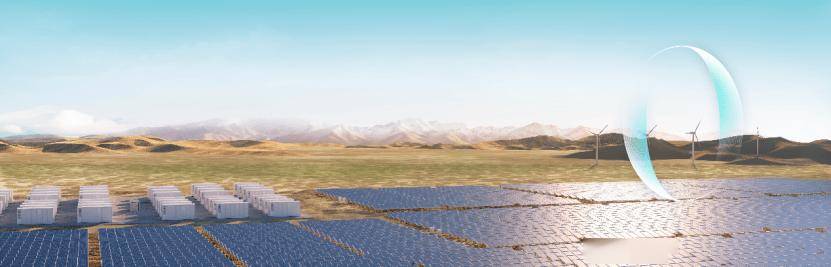
华为发布2026智能光伏十大趋势 助力光风储成为主力电源
Huan Qiu Wang Zi Xun· 2026-01-13 04:33
Core Viewpoint - Huawei Digital Energy held a conference to discuss the "Top Ten Trends in Intelligent Photovoltaics for 2026," emphasizing the acceleration of wind-solar-storage systems becoming the main power source for new energy systems, aiming for high-quality development in the industry [1][17]. Group 1: Trends in Intelligent Photovoltaics - The past decade has seen significant growth in the wind-solar-storage industry, but increasing penetration of renewable energy has led to balance and stability issues in power systems, marking a transition into a "value cultivation period" [3]. - The top ten trends include four application trends and six technology trends, with the first trend focusing on the collaboration of wind-solar-storage systems to create a predictable and controllable stable power source [3][5]. - The second trend highlights the omnipresence of grid-forming energy storage as a key support for grid stability and balance, enabling participation in energy market transactions and providing auxiliary services [6]. - The third trend discusses the collaborative supply model of source, grid, load, and storage, moving towards "regional autonomy + global collaboration" [7]. - The fourth trend emphasizes the transition of home energy storage scenarios from AI empowerment to AI-native, enhancing user experience through optimal electricity usage strategies [9]. - The fifth trend indicates a push for higher frequency and density in energy storage devices, with expectations of over 40% improvement in power density for photovoltaic inverters and storage systems in the coming years [11]. - The sixth trend focuses on high voltage and reliability, which will lead to a significant reduction in the cost per kilowatt-hour of photovoltaic systems [12]. - The seventh trend stresses the importance of system-level battery management for the safe and stable operation of energy storage systems [13]. - The eighth trend notes the maturation of new energy grid-forming technology, transitioning from passive to active roles in grid stability [14]. - The ninth trend involves the integration of intelligent systems into renewable energy plants, moving towards "autonomous operation" [15]. - The tenth trend addresses the shift towards quantifiable safety standards in the energy storage industry, enhancing safety capabilities through systematic evaluations [16].
华为发布2026智能光伏十大趋势:构网型储能无处不在
中关村储能产业技术联盟· 2026-01-13 03:49
Core Viewpoint - Huawei Digital Energy emphasizes the acceleration of solar, wind, and storage (光风储) to become the main power source in the new energy system, highlighting the importance of AI and innovative technologies in achieving high-quality development [2][21]. Group 1: Industry Trends - The solar, wind, and storage industry has experienced significant growth over the past decade, but faces stability issues as renewable energy penetration increases, marking a transition into a "value cultivation period" [3]. - The future of large-scale solar, wind, and storage bases must focus on two pillars: stability and cost control, along with three key elements: 100% renewable independent operation, intelligent collaboration across the entire chain, and high-quality safety throughout the lifecycle [6]. - The ten trends in smart photovoltaics include four application trends and six technology trends, which provide insights and practical paths for the industry [3][4]. Group 2: Application Trends - Trend 1: Networked storage will become a key support for grid stability and balance, enabling participation in energy market transactions and providing auxiliary services [7]. - Trend 2: Collaborative supply models will evolve towards "regional autonomy + global collaboration" [8]. - Trend 3: Home energy storage will transition from AI empowerment to AI-native, enhancing user experience [11]. Group 3: Technology Trends - Trend 4: High frequency and density will drive continuous improvement in power density of solar storage devices, with expectations of over 40% enhancement in the coming years [12][14]. - Trend 5: High voltage and reliability will lead to a reduction in the cost per kilowatt-hour, with advancements in key components and proactive safety measures [15]. - Trend 6: System-level battery management is essential for the safe and stable operation of storage systems, utilizing digital technologies for precise monitoring [16]. Group 4: Safety and Maturity - Trend 7: The technology system for renewable energy networking is maturing, transitioning from passive to active roles in grid stability [17]. - Trend 8: Intelligent systems will empower renewable energy plants, moving towards "autonomous driving" capabilities [18]. - Trend 9: The storage industry is entering a new phase of quantifiable safety, addressing industry pain points through systematic safety evaluations [19][20].

电力设备及新能源行业2026年上半年投资策略:零碳纪元启华章曦源永续万代春
Dongguan Securities· 2025-11-24 11:26
Group 1 - The report emphasizes the transition of the photovoltaic industry from "price wars" to "value wars," driven by technological innovation to achieve quality development [3][5][51] - As of Q3 2025, capital expenditure in the photovoltaic industry is significantly contracting, indicating a shift in focus from scale expansion to competition based on technology, brand, and profitability [3][80] - The report highlights the importance of leading companies with strong cash flow and technological barriers to navigate through the current industry challenges and enhance market concentration [3][80] Group 2 - The photovoltaic industry is currently experiencing a critical transformation phase, characterized by a supply-demand imbalance and rapid technological iteration [5][14] - The report notes that the domestic photovoltaic market is expected to see a new development cycle due to continuous policy support and the construction of a new energy system [40][30] - By the end of 2024, China's cumulative installed photovoltaic capacity is projected to reach 886.7 GW, with a compound annual growth rate of 39.8% over the past decade [18][30] Group 3 - The report indicates that the global energy system is accelerating its transition towards low carbon, with renewable energy utilization and the clean low-carbon transformation of conventional energy becoming major trends [14][62] - The demand for energy storage is expected to grow significantly, with the new energy storage installed capacity projected to reach over 180 million kilowatts by 2027, driving direct investment of approximately 250 billion yuan [5][30] - The report predicts that by 2030, the global cumulative energy storage capacity will reach around 1950 GWh, indicating a strong growth trajectory for the energy storage market [5][30]
34家企业,公示名单发布!
中国能源报· 2025-11-18 03:36
Core Viewpoint - The Ministry of Industry and Information Technology (MIIT) is promoting electricity demand-side management in the industrial sector by collecting typical case studies nationwide, with 34 companies and 30 products/technologies proposed for inclusion in the "National Typical Cases of Electricity Demand-Side Management in the Industrial Sector (2025)" list [1][4]. Summary by Sections Case Collection and Evaluation - The MIIT has initiated a nationwide collection of typical cases for electricity demand-side management in the industrial sector, involving preliminary reviews by local authorities and expert evaluations by the China Electricity Council [4]. Proposed Companies and Technologies - A total of 34 companies and 30 products/technologies are proposed for inclusion in the 2025 list, showcasing various management and technical measures aimed at improving energy efficiency and reducing electricity consumption [4][5]. Implementation Results - Companies like Hebei Changan Automobile reported direct electricity savings of 13.45 million yuan in 2024 through various energy efficiency measures, including upgrading distribution networks and promoting the use of electric vehicles [6]. - Jilin Linglong Tire achieved a direct electricity savings of 9.31 million kWh in 2024 by improving power factor and utilizing distributed solar power [6]. - Budweiser (Jiamusi) implemented a series of energy optimization measures, resulting in a reduction of 491,900 kWh in electricity consumption in 2024 compared to 2023, alongside a 15% increase in production efficiency [7]. Management and Technical Measures - Companies are establishing dedicated energy management teams and systems to oversee electricity demand-side management, with many implementing advanced technologies such as smart energy management platforms and distributed energy systems [8][9]. - The use of renewable energy sources, such as solar power, is being emphasized, with companies like Jiangdong Hengkang New Materials planning significant solar and energy storage projects to enhance green development [8]. Public Participation and Feedback - The MIIT has opened a public consultation period for stakeholders to provide feedback on the proposed list of companies and technologies, encouraging transparency and community involvement in the electricity demand-side management initiative [4].
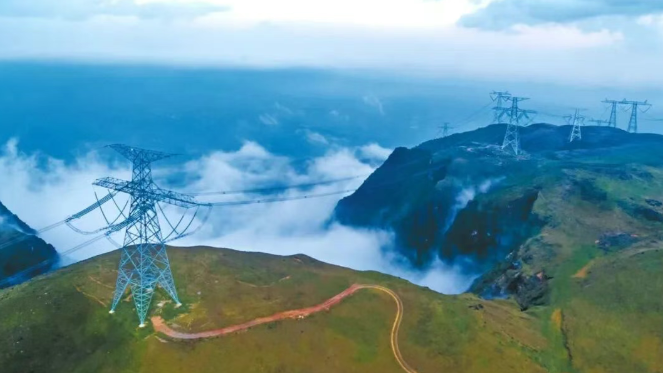
绿电澎湃润南国 数智赋能启未来——南方电网 “十四五”新型电力系统建设综述
Zhong Guo Dian Li Bao· 2025-11-03 08:28
Core Viewpoint - The sixth International Forum on New Power Systems and the 21st International Technology Forum of China Southern Power Grid was held, showcasing the achievements and innovations in the construction of new power systems during the 14th Five-Year Plan period [1] Group 1: Achievements in New Power System Construction - China Southern Power Grid has built the world's largest AC-DC interconnected grid, with cumulative electricity transmission exceeding 950 billion kilowatt-hours [1] - The reliability of power supply in the Guangdong-Hong Kong-Macao Greater Bay Area has reached world-class levels [1] - The number of registered market participants in the electricity trading market has surpassed 220,000, accounting for one-fourth of the national total, with over 70% of electricity traded through market mechanisms [1] - The ultra-high voltage transmission technology is internationally leading, with the Kunliulong DC project achieving 19 world-first power technology milestones [1] Group 2: Green Energy Supply and Efficiency - The digitalization efforts have improved the management of renewable energy, with short-term forecasting accuracy for wind and solar power reaching 88% and 93%, respectively [2] - Non-fossil energy generation in five provinces has reached 66% of installed capacity and 56% of total generation, placing it among the leading grids globally [2] - The installed capacity of renewable energy has exceeded 257 million kilowatts, a 3.5-fold increase since 2020 [2] - The capacity for electricity transmission from the west to the east has surpassed 58 million kilowatts, with over 80% of the transmitted electricity being clean energy [2] Group 3: Energy Transition and Consumer Benefits - Since the 14th Five-Year Plan, electricity substitution has exceeded 240 billion kilowatt-hours, with electricity accounting for 34% of total energy consumption, 5 percentage points higher than the national average [3] - Over 100,000 charging piles have been installed across urban and rural areas, achieving full coverage in the Guangdong-Hong Kong-Macao Greater Bay Area [3] - The green electricity trading volume is expected to reach 250 billion kilowatt-hours by 2025, surpassing the total of the previous three years [3] Group 4: Collaborative Development of Power Systems - The new power system construction emphasizes collaboration among generation, grid, load, and storage [4] - The installed capacity of pumped storage and new energy storage has exceeded 10 million kilowatts each, with demand-side response levels reaching 7.6% [5] Group 5: Mechanism Innovation and Market Efficiency - New mechanisms have been established for shared storage leasing and auxiliary services, enhancing resource allocation efficiency [6] - The virtual power plant model in Shenzhen exemplifies the integration of electric vehicles as mobile storage, achieving a controllable load of 1.1 million kilowatts [6] Group 6: Technological Innovation and Digital Transformation - The company has implemented advanced technologies for grid management, achieving significant improvements in operational efficiency and safety [7][8] - The digital grid construction is progressing steadily, with the establishment of an AI alliance and the release of national standards [9] - The integration of digital supply chains is driving the development of new business models within the industry [10] Group 7: Commitment to Sustainable Development - The company expresses its commitment to collaborating with various stakeholders to contribute to global sustainable energy development [11]
南方电网新型电力系统发展白皮书正式发布
Zhong Guo Dian Li Bao· 2025-11-01 02:53
Core Insights - The Southern Power Grid Company has officially released a white paper detailing its achievements and innovations in the construction of a new power system during the 14th Five-Year Plan period [1] Group 1: Achievements in Power System Development - The company has built the world's largest AC-DC interconnected power grid, with a cumulative electricity transmission of over 950 billion kilowatt-hours [3] - The reliability of power supply in the Guangdong-Hong Kong-Macao Greater Bay Area has reached world-class levels, with over 220,000 registered market participants, accounting for one-fourth of the national total [3] - The installed capacity of renewable energy has exceeded 257 million kilowatts, a 3.5-fold increase since 2020, establishing a clean and low-carbon supply structure [4] Group 2: Green Energy Supply and Consumption - The electricity substitution volume in the five provinces has surpassed 240 billion kilowatt-hours, with electricity accounting for 34% of total energy consumption, 5 percentage points higher than the national average [5] - Over 100,000 charging piles have been installed across urban and rural areas, achieving full coverage in the Greater Bay Area [5] - The trading volume of green electricity certificates is expected to reach 250 billion kilowatt-hours by 2025, surpassing the total of the previous three years [5] Group 3: Collaborative Development of Power Sources and Storage - The company has implemented a system-wide approach to address supply-demand matching challenges, enhancing the efficiency of green electricity across the entire production, transmission, consumption, and storage chain [6] - The installed capacity of pumped storage and new energy storage has exceeded 15 million kilowatts, with demand-side response levels reaching 7.6% [7] - The establishment of 35 new power system demonstration zones and 36 near-zero carbon demonstration zones has provided replicable models for coordinated development [8] Group 4: Technological Innovations - The company has adopted advanced technologies such as cloud computing, big data, and artificial intelligence to transform the power grid from traditional to intelligent [9] - Over 99.5% of substations are now unmanned, and the coverage of distribution automation has increased to 99.72% [9] - The company has launched the first national pilot base for artificial intelligence applications in the energy sector, promoting the development of a digital power grid [10]
国家能源局: 风光装机破17亿千瓦 绿电攻坚再提速
Zhong Guo Zheng Quan Bao· 2025-11-01 00:10
Core Insights - The National Energy Administration announced significant achievements in the energy sector, with total installed capacity of wind and solar power exceeding 1.7 billion kilowatts by the end of September, nearing the 3.6 billion kilowatt target for 2035 [1] - Renewable energy capacity reached 2.198 billion kilowatts, with wind and solar power accounting for 22% of total electricity generation in the first three quarters, reflecting a notable increase [1] Renewable Energy Development - In the first three quarters, wind and solar power generated 1.73 trillion kilowatt-hours, a year-on-year increase of 28.3%, contributing to 22% of total electricity consumption, up 4.1 percentage points from the previous year [1] - Solar power saw remarkable growth, with an additional 24 million kilowatts of installed capacity, bringing the total to 112.5 million kilowatts, a 45.7% year-on-year increase [2] - The cumulative solar power generation reached 916.3 billion kilowatt-hours, a 44.1% increase year-on-year, with a utilization rate of 94.7% [2] Power Supply and Demand Management - The electricity system demonstrated resilience, with record-breaking electricity consumption in July and August, exceeding 1 trillion kilowatt-hours for two consecutive months [3] - A multi-dimensional supply guarantee system was established, with 17 million kilowatts of supportive power sources put into operation in the first half of the year [3] - New energy sources significantly contributed to peak load management, with an average output of over 50 million kilowatts during peak hours [3] Market Mechanisms and Innovations - By the end of September, electricity market transactions reached 4.92 trillion kilowatt-hours, accounting for 63.4% of total electricity consumption, optimizing resource allocation through market signals [4] - Innovative mechanisms such as "peak pricing" incentivized power generation efficiency, with significant contributions from various regions to manage peak load pressures [4] Charging Infrastructure Development - The number of electric vehicle charging facilities reached 18.063 million, a 54.5% increase year-on-year, with significant growth in charging capacity during peak travel periods [5] - High-power charging facilities exceeding 250 kilowatts are being rapidly deployed, enabling quick charging capabilities [6] - A three-year action plan aims to increase the number of charging facilities to 28 million by the end of 2027, supporting over 80 million electric vehicles [6]
光储逆变器专题报告:光储共生启新元,逆变巧驭电流弦
Dongguan Securities· 2025-10-27 09:02
Investment Rating - The report maintains an "Overweight" rating for the power equipment and new energy industry, specifically focusing on the solar storage inverter sector [2]. Core Insights - The synergy of "source-network-load-storage" is identified as the future development direction of the solar storage industry, enhancing the stability of the power system and addressing the inherent volatility of renewable energy sources [6][64]. - China has announced a new round of national contribution targets, significantly promoting the large-scale construction of new energy storage systems, with a target of reaching over 180 million kilowatts of installed capacity by 2027 [6][49]. - The global solar storage market is expected to maintain strong growth momentum, driven by the transition to low-carbon energy systems and the increasing demand for renewable energy [6][86]. Summary by Sections 1. Synergy of "Source-Network-Load-Storage" - Continuous improvement in inverter performance and increasing localization of core components are noted, with the localization rate for power modules expected to reach 50% by 2024 [45]. - The Chinese government is actively supporting the sustainable development of the solar industry through various policies, including pricing, subsidies, and market mechanisms [49][50]. 2. Global Solar Storage Market Trends - The global photovoltaic (PV) installed capacity is projected to reach 630 GW in 2025 and 1,078 GW by 2030, with a significant increase in inverter exports [86][93]. - The domestic inverter export value reached $6.758 billion in the first nine months of 2025, reflecting a year-on-year growth of 6.74% [95]. 3. Investment Strategies and Key Companies - The report suggests focusing on leading domestic inverter companies that have a rich product matrix, a well-established global layout, and strong scale advantages [6].