沙特2030愿景

Search documents
分析称,任命新的投资大臣表明沙特迫切需要外国资金
Shang Wu Bu Wang Zhan· 2026-02-25 13:34
Core Insights - The appointment of Fahad AlSaif as the new Investment Minister indicates Saudi Arabia's urgent need for foreign capital due to declining oil prices and tightening fiscal conditions [1] - The selection of a seasoned banker reflects the dual challenges faced by Saudi Arabia: convincing foreign investors of attractive long-term opportunities and accelerating domestic regulatory and capital market reforms [1] Group 1: Investment Goals and Strategies - Saudi Arabia aims to attract 388 billion Saudi Riyals (over 100 billion USD) in foreign direct investment annually by 2030, which is more than three times the record inflow of 119 billion Saudi Riyals expected in 2024 [2] - The government is focusing on reducing lower-priority large projects to concentrate funds on major events like the 2030 World Expo and the 2034 FIFA World Cup [1][2] Group 2: Challenges and Reforms - The ongoing low oil prices, rising public deficits, and increasing debt are constraining future investment commitments, prompting officials to pay closer attention to overseas funding sources [1] - AlSaif's familiarity with domestic financial challenges and strong relationships with U.S. counterparts are expected to aid in increasing American direct investment in the Gulf region [2] - The shift in focus from debt financing to attracting actual foreign direct investment is seen as more challenging but essential for economic diversification [2]
中沙友谊新地标加速生长:萨勒曼国王知识区项目迎来关键节点
Xin Lang Cai Jing· 2026-02-10 05:40
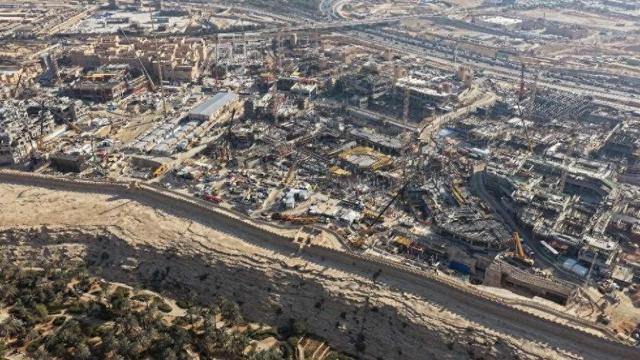
Group 1 - The Salman King Knowledge Area project in Riyadh, Saudi Arabia, is progressing rapidly, showcasing "Chinese speed" and "Chinese quality" as a symbol of the deep friendship and practical cooperation between China and Saudi Arabia [2] - The project has entered a critical phase with multiple areas advancing simultaneously, including the successful topping out of the multifunctional hall in Zone D and ongoing construction of the steel structure for the auditorium in the northern university area [4] - The total construction area of the Salman King Knowledge Area is approximately 340,000 square meters, featuring key cultural and educational buildings such as Salman King University, a luxury Capella hotel, a royal museum, and a library, which will significantly enhance Riyadh's educational resources, cultural depth, and tourism appeal [5] Group 2 - The project is part of Saudi Arabia's Vision 2030 framework, aimed at transforming the knowledge economy, with a focus on meticulous design and strict quality control throughout the construction process [5] - The project team is highly motivated and working diligently to meet various milestone targets, transforming a previously barren area into a future city that embodies knowledge and culture, reflecting the promising prospects of cooperation between the two countries [6]

中国银行董事长葛海蛟与沙特央行副行长塔拉勒·阿尔胡穆德举行工作会谈
Xin Lang Cai Jing· 2026-02-04 12:25
Core Viewpoint - The meeting between the chairman of Bank of China and the deputy governor of the Saudi Central Bank highlights the potential for enhanced cooperation between China and Saudi Arabia, particularly in the context of China's ongoing efforts to expand its global economic engagement during the "14th Five-Year Plan" period [1][2]. Group 1: Strategic Cooperation - Bank of China views the Middle East, especially Saudi Arabia, as a crucial area for global development, having established a comprehensive service network in Saudi Arabia, UAE, Qatar, and Bahrain [1][2]. - The bank aims to leverage financial resources to align the Belt and Road Initiative with Saudi Arabia's Vision 2030, enhancing services in RMB clearing and cross-border investment [1][2]. Group 2: Economic Partnership - Saudi Arabia is China's largest trading partner, with bilateral investments increasing annually, indicating significant potential for economic cooperation [1][2]. - The Saudi Central Bank expresses support for Bank of China's operations in Saudi Arabia, emphasizing the importance of compliance and stable management while seizing opportunities in financial markets and fintech [1][2].

首届中沙经济合作论坛在利雅得举行 聚焦项目化落地助力企业出海中东
Zhong Guo Neng Yuan Wang· 2026-01-18 03:09
Group 1 - The first China-Saudi Economic Cooperation Forum was held in Riyadh, Saudi Arabia, attracting around 800 participants from various sectors, including government, business, academia, and expatriate communities, under the theme "Silk Road Synergy, Expatriate Heart Building Dreams, Win-Win Cooperation" [1] - The forum focused on aligning China's Belt and Road Initiative with Saudi Arabia's Vision 2030, discussing cooperation opportunities in advanced manufacturing, digital economy, green transformation, logistics and supply chain, and business services [2] - Discussions highlighted the need for a mechanism to transition cooperation from "vision" to "projects," emphasizing the importance of collaboration in key sectors [2] Group 2 - The forum addressed common concerns for businesses entering the Middle East, such as information asymmetry, unclear compliance pathways, mismatched financing structures, and insufficient local partnerships and talent systems [3] - Representatives from media, strategic affairs, and international cooperation stressed the importance of a verifiable information system, credible communication mechanisms, and risk management tools to reduce uncertainties in cross-border cooperation [3] - The forum released the "Riyadh Cooperation Consensus," proposing the establishment of a long-term information sharing mechanism, a cross-border project matchmaking platform, and improved compliance services and risk prevention support [4] Group 3 - The forum aimed to enhance project landing success rates through standardized processes, integrated services, and a focus on actionable frameworks [4] - A project display and consultation area was set up during the forum to facilitate face-to-face communication regarding specific project needs, partner matching, compliance, and financial services [4] - A Saudi expatriate New Year gala was also held to strengthen community ties and foster a collaborative atmosphere for discussing cooperation [4]
沙特通告全球:境内四个区域新发现242.6吨黄金资源量,矿体还能继续深挖
Sou Hu Cai Jing· 2026-01-15 12:39
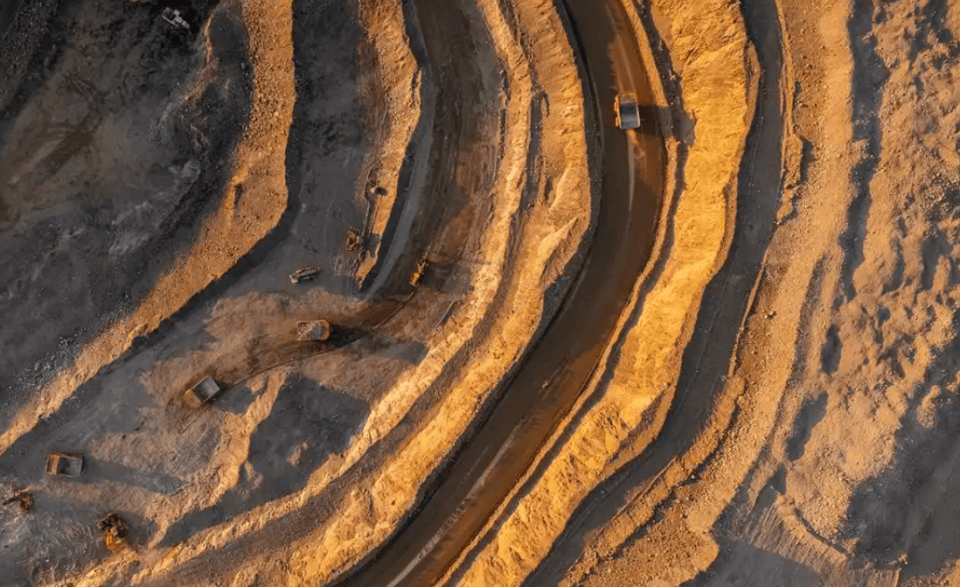
Core Insights - Saudi Arabia has discovered 242.6 tons of gold resources in four regions, valued at over $15 billion, indicating a significant potential increase in its global gold reserves [1][4] - The discovery is part of Saudi Arabia's broader strategy to diversify its economy away from oil dependency, aiming to become a comprehensive resource hub [4][10] Group 1: Economic Transition - Saudi Arabia is transitioning from being solely an "oil kingdom" to a "comprehensive resource supermarket," as highlighted by its Vision 2030 initiative [4][12] - The country has already identified over 500 tons of gold resources through systematic exploration, indicating a shift in mining practices and technological advancements [4][6] - The gold discovery is not isolated but part of a larger mineral belt, allowing for the development of large-scale mining operations and associated industries [4][9] Group 2: Gold Market Dynamics - Despite the significant gold discovery, international gold prices remained stable, indicating that gold is now viewed more as a financial symbol than a mere commodity [6][7] - The primary factors influencing gold prices are U.S. Federal Reserve interest rates and global risk sentiment, rather than supply changes from new discoveries [8][9] Group 3: Broader Resource Ambitions - In addition to gold, Saudi Arabia has also identified copper, nickel, and platinum group metals, which are crucial for the renewable energy sector [9][10] - This diversification positions Saudi Arabia as a potential key player in the global supply chain, especially in the context of reducing reliance on Chinese resources [9][10] Group 4: Sustainable Development Goals - Saudi Arabia aims to avoid the "resource curse" by investing in international partnerships and modern management practices in its mining sector [12][13] - The country is channeling resource revenues into emerging industries, such as NEOM city and green hydrogen projects, aligning with its Vision 2030 goals [12][13] - The long-term objective is to transform resource wealth into sustainable development, focusing on education, technology, and innovation [15]
沙特失业率升至7.5%
Shang Wu Bu Wang Zhan· 2026-01-07 16:19
Core Insights - The unemployment rate for Saudi citizens rose to 7.5% in the third quarter, yet remains close to the "Vision 2030" target [1] Group 1: Unemployment Rates - The unemployment rate for Saudi males increased by 0.7 percentage points to 5% [1] - The unemployment rate for Saudi females rose by 0.8 percentage points to 12.1% [1] - The overall unemployment rate in Saudi Arabia, including citizens and residents, increased by 0.2 percentage points to 3.4% [1] Group 2: Labor Participation Rates - The male labor participation rate increased by 0.3 percentage points to 64.3% [1] - The female labor participation rate decreased to 33.7%, although it remains above the "Vision 2030" target [1]
2025年沙特非石油经济将占GDP的57%
Shang Wu Bu Wang Zhan· 2026-01-07 16:19
Core Insights - Standard & Poor's predicts that by 2025, non-oil activities will contribute approximately 57% to Saudi Arabia's GDP, driven by the "Vision 2030" reforms and sustained growth in public and private investments, particularly in tourism, technology, and large projects [1] Group 1 - In 2024, the oil sector is expected to account for about 54.9% of Saudi Arabia's GDP, equivalent to 2.6 trillion riyals [1] - The contribution of the oil sector to GDP was 45.5% at the beginning of the "Vision 2030" initiative [1] - The Saudi government aims to increase the GDP contribution from non-oil activities to 5 trillion riyals by 2030 [1]
中企承建沙特吉赞工业城人工岛连接桥主体结构落成
Ren Min Wang· 2025-12-26 09:34
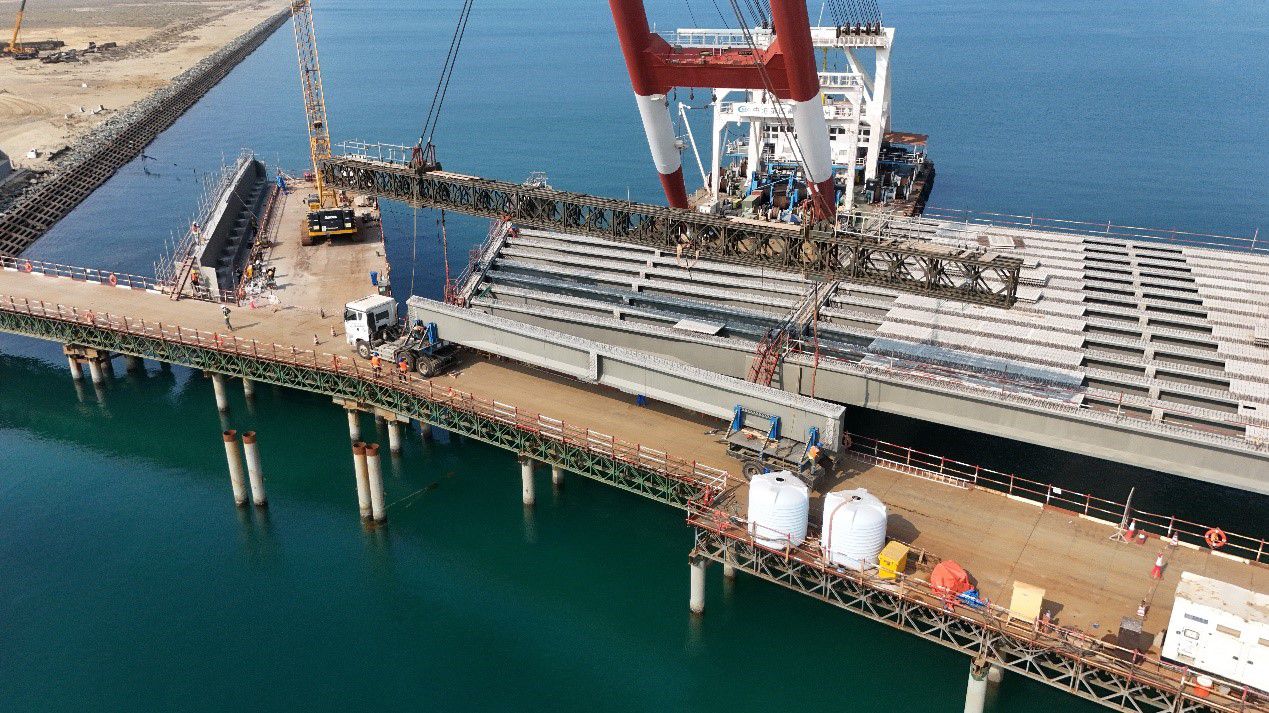
Core Viewpoint - The project connecting the bonded area of Jizan Industrial City to the artificial island has made significant construction progress, enhancing regional transportation and promoting industrial collaboration [1][3] Group 1: Project Overview - The connection bridge is part of Saudi Arabia's national highway plan for "Industrial Zone Development" and includes a 613-meter offshore prestressed concrete bridge and a 515-meter permanent road [1] - Upon completion, the bridge will serve as a crucial maritime transportation hub between the bonded area and the artificial island, significantly improving regional connectivity [1] Group 2: Construction and Environmental Management - The project team has implemented advanced safety control measures, including video monitoring and real-time remote management systems, to navigate the complex offshore working environment [3] - A specialized "Marine Protection Plan" has been established to ensure compliance with environmental standards, including marine life protection and wastewater management [3] Group 3: Strategic Importance - The project aims to be a benchmark for regional connectivity and is aligned with the Belt and Road Initiative and Saudi Arabia's Vision 2030 [3]
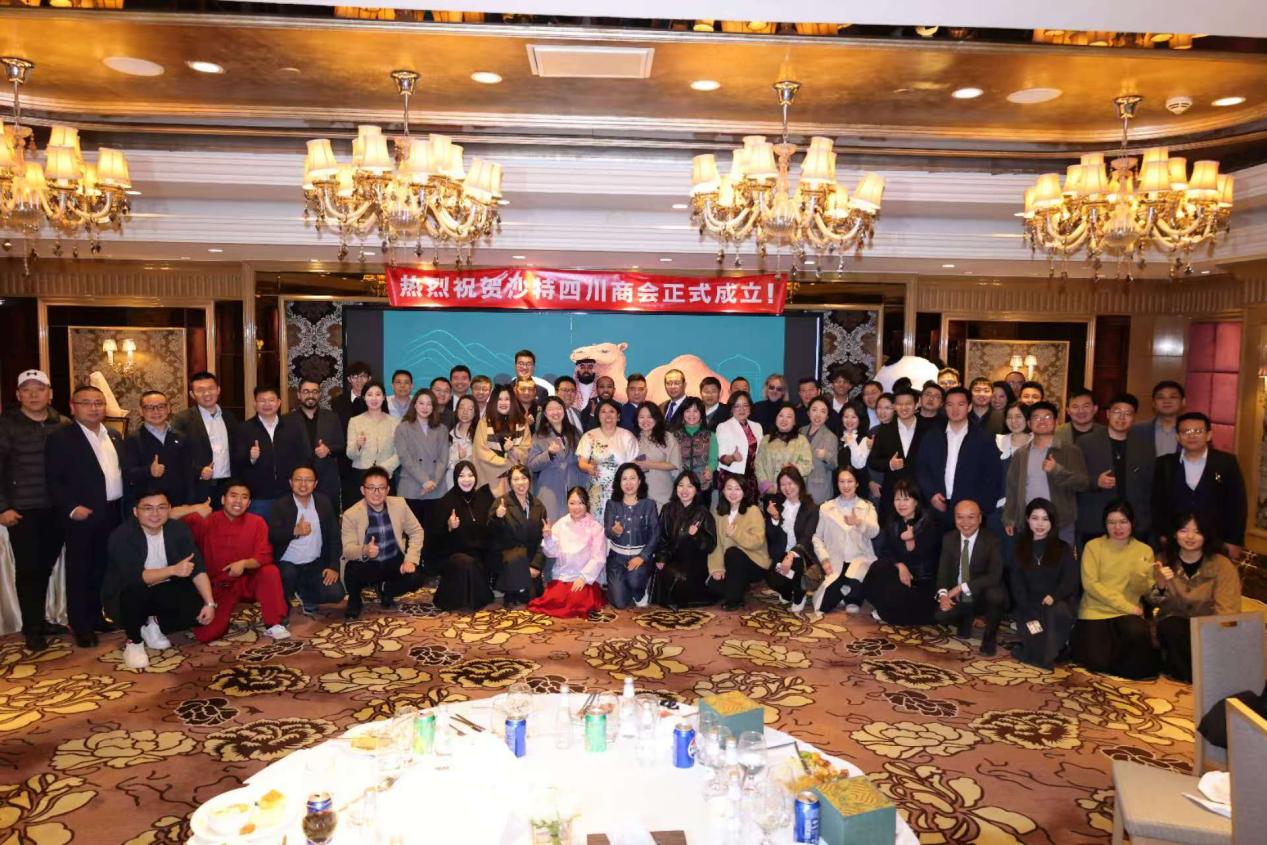
沙特四川商会在利雅得成立
Xin Lang Cai Jing· 2025-12-19 09:12
Core Insights - The Saudi Sichuan Chamber of Commerce was inaugurated in Riyadh, aiming to enhance economic cooperation between China and Saudi Arabia [1][3] - The chamber is founded by Wan Anfeng, who emphasizes the importance of bridging information gaps and fostering mutual understanding and collaboration between businesses from both regions [3] Group 1: Chamber Objectives and Operations - The chamber will focus on practical guidance in areas such as information exchange, policy understanding, project matching, industrial collaboration, and enterprise services [3] - It aims to maintain openness, welcoming all entities that support its mission and respect local regulations and diverse backgrounds [3] Group 2: Economic Context and Opportunities - Saudi Arabia is undergoing significant economic transformation under its "Vision 2030," encouraging Chinese enterprises to engage in long-term, compliant, and localized participation [4] - The establishment of the chamber is expected to enhance communication efficiency among businesses and promote stable and sustainable cooperation [4] - There remains substantial untapped development potential between China and Saudi Arabia, particularly in cultural tourism, comprehensive industrial cooperation, and emerging sectors [4]
“石油王国”经济版图重塑
Di Yi Cai Jing Zi Xun· 2025-12-13 04:07
Core Insights - Saudi Arabia's economy has undergone significant transformation over the past decade, with the non-oil sector's contribution to GDP rising from 45.4% to 55.6% [2] - The "Saudi Vision 2030" initiative, launched in 2016, has been pivotal in driving economic diversification, with projected GDP growth accelerating to 4.4% by 2025, primarily fueled by a 5% growth in the non-oil sector [2][3] - The National Development Fund (NDF) plays a crucial role in this transformation, focusing on mobilizing private capital and ensuring alignment with national economic goals [5][6] Economic Growth - The non-oil economy is expected to grow by 5% in 2023, driven by increased investment and consumer spending, contributing significantly to overall economic growth [3] - Despite a decline in total fiscal revenue due to falling oil prices, non-oil revenue has exceeded budget expectations, underscoring the effectiveness of the diversification efforts [3] - The average annual growth rate of the non-oil economy has surpassed 4% since the launch of Vision 2030 [3] Sectoral Contributions - The growth of the non-oil sector is supported by various initiatives, including increased localization in public procurement, which stimulates domestic manufacturing [4] - Wholesale and retail trade have emerged as significant contributors to non-oil growth, closely linked to strong consumer trends [4] - The government has implemented measures such as capping gasoline prices and providing direct financial support to stabilize household incomes and boost consumption [4] Investment and Financing - The NDF is adapting its business model to facilitate the transition from public spending to capital-driven investment, focusing on maximizing the multiplier effect of every riyal spent [6] - The NDF aims to attract both domestic and international investors by providing funding support and capacity building, acting as a catalyst for economic development [5][6] - In 2023, Saudi Arabia's green investment and sustainable finance issuance reached $12 billion, capturing two-thirds of the Middle Eastern green finance market [6] International Cooperation - China is Saudi Arabia's largest trading partner, with trade volume expected to reach $107.5 billion in 2024, reflecting a significant increase from $500 million at the time of diplomatic relations [7] - The NDF is actively fostering cross-border partnerships, having signed memoranda of understanding with several Chinese financial institutions to facilitate investment in Saudi Arabia [8] - Infrastructure remains a primary area of interest for Chinese investors, with ongoing discussions about potential investments in this sector [8]