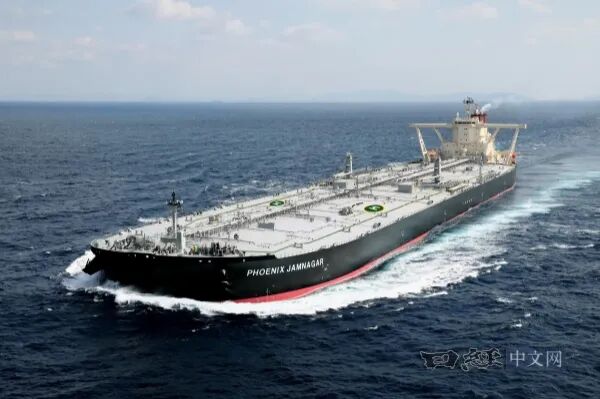
油轮运费上涨

Search documents
合规油轮运力紧张推升运费,贸易流向或重塑
Hua Tai Qi Huo· 2026-02-26 05:26
Report Summary 1. Report Industry Investment Rating - No information provided 2. Core Viewpoints - Oil tanker freight rates have risen significantly since the beginning of the year. The freight rate of TD3 tankers from the Middle East to the Far East has soared to $5 per barrel, and that of West Africa and Latin America routes has soared to over $8 per barrel. The sanctions on shadow tankers by the West have led to a continuous decline in the number of compliant tankers. After the compliance of Venezuelan oil, more compliant tankers are needed for transportation. After the freight rate increase, the arbitrage cost between the East and West regions has increased significantly. Asia - Pacific buyers have reduced the procurement of physical goods from long - distance regions such as West Africa, Latin America, and North America, and the premiums of relevant oil types have weakened. The Middle East is more favored by buyers due to its proximity. Freight has become an important factor affecting the physical market [2] - Oil prices are highly uncertain in the short term due to geopolitical events and are recommended for short - term bearish allocation in the medium term [3] 3. Summary by Related Catalogs Market News and Important Data - The price of light crude oil futures for April delivery on the New York Mercantile Exchange fell 21 cents to $65.42 per barrel, a decrease of 0.32%. The price of Brent crude oil futures for April delivery rose 8 cents to $70.85 per barrel, an increase of 0.11%. The main contract of SC crude oil closed down 0.63% at 487 yuan per barrel [1] - On February 25, Slovak Prime Minister Fico said that Ukrainian President Zelensky's repeated delays in resuming oil delivery through the "Friendship" pipeline were "hostile acts". Ukraine has changed the date of resuming oil delivery multiple times. The latest news is that it will not resume in February and may resume around March 3. Fico also said that if Ukraine "has no intention of providing the oil that Slovakia has purchased", Slovakia will take further countermeasures [1] - On February 26, the Trump administration is relaxing some restrictions on the transportation of fuel to Cuba, allowing private enterprises to resell Venezuelan oil to Cuba. The new guidelines issued by the US Treasury Department on Wednesday emphasized that this measure applies to commercial and humanitarian transactions involving the small private sector in Cuba for "supporting the Cuban people". Previously, the Cuban government did not allow an increasing number of local small private enterprises to import fuel. At the time of this update, Cuban small business owners are trying to import diesel from the US with the approval of the Trump administration [1] - This month, the amount of oil exported from Saudi Arabian ports is expected to reach the highest level in nearly three years. Oil tanker tracking data shows that Saudi Arabia's crude oil exports in the first 24 days of February jumped to 7.3 million barrels per day, the highest level since April 2023. If this momentum continues for the rest of the month, it means that the daily average export volume will increase by more than 400,000 barrels compared with January. Last June, when Israel and the US bombed Iranian nuclear facilities and other locations, Saudi Arabia briefly increased its oil production. As Trump considers launching another attack, the market is closely watching any "abnormal movements" of the Middle East oil - producing giant [1] - On February 25, the US Treasury Department's Office of Foreign Assets Control (OFAC) updated the "Specially Designated Nationals List" and imposed relevant sanctions on multiple individuals, entities, and multiple vessels related to Iran. The targets of this round of sanctions include 4 Iranian individuals, all related to Iranian aviation industry enterprises; many shipping and trading companies located in Iran, Turkey, the UAE, Panama, the Marshall Islands, Liberia, etc. are on the list, involving the Iranian oil and liquefied gas transportation network; at least 13 oil tankers and liquefied gas carriers are included in the sanctions scope, and the relevant vessels fly the flags of Panama, Palau, Barbados, Vanuatu, Comoros, and Iran. The US Treasury Department said that the above individuals and entities will face asset freezing and restrictions on transactions with the US financial system [1]
运费飙升 航运板块爆发
Shang Hai Zheng Quan Bao· 2026-02-25 12:54
Core Viewpoint - The oil tanker market is experiencing a significant surge, with VLCC spot market rates reaching their highest levels since April 2020, driven by increased demand and tightening supply [1][4]. Group 1: Market Performance - The A-share market saw a strong performance from companies like China Merchants Energy Shipping Company, with significant gains in related stocks [1]. - The average daily earnings for VLCCs increased by 24% month-on-month, reaching $146,385 per day, marking the highest level since April 2020 [4]. - The one-year time charter rates for VLCCs have also hit a record high of $100,000 per day, while Suezmax tankers are around $95,000 per day [3]. Group 2: Supply and Demand Dynamics - The tightening supply of compliant VLCCs is expected to continue driving rental prices upward [4]. - The global oil tanker market is projected to maintain a high level of activity, with a forecasted 1% increase in overall oil tanker demand and a 3% to 5% increase in compliant oil tanker demand by 2026 [10]. - The demand for compliant oil trade is anticipated to grow due to increased enforcement of sanctions, reversing the trend of non-compliant oil market share growth [10]. Group 3: Major Transactions and Market Impact - South Korean shipowner Sinokor has made significant acquisitions in the VLCC sector, completing 35 out of 45 VLCC transactions, which accounts for 78% of the total [6]. - This acquisition strategy has propelled Sinokor's ranking among VLCC owners from 12th to the top three globally, alongside major players like Bahri and China VLCC [6]. - The concentration of VLCC ownership is expected to enhance the bargaining power of leading shipowners, positively impacting the market's supply-demand balance and pricing flexibility [6][10]. Group 4: Future Outlook - Companies like China Merchants Energy Shipping Company anticipate that VLCC freight rates will experience more volatility in 2026 compared to 2025, driven by structural growth in compliant market demand and potential fleet consolidation [9]. - The overall demand for global oil and reserve needs is expected to improve, with a forecast of increased oil transportation demand outpacing the growth rate of oil demand [9]. - The market is expected to remain in a state of high demand relative to supply, with VLCC capacity growth projected at only 2.8% by 2026, indicating a continued supply-demand imbalance [10].

运费飙升,航运板块爆发
Shang Hai Zheng Quan Bao· 2026-02-25 12:43
Core Viewpoint - The global tanker freight rates have surged to a nearly six-year high, driven by strong demand and supply constraints in the VLCC (Very Large Crude Carrier) market, with significant impacts from recent acquisitions by Sinokor and other market dynamics [1][4]. Group 1: Market Performance - As of the market close, major shipping companies like China Merchants Energy Shipping Company and COSCO Shipping Energy Transportation have seen substantial stock price increases, reflecting the bullish sentiment in the tanker market [1]. - The average daily earnings for VLCCs have increased by 24% month-on-month, reaching $146,385 per day, the highest level since April 2020 [3][7]. - The current daily rental rate for VLCCs exceeds $170,000, with one-year charter rates hitting a record high of $100,000 per day [2][3]. Group 2: Supply and Demand Dynamics - The tightening supply of compliant VLCCs is expected to sustain upward pressure on rental prices, as the number of available vessels continues to decrease [3]. - The demand for compliant crude oil trade is projected to grow, with estimates indicating a potential increase of 3% to 5% in compliant VLCC capacity demand by 2026 [7]. - The overall tanker market is anticipated to maintain a high level of activity, driven by strong earnings and investor confidence, with second-hand and newbuild asset prices on the rise [3][5]. Group 3: Strategic Moves by Key Players - Sinokor's aggressive acquisition strategy has significantly altered the market landscape, with the company acquiring 35 out of 45 VLCC transactions, thereby controlling approximately 17% of the global VLCC capacity [4]. - The consolidation of VLCC ownership is expected to enhance the bargaining power of leading shipowners, which may lead to improved pricing dynamics in the compliant VLCC market [4][6]. - China Merchants Energy Shipping Company has locked in orders for eight VLCCs, indicating a proactive approach to fleet modernization and capacity expansion [6]. Group 4: Future Outlook - Analysts predict that the VLCC market will experience continued upward momentum, with expectations of increased demand for crude oil transportation and a tightening supply environment [5][6]. - The anticipated geopolitical risks and changes in oil import patterns in Asia are likely to further support freight rate increases in the coming years [6]. - The overall sentiment in the oil transportation sector remains optimistic, with expectations of a favorable market environment through 2026 [5][7].
地缘风险叠加供应激增,全球原油运费飙升至三年来新高
Hua Er Jie Jian Wen· 2026-01-26 20:10
Core Viewpoint - The increase in geopolitical risks and a surge in regional crude oil supply are driving tanker freight rates to a nearly three-year high, while major energy agencies have significant disagreements regarding the oil supply-demand outlook for 2026 [1][4]. Group 1: Freight Rate Dynamics - The Baltic dirty tanker freight index has risen over 30% in the second half of 2025 and has increased by about one-third since the beginning of 2026, primarily due to the U.S. government's takeover of Venezuelan oil sales [1][2]. - The recent surge in freight rates is attributed to the increased demand for transporting Venezuelan crude oil to U.S. Gulf Coast and European refineries, with major trading firms actively reallocating vessels [1][2]. - The tightening of international sanctions on major oil-producing countries like Russia and Iran has led to a significant amount of crude oil being stored on floating vessels, further delaying the return of ships to the spot market and compressing effective supply [2]. Group 2: Divergence in Supply-Demand Forecasts - The International Energy Agency (IEA) predicts a supply surplus exceeding 3.7 million barrels per day in 2026, while the U.S. Energy Information Administration (EIA) estimates a surplus of about 2 million barrels per day, and OPEC believes the market is nearing balance with a surplus of only 600,000 barrels per day [1][4][5]. - The core of the divergence among these agencies lies in their differing expectations for demand growth, complicating the already challenging task of predicting oil prices [1][6]. Group 3: Demand Growth Expectations - The IEA's forecast for daily demand in 2026 is slightly below 100.5 million barrels, which is about 1.5 million barrels lower than OPEC's estimate. This gap has narrowed since August 2022, with the IEA raising its forecast by 540,000 barrels over the past five months, while OPEC's outlook has remained unchanged [6][7]. - The IEA expects a daily consumption increase of 930,000 barrels in 2026, which is only about two-thirds of OPEC's predicted growth. The EIA's growth expectation falls between the two [6][7]. - Historical differences in demand growth rates are also evident, with OPEC analysts estimating an average annual growth rate of 1.3% since 2023, while the EIA's estimate is slightly lower at 1.2%, leading to an increasing gap in demand forecasts from 1.2 million barrels in 2023 to 1.7 million barrels in 2026 [6][7].
港股异动 | 中远海能(01138)再涨超5% 伊朗局势紧张使霍尔木兹海峡风险溢价快速上升
智通财经网· 2026-01-19 02:07
Core Viewpoint - The stock of China Ocean Shipping Energy (01138) has risen over 5%, reaching HKD 12.69, with a trading volume of HKD 140 million, driven by rising oil prices and increased demand for VLCCs due to geopolitical tensions [1] Group 1: Market Dynamics - According to Clarkson, oil prices have surged significantly as geopolitical tensions escalate, with VLCC Middle East route WS increasing for several consecutive days, now at 88, leading to TCE exceeding USD 60,000 per day [1] - The report from Zhongyin Securities indicates that tensions in Iran have caused a rapid increase in risk premiums for the Strait of Hormuz, with VLCC daily earnings doubling to USD 68,000 in just one week [1] Group 2: Supply Chain and Demand - The sharp decline in Venezuelan oil exports has compelled Chinese buyers to shift their sourcing to the Middle East and Brazil for heavy crude oil, resulting in increased demand for long-haul shipping [1] - The short-term support for tanker freight rates is attributed to this increased demand, while future trends will depend on whether sanctions are lifted [1]
中远海能再涨超5% 伊朗局势紧张使霍尔木兹海峡风险溢价快速上升
Zhi Tong Cai Jing· 2026-01-19 02:06
Core Viewpoint - The stock of COSCO Shipping Energy Transportation Co., Ltd. (中远海能) has risen over 5%, reaching HKD 12.69, driven by increasing oil prices and heightened geopolitical tensions in the Middle East [1] Group 1: Market Dynamics - According to Clarkson, oil prices have surged significantly due to escalating tensions, with VLCC Middle East route WS rising continuously, now at 88, leading to TCE exceeding USD 60,000 per day [1] - Zhongyin Securities reported that the risk premium in the Strait of Hormuz has rapidly increased due to the tense situation in Iran, with VLCC daily earnings doubling to USD 68,000 in just one week [1] Group 2: Supply Chain Impacts - The sharp decline in Venezuelan oil exports has compelled Chinese buyers to shift their procurement towards heavy crude oil from the Middle East and Brazil, resulting in increased demand for long-haul shipping [1] - The short-term support for tanker freight rates is evident, but future trends will depend on whether sanctions are relaxed [1]
中远海能午后涨超4% 委内瑞拉原油装运受干扰 短期或将持续推升油轮运费
Zhi Tong Cai Jing· 2025-12-17 05:56
Core Viewpoint - The recent seizure of a supertanker carrying approximately 1.85 million barrels of Venezuelan heavy crude oil by the U.S. military near Venezuela has implications for the oil shipping industry, particularly regarding compliance risks and potential shifts in oil supply sources [1]. Company Summary - COSCO Shipping Energy Transportation Co., Ltd. (中远海能) saw its stock price increase by over 4%, reaching HKD 9.76, with a trading volume of HKD 82.71 million [1]. Industry Summary - The U.S. plans to enhance sanctions and impose "action measures" on vessels in international waters, raising alerts about the risks associated with non-compliant oil tanker transport [1]. - According to Clarkson Research, Venezuelan crude oil exports account for approximately 2% of global oil trade, and the global oil tanker market is expected to remain resilient through 2026 [1]. - The demand for global oil trade is projected to grow moderately by 2026, while the supply side is expected to see a significant loosening of the oil tanker fleet, which has experienced low growth this year [1]. - If Venezuelan oil shipments are disrupted, buyers may increase their procurement from compliant oil suppliers in the Middle East, leading to a rise in demand for compliant tankers and potentially driving up tanker freight rates in the short term [1].
港股异动 | 中远海能(01138)午后涨超4% 委内瑞拉原油装运受干扰 短期或将持续推升油轮运费
智通财经网· 2025-12-17 05:53
Core Viewpoint - The recent seizure of a supertanker carrying approximately 1.85 million barrels of Venezuelan heavy crude oil by the U.S. military near Venezuela has implications for the oil shipping industry, particularly regarding compliance risks and potential shifts in oil supply chains [1]. Group 1: Company Impact - Zhongyuan Shipping (中远海能) saw its stock price increase by over 4%, reaching HKD 9.76, with a trading volume of HKD 82.71 million [1]. - The seizure of the oil tanker may lead to increased demand for compliant oil tankers, as buyers may shift their procurement to compliant suppliers in the Middle East due to disruptions in Venezuelan oil shipments [1]. Group 2: Industry Analysis - According to Clarkson Research, Venezuelan crude oil exports account for approximately 2% of global oil trade [1]. - The global oil tanker market is expected to remain resilient, with moderate growth in global oil trade demand projected for 2026, while the supply side is anticipated to see a significant loosening of the oil tanker fleet [1]. - Short-term disruptions in Venezuelan oil shipments could lead to a rise in transportation demand for compliant tankers, potentially driving up tanker freight rates [1].
俄油断供预期引发油轮运费飙升
3 6 Ke· 2025-11-24 00:14
Core Insights - Indian oil companies have announced a halt in purchasing Russian crude oil, indicating a trend of "de-Russification" in oil procurement. Similar moves are observed in China, which is also diversifying its sources of crude oil [2][4] - The freight rates for Very Large Crude Carriers (VLCCs) have surged significantly due to increased demand from India and China for oil from other producing countries, amidst tightening sanctions on Russia by the U.S. [2][4] - As of November 13, the World Scale (WS) index for freight rates reached approximately 132, with charter rates rising to $125,000 per day, doubling from around 65 in late August [2] Group 1: Market Dynamics - The freight rates for VLCCs exceeded $100,000 for the first time since April 2020, driven by U.S. sanctions against major Russian oil companies, Rosneft and Lukoil, aimed at undermining Russia's military funding amid stalled ceasefire negotiations with Ukraine [4] - The demand for VLCCs has intensified as India increases its oil purchases from other countries, leading to a tight supply situation in the regular market for large oil tankers [4][5] Group 2: Geopolitical Influences - The ongoing U.S.-China trade tensions are also impacting shipping costs, with the U.S. imposing port fees on Chinese vessels since mid-October, prompting China to retaliate with similar measures [6] - A recent agreement between U.S. and Chinese leaders to postpone the port fee measures for a year may lead to increased U.S. crude exports to China, which could positively affect the tanker market despite potential price corrections [6] - The sentiment in the shipping market remains strong, with limited new VLCC orders expected, further tightening supply and maintaining high freight rates [6]