
法定存款准备金率

Search documents
最新LPR出炉
21世纪经济报道· 2026-01-20 01:19
Core Viewpoint - The January LPR (Loan Prime Rate) remains unchanged, with the 1-year LPR at 3.00% and the 5-year LPR at 3.50%, indicating stability in the lending rates despite previous expectations for adjustments [1][4]. Group 1: LPR Stability - The 1-year and 5-year LPR have not changed for eight consecutive months since a decrease of 10 basis points in May 2025 [3]. - The current LPR rates are 3.00% for 1-year and 3.50% for 5-year, consistent with the previous month [1][4]. Group 2: Future Expectations - Analysts suggest that LPR adjustments may not occur until after the MLF (Medium-term Lending Facility) rate is adjusted, potentially delaying any changes until March [6]. - There is a significant focus on maintaining the stability of banks' operational rhythms and pricing systems, which could be disrupted by premature LPR reductions [7]. Group 3: Monetary Policy Outlook - The People's Bank of China indicates that there is still room for both reserve requirement ratio (RRR) cuts and interest rate reductions, with the current average RRR at 6.3% [9]. - Analysts estimate that there is approximately 1.3 percentage points of room for RRR cuts, suggesting a "hidden lower limit" around 5.0% [9]. - The use of open market operations, such as government bond transactions, may provide liquidity to the banking system, indicating that monetary policy easing will not be constrained by RRR cut limits [9].


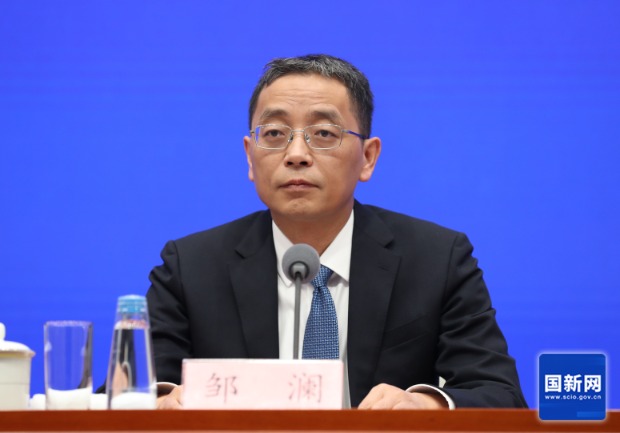
中国人民银行副行长邹澜:2026年降准降息还有一定空间
Xin Hua Cai Jing· 2026-01-15 14:48
Core Viewpoint - The People's Bank of China (PBOC) indicates that there is still room for further reductions in reserve requirements and interest rates to support high-quality economic development in 2026 [1][3]. Group 1: Monetary Policy Insights - The average statutory deposit reserve ratio for financial institutions is currently 6.3%, suggesting potential for a reduction in reserve requirements [3]. - The PBOC has noted that external constraints are relatively stable, with the RMB exchange rate being stable and the USD in a rate-cutting cycle, which does not impose strong constraints on monetary policy [3]. - Internally, the net interest margin for banks has stabilized at 1.42% over the past two quarters, indicating a favorable environment for potential interest rate cuts [3]. Group 2: Financing Cost Management - The PBOC plans to continue comprehensive measures to maintain low overall financing costs in society, including promoting transparency in loan costs through "loan clarity papers" for enterprises [3]. - Efforts will be made to reduce assessment, guarantee, and other intermediary financing costs to alleviate the financial burden on businesses and optimize the financing environment [3]. - The PBOC emphasizes the importance of effective execution and supervision of interest rate policies to ensure smooth transmission of these policies [3]. Group 3: Future Monetary Policy Direction - Looking ahead to 2026, the PBOC will implement moderately accommodative monetary policies in line with the central economic work conference's decisions, focusing on both stock and incremental policy effects [3]. - There will be an increased emphasis on counter-cyclical and cross-cyclical adjustments to create a conducive monetary and financial environment for stable economic growth and high-quality development [3].
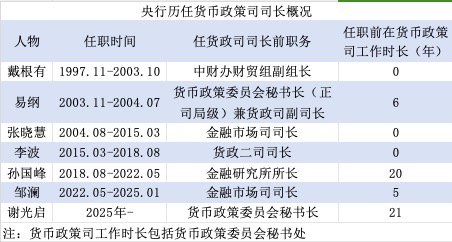
金融人·事|21年央行“老兵”谢光启的新使命
Xin Lang Cai Jing· 2026-01-07 09:49
Core Insights - The People's Bank of China (PBOC) has outlined seven key priorities for the year, with a focus on effective monetary policy implementation amid a constrained policy space due to low interest rates [1][3][19] Leadership Transition - Xie Guangqi has been appointed as the Director of the Monetary Policy Department, marking a significant leadership change within the PBOC [1] - Xie has extensive experience in the Monetary Policy Department, having worked there for 21 years and participated in key policy transformations [15] Monetary Policy Challenges - Current policy interest rates are only 140 basis points above the theoretical zero lower bound, indicating limited room for further rate cuts [3][17] - The PBOC faces the challenge of maintaining economic stability and addressing low inflation, as the Consumer Price Index (CPI) has shown prolonged low growth [19] Historical Context and Research Contributions - Xie has a strong academic background, having published significant research on the relationship between executive compensation and company performance, which has influenced monetary policy discussions [4][5][6] - His involvement in various research projects has contributed to the development of structural monetary policy tools in China [11] Structural Monetary Policy Tools - The PBOC has increasingly relied on structural monetary policy tools to support specific sectors, such as small and micro enterprises, amid a changing economic landscape [11][12] - As of early 2025, structural monetary policy tools accounted for 13% of the PBOC's balance sheet, a significant increase from previous years [11] Economic Indicators and Future Directions - The PBOC aims to align social financing and money supply growth with economic growth and price stability targets, reflecting a shift in focus for monetary policy [13] - The central bank is expected to continue implementing moderately loose monetary policies to stimulate economic growth and stabilize prices in the coming year [19]
央行:“十四五”以来共降准9次,累计下调法定存款准备金率3.5个百分点
Sou Hu Cai Jing· 2025-10-14 09:12
Core Viewpoint - The People's Bank of China has implemented a total of 9 reserve requirement ratio cuts since the beginning of the 14th Five-Year Plan, reducing the statutory deposit reserve ratio by 3.5 percentage points, which has provided approximately 7 trillion yuan in long-term liquidity [1] Monetary Policy Tools - The central bank has employed various monetary policy tools to flexibly adjust short- and medium-term liquidity [1] - The toolbox for monetary policy has been enriched, including operations such as open market transactions of government bonds and reverse repos [1] Credit Growth Management - There is an emphasis on strengthening the understanding and grasp of the supply and demand patterns and new characteristics of monetary credit to promote reasonable growth in monetary credit [1]
中国机构配置手册(2025版)之流动性与货币政策篇
2025-08-12 15:05
Summary of Key Points from the Conference Call Industry Overview - The conference call discusses the liquidity and monetary policy framework in China, focusing on the broad money supply (M2) and its implications for the banking sector and the economy as a whole [1][2][3]. Core Insights and Arguments - As of April 2025, China's broad money supply (M2) reached 325 trillion yuan, which includes M1, time deposits, and personal deposits, reflecting the purchasing power of society [1][4]. - The legal reserve requirement ratio (RRR) determines the amount of reserves that commercial banks must freeze, impacting their excess reserves and liquidity management [6][14]. - The People's Bank of China (PBOC) is shifting its monetary policy focus from the quantity of money supply to interest rates, with ongoing reforms to the Loan Prime Rate (LPR) [2][23]. - The relationship between M2 and the macroeconomy has weakened due to an increase in time and personal deposits, leading to a decrease in the velocity of money and reduced consumer and investment behavior [19]. - The PBOC has restarted government bond trading operations to manage liquidity more effectively, especially as the room for further RRR cuts is limited [18]. Important but Overlooked Content - The liquidity analysis of broad money considers various channels, including loan-derived deposits and the phenomenon of deposit outflows when residents purchase stocks or bonds, which do not count towards M2 [13]. - The phenomenon of "deposit disintermediation" is becoming more pronounced, with residents increasingly investing in low-risk financial products, which poses challenges for liquidity management in banks and the central bank [20][21]. - The behavior of bond fund managers can significantly impact market liquidity due to their similar investment strategies and regulatory requirements, leading to synchronized actions that affect the overall financial system [22]. - The current LPR reform is still evolving and aims to enhance the loan pricing mechanism, increasing transparency and market responsiveness [26]. This summary encapsulates the key points discussed in the conference call, providing insights into the current state of China's monetary policy and its implications for the banking sector and the broader economy.
马来西亚央行将法定存款准备金率降至1%。
news flash· 2025-05-08 08:09
Core Viewpoint - The central bank of Malaysia has reduced the statutory reserve requirement ratio to 1% [1] Group 1 - The decision aims to enhance liquidity in the banking system [1] - This move is expected to support economic growth by encouraging lending [1] - The reduction in reserve requirements may lead to increased funds available for banks to lend to businesses and consumers [1]