消费企业赴港上市

Search documents
三大因素推动,消费企业扎堆赴港IPO!冷热分化下资本有了新逻辑
Sou Hu Cai Jing· 2026-02-11 15:52
Core Viewpoint - The surge of consumer companies going public in Hong Kong reflects a shift in investment logic towards long-termism, driven by multiple factors including stricter A-share regulations and the need for capital exit strategies [1][4][9] Group 1: IPO Trends - In early 2026, over 10 consumer companies have disclosed H-share IPO materials, indicating a significant increase compared to the same period in 2025 [1] - Notable companies like Dongpeng Beverage and Mingming Hen Mang have successfully launched their IPOs, with Dongpeng raising a record HKD 10.1 billion [3] - The trend includes major players across various sectors such as dairy, fresh food, and casual dining, with companies like Junlebao and Qian Dama also entering the market [3][4] Group 2: Factors Driving IPOs - The primary reason for the shift to Hong Kong is the stringent review process for consumer chain businesses in the A-share market, leading to longer wait times and higher compliance demands [4] - Many companies that previously attempted to enter the A-share market, such as Junlebao and Laoxiangji, have opted for Hong Kong due to strategic financing needs [4] - The pressure from existing investors to exit, particularly those who completed financing around 2020, has made Hong Kong an attractive exit channel [4] Group 3: Market Performance and Differentiation - Post-IPO performance has varied significantly among consumer companies, with some like Mingming Hen Mang seeing a nearly 70% increase on their first trading day [6] - Companies with stable cash flows and mature business models, such as Nongfu Spring and Haitian Flavoring, tend to maintain steady valuations, while others face volatility [6][7] - The performance disparity is also evident across different consumer sectors, with high-frequency consumption businesses faring better than those reliant on single IPs or high-end products [6][7] Group 4: Investment Logic and Exit Strategies - The changing exit strategies for consumer companies now focus on either IPOs or mergers, altering investor expectations and strategies [9] - Investors are increasingly prioritizing dividend mechanisms over IPOs as a return strategy, indicating a shift towards long-term investment approaches [9] - Despite signs of recovery in exit routes, the overall consumer environment remains weak, necessitating careful selection of investment targets [9][10] Group 5: Assessing Growth Potential - To evaluate a consumer company's growth potential, three dimensions should be considered: product lifecycle stage, core growth drivers, and the ability to create a second growth curve [10]
大爆发!“组团”来了:君乐宝、钱大妈、袁记食品......知名消费企业掀港股上市潮
Zhong Guo Ji Jin Bao· 2026-01-31 06:58
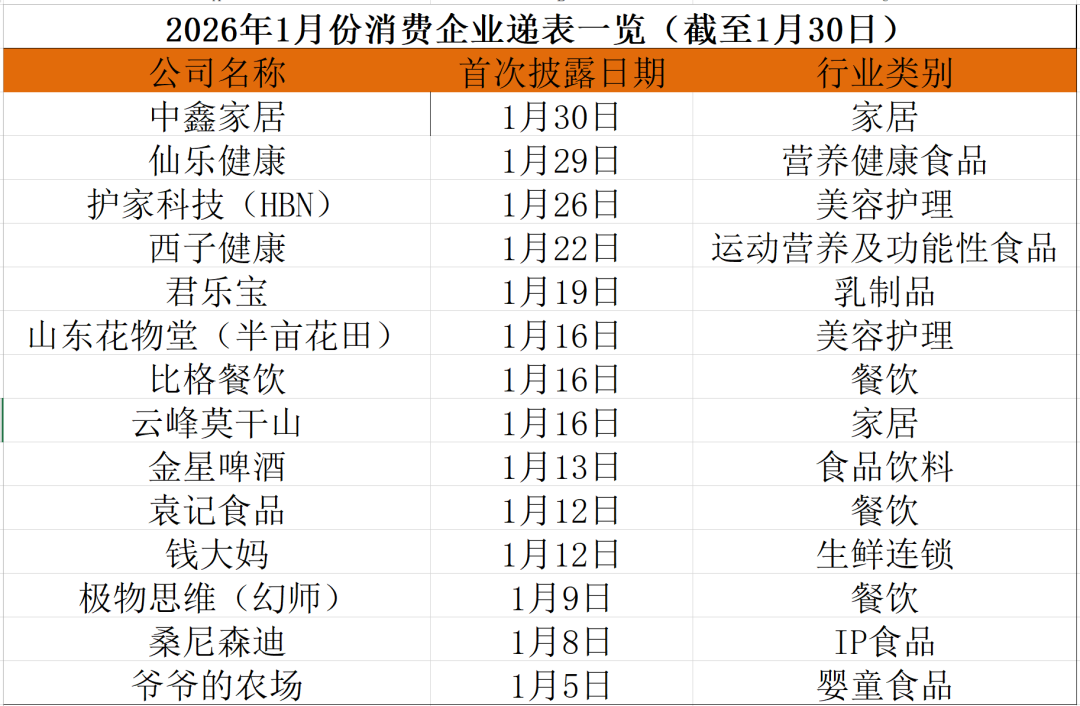
Core Viewpoint - The Hong Kong capital market is experiencing a surge in listings from consumer companies, with notable firms like Junlebao, Qian Dama, and Yuanji Food preparing to go public, indicating a strategic move amidst a challenging domestic consumption environment [1][5]. Group 1: Market Trends - In early 2026, 14 consumer companies have disclosed H-share prospectuses, a significant increase compared to the same period in 2025 [1]. - The IPO of Dongpeng Beverage, expected to raise HKD 10 billion, marks the largest IPO in the Asian beverage sector in recent years [1]. - The trend of consumer companies going public in Hong Kong reflects a strategic response to various market conditions, including policy support and capital market changes [5][6]. Group 2: Company Highlights - Junlebao, a leading player in the dairy industry, aims to raise funds for factory construction, capacity expansion, brand marketing, and digital transformation, with annual revenue around RMB 20 billion [2]. - Jin Xing Beer, a traditional brewery, has shown explosive growth, with revenue increasing from RMB 356 million to RMB 1.109 billion and net profit soaring from RMB 12 million to RMB 305 million over two years [3]. - The emerging beauty brand Banmu Huatian is also pursuing a Hong Kong listing to enhance R&D and brand development in a competitive market [3]. Group 3: Factors Driving Listings - Policy support from the Chinese government has facilitated the process for consumer companies to list in Hong Kong, with measures introduced to encourage leading firms to access capital markets [5][6]. - The shift towards Hong Kong listings is also driven by tightening A-share market conditions for consumer companies, making Hong Kong a more attractive option for capital raising [6]. - The influx of venture capital and private equity into emerging consumer firms has created pressure for exits, making public listings a viable path for capital recovery [7]. Group 4: Market Performance and Challenges - There is a noticeable divergence in stock performance among consumer companies listed in Hong Kong, with some achieving high valuations while others struggle post-IPO [8][9]. - The market favors companies with strong brand presence and visible cash flow, while smaller brands face liquidity discounts due to lack of profitability [9]. - Successful expansion in the consumer sector requires matching growth with profitability, as merely increasing store numbers is no longer sufficient to attract capital [9].
大爆发!“组团”来了:君乐宝、钱大妈、袁记食品、金星啤酒、比格餐饮......知名消费企业掀港股上市潮,资本、市场与政策共振的必然结果
Zhong Guo Ji Jin Bao· 2026-01-31 05:35
Core Viewpoint - The surge of consumer companies listing on the Hong Kong Stock Exchange (HKEX) in early 2026 is driven by a combination of capital demands, market conditions, and favorable policy environments, marking a significant trend in the consumer sector [1][8]. Group 1: Listing Trends - Major consumer companies such as Mingming Hen Mang and Dongpeng Beverage have recently completed their IPOs, with Dongpeng raising an estimated HKD 10 billion, setting a record for the Asian beverage industry [1][4]. - As of January 30, 2026, 14 consumer companies have disclosed their H-share prospectuses, indicating a notable increase compared to the same period in 2025 [2][4]. - The trend includes a diverse range of sectors, including food and beverage, beauty care, and home goods, showcasing a multi-faceted approach to capitalizing on market opportunities [4][6]. Group 2: Company Highlights - Junlebao, a leading dairy brand, aims to raise funds for factory construction, capacity expansion, and brand marketing, with an annual revenue of approximately CNY 20 billion [4]. - Jinxing Beer, known for its craft beer, reported a revenue increase from CNY 356 million to CNY 1.109 billion from 2023 to the first nine months of 2025, with net profit soaring from CNY 12 million to CNY 305 million, marking a 2400% increase [5]. - Other notable companies like Qian Dama and Yuanji Food are also advancing their listing processes, reflecting a broader trend of consumer companies seeking capital to support growth and expansion [4][6]. Group 3: Market Dynamics - The favorable policy environment, including measures from the China Securities Regulatory Commission to support leading enterprises in listing in Hong Kong, has facilitated this trend [8]. - The recovery of the HKEX since 2025 has made it an attractive option for consumer companies, with over one-third of new listings in the first half of 2025 being consumer-related [9]. - The internal pressures for capital and the need for significant funding to support growth strategies are driving companies to pursue listings as a means of capitalizing on market opportunities [9][10]. Group 4: Valuation and Market Performance - There is a noticeable divergence in stock performance among consumer companies listed on the HKEX, with some achieving high valuations while others struggle post-IPO [11][12]. - The market favors companies with strong brand presence and visible cash flow, while smaller brands face liquidity discounts due to lack of profitability [12]. - The ability to expand internationally and enhance operational efficiency is becoming increasingly important for valuation in the consumer sector [12].

山东夫妇要IPO敲钟了
3 6 Ke· 2026-01-27 11:44
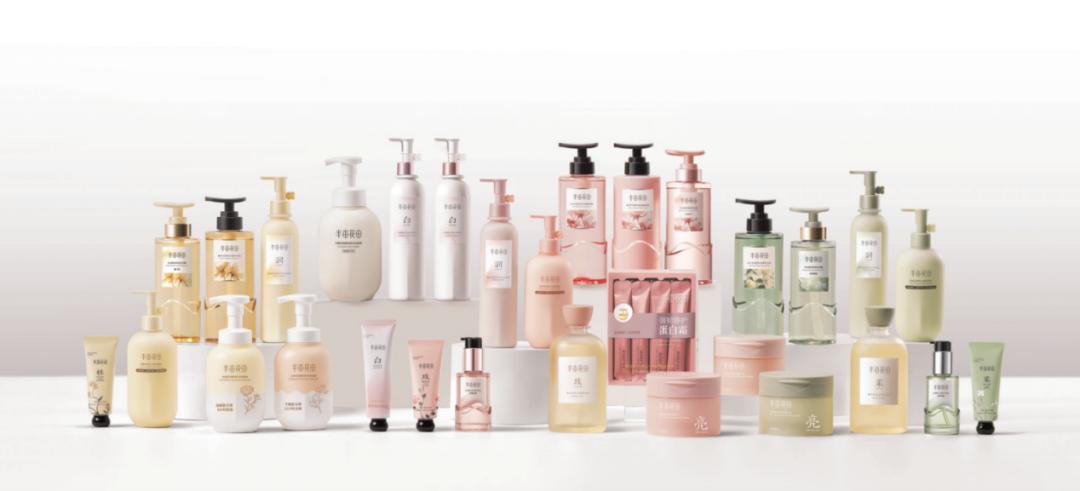
Core Viewpoint - The company Shandong Huawutang Cosmetics Co., Ltd., the parent company of the popular domestic brand "Banmu Huatian," is preparing for an IPO on the Hong Kong Stock Exchange, highlighting the ongoing trend of consumer brands seeking public listings in Hong Kong [2][4]. Company Overview - Banmu Huatian was founded by a couple from Shandong, who initially engaged in herbal tea business and later shifted focus to rose-based products, leveraging the region's rich history in rose cultivation [3]. - The brand gained significant traction on Douyin (TikTok) and has become a leading player in the domestic market for body care products, achieving over 1 billion yuan in sales in 2019 [3][10]. Financial Performance - The company reported revenues of 11.99 billion yuan in 2023, projected to grow to 14.99 billion yuan in 2024 and 18.95 billion yuan in the first three quarters of 2025, with adjusted net profits increasing correspondingly [10]. - The body care segment is the primary revenue driver, accounting for 41.8% of total revenue in the first three quarters of 2025, while the hair care segment has seen a nearly fivefold increase in revenue [10]. Market Position - According to Frost & Sullivan, Banmu Huatian is the leading domestic brand in body lotion, body scrub, and cleansing mousse as of 2024 [8]. - The average price point for the company's products is around 20 yuan, with a strategy to expand offline channels by reducing prices [11]. Sales Channels - Online sales remain the dominant revenue source, contributing 85.7% of total revenue in 2023, with Douyin being the primary platform, achieving a GMV of over 500 million to 750 million yuan in 2025 [11][12]. - The company has diversified its sales channels to include supermarkets, specialty stores, and new retail formats, although online sales continue to lead [11]. Competitive Landscape - The beauty and personal care market is highly competitive, with numerous brands vying for market share, and the company faces challenges from both established and emerging brands [13]. - The company has been investing heavily in marketing, with a sales expense ratio of 47.3% in the first three quarters of 2025, indicating significant financial pressure [13].
东北兄弟,要IPO敲钟了
投资界· 2025-05-31 06:50
Core Viewpoint - The article discusses the upcoming IPO of Lin Qingxuan, a high-end domestic skincare brand in China, which aims to become the first of its kind listed on the Hong Kong Stock Exchange, amidst a wave of consumer companies seeking to go public in Hong Kong [2][15]. Company Overview - Lin Qingxuan was founded by Sun Laichun, who has a background in both literature and pharmaceuticals, and the brand name originates from his pen name [4]. - The company has developed a strong presence with 506 retail stores across China and has sold over 30 million bottles of its signature camellia oil [2][7]. - Lin Qingxuan's product line includes 188 SKUs, covering a full range of skincare products priced between 200 to 800 RMB [9]. Financial Performance - The company reported revenues of 691.15 million RMB in 2022, projected to grow to 1.21 billion RMB by 2024, reflecting a compound annual growth rate (CAGR) of 32.5% [10][11]. - Gross profits for the same period are expected to rise from 539.08 million RMB in 2022 to 997.66 million RMB in 2024 [11]. - The adjusted net profit is projected to shift from a loss of 3.66 million RMB in 2022 to a profit of 200 million RMB in 2024 [10][11]. Market Position - Lin Qingxuan is ranked first among domestic high-end skincare brands in China by retail revenue and is the only domestic brand among the top 15 high-end skincare brands, which includes international competitors [9][10]. - The brand has successfully positioned itself in the market by focusing on independent development of core ingredients and technologies related to skincare [10]. Recent Developments - The company has embraced a dual-channel sales strategy, integrating online and offline sales, and has become a pioneer in live-streaming sales in the beauty sector [10][12]. - Lin Qingxuan has recently completed multiple rounds of financing, with significant investments from firms like SIG and others, marking a shift in its approach to capital [12][14]. Industry Context - The article highlights a surge in consumer companies seeking IPOs in Hong Kong, with notable examples including brands like Mixue Ice City and Pop Mart, which have seen significant market success [15][16]. - The changing sentiment towards Hong Kong as a viable market for IPOs is noted, with increased interest from investors and companies looking to capitalize on the global capital market [17][18].