熵减

Search documents
东海农商银行:聚焦四个维度 强化能力建设
Xin Hua Ri Bao· 2025-10-14 20:44
Core Viewpoint - Donghai Rural Commercial Bank is leveraging the "3741" strategy from the Provincial Joint Bank to achieve high-quality development through organizational activation, leadership, talent cultivation, and performance management [1] Group 1: Organizational Activation - The bank is breaking down hierarchical barriers and maintaining a crisis awareness through a "last place elimination" approach, while injecting external energy via talent acquisition [2] - It is transforming transaction flow data into credit approval criteria and innovating products based on external market demands [2] - A quarterly "market situation assessment meeting" is held to address service pain points and foster a culture of crisis awareness [2] Group 2: Leadership Development - The selection criteria for leadership positions emphasize practical performance, using metrics such as "inclusive and micro-loan issuance" and "coverage rates" [3] - Employees with three consecutive years of excellent performance in remote towns are prioritized for leadership roles [3] - A "rigid accountability" system is implemented to ensure that performance targets are met and rewarded accordingly [3] Group 3: Talent System - The bank is establishing a "1+3" training system that combines online learning with practical offline scenarios to enhance business skills [4] - A dual-skill training program is being implemented to develop versatile talents capable of both service and marketing [4] - An "innovation contribution award" is introduced to incentivize teams that develop unique products [4] Group 4: Performance Management - The core of performance management is a "value creation closed loop," focusing on strategic implementation through a balanced scorecard approach [5] - The performance indicators are designed to emphasize quality efficiency, customer service, process efficiency, and sustainable growth [5] - A "strong incentive + hard constraint" system is in place to reward top performers while providing training for underperformers [5]
如何做出巴菲特式的简单决策?不简单,不最好
Hu Xiu· 2025-09-24 01:57
Group 1 - The essence of value investing, established by Graham and Dodd, focuses on principles such as margin of safety, intrinsic value, and the evolution of investment strategies over time [1][2] - Buffett's approach to value investing incorporates qualitative analysis, emphasizing competitive advantages and intangible assets, which expands beyond Graham's focus on tangible assets [1] - The concept of "economic moat" is introduced, highlighting the importance of brand strength, management integrity, and the ability to generate cash flow for valuation [1] Group 2 - The internet has transformed business paradigms, leading to new characteristics in companies like META, Google, Amazon, Tencent, and Alibaba, which benefit from network effects and reduced marginal costs [3][4] - The rise of AI technology, supported by data, algorithms, and computing power, positions traditional internet giants favorably in the competitive landscape [4] Group 3 - The lifespan of companies has significantly decreased, with many once-prominent firms failing to adapt and ultimately disappearing, indicating that time can be an enemy of value investing [5][6] - The concept of entropy is introduced to explain the natural decline of companies over time, suggesting that maintaining vitality requires creating a dissipative structure [6][7] Group 4 - Companies must focus on reducing entropy to enhance their longevity and vitality, which involves being proactive, open to change, and ready to seize transformative opportunities [7][8] - The ability to maintain a strong "entropy reduction capacity" is crucial for a company's survival and success in the long term [8] Group 5 - Simple decision-making is emphasized as a key aspect of value investing, where identifying a few critical dimensions can lead to high-probability investment opportunities [9][10] - Examples of simple decisions include capitalizing on market downturns or temporary setbacks in companies that have strong fundamentals [11][12][13] Group 6 - The evolution of value investing must return to its foundational principles as outlined in Graham and Dodd's "Security Analysis," which serves as a guiding framework for investors [15]

【商道论衡】 ESG:一种追求熵减的投资理念
Zheng Quan Shi Bao· 2025-09-22 21:32
Core Insights - The article emphasizes the importance of ESG (Environmental, Social, and Governance) investment as a means to inject "negative entropy" into various industries, promoting green projects and sustainable development [2][4] - It discusses the relationship between capital input and the enhancement of order within economic systems, suggesting that ESG investments can facilitate efficient capital circulation and address environmental and social issues [2][3] Group 1: ESG Investment and Negative Entropy - ESG investment focuses on green and low-carbon projects, aiming to channel capital energy into financing parties, thereby promoting clean energy production and technological upgrades [2][4] - The concept of negative entropy is introduced as a way to describe the orderly state achieved through external energy input, which is crucial for the sustainability of life systems [2][3] Group 2: Capital and System Dynamics - The article highlights that the interaction between systems and external entities can slow down the loss of ordered energy, suggesting that capital can play a role in enhancing system order [2][3] - Continuous capital input leads to repeated productivity movements that enhance the order of green projects, thereby expanding the depth and breadth of economic and social development [2][3] Group 3: Investment Philosophy and Practices - ESG investment is portrayed as a process aimed at achieving mutual negative entropy between investors and investees, integrating environmental, social, and governance factors into the entire investment lifecycle [4][5] - The integration of social impact investment principles into ESG investment can help balance financial returns with environmental value creation, promoting a more holistic approach to investment [4][5]
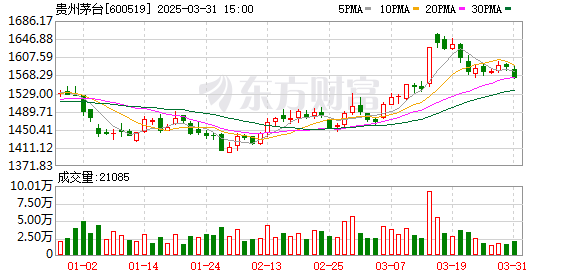
冲上热搜!任正非在《人民日报》头版发声 | 关于他和华为,他作序推荐了这本书
Sou Hu Cai Jing· 2025-06-12 15:52
Core Viewpoint - The article discusses Huawei's challenges in the semiconductor industry, highlighting Ren Zhengfei's acknowledgment of the technological gap with the U.S. and proposing innovative strategies to overcome these obstacles [10][14][16]. Group 1: Acknowledgment of Gaps - Ren Zhengfei openly admits that Huawei's single-chip technology is one generation behind the U.S., reflecting a rational understanding that recognizing gaps is the starting point for improvement [14]. - This admission aligns with the management philosophy emphasized in the book "Advancing in Paradoxes," which advocates for confronting contradictions as a means to progress [14][17]. Group 2: Innovative Approaches - In response to the physical limitations of chip manufacturing, Huawei is shifting focus towards software innovations such as "group computing" and "mathematical optimization," which echoes the idea that true innovation often comes from reinterpreting existing frameworks [15][17]. - The strategy indicates a departure from traditional hardware-centric approaches, suggesting a more holistic view of technological advancement [15]. Group 3: Ecosystem Development - Ren highlights the collective efforts of numerous Chinese semiconductor companies, indicating a shift from isolated breakthroughs to a more collaborative ecosystem aimed at achieving systemic advantages through specialization and industry chain synergy [16]. - This trend suggests a potential for cumulative local advantages that could lead to significant advancements in the overall semiconductor landscape [16]. Group 4: Embracing Paradoxes - The article emphasizes the importance of accepting contradictions and constraints as a source of innovation, with companies like Huawei transforming pressure into creative solutions [17]. - This perspective aligns with the notion that real progress often emerges from navigating difficult balances, as articulated in the referenced management literature [17].

贵州茅台一季度密集调研18省区市场,宣布完成相关销售指标
Nan Fang Du Shi Bao· 2025-03-31 09:51
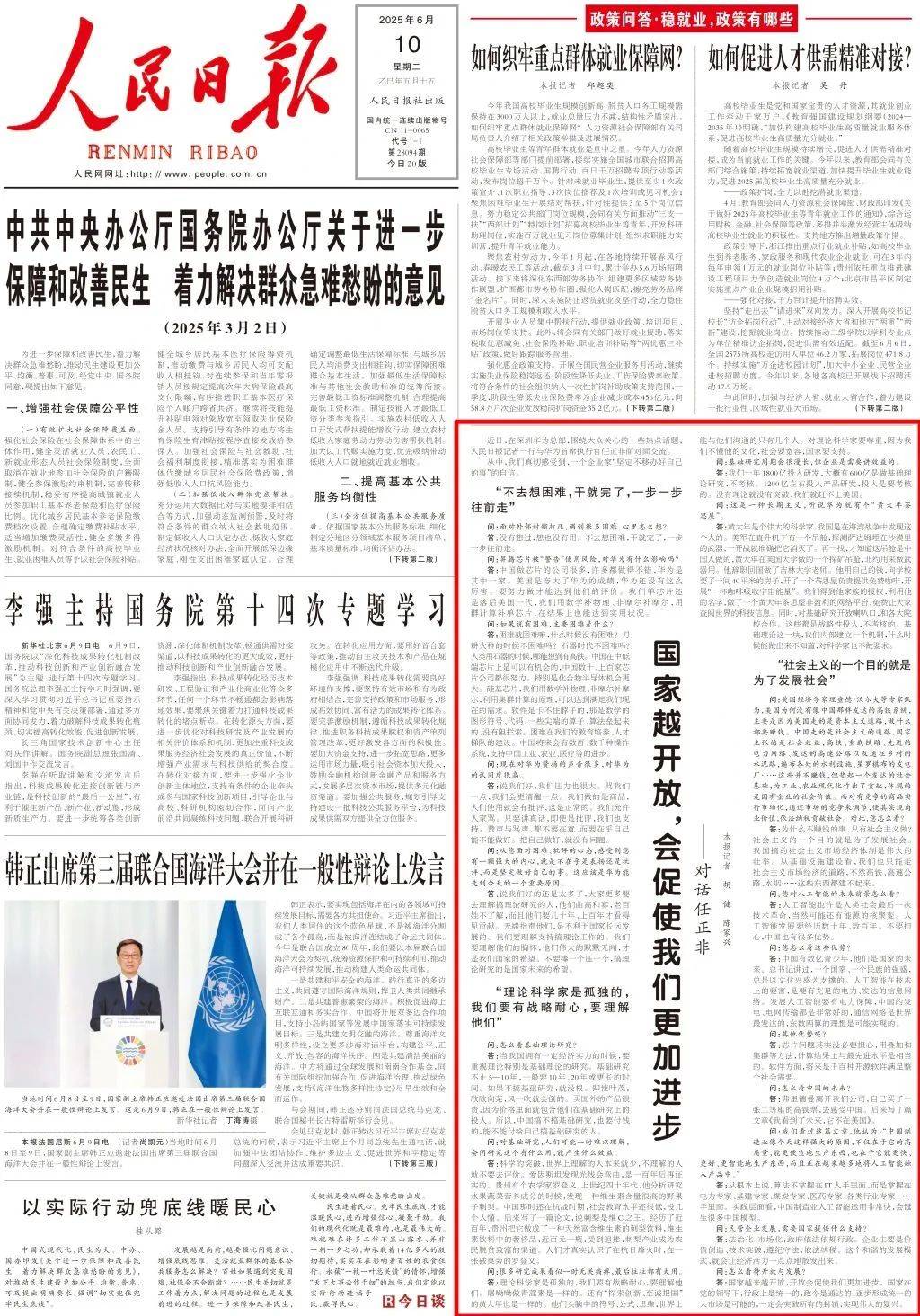
Core Insights - Guizhou Moutai conducted its largest and most frequent market research in Q1 this year, engaging with 984 distributors across 18 provinces [2] - The company reported steady growth in sales of Moutai liquor and sauce-flavored liquor, achieving all sales targets for Q1, which lays a solid foundation for annual goals [2] - The market dynamics have shifted, with Moutai recognizing the need for channel transformation from a "channel-centric" to a "consumer-centric" approach [3] Company Strategy - Guizhou Moutai is navigating a "triple period overlap" involving macroeconomic, industry, and company-specific cycles, while the fundamental demand for Moutai liquor remains unchanged [3] - The company plans to adjust the supply of various Moutai products to enhance consumer engagement and improve sales reach [3] - Recent market research indicates that Moutai's strategies are effective, with significant sales growth reported in the Beijing-Tianjin-Hebei region [4] Market Conditions - The white liquor industry is still undergoing deep adjustments, with changes in consumer demographics and overall consumption patterns [5] - Despite a slight recovery in Q1, the industry is not out of the adjustment phase, and consumers are increasingly focused on value for money [5] - Guizhou Moutai anticipates a challenging environment for the white liquor industry, particularly in the critical months of March, April, and May [5]