
定制快巴

Search documents
从“双城生活”到“同城体验”,看京津冀如何改写通勤日常?
Xin Lang Cai Jing· 2026-02-28 02:44
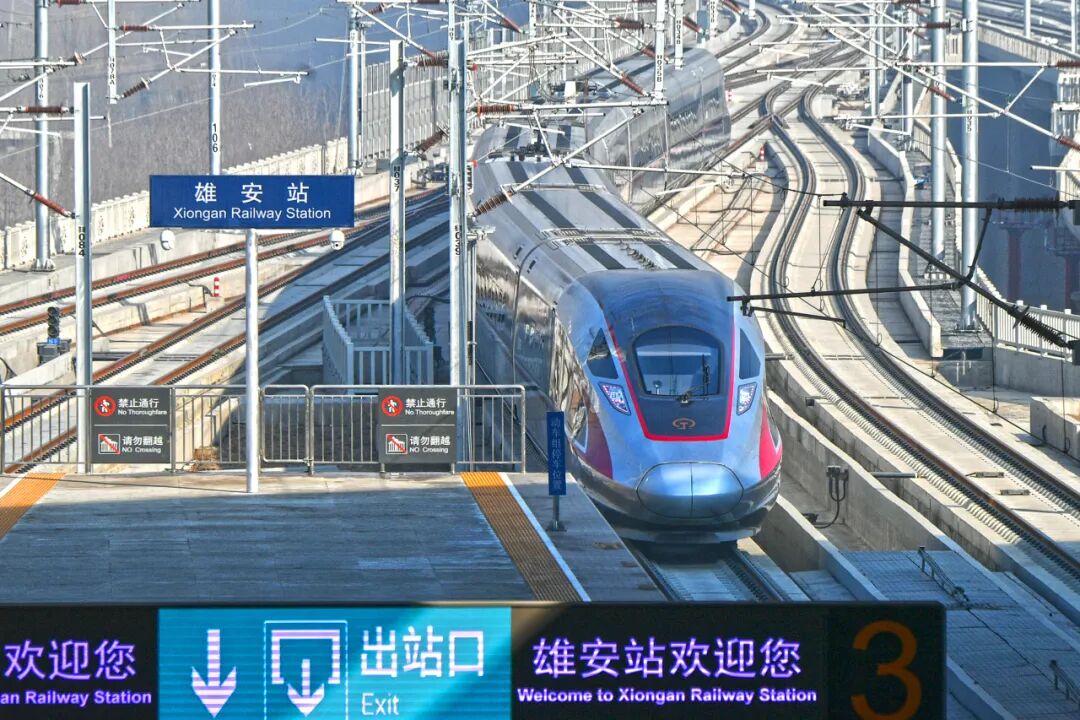
Core Insights - The integration of transportation networks in the Beijing-Tianjin-Hebei region has advanced significantly, transitioning from connectivity to rapid connectivity, with customized express buses and regular cross-province public transport operations enhancing commuter experiences [1][4] Group 1: Transportation Infrastructure Development - By the end of 2025, the operational railway mileage in the Beijing-Tianjin-Hebei region is expected to exceed 11,000 kilometers, marking a nearly 40% increase since 2014, while the total highway mileage will reach 11,000 kilometers, reflecting a 41.7% growth [2] - Major railway projects such as the Beijing-Harbin High-Speed Railway and the Beijing-Tanggu Intercity Railway have been completed, enabling travel between major cities in the region within 1.5 to 2 hours [2] Group 2: Cross-Province Commuting Solutions - The transportation department has launched 41 regular cross-province bus routes, serving 17 surrounding counties and cities, with an average daily passenger volume exceeding 230,000 [4] - Customized express buses have been introduced, with 12 main lines and over 50 branch lines, transporting an average of 9,500 commuters daily [4] Group 3: Technological Advancements - The Beijing section of the Jingxiong Expressway has become the first smart highway in the country to achieve full 5G coverage, while autonomous driving trials are being conducted on various routes [5] Group 4: Future Planning and Integration - The "Modern Capital Metropolitan Area Spatial Coordination Plan (2023-2035)" aims to integrate key sectors such as industry, transportation, ecology, and public services into a cohesive spatial framework [6] - Beijing will focus on enhancing the transportation network and optimizing customized bus services based on commuter demand, with plans to promote intercity bus operations from Tianjin to Tongzhou [6][8]

通州将围绕安贞医院通州院区、环球度假区等“量身定制”交通配套
Xin Jing Bao· 2026-01-30 09:20
Group 1 - The Beijing sub-center's "14th Five-Year" plan focuses on enhancing transportation infrastructure, with the Pinggu Line expected to be operational by the end of this year [1][2] - The sub-center will customize transportation support around key areas such as Anzhen Hospital's Tongzhou branch and the Universal Resort [1][3] - The plan includes the acceleration of M101 and Yizhuang lines, as well as the construction of additional stations to expand the rail network [2][3] Group 2 - The sub-center aims to strengthen interconnectivity and create a transportation model for the Beijing-Tianjin-Hebei region, addressing road bottlenecks and enhancing major road networks [2] - There will be a focus on optimizing traffic organization in the Grand Canal Business District and improving service capabilities in the southeast manufacturing corridor [3] - The initiative includes the development of a comprehensive bus connection system, introducing micro-circulation routes and "short, frequent, fast" lines to enhance last-mile connectivity [3]
京津冀交通一体化纵深推进 北京“八站两场”格局成型
Bei Jing Shang Bao· 2026-01-21 03:39
Group 1 - The core viewpoint of the article highlights Beijing's transportation development strategy, aiming for deep integration in the Beijing-Tianjin-Hebei region by 2025, transitioning from "interconnectivity" to "deep integration" [1] - The opening of Tongzhou Station and the completion of the Beijing-Tangshan intercity railway enhance the transportation network, covering 32 provincial-level administrative regions and 266 cities, facilitating personnel movement and material flow [1] - The annual passenger throughput at the aviation hub reaches 124 million, reflecting a year-on-year growth of 6.5%, indicating an expanding network and accessibility [1] Group 2 - The transportation system is focused on public needs, addressing nearly 6,000 issues raised by citizens and businesses, demonstrating a commitment to service improvement [2] - Over 60,000 various signs and markings for subways, buses, and roads have been standardized and updated, enhancing user experience [2] - The construction of 300 kilometers of "beautiful countryside roads" and the resolution of over 1,300 road damage issues indicate ongoing infrastructure improvements [2]
下好“一盘棋”,绘好“一张图”,拧成“一股绳” 河北廊坊市奋力在京津冀协同发展上走在全省前列
Ren Min Ri Bao· 2025-11-28 22:03
Core Viewpoint - Langfang City is actively integrating into the Beijing-Tianjin-Hebei coordinated development strategy during the 14th Five-Year Plan period, leveraging its geographical advantages and focusing on transportation, industry, public services, and ecology to accelerate its own development while serving the Beijing-Tianjin area [1]. Transportation Infrastructure - The construction of the "Railway on Beijing-Tianjin-Hebei" is accelerating, with Langfang's hub status becoming increasingly prominent, featuring 11 operational railways and a total length of 469 kilometers, forming a "four vertical and seven horizontal" railway network [2]. - The highway network has also expanded, with 13 highways completed, achieving a density of 182.97 kilometers per 100 square kilometers by the end of 2024, ranking among the top in the province [2]. Public Transportation - Langfang has launched 6 main and 33 branch lines of customized express buses, with an average daily passenger flow of 7,800, enhancing connectivity with Beijing and Tianjin [3]. Industrial Development - The city is focusing on modern commercial logistics and electronic information industries, with logistics enterprises establishing regional headquarters, and the logistics industry's added value accounting for 25.1% of the city's GDP [4]. - The electronic information sector is projected to exceed 70 billion yuan in revenue by 2024, with 15 companies entering the "Top 100 Electronic Information Enterprises in Hebei Province" [4]. Technological Innovation - From 2021 to 2024, the technology contract transaction volume with Beijing and Tianjin increased from 2.849 billion yuan to 14.492 billion yuan, totaling 35.23 billion yuan over four years [5]. Public Services - Langfang is enhancing educational cooperation with Beijing and Tianjin, with 155 schools engaging in various collaborative efforts [6]. - In healthcare, 89 medical institutions in Langfang have partnered with 124 medical institutions from Beijing and Tianjin, establishing a robust medical cooperation network [6]. Social Security Integration - All 283 designated medical institutions in Langfang have implemented cross-province direct settlement for various medical services, promoting social security card integration across regions [7]. Cultural and Tourism Development - Langfang is striving to create a new highland for cultural and tourism integration, hosting significant cultural events and enhancing tourism resources, with over 150 million visitors to key attractions [8]. Ecological Environment - The city is focusing on ecological protection and pollution control, achieving a 10.3% improvement in air quality index by October 2025 [9]. - Water quality has also improved significantly, with all monitored water quality sections meeting or exceeding the Class IV water body standard [9]. Regional Collaboration - Since 2024, Langfang has signed joint management agreements with neighboring districts in Beijing and Tianjin to combat environmental violations, establishing a data-sharing mechanism for environmental law enforcement [10].