
社会融资成本

Search documents
潘功胜:将灵活高效运用降准降息等多种货币政策工具
证券时报· 2026-03-06 07:57
Core Viewpoint - The article discusses the recent statements made by Pan Gongsheng, the Governor of the People's Bank of China, regarding monetary policy, market liquidity, and the exchange rate of the Chinese yuan. Group 1: Monetary Policy and Market Liquidity - In the past two months, approximately 2 trillion yuan of medium- and long-term funds have been net injected into the open market, indicating a generally loose financing condition in the economy [2] - The People's Bank of China will implement a moderately loose monetary policy in 2026, utilizing various tools such as reserve requirement ratio (RRR) cuts and interest rate reductions to ensure ample market liquidity [4] - The central bank aims to strengthen the execution and supervision of interest rate policies, ensuring that the comprehensive financing costs for enterprises remain low [3] Group 2: Exchange Rate Management - Pan Gongsheng stated that there is no necessity or intention for China to devalue its currency to gain trade competitiveness, as the yuan has appreciated against the US dollar this year due to various factors [5] - The current exchange rate of the yuan against the US dollar is within the median range observed in recent years, reflecting a stable economic outlook [5] Group 3: Policy Communication and Transparency - The central bank is focused on improving the transparency of monetary policy and enhancing the communication mechanisms to ensure effective transmission of policy rates to market rates [6] - Future monetary policy will gradually shift away from quantity-based intermediary targets, allowing for a more effective role of interest rate adjustments [7]


央行四季度货币政策报告6大信号【国盛宏观熊园团队】
Xin Lang Cai Jing· 2026-02-11 06:04
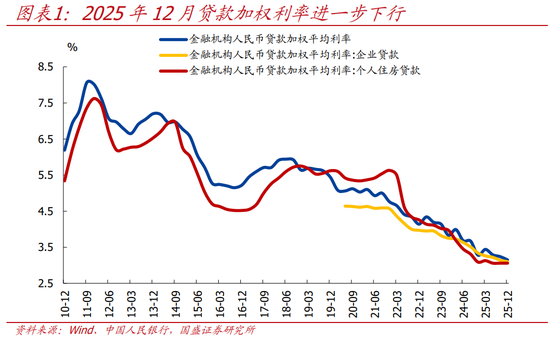
Core Viewpoint - The report maintains an optimistic outlook on the domestic economy and continues to advocate for a moderately loose monetary policy, emphasizing the importance of promoting stable economic growth as a key consideration for future monetary policy adjustments [2][18]. Group 1: Global Economic Outlook - The central bank has alleviated concerns regarding the global economy, believing that "global economic growth still has resilience in the short term," while noting the divergence in performance among major economies [6][22]. - The central bank continues to highlight persistent inflation, a cooling labor market, and increasing global trade uncertainties as significant issues [6][22]. - The report indicates that the central bank will enhance counter-cyclical and cross-cyclical adjustments to improve macroeconomic governance effectiveness [6][23]. Group 2: Domestic Economic Conditions - The central bank remains optimistic about the domestic economy, stating that "the economy is expected to continue to stabilize and improve in 2026," supported by a solid foundation for stable development, the growth of new economic drivers, and strong policy support [7][23]. - The report emphasizes the need to address the intertwining of old problems and new challenges in the domestic economy, as well as the deepening impact of external environmental changes [7][23]. Group 3: Inflation Insights - The central bank acknowledges that "inflation still has stickiness," and the process of reducing inflation remains to be observed [3][19]. - Domestic price trends are showing positive changes, with the central bank emphasizing the importance of promoting reasonable price recovery as a key consideration for monetary policy [3][19]. Group 4: Monetary Policy Adjustments - The monetary policy stance largely continues previous reports, with an added focus on promoting stable economic growth as a key consideration [9][25]. - The report indicates a cautious approach to interest rate cuts, shifting from "promoting a decrease in social financing costs" to "promoting low-level operation of social financing costs" [11][27]. - The weighted average interest rate for new loans in December was reported at 3.15%, a decrease of 0.09 percentage points from September, with corporate loan rates hitting a new low [20][28]. Group 5: Financial System Dynamics - The report discusses the "loss" of bank deposits, indicating that the reallocation of resident assets affects the structure of bank liabilities but does not equate to significant changes in the liquidity status of the entire financial system [13][29]. - The central bank outlines three main ways to enhance the coordination of monetary and fiscal policies, including maintaining market liquidity, optimizing financial resource allocation, and sharing risk costs to increase financing support for enterprises [14][30].
宏观点评:存款“流失”的变与不变—央行四季度货币政策报告6大信号
GOLDEN SUN SECURITIES· 2026-02-11 03:24
Group 1: Monetary Policy Signals - The central bank maintains an optimistic outlook on the domestic economy, indicating conditions for stable growth in 2026[2] - The monetary policy will continue to focus on "implementing a moderately loose monetary policy" and "promoting economic stability as an important consideration" moving forward[7] - The social financing cost policy has shifted from "promoting cost reduction" to "promoting low-cost operation," suggesting a more cautious approach to interest rate cuts[8] Group 2: Economic Conditions - The central bank acknowledges global economic resilience but highlights risks such as persistent inflation and labor market cooling[3] - Domestic inflation shows positive changes, with CPI rising to its highest level since March 2023 by the end of 2025, indicating a recovery in price levels[6] - The report emphasizes the need for coordinated monetary and fiscal policies to enhance policy effectiveness and support economic growth[9] Group 3: Banking Sector Insights - The report discusses the "loss" of deposits to asset management products, indicating a change in the structure of bank liabilities without significantly affecting overall liquidity in the financial system[5] - The weighted average interest rate for new loans in December 2025 was 3.15%, down 0.09 percentage points from September, with corporate loans at 3.1%[8]
央行四季度货币政策报告6大信号:存款“流失”的变与不变
GOLDEN SUN SECURITIES· 2026-02-11 03:16
Group 1: Monetary Policy Outlook - The central bank maintains an optimistic view on the domestic economy, expecting stable growth conditions for 2026, supported by solid foundations, new growth drivers, and strong policy support[2] - The monetary policy continues to emphasize "appropriate easing" and the importance of promoting stable economic growth as a key consideration[7] - The social financing cost outlook has shifted from "promoting cost reduction" to "promoting low-cost operation," indicating a more cautious approach to interest rate cuts[8] Group 2: Global Economic Concerns - The central bank has alleviated concerns about the global economy, citing short-term resilience in growth, but notes a divergence in performance among major economies[3] - Risks highlighted include persistent inflation, cooling labor markets, and increasing global trade uncertainties[3] - The central bank emphasizes the need for enhanced counter-cyclical and cross-cyclical adjustments to improve macroeconomic governance[4] Group 3: Inflation and Price Trends - Global inflation remains sticky, with ongoing monitoring of the de-inflation process, particularly in the U.S., U.K., and Japan[6] - Domestic inflation shows positive changes, with the CPI rising to its highest level since March 2023 by the end of 2025, supported by improved supply-demand matching[6] - The central bank prioritizes promoting reasonable price recovery as a key aspect of monetary policy[6] Group 4: Banking Sector Dynamics - The report discusses the "loss" of bank deposits, indicating that while asset reallocation affects bank liabilities, it does not significantly alter overall liquidity in the financial system[9] - The weighted average interest rate for new loans in December 2025 was 3.15%, down 0.09 percentage points from September, with corporate loans at 3.1% and personal housing loans stable at 3.06%[8]
银河证券解读货币政策委员会2025年第四季度例会:一季度的宽松路径将是降准和结构性降息
Di Yi Cai Jing· 2025-12-26 00:13
Core Viewpoint - The report from Galaxy Securities indicates that the monetary policy in the first quarter will focus on reserve requirement ratio (RRR) cuts and structural interest rate reductions to support economic growth and liquidity [1] Group 1: Monetary Policy Measures - The fiscal policy will be proactive, with monetary policy actively coordinating to support it, including a potential 50 basis points (BP) RRR cut, which could release approximately 1 trillion yuan in liquidity [1] - Structural interest rate cuts are seen as a more effective approach, with the central bank likely to target specific monetary policy tools to lower rates in key areas such as domestic demand, technological innovation, and financing for small and medium-sized enterprises [1] - A comprehensive interest rate cut will depend on external and internal stability, with the potential for 1-2 rate cuts throughout the year, totaling a reduction of 10-20 BP, which would influence the Loan Prime Rate (LPR) and subsequently affect loan and deposit rates [1]

瑞达期货国债期货日报-20251225
Rui Da Qi Huo· 2025-12-25 10:27
1. Report Industry Investment Rating - Not mentioned in the provided content. 2. Core Viewpoints - On December 25, the central bank continued to increase the volume of MLF operations, with a net investment of 100 billion yuan. The yields of short - term treasury bonds were strong while those of medium and long - term bonds were weak. Treasury futures declined across the board. The domestic economic fundamentals showed a marginal slowdown in industrial growth and social retail in November, with fixed - asset investment in continuous negative growth and stable unemployment. The financial data was structurally differentiated, with an unexpected increase in social financing but weak credit. The CPI improved in November, and the PPI decline marginally expanded. Overseas, the US consumption was strong, and the market expected future interest rate cuts. Overall, the domestic economic internal momentum needs to be boosted. Next year's monetary policy will remain moderately loose, but the urgency of short - term interest rate cuts is not high. Future policy will focus on structural tools, and short - term interest rates are expected to fluctuate [4]. 3. Summary by Relevant Catalogs 3.1 Futures Market Data - **Futures Closing Price**: T, TF, TS, and TL主力合约收盘价分别为108.195、105.990、102.510、112.510,较昨日分别下跌0.02%、0.03%、0.02%、0.24% [2]. - **Futures Trading Volume**: T、TF、TS、TL主力成交量分别为56411、49022、30026、95007,较昨日分别减少12732、5686、增加3525、减少15756 [2]. - **Futures Price Spread**: Different spreads showed various trends, such as the TL2603 - 2606 spread increasing by 0.00 to - 0.22, and the T2603 - 2606 spread decreasing by 0.02 to - 0.02 [2]. - **Futures Position**: T、TF、TS、TL主力持仓量分别为247563、156449、78241、143219,较昨日分别增加4062、1927、减少289、减少847. The net short positions of the top 20 in T、TF、TS、TL changed by - 203、666、 - 760、 - 1354 respectively [2]. 3.2 Bond Price and Yield Data - **CTD Bond Net Price**: Some CTD bonds' net prices declined, while a few increased, such as 250018.IB (6y) decreasing by 0.0285 to 100.517 and 250017.IB (2y) increasing by 0.0036 to 100.1542 [2]. - **Active Treasury Bond Yield**: The yields of 1 - year and 3 - year active treasury bonds decreased by 0.50bp and 0.75bp to 1.3350% and 1.3750% respectively. The 5 - year and 10 - year yields remained unchanged at 1.5800% and 1.8350% [2]. 3.3 Interest Rate Data - **Short - term Interest Rate**: The overnight silver - pledged repo rate increased by 4.80bp to 1.2480%, and the 7 - day silver - pledged repo rate increased by 18.68bp to 1.5668%. Some Shibor rates also changed [2]. - **LPR Rate**: The 1 - year and 5 - year LPR rates remained unchanged at 3.00% and 3.5% respectively [2]. 3.4 Policy and Market News - **Central Bank Policy**: The central bank's Monetary Policy Committee held its fourth - quarter meeting, emphasizing the integrated effect of incremental and existing policies, and maintaining stable capital markets without mentioning the real estate market. On December 25, the central bank carried out 400 billion yuan of 1 - year MLF operations, with a net investment of 100 billion yuan after deducting the maturity amount, marking the 10th consecutive month of increased MLF operations [2][3]. - **Real Estate Policy**: Beijing optimized its housing purchase restriction policy, including relaxing the purchase conditions for non - Beijing households and adjusting mortgage policies for multi - child families [3].
我国社会融资成本持续下降
Ren Min Ri Bao· 2025-11-13 22:10
Core Points - The People's Bank of China has reported a continuous decline in social financing costs this year, with the average interest rate for new corporate loans at 3.1%, down approximately 40 basis points year-on-year [1] - The average interest rate for new personal housing loans is also at 3.1%, down about 8 basis points from the previous year [1] - Various monetary policy tools have been employed to create a favorable monetary environment for economic recovery and financial market stability [1] - The transparency of corporate financing costs has improved, particularly benefiting small and micro enterprises [1] - Consumer loan interest burdens have been alleviated, supporting consumption capacity and demand [2] - The overall financing costs for enterprises and residents have decreased, indicating a loose monetary condition and ample capital supply [2] Summary by Sections Monetary Policy and Financing Costs - The People's Bank of China has utilized multiple monetary policy tools to lower social financing costs, resulting in a favorable environment for economic recovery and financial stability [1] - The average interest rates for new loans (both corporate and personal housing) have significantly decreased compared to the previous year, indicating effective monetary policy execution [1] Impact on Enterprises - The comprehensive financing cost for enterprises has become more transparent, with specific examples showing reduced costs for small businesses [1] - A logistics company in Yantai was able to secure a loan with no additional fees, reflecting the improved financing conditions [1] Consumer Financing - Policies such as consumer loan interest subsidies have effectively reduced personal interest burdens, enhancing consumer purchasing power [2] - A case study of a consumer loan for a car shows potential savings on interest due to these supportive policies [2]
各大银行行一锤定音,2025年起这类存款将喊停,今后存款要注意
Sou Hu Cai Jing· 2025-10-12 02:53
Core Viewpoint - The article discusses the decline in interest rates for bank deposits in China, highlighting the challenges faced by ordinary citizens in asset allocation as banks begin to phase out high-interest deposit products starting in 2025 [1][4][5]. Summary by Sections Deposit Rate Changes - As of September 2025, the average interest rate for fixed-term deposits across over 400 banks in China has decreased by 0.32 percentage points since the beginning of the year, reaching a five-year low [3]. - The People's Bank of China reported that the total RMB deposits in financial institutions reached 285.6 trillion yuan, with a year-on-year growth of 9.3%, but the growth rate has slowed by 0.5 percentage points compared to the previous year [1]. Types of Deposit Products Being Phased Out - "Tiered interest" deposit products, which adjust rates based on central bank interest rate changes, are being reduced from over 20 banks in 2024 to only 8 by September 2025 [4]. - "Step-up" high-interest deposits, which offer increasing rates over time, are also being discontinued, with one bank halting its "Step Up" product in May 2025 [4]. - Exclusive high-interest deposits targeting specific groups, such as the elderly or military personnel, are being eliminated, with over 30 banks already canceling such offerings in 2025 [4]. Reasons for Changes - Banks are halting high-interest deposits to manage funding costs more effectively as interest rate liberalization progresses, which is crucial for maintaining profitability amid rising non-performing loan pressures [5]. - The average net interest margin for commercial banks fell to 1.76% in the first half of 2025, down 0.25 percentage points from 2023, indicating challenges in profitability [6]. - Regulatory measures have been introduced to curb excessive high-interest deposit competition, which poses systemic risks to the financial market [6]. Investment Strategies - Diversification is emphasized as a key strategy in the current low-interest environment, suggesting a balanced allocation among various financial instruments such as savings, government bonds, and low-risk investment products [7]. - The average yield for fixed-income investment products was reported at 3.2% in Q3 2025, which remains competitive compared to traditional deposits [8]. - Caution is advised regarding high-interest deposit products that may have hidden conditions or penalties for early withdrawal, as these can diminish actual returns [8][11]. Long-term Financial Management - The article suggests that individuals should adapt to a prolonged low-interest rate environment by enhancing financial literacy and exploring diverse investment options beyond traditional bank deposits [12]. - For risk-averse individuals, government-supported retirement financial products are recommended, while those with higher risk tolerance may consider equity investments like index funds for potentially better long-term returns [11][12].

央行:社会融资成本处于历史较低水平,金融市场总体运行平稳
Sou Hu Cai Jing· 2025-09-26 11:30
Core Viewpoint - The People's Bank of China emphasizes the need for a moderately loose monetary policy to support high-quality economic development and create a favorable financial environment for economic recovery [1] Monetary Policy - The monetary policy has been appropriately loosened this year, with increased macroeconomic regulation efforts [1] - Various monetary policy tools are being utilized to strengthen counter-cyclical adjustments [1] - The effectiveness of the loan market quotation rate reform continues to be released, enhancing the efficiency of monetary policy transmission [1] Financial Environment - Social financing costs are at historically low levels, indicating a supportive environment for businesses [1] - The foreign exchange market is generally balanced, with a stable current account surplus and sufficient foreign exchange reserves [1] - The RMB exchange rate remains stable at a reasonable equilibrium level, with two-way fluctuations [1] Market Stability - Overall, the financial market operates smoothly, reflecting the effectiveness of the current monetary policy measures [1]
国债衍生品周报-20250803
Dong Ya Qi Huo· 2025-08-03 01:45
Group 1: Core View - After the Politburo meeting, macro - policies continue to exert force, and Treasury bond futures may fluctuate and consolidate in the short term [3] Group 2: Factors Affecting the Bond Market Bullish Factors - The Politburo meeting set the tone for a moderately loose monetary policy, promoting a decline in social financing costs and supporting the bond market sentiment [3] - After the Politburo meeting, the anti - involution statement was mild, and no unexpected growth - stabilizing policies were introduced. The end of negative news promoted market improvement [3] Bearish Factors - The anti - involution policy on the supply side boosts the inflation expectation of industrial products, short - term suppressing the bond market sentiment and causing the yield to rise [3] - Policy expectations and risk sentiment dominate the market. The bond market has fallen sharply since early July, and the long - term Treasury bond yield is close to 1.75% [3] Group 3: Data Presented Treasury Bond Yields - Data on 2Y, 5Y, 10Y, 30Y, and 7Y Treasury bond yields from 2024/04 to 2025/04 are presented [4] Funding Rates - Data on deposit - type institutional pledged repurchase weighted average rates (1 - day, 7 - day) and 7 - day reverse repurchase rates from 2023/08 to 2025/04 are shown [4] Treasury Bond Term Spreads - Data on 7Y - 2Y and 30Y - 7Y Treasury bond term spreads from 2024/04 to 2025/04 are presented [5] Treasury Bond Futures Positions and Trading Volumes - Positions and trading volumes of 2 - year, 5 - year, 10 - year, and 30 - year Treasury bond futures are presented with different time intervals [7][8] Treasury Bond Futures Basis - Data on the basis of the current - quarter contracts of 2 - year, 5 - year, 10 - year, and 30 - year Treasury bond futures are presented with different time intervals [9][10][11][13] Treasury Bond Futures Inter - period Spreads - Data on the inter - period spreads (current - quarter minus next - quarter) of 2 - year, 5 - year, 10 - year, and 30 - year Treasury bond futures are presented with different time intervals [15][17][18][19] Treasury Bond Futures Cross - variety Spreads - Data on TS*4 - T and T*3 - TL cross - variety spreads are presented with different time intervals [20][21]