科学素养

Search documents
航天英雄陈全大校走进望海园中学
Xin Lang Cai Jing· 2026-01-27 16:55
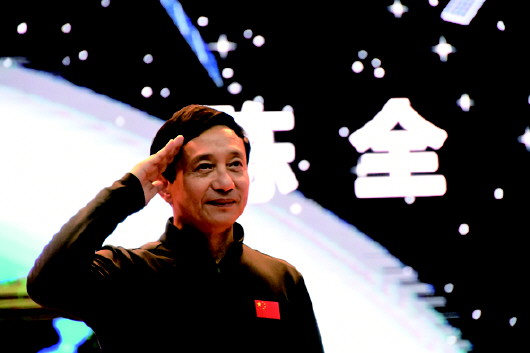
Core Viewpoint - The event at Weihai Wanghaiyuan Middle School featured astronaut Chen Quan, who inspired students with his experiences in aerospace, emphasizing the importance of perseverance and the spirit of exploration [2][4]. Group 1: Event Overview - The event included a unique aerospace-themed lecture by Chen Quan, a senior colonel and astronaut, aimed at igniting students' dreams of space exploration [2]. - Chen shared his journey from being a fighter pilot to becoming one of China's first astronauts, highlighting the rigorous training and challenges faced during the selection process [4]. Group 2: Student Engagement - Students actively participated in the interactive session, showcasing their scientific knowledge and asking insightful questions about space and astronautics, which impressed Chen [5]. - The school organized a creative project where students created works related to aerospace from various academic perspectives, demonstrating their understanding of the aerospace spirit [5][6]. Group 3: Educational Impact - The event was not just a lecture but a significant educational experience, blending scientific knowledge with patriotic values, as noted by the school officials [6]. - The school plans to continue developing "aerospace spirit" themed courses to instill values of hard work, combat readiness, problem-solving, and dedication among students [6].

“我的探月计划”新书带领小读者解锁航天科技
Zhong Guo Xin Wen Wang· 2026-01-12 11:03
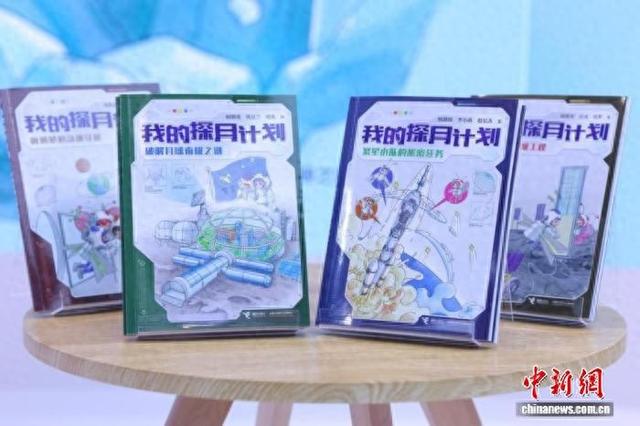
Core Perspective - The book series "My Lunar Exploration Plan" aims to engage young readers in space science through storytelling and interactive content, fostering scientific literacy and a spirit of exploration [1][3]. Group 1: Book Overview - The series consists of four volumes designed to connect children with cutting-edge technology related to lunar exploration [3]. - The main characters, "Captain Firefly," "Doctor Butterfly," and "Doctor Wasp," are used to illustrate the spirit of space exploration as they embark on a journey to the moon [3]. - The book aims to simplify complex knowledge of the lunar exploration program into understandable stories for children [3]. Group 2: Educational Approach - The series introduces a project-based thinking model to help children understand the scientific principles behind lunar exploration [3]. - It challenges the misconception that only those proficient in mathematics and science can pursue careers in aerospace, highlighting the need for diverse talents in the field [3]. - The book serves as an "invitation" for children to engage actively in space exploration challenges, encouraging them to think like aerospace engineers [3]. Group 3: Collaborative Initiatives - The deputy director of the Beijing Planetarium, Qi Rui, suggested extending the book's impact through collaboration with venues, creating resource packages that link knowledge points with corresponding exhibits [3]. - This collaboration aims to enhance interactive learning experiences, breaking the traditional boundaries of science popularization [3].

“跨学科主题学习”“项目式学习”增强学生实践能力 中小学生科学素养稳步提升
Yang Shi Wang· 2025-12-17 05:05
Core Viewpoint - By 2025, the scientific literacy of primary and secondary school students in China is expected to steadily improve, with average scores increasing by 4.5% from 2024 and 6.3% from 2023, indicating a consistent upward trend over the past three years [3]. Group 1: Educational Initiatives - The Ministry of Education has implemented new measures such as "cross-disciplinary thematic learning" and "project-based learning" to enhance students' scientific literacy and transform science education [5]. - In Beijing's Dongcheng District, schools are collaborating with universities to create "zero-carbon" courses, integrating inquiry-based learning at the primary level [7]. - The focus has shifted from merely learning to applying knowledge, emphasizing practical use and problem-solving skills [9]. Group 2: Resource Allocation and Development - There is still a significant shortage of professional science teachers across various educational stages, prompting the Ministry of Education to set targets for laboratory space and equipment availability by 2026 [10]. - The Ministry has established a collaborative mechanism involving 241 experimental zones and 1,862 experimental schools, along with partnerships with 14 universities [11]. Group 3: AI Integration in Education - The Ministry of Education plans to actively promote the integration of artificial intelligence in the development of science education for primary and secondary schools [10]. - Schools like Nanyu Middle School in Chongqing and Jing Shan School in Beijing are utilizing AI to enhance student engagement in subjects like chemistry, physics, and biology [14][16].
播撒科学种子,点亮少年儿童成才梦想——全国各地多举措推动科学教育高质量发展
Xin Hua Wang· 2025-12-16 06:47
Group 1 - The article highlights the ongoing efforts across China to enhance science education in primary and secondary schools, aiming to inspire children's dreams of success and contribute to national technological advancement [1][2] - Various educational departments are optimizing science curricula, innovating teaching methods, and enriching resource supply to improve the effectiveness of science education [1][3] - Schools are implementing diverse teaching approaches such as project-based learning and interactive methods to cultivate students' innovative thinking and problem-solving skills [2][3] Group 2 - The integration of school-based science education with social life, industry development, and advanced research is being strengthened, particularly in urban areas like Beijing [2] - In rural regions, schools are utilizing local resources to enhance students' observational and critical thinking skills through nature-based activities [2][3] - Collaborative efforts among multiple departments are essential for building a high-quality educational ecosystem, with initiatives like funding for educational projects and the establishment of science practice bases [3]
【8点见】住建局局长回应评审名单照搬人名大全
Yang Shi Wang· 2025-12-06 00:07
Group 1 - The National Development and Reform Commission has allocated a total of 35.5 billion yuan for the year to support projects that replace labor with investment [2] - In November, the national railway sent a total of 184 million tons of coal to ensure winter heating [2] - The China Consumer Association and the China Market Supervision Administration have issued consumer tips ahead of the "Double Twelve" shopping festival [2] Group 2 - The South China Sea has seen increased tensions, with the U.S. Secretary of Homeland Security planning to expand the travel ban to over 30 countries [4] - Japan has initiated the 17th discharge of nuclear contaminated water into the sea [4] - The U.S. Navy has released the causes of three incidents involving "Super Hornet" fighter jet crashes [4] Group 3 - A construction site in Guangdong unearthed a cannon approximately 2 meters long, preliminarily identified as a Qing Dynasty city defense cannon [11]

2025年度中国媒体十大热词发布
Xin Hua She· 2025-12-05 14:43
Core Insights - The article discusses the release of the "Top Ten Hot Words in Chinese Media for 2025" by the National Language Resources Monitoring and Research Center, highlighting key themes and trends in Chinese media [1] Group 1: Key Themes - The ten hot words include "14th Five-Year Plan," "September 3rd Military Parade," "Global Governance Initiative," "DeepSeek," "Humanoid Robots," "Soochow Super," "Ticket Economy," "Childcare Subsidies," "Scientific Literacy," and "Cyber Ecology Governance" [1] - The selection process for these hot words involved utilizing a language information processing technology combined with manual post-processing, based on a corpus of over 1 billion character occurrences [1] Group 2: Context and Activities - The release is part of the "Chinese Language Review 2025" initiative, which will also include announcements of "Top Ten Internet Terms of the Year" and "Top Ten New Words of the Year" during the event [1]
“2025年度中国媒体十大热词”发布
Zhong Guo Xin Wen Wang· 2025-12-05 07:57
Core Insights - The "Top Ten Buzzwords in Chinese Media for 2025" were released, highlighting significant themes such as the "14th Five-Year Plan," global governance initiatives, and advancements in AI technology with the launch of the DeepSeek model [1][2]. Group 1: Economic and Policy Developments - The "14th Five-Year Plan" is crucial for implementing the strategic deployments of the 20th National Congress of the Communist Party of China, emphasizing the importance of planning and execution for national modernization [1]. - The introduction of the parenting subsidy policy aims to enhance family welfare and social well-being, promoting income growth while reducing burdens on families [5]. Group 2: Technological Advancements - The DeepSeek model, developed by Chinese startups, showcases innovation in AI technology with its user-friendly, open-source, and cost-effective features [2]. - The year 2025 marks the mass production of humanoid robots, shifting the focus from technology development to practical applications and commercialization [3]. Group 3: Cultural and Social Trends - The "Soo Super" initiative fosters regional identity through competitive events, stimulating a vast consumption chain from ticket sales to cultural tourism [3]. - The emergence of the "ticket root economy" addresses consumption upgrades and industrial collaboration, providing essential solutions for economic development [4]. Group 4: Education and Governance - The integration of cutting-edge technology into basic education aims to enhance students' scientific literacy, aligning with the "Guidelines for Science Education in Primary and Secondary Schools" [5]. - Continuous advancements in new technologies pose challenges for network ecological governance, necessitating the establishment of a comprehensive governance framework to maintain a healthy online environment [5].
科学教育公益行动:破局乡村科学课困境,筑牢创新人才根基
Hua Xia Shi Bao· 2025-06-07 06:56
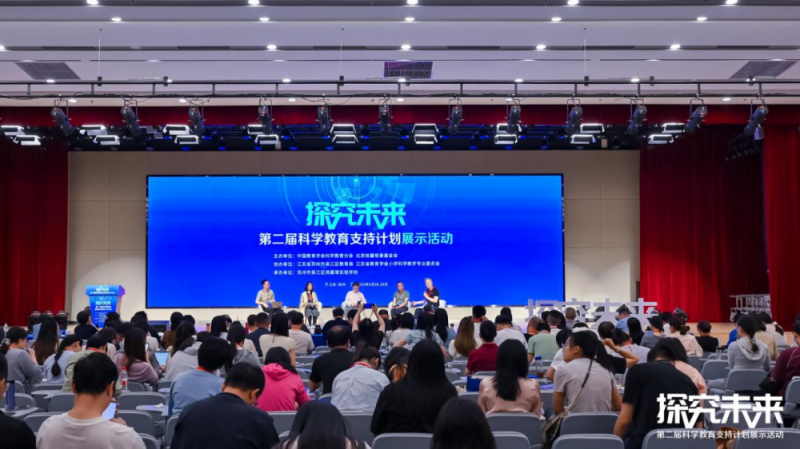
Core Viewpoint - The cultivation of scientific literacy is essential for students to adapt to future life, and scientific education plays a crucial role in enhancing other subjects and overall personal development [2][6]. Group 1: Importance of Scientific Literacy - Scientific literacy is a vital component of national quality and the foundation for social progress, as highlighted in the "National Scientific Literacy Action Plan (2021-2035)" issued by the State Council [2]. - The plan acknowledges significant achievements in scientific literacy construction but also points out issues such as low overall levels of scientific literacy and insufficient grassroots support [2]. Group 2: Recent Initiatives in Science Education - A recent public welfare event focused on innovative science education was held in Suzhou, Jiangsu, attracting over 500 experts and educators to discuss the latest achievements and future paths in science education [3]. - The event emphasized the transformation of science education from a marginal subject to a core competency, highlighting its role in fostering curiosity and intrinsic motivation among students [4][5]. Group 3: Challenges in Rural Science Education - Rural schools face significant challenges in science education, including a lack of dedicated teachers and necessary laboratory equipment, which hinders effective implementation [7]. - The involvement of public welfare organizations is seen as crucial in addressing these challenges by enhancing teacher capabilities and providing essential resources [7][8]. Group 4: Teacher Development and Recognition - The development and recognition of science teachers are critical for the advancement of science education, with calls for equitable treatment and support similar to that of core subject teachers [8]. - The second science education support plan received 346 submissions from across 30 provinces, indicating a growing interest and commitment to improving science education [9].