智能农机

Search documents
丹阳市召开创新发展大会 用实干实绩书写“智造名城、运河明珠”新篇章
Zhen Jiang Ri Bao· 2026-02-26 23:43
Group 1 - The core theme of the conference is "innovation development," emphasizing the need for practical actions to achieve results in the city's modernization efforts [1] - By 2025, a number of established companies are expected to take the lead, while key enterprises and emerging businesses will contribute significantly to innovation and industrial strength [1] - The government aims to enhance project diversity and support local enterprises while attracting high-quality projects [2] Group 2 - Manufacturing is highlighted as a critical lifeline, with a focus on major projects and the integration of cultural tourism and urban development [2] - The conference emphasizes the importance of upgrading industries, particularly in the optical industry through AI, and the integration of production, manufacturing, and trade [2] - There is a strategic push for emerging industries, particularly in smart agricultural machinery and brain-machine interface technology, to foster innovation and talent development [2] Group 3 - The conference stresses loyalty to the party and the nation, urging all participants to implement decisions effectively and work collaboratively for the city's development [3] - Recognition was given to advanced collectives and individuals for high-quality development in 2025, along with project signing ceremonies involving various companies [3]
筑牢实体经济“硬底盘”,潍坊跑出万亿城市“加速度”
Qi Lu Wan Bao· 2026-02-25 15:22
Group 1: Economic Development Goals - Weifang aims to achieve a GDP of 8,587.36 billion yuan by 2025, with a year-on-year growth of 5.5%, laying a solid foundation for its goal of becoming a trillion-yuan city [1] - The city emphasizes the importance of the real economy, with manufacturing as its "ballast stone," maintaining its position as the leading manufacturing hub in Shandong province for five consecutive years [1] Group 2: Manufacturing Sector - Weifang hosts 27 national-level and 204 provincial-level manufacturing champions, covering 37 out of 41 major industrial categories in the country, with industrial output exceeding 1.2 trillion yuan [1] - The city has developed a gradient cultivation system and a "9+3+N" industrial chain collaboration mechanism, focusing on national-level industrial clusters in power equipment and smart agricultural machinery [1] Group 3: Agricultural Sector - The total output value of agriculture, forestry, animal husbandry, and fishery in Weifang is projected to reach 1,409.7 billion yuan by 2025, with a comparable growth rate of 4.6%, making it a leader in Shandong province [2] - Weifang contributes significantly to national food production, with only 1.7% of the country's land and 1% of freshwater resources, producing 6.4% of the nation's grain and 16.8% of its vegetables [2] Group 4: Service Sector - The added value of the service industry in Weifang is expected to exceed 4,100 billion yuan during the 14th Five-Year Plan, with a target of 4,321.96 billion yuan by 2025, growing at 6.5% [2] - The city is actively promoting new consumption scenarios and expanding the supply of quality goods and services, including modern finance, technology services, and logistics [2] Group 5: Overall Economic Strategy - Weifang is focusing on a multi-faceted development strategy that integrates strong manufacturing, superior agriculture, and vibrant services to achieve its trillion-yuan city goal [3] - The year 2026 marks a critical point for Weifang as it embarks on its 15th Five-Year Plan, emphasizing the importance of the real economy in urban development [3]
研之有理|以产业为牵引推进教育科技人才一体发展
Xin Lang Cai Jing· 2026-02-23 22:47
Core Viewpoint - The article emphasizes the importance of integrating education, technology, and talent development in Heilongjiang to drive high-quality economic revitalization through a collaborative approach involving various sectors and resources [1]. Group 1: Education and Industry Integration - The integration of education and industry serves as a crucial link between educational supply and industrial demand, facilitating resource complementarity and precise supply-demand matching [2]. - Higher education institutions are encouraged to develop new majors aligned with strategic emerging industries such as aerospace, electronic information, and high-end equipment, while also focusing on talent-scarce areas like cultural tourism and modern services [2][3]. Group 2: Technology and Project Collaboration - The article outlines a framework for technology-driven projects where enterprises identify key technological challenges, and the government selects relevant research topics, creating a dynamic project database [2]. - Collaborative teams formed through education-industry integration are tasked with addressing critical technological challenges, promoting innovation through partnerships among universities, research institutions, and enterprises [2]. Group 3: Talent Development Mechanisms - A "revolving door" mechanism is proposed to facilitate the exchange of personnel between enterprises and educational institutions, allowing experienced professionals to contribute as "industry professors" [3]. - The evaluation system for educators will be reformed to prioritize practical experience and problem-solving capabilities, aligning talent assessment with industry needs [3]. Group 4: Role of Major Projects - Major projects are identified as essential for integrating education, technology, and talent, necessitating systematic support and collaboration among these elements [4]. - Educational institutions are encouraged to align their curriculum and professional training with the talent needs of significant engineering projects, ensuring a comprehensive approach to talent development [4]. Group 5: Innovation through Large Scientific Facilities - Large scientific facilities are highlighted as foundational platforms for innovation, capable of attracting and nurturing top scientific talent while enhancing the synergy between education, technology, and talent [7]. - Collaborative innovation centers involving management entities, universities, research institutes, and enterprises are proposed to leverage shared resources for technological advancements [7]. Group 6: Talent Recruitment and Evaluation - A targeted talent recruitment strategy is suggested to attract top-tier scientists and young talents globally, with a focus on contributions to large scientific facilities [8]. - The evaluation criteria for researchers and engineers involved in these facilities will be revised to emphasize tangible results and contributions [8].
哈尔滨深圳联动激活科技“富矿”
Xin Lang Cai Jing· 2026-02-19 21:59
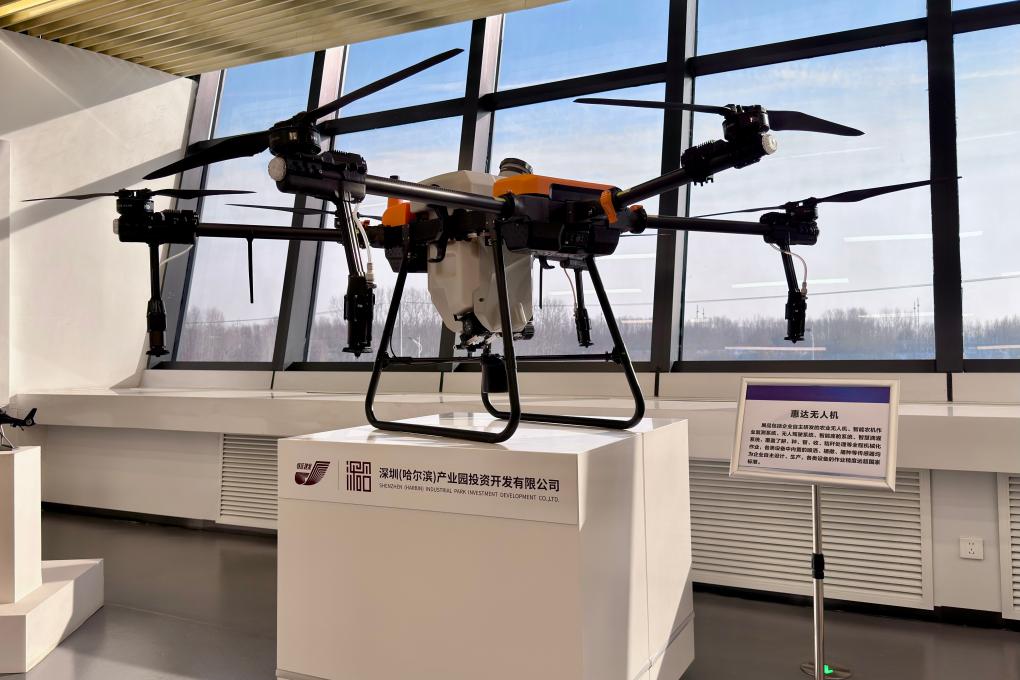
Core Viewpoint - The collaboration between Harbin and Shenzhen is fostering innovation and new production capabilities, exemplified by the establishment of the Harbin New Area Shenzhen (Harbin) Industrial Park, which serves as a model for cross-regional scientific and technological cooperation [1][2]. Group 1: Industrial Development - The Harbin New Area Shenzhen Industrial Park has become a hub for various industries, including smart agriculture, equipment manufacturing, and biomedicine, showcasing the potential for cross-regional innovation [1][2]. - The park has registered 717 companies with a total registered capital of 24.2 billion yuan, and the first phase of projects has achieved over 90% occupancy, generating cumulative revenue exceeding 17 billion yuan [3]. Group 2: Technological Integration - The park integrates research capabilities from Harbin with market opportunities in Shenzhen, facilitating the transformation of technological innovations into practical applications [3][4]. - Companies like Huida Technology have successfully developed agricultural drones by combining Shenzhen's advanced technologies with Harbin's agricultural practices, significantly enhancing operational efficiency [2][3]. Group 3: Investment and Support - The collaboration has attracted investments from Shenzhen, including support from major enterprises like China National Offshore Oil Corporation, enhancing the local business environment [6]. - The park has implemented a "Friday Meeting" platform to facilitate communication between government, enterprises, and universities, promoting resource sharing and innovation [8]. Group 4: Talent and Infrastructure - The park offers 1,355 talent apartments with rental discounts to attract skilled professionals, ensuring a conducive environment for innovation [8]. - The total planned area for the Harbin New Area Shenzhen Industrial Park is 26 square kilometers, with ongoing projects aimed at creating a comprehensive industrial ecosystem [9].
因地制宜发展新质生产力丨跨越2800公里的牵手:哈尔滨深圳联动激活科技“富矿”
Xin Hua Wang· 2026-02-19 06:55
Core Viewpoint - The collaboration between Harbin and Shenzhen, exemplified by the establishment of the Harbin New Area Shenzhen (Harbin) Industrial Park, is driving innovation and new productivity pathways in China, showcasing successful cross-regional cooperation in technology and industry development [1][5]. Group 1: Innovation and Technology Development - The Harbin New Area Shenzhen Industrial Park serves as a testing ground for institutional innovation and industry symbiosis, fostering sectors like smart agriculture, equipment manufacturing, and biomedicine [1]. - The park has seen the emergence of nearly 100 thriving tech companies, demonstrating the effectiveness of cross-regional collaboration [2]. - The integration of Shenzhen's advanced technologies, such as IoT and AI, with Harbin's agricultural practices has led to significant advancements in agricultural machinery, enhancing operational precision and efficiency [2][3]. Group 2: Economic Impact and Growth - The Harbin New Area Shenzhen Industrial Park has achieved rapid development, with the creation of a new industrial city in just two years, reflecting a construction speed of "one floor every two days" [5]. - By the end of 2025, the park is projected to have registered 717 companies with a total registered capital of 24.2 billion yuan, and the first phase of projects has already generated over 17 billion yuan in revenue [7]. - The park's operational projects have an occupancy rate exceeding 90%, indicating strong demand and successful integration of businesses [7]. Group 3: Strategic Collaboration and Resource Sharing - The park exemplifies a model of "research end (Harbin) + market end (Shenzhen)" integration, acting as an adapter and converter to match technology supply with capital demand [7]. - The collaboration has facilitated the introduction of investment from Shenzhen, enhancing local companies' access to resources and market opportunities [9]. - The establishment of a government-enterprise communication platform has improved interaction between startups and government, leading to better access to funding and policy support [12]. Group 4: Talent and Infrastructure Development - The park has developed 1,355 talent apartments with rental discounts to attract skilled professionals, enhancing the local talent pool [14]. - As a pilot for national technological innovation, the park has attracted multiple innovation service platforms and has a high occupancy rate in its incubators [14]. - Future plans include expanding the park to 26 square kilometers, focusing on industrialization and large-scale manufacturing to create a more conducive environment for business development [14].

科创赋能产业腾飞
Xin Lang Cai Jing· 2026-02-15 22:17
Core Viewpoint - Jiamusi City is focusing on the "3510" overall work layout and aims to achieve breakthroughs in technology-driven productivity by 2025, enhancing innovation capabilities and expanding characteristic industrial clusters to inject strong momentum into high-quality economic and social development [4] Group 1: Innovation Platform Development - Jiamusi City is implementing a core strategy of "national platform landing + provincial platform expansion," aiming to integrate quality innovation resources and achieve leapfrog development in high-end platform construction [5] - By the end of 2025, the number of national and provincial technology innovation platforms in the city is expected to increase to 90, a net increase of 10 platforms, representing a growth of 12.5% [5] - 309 enterprises have completed evaluations as technology-based small and medium-sized enterprises, with an entry rate of 99.68%, ranking second in the province [5] Group 2: Technology and Results Transformation - Jiamusi City is focusing on key industries such as intelligent agricultural machinery and new materials, promoting collaborative breakthroughs in key technologies with a total investment of 290 million yuan [6] - The city has seen a 30.6% year-on-year increase in the added value of high-tech manufacturing, ranking among the top in the province [7] - 404 technology contracts were registered in 2025, with a transaction value of 740 million yuan, reflecting a year-on-year growth of 25.6% [7] Group 3: Investment and Ecosystem Development - Jiamusi City has conducted eight investment promotion activities, establishing cooperation intentions with over 20 universities and enterprises, and signing four projects [8] - The city is deepening international technology exchange cooperation, expanding its "circle of friends" in technology [8] - The establishment of over 200 technology special commissioner expert teams is aimed at providing scientific planting guidance, with an expected average yield increase of 5.85% for major grain crops [8]
2026年一号文点评报告:现代化为矛,稳定生产为盾
China Post Securities· 2026-02-11 02:29
Industry Investment Rating - The investment rating for the agriculture, forestry, animal husbandry, and fishery industry is "Outperform the Market" [1] Core Insights - The report emphasizes the importance of modernizing agriculture while ensuring stable production as a shield for food security. The 2026 Central Document sets a target for grain production to remain around 1.4 trillion jin, highlighting the need for quality and efficiency improvements in agricultural production [4][6] - The focus on breeding has shifted from research to industrial application, indicating a faster pace in the commercialization of biobreeding technologies [4] - Comprehensive regulation of the livestock industry is emphasized, with a shift from monitoring pig production capacity to a more integrated approach across the entire supply chain [4][8] Summary by Relevant Sections Industry Overview - The closing index for the industry is 2936.45, with a 52-week high of 3158.8 and a low of 2448.98 [1] Key Policy Developments - The 2026 Central Document outlines six key areas for agricultural and rural modernization, including enhancing agricultural production capacity, promoting stable income for farmers, and innovating institutional mechanisms [3][4] Investment Recommendations - In the seed industry, the report suggests focusing on companies with strong breeding advantages such as Longping High-Tech, Denghai Seeds, and Shennong Seeds due to the anticipated restructuring and increased market concentration [6] - For the livestock sector, it recommends monitoring leading companies like Muyuan Foods and Wens Foodstuffs, as there is still room for production capacity adjustments [8] - The report highlights the potential benefits for smart agricultural machinery and related industries due to the emphasis on developing new agricultural production capabilities [8]
【省发展改革委】陕西发布政策手册和应用场景清单支持民企发展
Shan Xi Ri Bao· 2026-02-03 00:46
Core Insights - The recent release of the "Shaanxi Province Private Enterprise Support Policy Handbook (2026)" aims to enhance support for private enterprises through a comprehensive set of policies [1][2] - The handbook includes 225 policies across six categories, providing substantial financial and operational support to private enterprises [1] Policy Overview - The handbook covers six key areas: - 30 policies for resource assurance - 76 policies for cost reduction and efficiency improvement - 15 policies for financial support - 21 policies for financial assistance - 76 tax incentive policies - 7 policies for entrepreneurship and innovation [1] - Specific financial benefits include halving taxes for small-scale VAT taxpayers and small micro-profit enterprises, as well as tax deductions for R&D expenses [1] Application Scenarios - Alongside the policy handbook, 22 application scenarios were introduced, focusing on areas such as industry applications, social governance services, and cultural heritage protection [2] - The scenarios include 18 industry-specific applications, covering advanced technologies like smart agricultural machinery and urban intelligent transportation [2]
四地协同、多方合力,共绘长三角智能农机“创新图谱”
Xin Lang Cai Jing· 2026-01-27 22:08
Core Viewpoint - The establishment of the Yangtze River Delta Smart Agricultural Machinery Equipment Technology Innovation Alliance aims to overcome technological bottlenecks in the smart agricultural machinery industry and lead high-quality industrial upgrades, focusing on the integration of production, learning, research, and application [2][3]. Group 1: Formation and Objectives - The alliance consists of top research institutions, leading enterprises, industry associations, and supporting organizations in the region, with a mission to create an innovative ecosystem [2][3]. - The alliance is seen as a significant step in implementing the national agricultural modernization strategy and promoting regional collaborative innovation [3]. - The Yangtze River Delta region has strong industrial foundations and abundant innovation resources, making it well-positioned to become a national hub for smart agricultural machinery [3]. Group 2: Regional Collaboration and Contributions - Anhui Province aims to actively participate in the alliance, leveraging its rich application scenarios and complete supporting systems to contribute to national food security and rural revitalization [4]. - Jiangsu University, with the largest research team in agricultural machinery, is collaborating with local governments to enhance the agricultural modernization process [4]. - The establishment of the alliance in Zhenjiang is a testament to the local agricultural machinery advantages and aims to accelerate the development of smart agricultural machinery in the region [4]. Group 3: Bridging Research and Application - The alliance serves as a "transit station" and "accelerator" for technology transfer from research to practical application, addressing the needs of small and medium-sized enterprises [5]. - Companies like Zhejiang Guanghe Zhigu Ecological Agriculture Co., Ltd. are looking to the alliance for support in integrating advanced technologies into their operations [5]. - The alliance will provide real-world testing environments for member units to facilitate rapid technology iteration [5]. Group 4: Innovation and Collaboration Mechanisms - Several innovation sub-alliances focusing on key technologies and smart agricultural equipment have been established to tackle industry challenges [6]. - The alliance aims to create a collaborative platform for technology sharing and result transformation, enhancing the overall service capabilities of the industry [6]. - The goal is to build an open, efficient, and win-win platform to support rural revitalization and agricultural modernization [6]. Group 5: International Expansion - The agricultural machinery industry is at a critical juncture, facing both challenges and opportunities for transformation and globalization [7]. - The alliance will facilitate collective international market entry for companies, reducing costs and risks associated with overseas expansion [7]. - A signing ceremony for international cooperation was held, involving multiple companies to promote the global presence of the Yangtze River Delta's smart agricultural machinery industry [7].
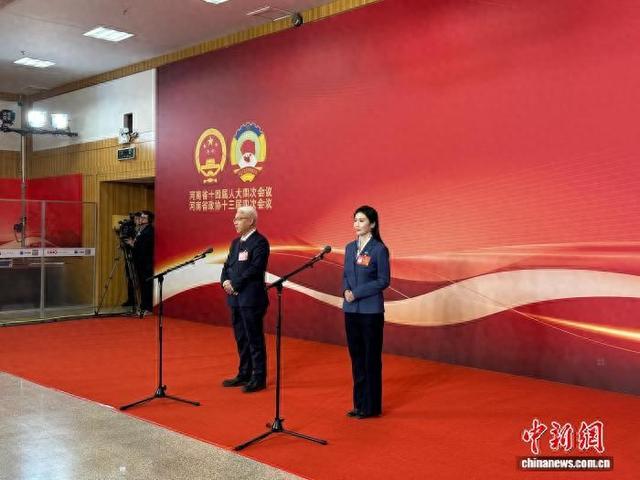
种地、胡辣汤、外卖小哥,透过河南两会“委员通道”看未来
Xin Lang Cai Jing· 2026-01-25 11:03
Core Insights - The article discusses the key topics addressed by Henan Provincial Political Consultative Conference members during the 2026 Two Sessions, focusing on high-quality development in Henan province, including artificial intelligence, ecological restoration, and urban governance. Group 1: Urban Governance and Community Support - The establishment of "small new gas stations" in Zhengzhou serves delivery workers, addressing their needs for meals, childcare, and charging stations, highlighting a community-focused governance approach [2] - Delivery workers are becoming "warm-hearted transmitters," actively participating in urban governance by reporting issues and contributing to community well-being [2] Group 2: Agricultural Innovation - The use of drones in agriculture allows farmers to receive detailed "health reports" on their fields, improving efficiency in resource management [2] - Henan's grain production has consistently exceeded 130 billion jin for nine consecutive years, supported by the construction and enhancement of high-standard farmland [2] - The digital economy in Henan is projected to exceed 2 trillion yuan during the 14th Five-Year Plan, contributing over 50% to GDP growth [4] Group 3: Logistics and Market Integration - Henan is positioning itself as a key hub in the national unified market, emphasizing the development of a modern logistics system to enhance domestic and international trade [6] - Recommendations include strengthening supply chain organization and implementing water network projects to support market integration [6] Group 4: Cultural Export and Global Engagement - The popularity of Henan's cultural products, such as Hu La Tang, in international markets exemplifies the province's efforts in cultural export and global engagement [7] - Suggestions include leveraging successful international IP models to transform local cultural symbols into globally appealing brands [7] - Collaboration with international certification bodies is recommended to facilitate the export of Henan's agricultural products, ensuring compliance with global standards [7]