
稳企业

Search documents
工商银行2025年新增信贷投放、债券投资4.8万亿元 创历史新高
Xin Hua Wang· 2026-03-27 15:37
Core Viewpoint - In 2025, Industrial and Commercial Bank of China (ICBC) significantly increased its support for the real economy, achieving a record high in new credit and bond investments totaling 4.8 trillion yuan [1] Group 1: Financial Performance - By the end of 2025, ICBC's total assets reached 53.48 trillion yuan, reflecting a year-on-year growth of 9.5% [1] - The bank's operating income for 2025 was 801.395 billion yuan, an increase of 1.9% compared to the previous year [1] - Net profit for 2025 was 370.766 billion yuan, showing a growth of 1.0% year-on-year [1] Group 2: Loan and Investment Highlights - As of the end of 2025, the balance of technology loans was approximately 6 trillion yuan, while loans directed towards the manufacturing sector amounted to 5.24 trillion yuan [1] - Green loan balance exceeded 6.7 trillion yuan, with a total of 125 billion yuan in green financial bonds issued in the domestic interbank market [1] - Agricultural loans surpassed 5 trillion yuan, and inclusive loans reached 3.6 trillion yuan, with a growth rate of nearly 23% [1] - Loans for core digital economy industries exceeded 1 trillion yuan [1] Group 3: Asset Quality and Capital Adequacy - By the end of 2025, ICBC's non-performing loan ratio was 1.31%, a decrease of 0.03 percentage points year-on-year [1] - The capital adequacy ratio stood at 18.76%, and the provision coverage ratio was over 210%, indicating a stable and reasonable level [1]

2026年滨州市春风行动暨就业援助季活动正式启动
Xin Lang Cai Jing· 2026-02-27 16:26
Group 1 - The event "2026 Binzhou Spring Action and Employment Assistance Season" was held on February 25-26, aiming to implement national and local policies for stabilizing employment, enterprises, markets, and expectations [1] - The recruitment fair utilized a combination of offline, online, and live streaming methods to effectively connect employers and job seekers, particularly targeting rural labor, unemployed individuals, and recent graduates [1] - Over 200 quality employers participated, offering more than 6,000 job positions across various sectors including manufacturing, services, and modern agriculture, with over 2,000 employment intentions reached during the event [1] Group 2 - The event marked the official launch of the 2026 Binzhou Spring Action and Employment Assistance Season, with plans for a series of recruitment activities to follow [2] - The event featured seven functional areas including recruitment zones, policy promotion, live job broadcasting, labor brand displays, career guidance, intangible cultural heritage showcases, and AI empowerment [1] - The online live broadcast attracted over 5,000 viewers, demonstrating significant interest in the job opportunities presented [1]
跃马扬鞭“十五五”|“订单稳、产线流畅、岗位踏实,是对‘稳’最实在的贡献”
Xin Lang Cai Jing· 2026-02-07 13:33
Core Viewpoint - The Jiangsu provincial government emphasizes the tasks of "stabilizing employment, enterprises, markets, and expectations," which are crucial for companies to integrate their development into the broader provincial growth strategy [1][3]. Group 1: Stabilizing Enterprises - The concept of "stabilizing enterprises" is closely linked to technological innovation, as highlighted by the company’s focus on carbon fiber and its equipment, addressing critical challenges in the industry [3][4]. - The company has maintained stable production capacity, with over 300 employees working during the Spring Festival, demonstrating its role as a stabilizer in the industrial ecosystem [3]. Group 2: Employment and Economic Impact - Employment is viewed as a significant aspect of public welfare, with the company recognizing that "stabilizing employment" should be rooted in healthy industrial development [4]. - The company has fostered over twenty supporting enterprises in the local area, creating a small industrial cluster that enhances job creation and stabilizes public sentiment [4]. - The company provides diverse job opportunities across various sectors, including technology research and development, smart manufacturing, and marketing, while also focusing on skill training and career development for local talents [4].

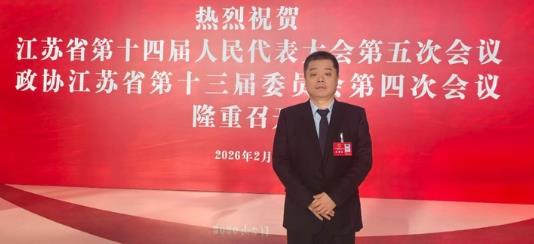
稳订单稳生产稳岗位做最实在贡献
Xin Hua Ri Bao· 2026-02-06 21:25
Group 1 - The provincial government's work report for 2026 emphasizes the tasks of "stabilizing employment, enterprises, markets, and expectations," highlighting the importance of integrating enterprise development into the broader provincial development strategy [1] - The chairman of Yingyou Group, Zhang Siwei, stresses that for manufacturing enterprises, "stability" translates into stable orders, smooth production lines, and secure employee positions, which are essential for contributing to overall stability [1] - The report's focus on fostering innovation and advanced manufacturing aligns with the "four stabilizations," encouraging private enterprises to take on social responsibilities and drive collaborative development within the industry [1] Group 2 - Yingyou Group maintains over 300 employees during the Spring Festival to ensure stable production capacity, demonstrating its role as a stabilizer within the industrial ecosystem [2] - Zhang Siwei emphasizes that "stabilizing employment" should be viewed in the context of healthy industrial development, as the company has fostered over 20 supporting enterprises in the local area through its carbon fiber industry, creating a small industrial cluster [2] - The company provides job opportunities across various dimensions, including R&D, smart manufacturing, and marketing, while focusing on systematic skills training and career development for local talents and returning workers to ensure sustainable and high-quality employment [2]
稳就业、稳企业、稳市场、稳预期
Xin Lang Cai Jing· 2026-01-20 18:52
Group 1 - The core viewpoint of the news is that the Ministry of Finance will implement a more proactive fiscal policy in 2026 to support employment, businesses, markets, and expectations, ensuring a good start for the 14th Five-Year Plan [1][2] - The fiscal policy will focus on increasing total expenditure, optimizing expenditure structure, improving efficiency, and enhancing economic momentum [2][4] - Specific measures include maintaining necessary levels of fiscal deficit, debt, and total expenditure, ensuring that overall expenditure increases and key areas are strongly supported [2][3] Group 2 - A package of policies will be introduced to stimulate domestic demand, with a focus on increasing private investment and promoting consumer spending [5][6] - The six policies include four aimed at supporting private investment and two focused on promoting consumption, such as interest subsidies for loans to small and micro enterprises and optimizing consumption loan policies [6][7] - The government plans to enhance the effectiveness of the "Two New" policies by optimizing support scope and subsidy standards, improving implementation mechanisms, and managing projects and funds comprehensively [9] Group 3 - The government is planning to promote high-tech industries and significant projects during the 14th Five-Year Plan, with a focus on new technologies and products [7][8] - The aim is to address the current issues of insufficient demand and supply, promoting a dynamic balance and virtuous cycle between supply and demand [8] - The government will also enhance the coordination of reform and innovation policies, improving the market access environment for new industries and new business models [10][11]
财政部:“硬核”支持稳就业、稳企业、稳市场、稳预期
Zheng Quan Ri Bao· 2026-01-20 16:25
Core Viewpoint - The Chinese government is committed to implementing a more proactive fiscal policy in 2026, focusing on increasing total expenditure, optimizing structure, improving efficiency, and enhancing economic momentum to ensure a strong start for the 14th Five-Year Plan [1] Fiscal Revenue and Expenditure - Fiscal revenue in 2025 is expected to show a "front low, middle high, and back stable" trend, with a 1.1% decline in Q1, followed by a 0.6% increase in Q2, and a 2.5% increase in Q3, with October showing a 3.2% growth [2] - The overall balance of revenue and expenditure is projected to be achievable, with stable growth in public budget revenue and strong expenditure supporting economic development [2] - Key expenditures in social security, employment, technology, education, and health have been well-supported, with over 10 trillion yuan allocated to these areas, accounting for over 40% of total public budget expenditure [3] Support for Technological Innovation - The fiscal policy is a crucial tool for supporting technological innovation, with measures including increased funding, tax incentives, and government procurement to promote high-level self-reliance in technology [4] - In 2025, 3.44 million enterprises received over 140 billion yuan in bank loans, with comprehensive financing costs reduced to below 5% [4] - Key areas of focus include enhancing government investment funds, supporting quality upgrades in key industries, and accelerating the application of major technological achievements [5] Policy Implementation - A comprehensive package of policies aimed at promoting domestic demand has been deployed, with a focus on early implementation to maximize impact [6] - Key policies include loan interest subsidies for small and micro enterprises, special guarantees for private investment, and support for consumer loans [7] - The budget for 2026 has made sufficient arrangements for the fiscal expenditures required for these policies, encouraging local institutions to actively engage in business [8]
一揽子政策公布后,财政部重磅定调:2026年财政总体支出力度“只增不减”
Hua Xia Shi Bao· 2026-01-20 08:39
Core Viewpoint - The Chinese government is implementing a series of proactive fiscal policies aimed at promoting high-quality economic and social development, with a focus on increasing overall fiscal expenditure and optimizing its structure for better efficiency and stronger economic momentum [2][14]. Fiscal Policy and Expenditure - In 2026, the overall fiscal expenditure will continue to increase, ensuring that the fiscal deficit, total debt scale, and expenditure remain at necessary levels, with a commitment to "only increase, not decrease" [2][14]. - The fiscal deficit rate for 2025 is set at around 4%, an increase of one percentage point from the previous year, with new government debt reaching 11.86 trillion yuan, up by 2.9 trillion yuan from the previous year [3][4]. Debt Management - The government maintains a relatively low debt-to-GDP ratio compared to the average of G20 countries, despite increasing deficits and debt issuance [4]. - In 2025, measures will be taken to replace 2 trillion yuan of hidden debt and allocate 800 billion yuan in new special bonds to support local government finances, thereby reducing the average interest cost of local debts by over 2.5 percentage points [6][7]. Support for Consumption and Investment - A special long-term government bond issuance of 1.3 trillion yuan in 2025 will support consumption and promote the sale of green, low-carbon, and intelligent products, with an expected sales boost of approximately 2.6 trillion yuan [5]. - Policies will be introduced to stimulate consumption through personal consumption loans and support for new consumption models, as well as adjustments to tax refund policies for duty-free shops [5]. Support for SMEs and Innovation - A new loan interest subsidy policy for small and micro enterprises will focus on 14 key industrial chains, including new energy, automotive, and medical equipment [8][9]. - The government will provide risk-sharing funds to support bond issuance for private enterprises and private equity investment institutions, mitigating investor losses [10]. Pension and Social Security - In 2025, the central government will allocate approximately 1.2 trillion yuan for basic pension insurance subsidies, with a 2% increase in pension levels for retirees [11]. Tax System and Market Development - The government aims to improve the local tax system to support the construction of a unified national market, including clarifying fiscal responsibilities and enhancing tax regulations [12]. Technological Innovation and Investment - The government will support the National Venture Capital Guidance Fund to invest in early-stage, small, long-term, and hard technology projects, promoting innovation in key industries [19]. - Financial support will be provided for technology innovation loans, with the central bank offering re-loan support to facilitate the transformation of manufacturing and digitalization of SMEs [20][21]. Export Tax Policy Changes - The cancellation of export tax rebates for solar and electronic products starting April 1, 2026, is expected to promote efficient resource utilization and address "involution" in competition [17].
稳企业强信心 筑牢高质量发展根基
Xin Lang Cai Jing· 2025-12-28 21:32
Core Viewpoint - The stability of enterprises is crucial for the economic development of China, with a focus on policies aimed at stabilizing employment, businesses, markets, and expectations to promote high-quality economic growth [1]. Policy Efforts - Guangdong's private enterprise, Qianli Chengzi Group, reported an annual revenue exceeding 80 billion yuan and a net profit growth of over 15% for five consecutive years, attributing its success to supportive policies [2]. - The central government has implemented a series of policies to enhance enterprise vitality, including financial support for upgrading manufacturing lines, which has reduced financing costs significantly [2]. Market Environment - The establishment of a fair and vibrant market environment is essential for stabilizing enterprises, with measures such as the implementation of the Private Economy Promotion Law and the introduction of a long-term regulatory mechanism for enterprise-related fees [3]. - Efforts to alleviate burdens on enterprises include clearing overdue payments, regulating administrative enforcement, and promoting financial support measures [3]. Innovation and Competitiveness - Companies like Shanghai Xijing Technology have successfully developed autonomous electric trucks, showcasing innovation as a key driver for competitiveness in the global market [4][5]. - Policies aimed at promoting private investment and technological innovation are being introduced, with specific measures to support small and medium-sized enterprises in their development [6]. Long-term Development - The focus on stabilizing enterprises is not only for immediate relief but also for building resilience and capacity for future challenges [6]. - The introduction of the National Venture Capital Guiding Fund aims to attract social capital to support early-stage enterprises, emphasizing long-term investment strategies [11]. Future Outlook - The upcoming "14th Five-Year Plan" outlines opportunities for various industries, including the establishment of a modern industrial system and the promotion of high-level technological self-reliance [10]. - New initiatives in sectors such as integrated circuits, new materials, and biomedicine are expected to provide favorable conditions for enterprise development [13].
2025年终经济观察|稳企业强信心 筑牢高质量发展根基
Xin Hua Wang· 2025-12-28 18:01
Group 1 - The core viewpoint emphasizes that stabilizing enterprises is crucial for promoting high-quality economic development in China, as highlighted by the central government's focus on "stabilizing employment, enterprises, markets, and expectations" [1][2] - The Guangdong private enterprise, Qianli Chengzi Group, reported an annual revenue exceeding 80 billion yuan and a net profit growth of over 15%, attributing its success to supportive policies amid global and domestic economic pressures [2] - A series of policy measures have been implemented to enhance enterprise vitality, including financial support for upgrading manufacturing lines and reducing financing costs [2][3] Group 2 - The establishment of a fair and vibrant market environment is essential for stabilizing enterprises, with measures such as the implementation of the Private Economy Promotion Law and the cleaning up of unreasonable restrictions in bidding processes [3] - Policies aimed at reducing burdens on enterprises include clearing overdue payments, regulating administrative enforcement, and promoting financial support measures [3][4] - The government is focusing on innovation-driven strategies to enhance enterprise competitiveness, as demonstrated by Shanghai Xijing Technology's successful development of the Q-Truck, which aligns with global trade trends [4][5] Group 3 - The introduction of targeted policies to promote private investment and the cultivation of new application scenarios indicates a commitment to creating more opportunities for enterprises [5][6] - The emphasis on long-termism and technological advancement is seen as vital for enterprises to transition from low-end to high-end production [6][7] - Small and medium-sized enterprises are encouraged to embrace innovation and adapt to market changes, with some reporting significant revenue growth [7][8] Group 4 - The upcoming "14th Five-Year Plan" outlines strategic opportunities for various industries, including the establishment of a modern industrial system and the promotion of high-level technological self-reliance [9][10] - The National Venture Capital Guidance Fund aims to attract social capital to support early-stage enterprises, indicating a long-term investment approach [10][11] - The focus on expanding effective investment in emerging industries and promoting reforms in technology utilization reflects a proactive stance towards enhancing the business environment [11][12]
中央经济工作会议目标任务解读丨抓好“四稳”激活发展内生动力
Xin Lang Cai Jing· 2025-12-28 06:02
Core Viewpoint - The article emphasizes the importance of the "Four Stabilities" (stabilizing employment, enterprises, markets, and expectations) as essential measures to enhance China's economic resilience and growth amid complex internal and external challenges [1] Group 1: Economic Policies and Measures - Since the Central Political Bureau meeting on April 25, 2025, a series of policies aimed at stabilizing employment and the economy have been implemented to invigorate economic development [1] - The Central Economic Work Conference reiterated the necessity of the "Four Stabilities" as a fundamental requirement for achieving quality and reasonable economic growth [1] - Experts suggest that the "Four Stabilities" are interdependent and must support each other to lay a solid foundation for economic improvement [1] Group 2: Challenges Facing Enterprises - Small and medium-sized enterprises (SMEs) are facing multiple challenges, including rising costs and insufficient demand, which are exacerbated by structural contradictions in the economy [1] - The overall recovery and transformation of SMEs are critical, as they are currently navigating a phase of both recovery and upgrade [1] - The article notes a trend of increasing "one-person companies" across the country, indicating a shift in how individuals are responding to economic pressures [1] Group 3: Employment and Labor Market - In the first eleven months of the year, 12.1 million new urban jobs were created, with an average urban unemployment rate of 5.2%, indicating a positive employment trend [1] - Employment is described as a key driver of demand, linking enterprise development with market vitality [1] - The article highlights the need for a systematic approach to address employment challenges, including the establishment of a unified public employment service platform [1] Group 4: Policy Recommendations - The article suggests that improving the business environment for SMEs is essential for stabilizing employment and economic growth [1] - It advocates for the use of digital technology to enhance policy services, transforming the approach from reactive to proactive [1] - Industry associations are encouraged to act as important nodes for policy transmission and feedback, helping to implement the "Four Stabilities" at the enterprise level [2]