
端侧人工智能

Search documents
湖南国科微电子股份有限公司2025年度业绩预告
Zhong Guo Zheng Quan Bao - Zhong Zheng Wang· 2026-01-26 23:25
Core Viewpoint - The company anticipates a negative net profit for the fiscal year 2025, primarily due to increased R&D and operational expenses, alongside declining sales revenue and gross margins [1][2]. Group 1: Performance Forecast - The performance forecast period is set from January 1, 2025, to December 31, 2025, with an expected net profit in the negative range [1]. - The forecast data is based on preliminary calculations by the company's finance department and has not been audited by registered accountants [3]. Group 2: Reasons for Performance Changes - Increased R&D and operational expenses have significantly impacted performance, with R&D investments in areas such as edge AI, automotive electronics, smart vision, and wireless LAN seeing substantial growth compared to the previous year [2]. - Sales revenue has decreased due to market changes, including rising raw material costs and adjustments in sales strategies, leading to a decline in the sales of certain products [2]. - The gross margin has been adversely affected as the company did not raise prices on key products despite increasing raw material costs, and new products only began to achieve gradual mass production towards the end of the reporting period [2]. - An increase in income tax expenses has also impacted net profit, as the deferred tax asset amount related to the company's losses has decreased under current accounting policies [2].
湖南国科微电子股份有限公司 2025年度业绩预告
Zheng Quan Ri Bao· 2026-01-26 23:11
Group 1 - The company expects a net profit to be negative for the fiscal year 2025, covering the period from January 1, 2025, to December 31, 2025 [1] - The performance forecast has not been audited by an accounting firm, but preliminary discussions have taken place without any disagreements [1][3] Group 2 - The increase in research and development expenses, as well as other period expenses such as sales, management, and financial costs, has significantly impacted the company's performance [2] - The company's operating revenue has decreased due to market changes, including rising raw material costs and adjustments in sales strategies, leading to a decline in sales for some products [2] - The gross profit margin has been negatively affected as the company did not raise prices for its main products despite increasing raw material costs, and new products only began to achieve gradual mass production towards the end of the reporting period [2] - The reduction in deferred tax assets related to the company's ability to offset losses has led to an increase in income tax expenses, further impacting net profit [2]
国科微(300672.SZ):预计2025年亏损1.8亿元–2.5亿元
Ge Long Hui A P P· 2026-01-26 14:31
Group 1 - The company expects a loss of 180 million to 250 million yuan in 2025, with a non-recurring loss of 210 million to 280 million yuan [1] - The increase in research and development expenses significantly impacted the company's performance, as it continued to invest in various fields such as edge AI, automotive electronics, smart vision, and wireless LAN [1] - Operating revenue decreased due to multiple factors, including rising raw material costs and adjustments in sales strategies, leading to a decline in sales for some products [1] Group 2 - The gross profit margin declined as the company did not raise prices for its main products despite increasing raw material costs, which further affected overall performance [1] - The gradual mass production of the company's main new products only began at the end of the reporting period, which also impacted the improvement of gross margins [1]
研发及期间费用增加,国科微预计2025年预亏1.8亿元-2.5亿元
Ju Chao Zi Xun· 2026-01-26 13:27
Core Viewpoint - The company, Guoke Micro, forecasts a significant loss for the fiscal year 2025, transitioning from a profit in the previous year to an expected net loss of between 180 million to 250 million yuan, indicating a substantial decline in performance [2]. Group 1: Financial Performance - The expected net profit attributable to shareholders is projected to be a loss of 180 million to 250 million yuan, compared to a profit of 97.15 million yuan in the same period last year, marking a shift from profit to loss [2]. - The anticipated net profit after deducting non-recurring gains and losses is expected to be a loss of 210 million to 280 million yuan, down from a profit of 11.55 million yuan in the previous year, reflecting a significant downturn [2]. Group 2: Reasons for Performance Decline - Increased R&D and period expenses are cited as a primary reason for the performance decline, with the company investing heavily in various sectors such as edge AI, automotive electronics, smart vision, and wireless LAN, leading to a substantial rise in R&D costs compared to the previous year [2]. - A decline in operating revenue and gross margin is attributed to changes in the market environment, including rising raw material costs and supply shortages, as well as adjustments in the company's sales strategy, resulting in decreased sales for some products [2]. - The company has not raised the sales prices of its main products despite increasing raw material costs, which has contributed to a lower gross margin, compounded by the fact that new products were only beginning to achieve mass production towards the end of the reporting period [2]. Group 3: Tax Impact - The reduction in deferred tax assets corresponding to the company's losses, as calculated under relevant accounting policies and standards, has led to an increase in current tax expenses, further impacting net profit [3].


国科微:预计2025年全年净亏损1.80亿元—2.50亿元
2 1 Shi Ji Jing Ji Bao Dao· 2026-01-26 10:59
Core Viewpoint - The company, Guokewai, is forecasting a significant net loss for the year 2025, with expected losses ranging from 180 million to 250 million yuan, and a loss of 210 million to 280 million yuan when excluding non-recurring gains and losses [1] Group 1: Performance Forecast - The company anticipates a net profit attributable to shareholders of a loss between 180 million and 250 million yuan for 2025 [1] - The expected net profit, excluding non-recurring items, is projected to be a loss of 210 million to 280 million yuan [1] Group 2: Reasons for Performance Changes - Increased R&D and period expenses are impacting performance, with significant growth in R&D investment across various sectors such as edge AI, automotive electronics, smart vision, and wireless LAN [1] - Sales, management, and financial expenses have also risen compared to the previous year, contributing to the overall performance decline [1] - Changes in market conditions, including rising raw material costs and supply shortages, have led to a decrease in sales revenue for some products, further affecting overall revenue [1] - The company's main products did not see a price increase despite rising raw material costs, resulting in lower gross margins [1] - New products developed by the company only began to achieve gradual mass production towards the end of the reporting period, which also hindered gross margin improvement [1] - An increase in income tax expenses due to a reduction in deferred tax assets related to the company's losses has further impacted net profit [1]
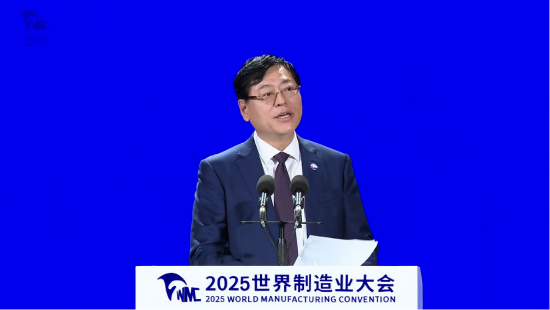
杨元庆:端侧AI激发新需求,联想AI PC出货量占比已超30%
Xin Lang Ke Ji· 2025-09-20 06:51
Group 1 - The core viewpoint is that the rapid development of edge AI is driving new demand, as highlighted by Lenovo's Chairman and CEO Yang Yuanqing at the 2025 World Manufacturing Conference [1] - Lenovo has been a pioneer in the domestic market by launching AI PCs, AI smartphones, and AI tablets since May of last year, with AI PCs now accounting for over 30% of the company's total PC shipments [1] Group 2 - Lenovo's vision revolves around "one body, multiple ends," which refers to a super-intelligent entity that spans across devices and ecosystems, enabling personalized data generation and storage through various intelligent terminal devices [3] - The company emphasizes that AI empowerment for enterprises goes beyond deploying mechanical arms and robots on production lines; it focuses on leveraging enterprise data and knowledge to optimize internal processes and enhance operational decision-making [3] - As a result of its intelligent transformation, Lenovo has achieved a 28% reduction in supply chain order delivery time, a 25% improvement in accuracy, and a 20% decrease in manufacturing and logistics costs, leading to better balance between supply and demand [3]

中芯国际上半年净利润同比增近40%
Zhong Guo Xin Wen Wang· 2025-08-28 12:02
Group 1 - The core viewpoint of the article highlights that Semiconductor Manufacturing International Corporation (SMIC) reported a significant increase in revenue and net profit for the first half of 2025, with revenue reaching approximately 32.35 billion yuan, a year-on-year growth of 23.1%, and net profit of about 2.30 billion yuan, up 39.8% [1] - SMIC's wafer foundry business generated revenue of approximately 30.35 billion yuan, reflecting a year-on-year increase of 25.9% [1] - The company attributes its positive performance to a stable growth in the smartphone market, an increase in personal computer sales due to a replacement cycle, and a robust expansion in consumer electronics and smart wearable devices driven by edge AI [1] Group 2 - The article notes that the domestic semiconductor supply chain is strengthening, with more foundry demand returning to local sources and supply chain channels actively stocking up [1] - SMIC's stock performance has been impressive, with a cumulative increase of over 30% in August [1]

中科创达2025年上半年实现营业收入33亿元,同比增长37%
Zheng Quan Shi Bao Wang· 2025-08-26 15:41
Core Insights - The company reported a revenue of 3.299 billion yuan for the first half of 2025, representing a year-on-year growth of 37.44%, with a net profit attributable to shareholders of 158 million yuan, up 51.84% [1] - Revenue from domestic markets reached 1.742 billion yuan, a growth of 12.96%, while overseas revenue amounted to 1.558 billion yuan, showing a significant increase of 81.41% [1] Group 1: Product and Technology Development - The company focuses on intelligent operating systems and edge AI products, providing a comprehensive "IP + services + solutions" software product and solution framework [1] - The newly launched DWater OS 1.0 Evo, an AI-native vehicle operating system, marks a significant advancement in the company's push towards fully AI-integrated vehicle systems [2] - The DWater OS integrates AI large model technology, enabling vehicles to have autonomous interaction and decision-making capabilities, transforming them from mere transportation tools to intelligent partners [2] Group 2: Market Expansion and Partnerships - The company has established strong collaborations with leading players in the chip, operating system, and cloud sectors, enhancing its ecosystem advantages [3] - The partnership with Volcano Engine has deepened, creating a comprehensive solution that spans multiple application scenarios [3] - The company aims to further solidify its advantages in the second half of 2025 by leveraging its accumulated industry and technological strengths to drive the development of intelligent vehicles globally [3] Group 3: Robotics and Automation - The company has rapidly developed AI robotics, launching two new robot products in April 2025, which have been implemented in automation projects for several Fortune 500 companies [2] - The sales and after-sales service network for the company's robotic products covers major domestic and international markets, with successful implementations in countries like Thailand, Vietnam, and the Middle East [2]

通信行业周报(20250623-20250629):Marvell投资者日指引积极,小米AI智能眼镜发布,建议关注AI及端侧产业链进展-20250629
Huachuang Securities· 2025-06-29 14:37
Investment Rating - The report maintains a "Recommendation" rating for the communication industry, expecting the industry index to outperform the benchmark index by more than 5% in the next 3-6 months [30]. Core Insights - Marvell's investor day highlighted a positive outlook, with significant growth expected in the data center market, projecting a potential market size increase from $75 billion to $94 billion by 2028, with a compound annual growth rate (CAGR) of 35% [15][14]. - The demand for customized AI chips is expanding, driven by a diverse customer base including traditional cloud computing companies and new AI infrastructure builders [15][14]. - Xiaomi launched its first AI smart glasses, positioning them as a personal smart device for the next era, showcasing advancements in edge AI technology [18][19]. Summary by Sections Industry Overview - The communication sector saw a weekly increase of 5.53%, outperforming the CSI 300 index by 3.58 percentage points [7][8]. - Year-to-date, the communication sector has risen by 7.36%, significantly outperforming the CSI 300 index, which has decreased by 0.33% [7][8]. Marvell Insights - Marvell's AI chips are transitioning from general GPU assembly to highly customized system-level collaboration, with XPU currently holding a 25% market share in AI computing [14][15]. - The fastest-growing segments within the data center market are expected to be the customized computing (XPU) market, projected to reach $40 billion with a CAGR of 47%, and the XPU component market, expected to reach $15 billion with a CAGR of 90% [15][14]. Xiaomi Product Launch - Xiaomi's AI glasses feature a lightweight design, advanced camera capabilities, and multi-modal smart interaction, aiming to enhance user experience in various applications [18][19][20]. - The glasses are equipped with a dual-chip architecture for efficient AI processing and energy management, supporting various functionalities including real-time translation and video calls [21][22]. Investment Recommendations - Key recommendations include focusing on major operators like China Mobile, China Telecom, and China Unicom, as well as leading companies in optical modules and AI chips such as NewEase, Tianfu Communication, and Shengke Communication [24].
