
端到端智能驾驶

Search documents
智能出行新浪潮,全球Robotaxi商业化提速
CMS· 2026-03-24 06:04
Investment Rating - The report maintains a "Recommended" investment rating for the Robotaxi industry, indicating a positive outlook for investment opportunities in this sector [3]. Core Insights - The Robotaxi industry is accelerating towards large-scale commercialization, driven by advancements in autonomous driving technology, favorable policies, and the maturation of the business ecosystem. Key players are rapidly iterating technologies and expanding globally, suggesting significant investment opportunities [1][10]. - Robotaxi represents a core application scenario for Level 4 (L4) autonomous driving, characterized by high technical challenges, clear business models, and substantial cost restructuring potential. The industry is expected to enter a phase of large-scale investment and application expansion from 2026 to 2030 [1][10]. Summary by Sections 1. High-Level Autonomous Driving Penetration - Autonomous driving is categorized from Level 0 to Level 5, with L3 and L4 being the focus of global regulatory and competitive landscapes. By 2025, the penetration rate of passenger cars with Level 2 and above in China is projected to reach approximately 66%, with significant growth in higher-level L2++ vehicles [14][21]. - The report highlights that the penetration of L2 and above vehicles is expected to cross 60% by 2025, marking a pivotal point for the widespread adoption of advanced driving assistance systems [21][22]. 2. Industry Catalysts - Multiple catalysts are propelling the Robotaxi industry towards commercialization: - **Policy Improvements**: Countries like China and the U.S. are gradually opening regions for L4 level paid operations, removing mandatory safety driver requirements, thus facilitating commercial operations [2][32]. - **Technological Advancements**: Hardware and algorithm iterations are enhancing safety redundancies, with companies like Waymo and Tesla leading the way in sensor fusion and vision-based approaches [2][32]. - **Cost Reductions**: The BOM (Bill of Materials) cost for vehicles has decreased significantly, enabling large-scale fleet deployments and reducing overall operational costs [2][32]. - **Unit Economics**: Robotaxi can save over 70% in labor costs, with some leading companies already achieving profitability in select cities, indicating a shift towards commercial viability [2][32]. 3. Competitive Landscape - The Robotaxi industry is characterized by a "U.S.-China dominance with multiple strong competitors" framework. In the U.S., Waymo and Tesla are leading, while in China, companies like Pony.ai, WeRide, and others are expanding aggressively [7][10]. - The report notes that the Robotaxi fleet size is increasing, with leading companies already operating fleets of over a thousand vehicles and expanding into more cities for paid operations [7][10]. 4. Market Size - The global autonomous driving mobility service market is projected to grow from $140 million in 2025 to $67.3 billion by 2030, with a compound annual growth rate (CAGR) of approximately 232.7%. In China, the market is expected to grow from $70 million to $39.4 billion during the same period, with a CAGR of about 253.6% [8][10].



乐道汽车沈斐:不跟风“大增程” 押注纯电+换电是长远更优选项
2 1 Shi Ji Jing Ji Bao Dao· 2025-12-02 14:00
Core Viewpoint - Leida Automobile's management emphasizes a commitment to a pure electric system that is "chargeable, swappable, and upgradable," rejecting the current trend of extended-range electric vehicles (EREVs) [1][2]. Group 1: Product Strategy - Leida's strategy focuses on enhancing user experience by avoiding the added weight and cost of range-extending systems, which are deemed unnecessary given the significant increase in charging infrastructure over the past five to six years [1]. - The company advocates for a battery-swapping model, allowing users to select a "reasonable capacity" battery pack and upgrade temporarily for long trips, which is seen as a more efficient use of funds [1]. - Currently, about 20%-30% of L90 users opt for the 60 kWh standard battery pack [1]. Group 2: Battery Safety and Management - Approximately 90% of Leida users rely on battery swapping and home charging, reducing risks associated with high charging rates [2]. - The battery swapping stations create a dynamic monitoring network that can detect minute damages and manage battery health proactively, a capability that fixed battery models cannot achieve [2]. Group 3: Market Performance and Challenges - In November, Leida delivered 11,794 vehicles, reflecting a 32% month-over-month decline [3]. - The primary challenge identified is increasing vehicle sales, which hinges on enhancing brand awareness and organizational capabilities [3]. - The company plans to continue product iterations based on family user needs and maintain market vitality through special edition models like the L90 Black Knight version [3].
智能驾驶双轨演进:政策“破冰”激活技术“竞速”
Zhong Guo Qi Che Bao Wang· 2025-12-01 09:19
Core Insights - The integration of intelligent driving technology is reshaping lifestyles at an unprecedented pace, driven by advancements in artificial intelligence and a unique market environment in China [1][3] - The Chinese intelligent driving industry is transitioning from a phase of rapid growth to one of high-quality development, with regulatory frameworks being strengthened alongside pilot programs for higher-level autonomous driving [3][4] - The rapid adoption of electric vehicles is providing an optimal platform for intelligent driving technologies, creating a virtuous cycle between electrification and intelligence [4][6] Industry Trends - The emergence of cognitive intelligence technologies is transforming intelligent driving from a rule-based tool to a cognitive-driven entity, with new architectures like end-to-end and VLA opening new possibilities for high-level autonomous driving [3][5] - The intelligent driving sector is witnessing a clear focus on L4-level scenario-based applications, with significant investments directed towards areas like unmanned delivery and logistics [6][7] - Key components of the supply chain, such as sensor manufacturers and chip companies, are receiving substantial funding, highlighting their foundational role in the development of autonomous driving [7] Regulatory Environment - The regulatory landscape is evolving, with policies being introduced to facilitate the testing and commercialization of L3-level and above autonomous driving technologies in multiple cities [3][4] - The dual approach of relaxing pilot programs while simultaneously enhancing regulatory frameworks is creating clearer competitive advantages for companies with core competencies [3][4] Investment Landscape - Investment activities in the intelligent driving sector are increasingly concentrated in later-stage financing, indicating a shift from technology validation to large-scale commercial applications [7] - Traditional automotive companies are actively participating in investments to address technological gaps, while collaborations within the supply chain are emerging to build ecological advantages [7] Future Outlook - The competition in intelligent driving is entering a new phase where success will depend on the ability to integrate technology, compliance, and commercialization effectively [9] - The industry is at a historical turning point, with the potential for new industry giants to emerge from the convergence of technology, policy, and market dynamics [8][9]

地平线吕鹏:端到端用“老司机”数据,用户不会被“点刹”困扰
2 1 Shi Ji Jing Ji Bao Dao· 2025-11-23 10:26
Core Viewpoint - The discussion highlights the advancements in intelligent driving systems, emphasizing the importance of smooth vehicle control and the integration of human driving data to enhance performance [1] Group 1: Intelligent Driving Technology - The current braking systems often face issues like abrupt stops due to rule interventions, leading to a lack of coherence in the system [1] - By utilizing comprehensive end-to-end learning from experienced human drivers, the occurrence of sudden braking can be significantly reduced, resulting in smoother vehicle control [1] - The company has achieved mass production this year, securing partnerships with over 10 automotive manufacturers for more than 20 vehicle models, indicating a strong market presence [1] Group 2: Future Vision - The company aims to lead the future of Full Self-Driving (FSD) technology with scalable mass production [1] - A slogan has been adopted to convey the vision of entrusting intelligent driving to the company, thereby allowing individuals to reclaim their time and focus on other aspects of life [1]
智能驾驶深度报告:世界模型与VLA技术路线并行发展
Guoyuan Securities· 2025-10-22 08:56
Investment Rating - The report does not explicitly state an investment rating for the smart driving industry Core Insights - The smart driving industry is experiencing rapid evolution driven by "end-to-end" and "smart driving equity" concepts, with significant growth in both new energy vehicle sales and smart driving functionalities [3][4][9] - The penetration rate of L2-level smart driving in new energy vehicles in China has increased from approximately 7% in 2019 to around 65% by the first half of 2025, indicating a strong correlation between new energy vehicle sales and the adoption of smart driving technologies [9][10] - The smart driving market is projected to exceed 5 trillion yuan by 2030, with a compound annual growth rate driven by technological advancements and increased consumer acceptance [15][16] Summary by Sections 1. "Equity + End-to-End" Accelerating Smart Driving Evolution - The smart driving industry has seen a significant increase in new energy vehicle sales, which has created a positive feedback loop for the adoption of smart driving technologies [9][10] - The penetration of L2-level smart driving features in new energy vehicles has rapidly increased, reflecting the growing consumer acceptance and market expansion of smart driving technologies [9][10] 2. End-to-End Smart Driving Review - The evolution of end-to-end smart driving can be categorized into four main stages, with advancements in perception, decision-making, and control processes [30][32] - The introduction of the "occupancy network" has enhanced environmental perception capabilities, allowing for more accurate and stable decision-making in complex driving scenarios [46][47] 3. VLA Technology Route - The VLA (Vision-Language-Action) model is emerging as a key driver of paradigm shifts in autonomous driving, integrating visual, linguistic, and action modalities into a cohesive framework [70][71] - The VLA model's development is divided into four stages, with significant advancements in task understanding and execution capabilities [76][77] 4. World Model Technology Route - The world model approach emphasizes physical reasoning and spatial understanding, representing a long-term evolution path for smart driving technologies [69][70] - The integration of world models with cloud computing is expected to enhance the iterative optimization of end-to-end smart driving systems [65][66]




首个转型AI公司的新势力,在全球AI顶会展示下一代自动驾驶模型
机器之心· 2025-06-17 04:50
Core Viewpoint - The article emphasizes the significance of high computing power, large models, and extensive data in achieving Level 3 (L3) autonomous driving, highlighting the advancements made by XPeng with its G7 model and its proprietary AI chips [3][18][19]. Group 1: Technological Advancements - XPeng's G7 is the world's first L3 level AI car, featuring three self-developed Turing AI chips with over 2200 TOPS of effective computing power [3][18]. - The G7 introduces the VLA-OL model, which incorporates a "motion brain" for decision-making in intelligent assisted driving [4]. - The VLM (Vision Large Model) serves as the AI brain for vehicle perception, enabling new interaction capabilities and future functionalities like local chat and multi-language support [5][19]. Group 2: Industry Positioning - XPeng was the only invited Chinese car company to present at the global computer vision conference CVPR 2025, showcasing its advancements in autonomous driving models [6][13]. - The company has established a comprehensive system from computing power to algorithms and data, positioning itself as a leader in the autonomous driving sector [8][18]. Group 3: Model Development and Training - The next-generation autonomous driving base model developed by XPeng has a parameter scale of 72 billion and has been trained on over 20 million video clips [20]. - The model utilizes a large language model backbone and extensive multimodal driving data, enhancing its capabilities in visual understanding and reasoning [20][21]. - XPeng employs a distillation approach to adapt large models for vehicle-side deployment, ensuring core capabilities are retained while optimizing performance [27][28]. Group 4: Future Directions - The development of a world model is underway, which will simulate real-world conditions and enhance the feedback loop for continuous learning [36][41]. - XPeng aims to leverage its AI advancements not only for autonomous driving but also for AI robots and flying cars in the future [43][64]. - The transition to an AI company involves building a robust AI infrastructure, with a focus on optimizing the entire production process from cloud to vehicle [50][62].
人形机器人专题:智能驾驶和人形机器人培训专题
Sou Hu Cai Jing· 2025-04-16 11:10
Core Insights - The report focuses on the trends and market dynamics in the fields of intelligent driving and humanoid robots, highlighting the expected explosive growth in advanced driving technologies and the emergence of humanoid robots in commercial applications by 2025 [1][4]. Intelligent Driving - Advanced driving technology is anticipated to enter a phase of explosive growth, with a projected penetration rate exceeding 15% by 2025 and potentially surpassing 70% in the next 2-3 years, significantly altering the automotive landscape [1][4]. - The Robotaxi segment is reaching a critical turning point, with costs expected to align with ride-hailing services by 2025, suggesting a competitive edge for companies like Didi that integrate both self-operated and platform-based models [1][5]. - Key supply chain components such as intelligent driving chips, LiDAR, and sensor cleaning are expected to see substantial growth driven by policy, technology, and market demand, with companies like Horizon Robotics and Hesai Technology leading the way [1][5]. Humanoid Robots - The humanoid robot sector is poised for a breakthrough in mass production by 2025, with economic viability in general commercial scenarios expected by 2027, particularly in high-cost labor markets [1][6]. - The supply chain for humanoid robots is characterized by high-value components such as dexterous hands, lead screws, and sensors, which are becoming core segments due to their high barriers to entry and significant cost reduction potential [1][6]. - The domestic market for lead screws is growing, with a market share exceeding 10% and increasing, driven by the demand for lightweight materials like PEEK in humanoid robots [1][6]. Supply Chain Dynamics - The supply chain for intelligent driving and humanoid robots is evolving, with high-value segments like dexterous hands and lead screws becoming increasingly important due to their cost structure and technological barriers [1][6]. - The report emphasizes the importance of domestic production capabilities in the supply chain, particularly in the context of rising demand for humanoid robots and the need for cost-effective solutions [1][6].

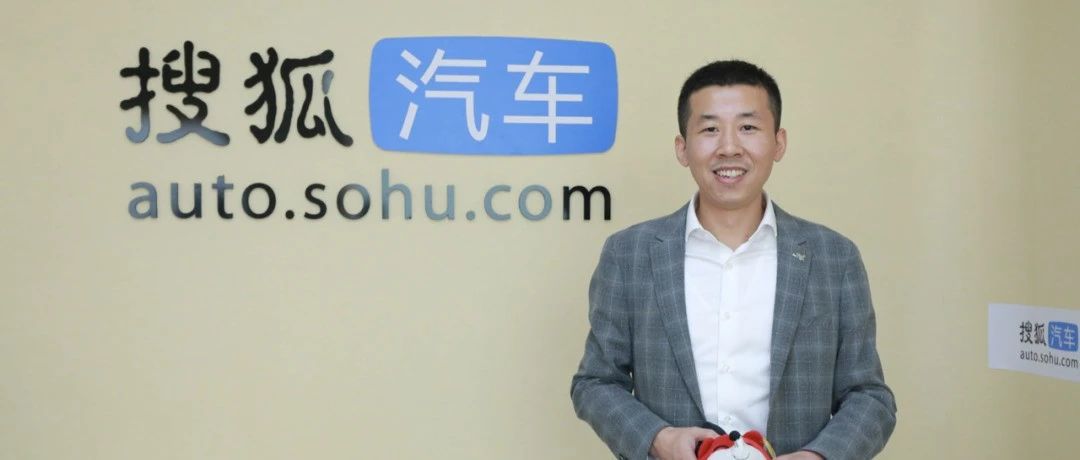
独家丨哪吒汽车智驾高级总监王俊平加入商汤绝影
雷峰网· 2025-03-24 10:04
Core Viewpoint - SenseTime's R-UniAD end-to-end autonomous driving solution is set to be unveiled at the Shanghai Auto Show in April, with real vehicle deployment completed and expected delivery by the end of the year [1][3]. Group 1: Company Developments - Wang Junping, former senior director of intelligent driving at Nezha Auto, joined SenseTime's autonomous driving division in February 2023, previously being part of Baidu's intelligent driving team [2]. - SenseTime has been collaborating with Nezha Auto since September 2021, focusing on intelligent driving and smart cockpit technologies [2]. - Wang Weibao, who took over from Shijianping as the head of intelligent driving, joined SenseTime at the end of 2023 and has a background in Apple's autonomous driving team and as CTO at New Stone Unmanned Vehicle Company [3]. Group 2: Industry Context - The autonomous driving sector is experiencing intensified competition, particularly for companies not in the top tier, highlighting the challenges faced by solution providers [3]. - SenseTime collaborates with over 30 automotive companies, including GAC, BYD, Honda, and NIO, with solutions already deployed in models like the Haobo and Nezha's super sedan [3].
汽车及汽车零部件行业研究:智能驾驶专题(一)-端到端智驾加速整车出清,全栈自研有望突围
SINOLINK SECURITIES· 2025-01-08 06:03
Investment Rating - The report indicates a positive investment outlook for the high-level intelligent driving industry, particularly focusing on the acceleration of urban NOA penetration and the transition from "usable" to "user-friendly" by 2025 [3]. Core Insights - The core competitive elements of high-level intelligent driving are shifting from algorithms to data and computing power, with urban NOA expected to fully roll out in 2024, marking the beginning of an accelerated expansion phase [1][3]. - High-level intelligent driving is anticipated to facilitate the clearing of the 200,000 to 400,000 RMB vehicle market segment, where consumer acceptance of new technologies is strongest [1][3]. - The competitive strength of automakers is deemed superior to third-party suppliers, with a focus on five key elements: data, computing power, talent, funding, and internal collaboration [2][3]. Summary by Sections Section 1: High-Level Intelligent Driving as Core Competitiveness - The large-scale implementation of high-level intelligent driving requires a combination of technology, policy, and cost factors [12]. - The transition to end-to-end systems emphasizes data and computing power as the new competitive focus, moving away from traditional algorithm-centric approaches [1][12]. Section 2: Market Dynamics in the 200,000 to 400,000 RMB Segment - The competitive landscape in the mid-range vehicle market is chaotic, with a clear "smile curve" indicating better conditions at both ends of the price spectrum [45]. - The report predicts that the market will see a significant clearing process, particularly in the 200,000 to 400,000 RMB segment, where no single company has yet established a dominant competitive advantage [1][45]. Section 3: Automaker Competitiveness vs. Third-Party Suppliers - Automakers are positioned to outperform third-party suppliers due to their comprehensive capabilities in data and computing power [2][3]. - Companies like Huawei and Li Auto are highlighted as key players with strong competitive advantages in the high-level intelligent driving space [2][3]. Section 4: Investment Recommendations - The report recommends focusing on companies like Huawei and Li Auto, which are well-positioned to maintain leadership in the intelligent driving sector due to their data accumulation and technological advancements [3].
晚点独家丨易航智能获北汽等数亿元 C 轮融资,将使用地平线 J6 开发智驾方案
晚点LatePost· 2024-09-28 12:08
以下文章来源于晚点Auto ,作者晚点团队 晚点Auto . 从制造到创造,从不可能到可能。《晚点LatePost》旗下汽车品牌。 目前主要服务北汽、上汽大通等车企。 文丨赵宇 编辑丨 程曼祺 我们独家获悉,智能驾驶供应商易航智能近日完成数亿元 C 轮融资,由北汽产投、浙江金控投资公司、德 清产投、财通资本联合投资。其中,浙江金控投资公司为浙江省级投资平台,德清产投为湖州德清县级投 资平台。 北汽在 2022 年与易航智能达成合作,主打越野车的北汽 BJ40 系列车型已搭载易航智能的 L2 级前视一体 机(集成摄像头等传感器的硬件套件)和 L2+ 级高速 NOA 方案。 易航智能称,本轮融资后,易航智能或将为北汽集团旗下 BEIJING、极狐品牌的车型开发智驾方案。 浙江德清县政府则正在招引智驾项目,打造智能驾驶示范区。蔚来激光雷达供应商图达通的一条产线和港口 无人驾驶公司斯年智驾总部基地已落地德清。 易航智能由陈禹行于 2015 年 8 月创立。他博士毕业于吉林大学车辆工程专业,师从中国工程院院士郭孔辉, 郭孔辉也是空气悬架公司浙江孔辉的前身 "长春孔辉" 的创始人;在美国加州伯克利大学交流期间,陈禹行还 ...