端到端AI模型

Search documents
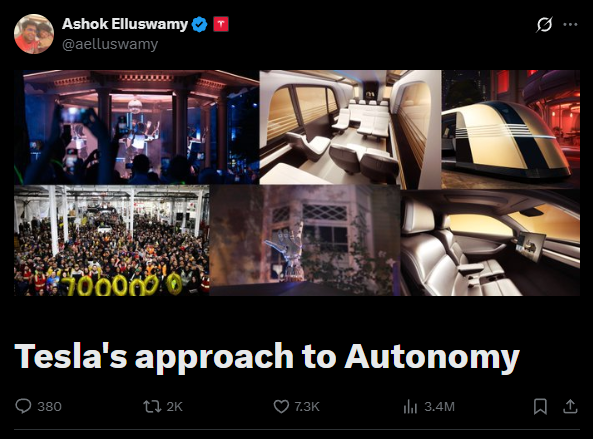
特斯拉:FSD累计行驶里程突破128.75 亿公里
Zhong Guo Qi Che Bao Wang· 2026-02-24 10:13
埃隆・马斯克此前曾表示,100亿英里真实路测数据是实现安全无监督自动驾驶的重要门槛。现实 道路中存在大量复杂且罕见的"长尾场景",很难通过模拟环境完整复现,而真实行驶数据正是训练端到 端AI模型的核心资源。随着FSD里程快速逼近百亿英里门槛,特斯拉距离完全无人驾驶的商业化落地, 也迎来了关键的数据积累阶段。 这一里程碑对特斯拉自动驾驶技术具有关键意义。一方面,海量真实道路数据持续为AI模型提供 训练支撑,每一公里行驶都在帮助系统识别并应对复杂路况。另一方面,该数据也让特斯拉距离100亿 英里的训练目标又近一步。 2月19日消息,特斯拉宣布其FSD(辅助监督版)再迎重要里程碑:全球车主使用该半自动驾驶功 能的累计行驶里程已突破80亿英里,约合128.75亿公里。特斯拉在社交平台X上公布了这一数据。就在 2025年12月27日,该里程数刚达到70亿英里,短短数月内便再增10亿英里,数据积累速度显著加快。 ...

特斯拉AI负责人首次揭秘FSD自动驾驶方法论:为什么我们选择端到端?
Hua Er Jie Jian Wen· 2025-10-26 05:58
Core Argument - Tesla is transforming autonomous driving into a pure AI problem using an "end-to-end" neural network approach, moving away from the traditional modular method that separates perception, prediction, and planning, which they find cumbersome and limited in scalability [1][11]. Group 1: End-to-End Approach - The end-to-end AI model allows the system to directly process pixel data and output driving commands, enabling overall optimization of the entire system [1][11]. - Tesla believes that learning human values from data is easier than encoding them into rules, which is a significant advantage of the end-to-end approach [11][15]. Group 2: Handling Human-Like Decisions - The AI can learn to navigate complex driving scenarios, such as deciding whether to drive through a puddle or into oncoming traffic, by analyzing vast amounts of human driving data [2][15]. - The system can differentiate between groups of animals with different intentions, showcasing its ability to understand "latent intentions" that are difficult to convey in modular systems [3][16]. Group 3: Data Processing and Challenges - Tesla's Full Self-Driving (FSD) system processes up to 2 billion input data points per second, condensing this information into two commands: steering and acceleration [4][20]. - The company leverages a massive data pool, equivalent to 500 years of driving time generated daily by its fleet, to train the AI effectively [22][24]. Group 4: Predictive Capabilities - The AI demonstrates remarkable predictive abilities, such as anticipating a potential collision five seconds before it occurs, which is a level of foresight that traditional systems struggle to achieve [5][24]. Group 5: Interpretability and Evaluation - To address the challenges of debugging the end-to-end model, Tesla outputs interpretable intermediate results alongside driving commands [6][26]. - The company has developed a "neural world simulator" to evaluate the FSD system under various scenarios, allowing for extensive testing and performance assessment [6][37]. Group 6: Technological Versatility - The technology stack developed for FSD is not limited to vehicles; it can also be applied to Tesla's humanoid robot, Optimus, demonstrating its versatility [8][45].

看好自动驾驶技术落地前景 英伟达拟5亿美元战略投资Wayve
Huan Qiu Wang Zi Xun· 2025-09-20 04:20
Core Insights - Wayve, a UK-based autonomous driving startup, has signed a letter of intent with NVIDIA for a strategic investment of $500 million in its upcoming funding round [1][3] - The third-generation autonomous driving platform (Gen 3) will be built on NVIDIA's DRIVE AGX Thor computing architecture, utilizing Blackwell GPU for computational power and a safety-certified DriveOS operating system [3] - NVIDIA's involvement dates back to Wayve's Series C funding, and the new investment will enhance collaboration in hardware acceleration, model optimization, and safety validation [3] Investment and Financials - The $500 million investment is part of NVIDIA's £2 billion (approximately $2.7 billion) AI ecosystem investment plan in the UK, which also includes a £500 million equity investment in AI data center company Nscale [3] - Wayve has previously attracted attention from various investors, including a separate investment from ride-hailing giant Uber in 2024 [4] Product Development and Market Strategy - Wayve's Gen 3 platform aims to reduce reliance on high-definition maps by using end-to-end AI models to learn driving decisions directly from raw sensor data, enabling autonomous navigation in complex urban environments [3] - The production version of the Gen 3 platform is expected to be integrated into a luxury car brand model in Europe by 2026, with the first list of partner car manufacturers to be announced by the end of 2025 [4]


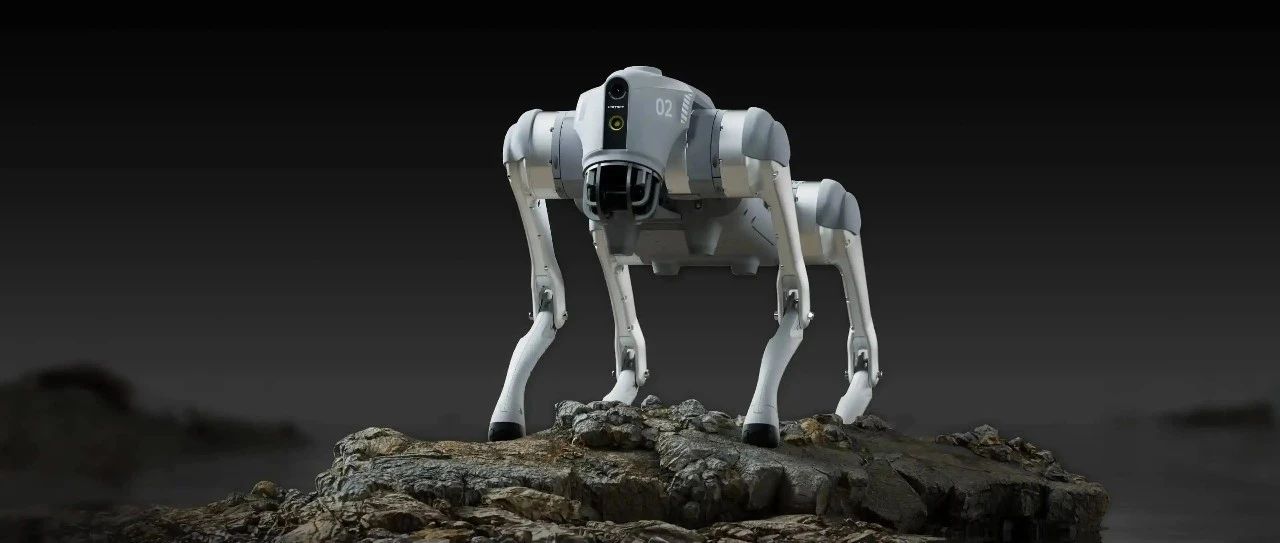
宇树科技王兴兴:指望机器人能够在干活场景产生较大的价值不太现实
是说芯语· 2025-08-09 23:56
Core Viewpoint - The humanoid robot market is experiencing significant growth driven by demand, with manufacturers seeing an average increase of 50% to 100% in sales [3][4]. Industry Development - The humanoid robot market is "very hot" this year, with expectations for annual shipment volumes to double in the coming years, potentially reaching hundreds of thousands or even millions in 2 to 3 years if technological breakthroughs occur [3][4]. - The global robotics industry has seen explosive growth in the first half of the year, with domestic manufacturers experiencing an average growth rate of 50% to 100% [3][4]. - Major companies like Tesla and Nvidia are heavily investing in humanoid robots, with Tesla planning to produce thousands of units this year [3][4]. Company Insights - The company has been focusing on international markets, with overseas business accounting for about 50% of its revenue since 2018 [3][4]. - The company aims to develop versatile humanoid robots that can operate in various scenarios, including factories, performances, and homes [4]. - Current hardware for intelligent robots is not perfect but is deemed sufficient, with future efforts focused on improving hardware details, reducing costs, and enhancing reliability [4][5]. Technological Challenges - The biggest challenge in the industry is the development of robust robot models, with current AI capabilities being insufficient [4][5]. - The company believes that the focus should shift from data to model architecture, as the latter is crucial for advancements in AI technology [5][7]. - There is an expectation that breakthroughs in AI technology will occur within the next 2 to 5 years, leading to a large-scale application era [7].
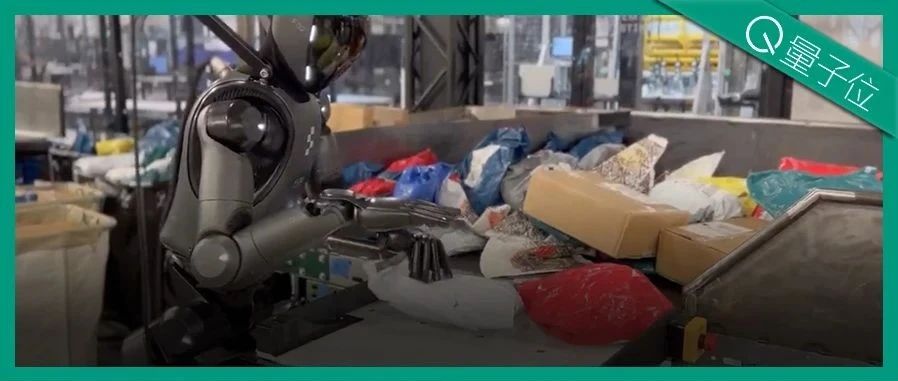
Figure机器人分拣快递新视频曝光,网友:太像人类
量子位· 2025-06-06 04:01
Core Viewpoint - Figure 02, a humanoid robot developed by Figure, has made significant advancements in logistics and manufacturing tasks, showcasing its capabilities through a recent video demonstration that counters skepticism about its performance in variable environments [12][21][47]. Group 1: Robot Performance and Capabilities - Figure 02 has demonstrated proficiency in sorting packages, arranging them neatly for easy scanning, and handling various types of parcels with ease [2][3][4]. - The robot's movements are described as fluid and human-like, with the ability to extract packages even when they are compressed [10][21]. - The underlying technology, Helix, is an end-to-end control model that allows the robot to operate autonomously in logistics scenarios [12][35]. Group 2: Operational Achievements - Figure 02 has been deployed in a BMW production line, successfully working in shifts for up to 20 hours continuously, showcasing its endurance and efficiency [23][25]. - The robot's tasks include placing parts accurately on workstations and retrieving components from shelves, demonstrating its capability to perform complex manufacturing operations [28][29]. Group 3: Technological Development - Helix represents a significant evolution in robotic control, enabling the robot to perceive, understand, and act similarly to humans without the need for extensive programming [35][40]. - The system consists of two communicating components that have been trained end-to-end, allowing for versatile performance across various tasks [36][38]. Group 4: Company Background and Strategic Shift - Figure was founded in May 2022 by Brett Adcock, who has a history of successful entrepreneurship, including the establishment of Archer Aviation [41]. - The company has raised approximately $675 million from notable investors, achieving a valuation of $2.6 billion, positioning itself as a leading humanoid robotics firm [41]. - Following a split from OpenAI, Figure has shifted towards developing its own AI models tailored for its robotic hardware, indicating a strategic pivot towards vertical integration [45][46].