
红利+策略

Search documents
(场外)为什么当下“红利+”策略越来越重要?
Jin Rong Jie· 2026-02-26 05:37
Core Viewpoint - The investment strategy of "Stable + Sustainable" is becoming a key theme for the year amid increasing market volatility and uncertainty, suggesting that a "Dividend +" strategy, which combines defensiveness and yield elasticity, may be a core choice for ordinary investors [1] Group 1: Investment Strategy - The "Dividend +" strategy evolves beyond traditional high-dividend frameworks to a comprehensive system that includes high dividends, low valuations, quality earnings, and value recovery, allowing for both offensive and defensive positioning in volatile markets [1] - Three ETFs under E Fund provide a complete "Dividend +" allocation tool, focusing on high-dividend, stable dividend-paying leading companies, with a notable emphasis on banking, coal, and transportation sectors [1] Group 2: Fund Performance - The E Fund National Value 100 ETF focuses on uncovering undervalued profit opportunities, with a high representation in financial and industrial sectors, suitable for capturing rebound trends after market stabilization [2] - The E Fund National Free Cash Flow ETF targets high-quality earnings, tracking the National Free Cash Flow Index, with a core advantage of a 12.4% return on equity, leaning towards technology growth and manufacturing sectors, and has recently outperformed the market [2] Group 3: Historical Data - From 2013 to present, the annualized return of the National Value 100 Index is 18.3%, the National Free Cash Flow Index is 19.0%, and the China Securities Dividend Index is 11.3%, all outperforming mainstream broad-based indices with higher Sharpe ratios, indicating better historical long-term returns for similar risk levels [2]
(场外)震荡市如何用“红利+”基金做配置?
Jin Rong Jie· 2026-02-26 05:37
Core Viewpoint - The current market presents a dilemma for investors, balancing between chasing gains and avoiding losses, leading to a common pain point of high volatility in single holdings. The "Dividend+" strategy offers a practical and stable allocation solution in a fluctuating market [1]. Group 1: Strategy Overview - The "Dividend+" strategy combines defensive and offensive elements, addressing the core needs of stability, elasticity, and avoiding missed opportunities in a volatile market [2]. - Three ETFs are highlighted as part of this strategy: - E Fund CSI Dividend ETF Linked Fund (A/C/Y: 009051/009052/022925) tracks the CSI Dividend Index with a dividend yield of 4.8%, providing a stable cash flow and reducing drawdowns during market adjustments [1]. - E Fund National Value 100 ETF Linked Fund (A/C: 025497/025498) focuses on capturing market recovery opportunities, being the only ETF linked to the National Value 100 Index, emphasizing undervalued and high-profitability stocks for stronger elasticity in rebound markets [1]. - E Fund National Free Cash Flow ETF Linked Fund (A/C: 024566/024567) emphasizes high-quality earnings with a net asset return rate of 12.4%, targeting companies with real profits and healthy cash flows, thus gaining recognition in volatile markets and providing long-term growth momentum [1]. Group 2: Investment Benefits - The combination of these three funds creates a complete cycle of "defense + recovery + growth," ensuring support during downturns, elasticity during rebounds, and long-term returns, allowing for a more stable and composed investment approach in a fluctuating market [2].
(场外)“红利+”基金怎么选?
Jin Rong Jie· 2026-02-26 05:37
Group 1 - The article emphasizes that the "dividend+" strategy is not a one-size-fits-all approach, and investors with different risk preferences can tailor their investment strategies using various ETFs [1][2] - Conservative investors are advised to focus on the E Fund CSI Dividend ETF Fund (A/C/Y: 009051/009052/022925) as a core holding due to its undervalued and high-dividend characteristics, which provide stable cash flow and better drawdown control [1] - Balanced investors may consider a combination of the E Fund CSI Dividend ETF Fund and the E Fund National Value 100 ETF Fund (A/C: 025497/025498) to anchor high-dividend assets while providing a margin of safety through value investments [1] - Growth-oriented investors are encouraged to prioritize the E Fund National Free Cash Flow ETF Fund (A/C: 024566/024567), which offers high net asset return and profit quality advantages, along with a 3.2% dividend yield for solid returns [1] Group 2 - Long-term investors can flexibly allocate among the E Fund CSI Dividend ETF Fund, the E Fund National Value 100 ETF Fund, and the E Fund National Free Cash Flow ETF Fund, adjusting proportions based on market styles to achieve value returns across cycles [2] - The article concludes that there is no universally best strategy, but rather the most suitable allocation for individual investors, highlighting the importance of selecting the right tools over following trends blindly [3]
风止高息处,用红利资产坚守长期现金流
Jin Rong Jie· 2026-02-10 13:09
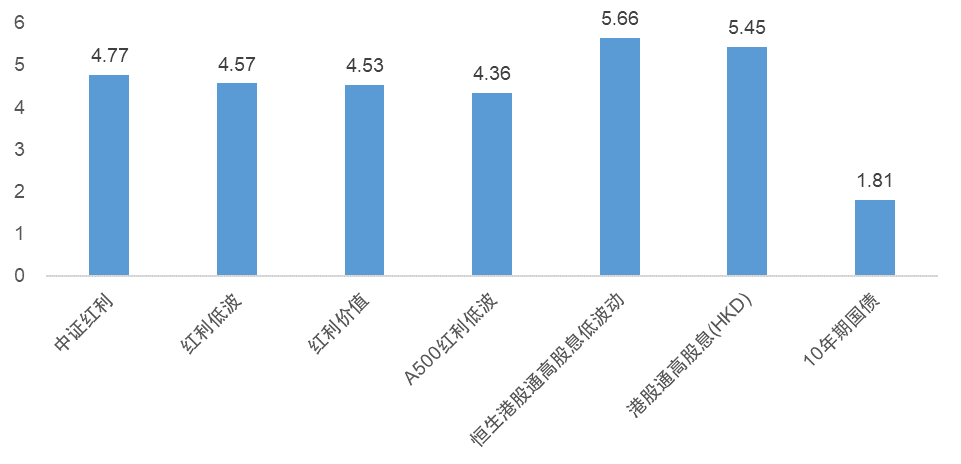
Group 1 - The core viewpoint emphasizes the importance of dividend assets that provide stable cash flow and defensive resilience in a low interest rate environment, particularly for ordinary investors seeking to navigate market fluctuations [1] Group 2 - Dividend indices are not merely single stock selections but a sophisticated toolbox that caters to diverse investment needs, with various indices in the A-share market focusing on different aspects and complementing each other [2] - The CSI Dividend Index is recognized as the benchmark for A-share dividend investment, selecting companies with stable dividends over the past three years and high dividend yields, comprising 100 quality stocks willing to share profits with shareholders [2] - The CSI Dividend Low Volatility Index combines high dividend characteristics with low volatility, resulting in better performance stability, while the CSI Dividend Value Index focuses on undervalued, fundamentally solid high dividend stocks to enhance valuation safety [2] - Data shows that the annualized volatility of the CSI Dividend Low Volatility Index over the past year is 11.34%, lower than that of the other two indices, and the rolling P/E ratio of the CSI Dividend Value Index is 7.73 times, lower than the other indices [2] Group 3 - The newly launched CSI A500 Dividend Low Volatility Index in 2025 achieves a dual breakthrough by focusing on quality leading companies while expanding industry coverage, significantly increasing weights in sectors like pharmaceuticals, oil and gas, and public utilities compared to previous indices [3] Group 4 - The Hong Kong dividend indices, influenced by market liquidity and dividend tax rules, generally exhibit higher dividend yields, with two core indices complementing A-share indices: the CSI Hong Kong Stock Connect High Dividend Investment Index focuses on high dividend characteristics, while the Hang Seng Hong Kong Stock Connect High Dividend Low Volatility Index combines high dividends with low volatility [6] - In a low interest rate environment, relying solely on deposits may not meet the rigid cash flow needs of daily expenses or support long-term asset appreciation, making dividend indices with stable dividends and solid fundamentals a suitable choice for ordinary investors [6] Group 5 - The "Dividend+" strategy aims to enhance the quality and sustainability of dividends by focusing on companies with stable profitability and ample free cash flow, ensuring that investors can anchor their returns more on long-term value [8] - The National Value 100 Index targets undervalued, high-margin quality stocks, while the National Free Cash Flow Index captures "cash cow" companies with sustainable cash flow generation capabilities [8] Group 6 - E Fund has diversified its dividend product line, offering four differentiated investment solutions tailored to various investor needs [10] - For investors seeking regular cash flow, E Fund offers ETFs with different dividend schedules, allowing for monthly dividends [11] - For those focused on long-term compounding value, the E Fund Dividend ETF, which tracks the CSI Dividend Index and has a scale exceeding 100 billion, provides opportunities for reinvestment of annual dividends [12] - Investors looking to enhance long-term returns can consider high-growth indices while maintaining a solid dividend base, balancing stability and potential returns [13] - For investors pursuing lower volatility and more stable performance on a high dividend basis, E Fund offers specific ETFs, while those seeking stronger valuation safety can consider value-focused ETFs [14]

红利国企ETF(510720)近20日资金净流入超6亿元,市场关注高股息资产配置价值
Sou Hu Cai Jing· 2025-12-11 02:18
Group 1 - The core viewpoint is that the "Dividend+" strategy is a short-term stable allocation approach and is the preferred choice for the first wave of returning consumer funds [1] - As high-end consumption and certain mass-market products show signs of recovery, the market is expected to gradually refocus on the consumer sector [1] - Due to the prolonged bottom consolidation period and significant divergence in consumer sentiment, the current "Dividend+" strategy represents the path of least resistance [1] Group 2 - The Dividend National Enterprise ETF (510720) tracks the National Dividend Index (000151), which selects high-quality companies with significant and stable dividend records from the Shanghai Stock Exchange [1] - The index includes high-dividend sectors such as banking, coal, and transportation, reflecting the overall performance of high-dividend listed companies [1] - The index provides a reference for investors seeking stable returns through a cash dividend yield and liquidity screening mechanism [1]
构建资产配置稳健基石基金经理探讨红利资产长期逻辑
Shang Hai Zheng Quan Bao· 2025-09-21 15:28
Core Viewpoint - Dividend assets have become a stable mainstay in the equity market since 2022, providing steady cash flow and reasonable valuations, and are expected to maintain long-term allocation value despite a shift towards growth styles by 2025 [3][4]. Group 1: Changes in Dividend Asset Allocation Value - The allocation value of dividend stocks has not weakened but rather complements growth sectors due to a diverse market style and active structural opportunities [4]. - Dividend assets provide a stable foundation for investment portfolios, optimizing risk-return structures and enhancing long-term compounding returns [4][5]. Group 2: Long-term Performance and Demand for Dividend Assets - The demand for dividend assets is expected to rise as companies increase their dividend payout ratios following a peak in capital expenditures, supported by ample liquidity in the market [5]. - The market is transitioning to a "dividend+" era, where dividend assets will show significant differentiation based on specific industry and company conditions [5][6]. Group 3: Strategies for Achieving Flexibility and Excess Returns - A balanced approach combining "core-satellite" strategies with cash-rich, stable-profit assets is recommended to adapt to market rotations [6]. - Value investment should not be narrowly defined; it should include identifying quality businesses at reasonable or low prices while adapting to market and fundamental changes [6][7]. Group 4: Value Investment in a Rotating Market - A deep value investment philosophy should guide the entire investment process, distinguishing between "value" and "price" based on ROE, cash flow, and governance [7][9]. - A diversified and balanced portfolio strategy is essential to manage high market volatility and avoid excessive risk exposure to individual stocks or sectors [7][8]. Group 5: Identifying Truly Undervalued Stocks - The selection of stocks should consider both willingness and ability to distribute dividends, focusing on governance and free cash flow [9][10]. - Long-term competitive strength and cash generation capabilities are critical in distinguishing between genuinely undervalued stocks and those that merely appear cheap [10]. Group 6: Investment Opportunities in the Current Market - Future investment opportunities in cyclical dividend assets are anticipated, particularly in sectors like coal, engineering machinery, and consumer goods, as they recover from low profitability [11]. - The focus should also be on stable cash flow sectors such as utilities, highways, and essential consumption, alongside opportunities driven by new policies and external demand [11][12]. Group 7: Evaluating the "Dumbbell Strategy" of Small and Dividend Stocks - The combination of stable dividend assets and small-cap stocks can reduce portfolio volatility while providing both defensive and offensive characteristics [12][13]. - The economic recovery may impact dividend assets and small-cap stocks differently, necessitating a focus on dividend stability and cash flow resilience in the former, while emphasizing profitability and governance in the latter [13].

市场策略报告:估值安全边际下的“红利+”-20250822
Capital Securities· 2025-08-22 14:34
Group 1 - The Hong Kong stock market indices have performed relatively well since 2025, with the Hang Seng Index increasing by 25.51%, the Hang Seng Technology Index by 22.89%, and the Hang Seng China Enterprises Index by 23.98% from the beginning of 2025 to July 30, 2025 [3][17]. - The improvement in liquidity in the Hong Kong market is significantly driven by the increase in southbound capital, which has seen a total trading volume of 14.63 trillion RMB, a year-on-year increase of 220.41% [3][21]. - The valuation of Hong Kong stocks remains attractive, with the Hang Seng Index, Hang Seng Technology Index, and Hang Seng China Enterprises Index having TTM P/E ratios of 11.49, 22.24, and 10.49 respectively, which are lower compared to the CSI 300 Index [3][31]. Group 2 - The "Dividend +" strategy is based on the high dividend yield and low valuation advantages of Hong Kong stocks, particularly state-owned enterprises, which generally have higher dividend rates [3][46]. - The "Dividend + Stability" strategy focuses on selecting stocks with high dividend yields and stable earnings, with criteria including a TTM dividend yield greater than 4.5% and a market capitalization of over 30 billion RMB [3][55]. - The "Dividend + Economic Recovery" strategy targets investment opportunities in the power sector, which is currently experiencing a recovery due to stable coal prices and increasing electricity demand [3][59]. Group 3 - The power industry is in a recovery phase, with coal prices stabilizing and electricity demand increasing, which enhances the profitability of power companies [3][60][64]. - The implementation of a two-part electricity pricing mechanism starting in 2024 is expected to support the profitability of coal power companies by allowing them to recover fixed costs [3][64]. - The renewable energy sector is also expected to benefit from improved cash flow and reduced accounts receivable, which will enhance dividend capabilities [3][70][71].
红利资产的定价模式探索系列(I):AH红利资产如何划分:W107市场观察
Changjiang Securities· 2025-04-28 09:44
Dividend Performance - In 2024, the total cash dividends for all A-share companies reached CNY 1.94 trillion, with a growth rate of 13.90% compared to 2023, and approximately 73.80% of listed companies distributed cash dividends[18][19]. - The overall dividend payout ratio for A-shares in 2024 was 37.70%, slightly lower than the 39.10% observed in the Hong Kong market[19]. Market Trends - Nearly 74% of listed companies are engaging in cash dividends, significantly expanding the concept and selection range of dividend stocks[18]. - The differentiation within dividend assets is expected to continue and intensify, challenging the traditional selection paradigm based on a dividend yield threshold of 4% or 5%[18]. Investment Strategies - The report highlights the emergence of various "dividend+" strategies that combine dividend selection with other investment criteria to address the sustainability of dividends and capture potential high-yield stocks[23][31]. - The insurance sector is anticipated to increase its allocation to dividend assets, with companies like New China Life and China Life expected to raise their OCI (Other Comprehensive Income) allocation by approximately 4% to 5% in their 2024 semi-annual reports[23]. Sector Analysis - The report identifies that industries such as insurance, food and beverage, and home appliances have announced higher average dividends per share compared to 2023, indicating strong performance in these sectors[23]. - The consumer discretionary sector is leading the market, with significant outperformance noted in the healthcare sector against industry benchmarks[8][23]. Risk Considerations - The report emphasizes that historical data does not guarantee future performance, and investors should be cautious of the ongoing market volatility and sector-specific risks[8].