纯电动技术

Search documents
理想汽车李想放话:目标年底高端纯电赛道“保五争三”,销量稳定在18000-20000辆/月【附新能源汽车行业市场分析】
Qian Zhan Wang· 2025-09-03 07:43
Core Viewpoint - Li Auto aims to enter the pure electric SUV market in 2025, targeting monthly sales of 18,000 to 20,000 units across its electric models by the end of the year [2][6]. Group 1: Company Goals and Targets - Li Auto's CEO, Li Xiang, expressed confidence in achieving the goal of "maintaining fifth and striving for third" in the high-end pure electric vehicle segment by the end of 2025 [2]. - The specific targets for Li Auto's models include stabilizing sales at 6,000 units per month for the Li i8 and 9,000 to 10,000 units per month for the Li i6 [2]. Group 2: Market Context - The Chinese new energy vehicle market continues to grow rapidly, with a cumulative production of 11.26 million units from January to November 2024, representing a year-on-year increase of 35.6% [3]. - In the same period, the production of pure electric vehicles reached 6.8 million units, accounting for 60.4% of the total new energy vehicle production [5]. Group 3: Competitive Landscape - The high-end market (vehicles priced above 300,000 yuan) is notably concentrated, with Tesla's Model Y leading with a market share of 41.3%, followed by NIO's ES6 at 18.7% and Zeekr 001 at 15.2% [5]. - To achieve its sales targets, Li Auto must navigate and overcome the existing competitive landscape [6]. Group 4: Industry Trends - The advancement of technology and market maturity indicates that pure electric technology will become the mainstream direction for future automotive development [9].


增程式汽车再加速
Zhong Guo Qi Che Bao Wang· 2025-07-07 01:57
Group 1 - BMW plans to reintroduce range-extended technology with the iX5 in 2026, expecting a combined range of 1000 km, and will apply this technology to the sixth generation iX3 and seventh generation iX7 models [2][4] - GAC Toyota announced plans to produce range-extended models, including versions of the Highlander and Sienna, while SAIC Volkswagen has introduced the ID.ERA concept car as its first range-extended model [2][5] - The market for range-extended vehicles is experiencing significant growth, with a nearly 50% year-on-year increase in sales, while plug-in hybrid vehicles are showing signs of slowing growth [3][4] Group 2 - The sales of range-extended vehicles have surged, with a reported 111% year-on-year growth in 2023 and an expected 167% increase in 2024, contrasting with the single-digit growth of pure electric and plug-in hybrid vehicles [12][18] - The shift towards range-extended technology is driven by changing consumer preferences, with buyers favoring vehicles that offer both electric and fuel options for flexibility [10][14] - Range-extended vehicles are perceived to have better performance and user experience compared to plug-in hybrids, as they are fully driven by electric motors and alleviate concerns about range anxiety [8][9] Group 3 - The automotive industry is witnessing a strategic pivot towards range-extended technology, with companies like Ideal, Leap Motor, and Aito achieving significant sales growth in this segment [5][13] - The simplicity of range-extended vehicle structures helps reduce manufacturing costs and vehicle weight, enhancing their appeal in the market [9][14] - The introduction of solid-state batteries is anticipated to further enhance the performance and appeal of range-extended vehicles, potentially revolutionizing the market [17][18]




中国车企在欧洲逆势“狂飙”
第一财经· 2025-05-14 00:29
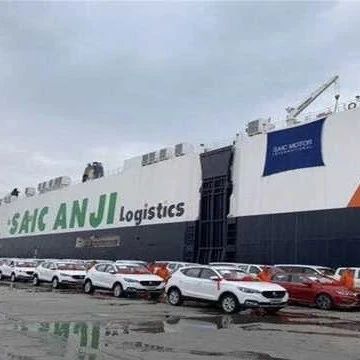
Core Viewpoint - Chinese automakers are leveraging plug-in hybrid electric vehicles (PHEVs) as a strategic response to the EU's high tariffs on pure electric vehicles, resulting in significant sales growth in the European market [1][2]. Group 1: Market Performance - In Q1 2025, Chinese car sales in Europe reached 148,000 units, a 78% year-on-year increase, with market share rising from 2.5% to 4.5% [1]. - Sales of plug-in hybrid models surged by 368%, becoming the main driver of this growth [1][2]. - BYD and Chery sold 3,269 and 757 plug-in hybrid vehicles in March 2025, respectively, marking a significant increase from nearly zero sales in July 2024 [2]. Group 2: Strategic Adjustments - Chinese automakers are adjusting their strategies in Europe by focusing on plug-in hybrid models, which are still subject to a 10% base tariff, unlike pure electric vehicles facing tariffs as high as 45.3% [2][4]. - BYD's plug-in hybrid vehicles accounted for 41% of its electric vehicle sales in the EU in March 2025, while SAIC's figure was as high as 49% [2]. - Chery's plug-in hybrid sales exceeded pure electric models, with 71% of its electric vehicle sales in the EU being plug-in hybrids [2]. Group 3: Competitive Landscape - The low base of plug-in hybrid sales in Europe and limited offerings from major European automakers (e.g., BMW, Mercedes) have created opportunities for Chinese brands to capture market share with high-cost performance products [3][4]. - BYD plans to launch two new plug-in hybrid models in Germany by 2025, aiming to meet diverse consumer needs [3]. Group 4: Future Outlook - Ongoing negotiations between China and the EU regarding electric vehicle tariffs may lead to a minimum price setting for Chinese electric vehicles, which could be more favorable for market competition than tariffs [5]. - The transition to pure electric vehicles is seen as the long-term trend in Europe, with plug-in hybrids serving as a transitional solution [5].