维生素D

Search documents
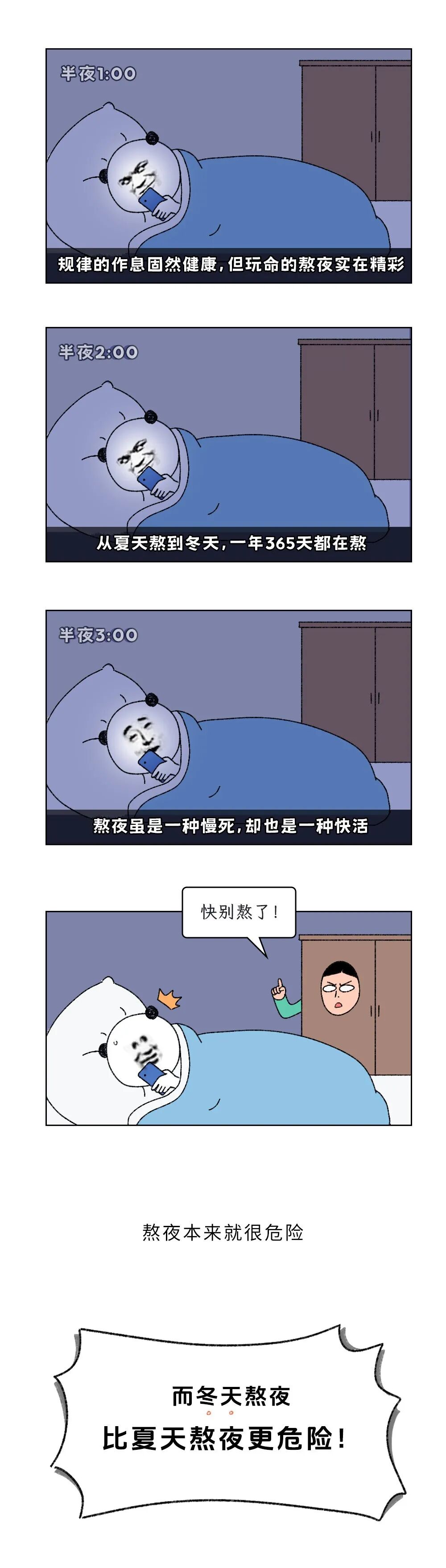
为什么说冬天熬夜比夏天熬夜更危险???
Xin Lang Cai Jing· 2026-01-08 13:48
Core Viewpoint - Staying up late is particularly dangerous in winter due to reduced sunlight exposure, which affects melatonin secretion and overall health. Group 1: Impact on Sleep Quality - Winter nights lead to increased difficulty in falling asleep and maintaining sleep quality due to delayed melatonin secretion [14][19]. - Research indicates that 17.6% of women and 9.0% of men report insomnia in winter, significantly higher than other seasons [21]. - A study involving 13,296 French employees found that insufficient natural light correlates with a 28.8% insomnia rate [21]. Group 2: Emotional and Mental Health Effects - Lack of sunlight in winter can lead to lower levels of Vitamin D, which is essential for serotonin and dopamine production, potentially resulting in depression [32][33]. - Seasonal Affective Disorder (SAD) is characterized by winter depression, with symptoms worsening in low-light conditions [36][37]. - Research shows that shorter sleep duration increases the risk of depression, with a notable correlation between sleep time and depression risk scores [40][41]. Group 3: Physical Health Risks - Sleep deprivation increases susceptibility to cold, as studies show that lack of sleep impairs the body's ability to regulate temperature [50][52]. - Winter is a high-risk season for heart-related issues, with studies indicating a higher incidence of myocardial infarction at temperatures below 0°C [63][64]. - A long-term study found that individuals who sleep after midnight have a 62.8% higher risk of heart attack compared to those who sleep earlier [68][69].

天天补钙仍然骨质疏松,问题出在哪?
Ren Min Ri Bao· 2025-11-28 00:31
Core Viewpoint - Osteoporosis is a complex condition not solely caused by calcium deficiency, but rather a combination of decreased bone mineral content and quality, leading to increased fracture risk [2][3] Epidemiology - The prevalence of osteoporosis in individuals over 50 years old in China is 19.2%, with women at 32.1% and men at 6.9%. For those over 65, the prevalence rises to 32.0%, with women at 51.6% and men at 10.7% [3] - Approximately 90 million people in China are estimated to suffer from osteoporosis, with around 70 million being women, particularly postmenopausal women [3] Risk Factors - Non-controllable risk factors include aging, menopause in women, and family history of fragility fractures [5] - Controllable risk factors encompass unhealthy lifestyles, diseases affecting bone metabolism, and certain medications [6] Calcium and Vitamin D - Calcium supplementation must be paired with Vitamin D to enhance absorption; without Vitamin D, calcium intake may not be effectively utilized by the body [7][9] - Vitamin D synthesis requires sunlight exposure, and dietary sources are limited, making supplementation necessary for high-risk groups [9] Diagnosis and Screening - The gold standard for diagnosing osteoporosis is the dual-energy X-ray absorptiometry (DXA) scan, with a T-score of ≤ -2.5 indicating osteoporosis [10][11] - Screening is recommended for women aged 65 and older and men aged 70 and older, with earlier screening for those with specific risk factors [12] Symptoms and Public Awareness - Osteoporosis is often asymptomatic in early stages, leading to a lack of awareness until a fracture occurs [13] - Common misconceptions include equating osteoporosis solely with calcium deficiency and believing it only affects the elderly [13]
天天补钙仍然骨质疏松,问题出在哪?(健康驿站)
Ren Min Ri Bao Hai Wai Ban· 2025-11-27 22:46
Core Viewpoint - Osteoporosis is a complex condition not solely caused by calcium deficiency, but rather a combination of decreased bone mineral content and quality, leading to increased fracture risk [2][3] Group 1: Understanding Osteoporosis - Osteoporosis is characterized by a reduction in both bone mineral content and bone quality, which together lower bone strength and increase fragility [2] - The prevalence of osteoporosis in individuals over 50 years old is 19.2%, with women at 32.1% and men at 6.9%. For those over 65, the prevalence rises to 32.0%, with women at 51.6% and men at 10.7% [3] Group 2: Risk Factors - Risk factors for osteoporosis are categorized into uncontrollable factors such as age, menopause, and family history of fractures [5] - Controllable factors include unhealthy lifestyles, diseases affecting bone metabolism, and certain medications [6] Group 3: Calcium and Vitamin D - Many individuals supplement calcium but still experience bone density loss, indicating that calcium deficiency is more accurately described as a decrease in bone mineral content [7][8] - Vitamin D is essential for calcium absorption, acting as a "navigator" to facilitate calcium uptake in the intestines [9] Group 4: Diagnosis and Screening - The gold standard for diagnosing osteoporosis is the dual-energy X-ray absorptiometry (DXA) scan, which measures bone density [10] - It is recommended that women over 65 and men over 70 undergo routine bone density screening, with earlier screening for those with risk factors [12] Group 5: Public Awareness and Misconceptions - Osteoporosis is often referred to as a "silent disease" due to the lack of symptoms in early stages, leading to potential fractures from minor incidents [13] - Common misconceptions include the belief that osteoporosis is solely a calcium deficiency or that it only affects the elderly, which can delay necessary interventions [13]
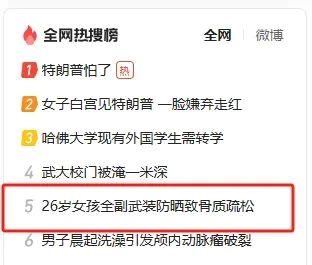
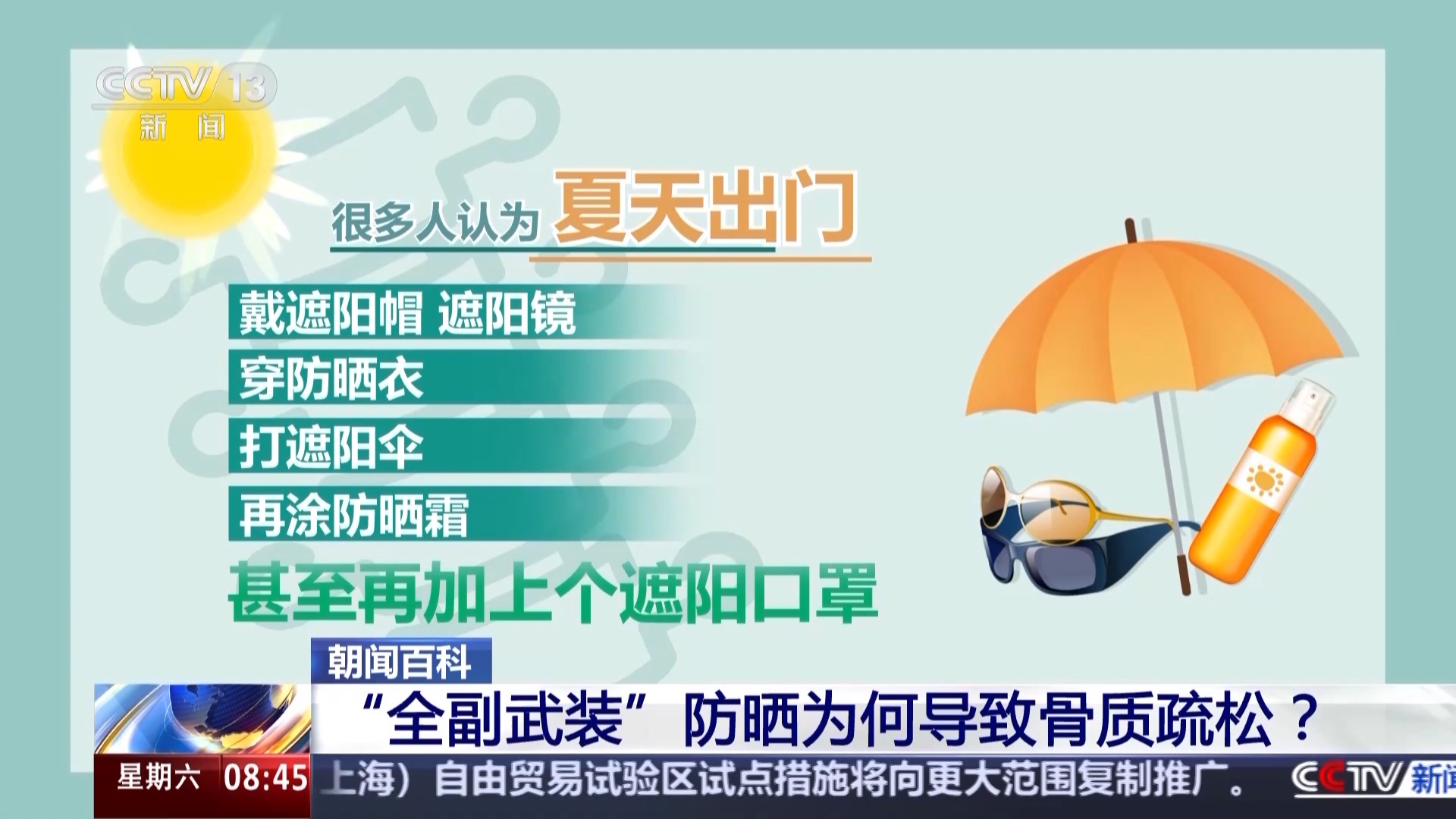
“全副武装”反致骨质疏松 科学防晒拿捏“分寸”很重要
Yang Shi Xin Wen· 2025-06-14 06:47
Core Viewpoint - Excessive sun protection measures can lead to vitamin D deficiency, increasing the risk of osteoporosis, particularly among young people and adults [1][2][5][6]. Group 1: Osteoporosis and Vitamin D - Osteoporosis is a metabolic bone disease characterized by decreased bone formation and increased bone resorption, leading to fragile and porous bones [1]. - Vitamin D is crucial for calcium absorption; insufficient vitamin D results in poor calcium absorption, which can lead to osteoporosis [4]. - The trend of osteoporosis is becoming more prevalent among younger populations, raising concerns about the long-term health implications [5]. Group 2: Sun Protection Measures - Full sun protection, including hats, sunglasses, and sunscreen, while effective against UV rays, can hinder vitamin D synthesis [2][4]. - Medical professionals emphasize the importance of balanced sun exposure to maintain adequate vitamin D levels, especially during summer [6][15]. Group 3: Recommendations for Sun Protection - Effective sun protection should focus on blocking UVA and UVB rays, which can penetrate the atmosphere and affect the skin [10][12]. - Recommendations include using sunscreen with appropriate SPF and PA ratings based on the activity level and duration of sun exposure [13]. - It is advised to allow for short periods of sun exposure (10-30 minutes) without protection to facilitate vitamin D synthesis [15].
过度防晒可能导致骨质疏松 三招教你科学补充“阳光维生素”
Yang Shi Xin Wen· 2025-06-02 01:37
Core Viewpoint - Overexposure to sun protection measures can lead to vitamin D deficiency, which is linked to osteoporosis, as demonstrated by a case of a 26-year-old girl diagnosed with the condition due to excessive sun protection [1][3]. Group 1: Impact of Sun Protection on Vitamin D - Sun protection methods, while preventing skin damage, significantly reduce the body's ability to synthesize vitamin D, which is crucial for calcium absorption and bone health [3][5]. - Approximately 80% to 90% of vitamin D is synthesized through skin exposure to UVB rays, and just 10 to 30 minutes of daily sun exposure is sufficient for adequate vitamin D levels [5][7]. Group 2: Vitamin D Deficiency Statistics - In China, there is a notable prevalence of vitamin D deficiency among children aged 0-18, with a severe deficiency rate of 2.46%, a deficiency rate of 21.57%, and an insufficiency rate of 28.71% [7]. Group 3: Recommended Vitamin D Intake - The recommended daily intake of vitamin D is 400 IU (10 micrograms) for individuals aged 0-65, and 600 IU (15 micrograms) for those over 65 [7][11]. Group 4: Risks of Excessive Vitamin D - While vitamin D toxicity is rare, it can occur, leading to symptoms such as hypercalcemia, which may result in kidney stones and other health issues [8][10]. Group 5: Safe Supplementation Practices - The safe upper limit for daily vitamin D intake is 2000 IU (50 micrograms), and individuals should be cautious not to exceed this amount when taking supplements [10][11]. - Outdoor activities and sun exposure are the most effective ways to obtain vitamin D, with dietary sources such as fatty fish and fortified milk also contributing to intake [11][13].